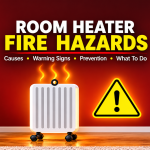
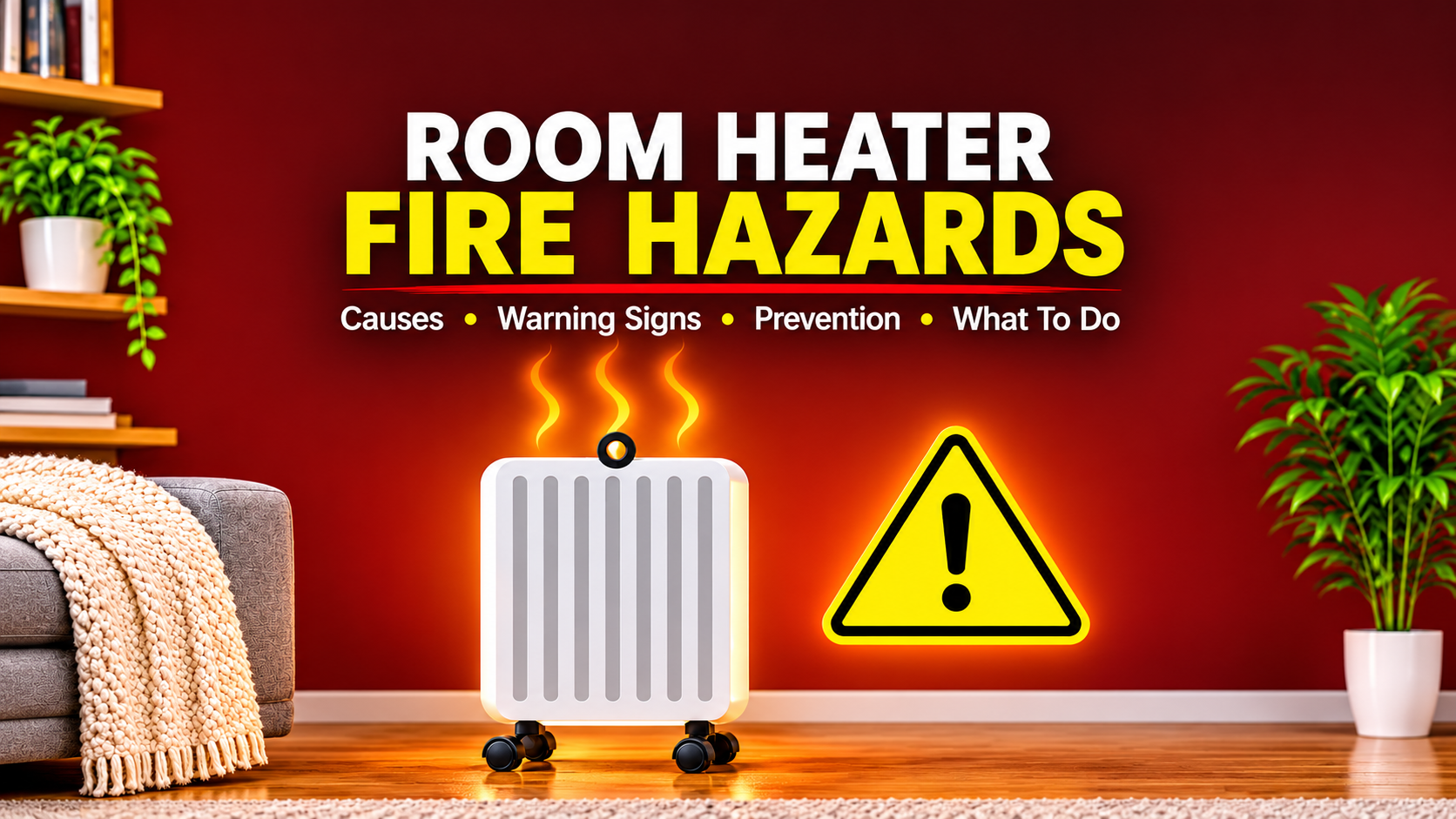

A room heater can turn a cold, uncomfortable space into a warm and welcoming one in minutes. But the same device that keeps you cosy also produces serious heat, draws a lot of electricity, and sits right in the middle of your living space. When something goes wrong, the result can be a house fire.
The encouraging news is that most room heater fire hazards are well understood and highly preventable. Safety organisations consistently point to the same handful of mistakes, from placing heaters too close to flammable materials to plugging them into overloaded outlets. This guide explains how heater fires start, the most common hazards, the warning signs you should never ignore, how to use a heater safely, and exactly what to do if the worst happens.
Quick Safety Takeaways
- Keep 3 feet (1 metre) of clear space around every heater, in all directions.
- Plug directly into a wall outlet. Avoid extension cords and power strips.
- Never cover a heater or use it to dry clothes or towels.
- Choose modern safety features: tip-over protection, overheat protection and a thermostat.
- Don’t leave heaters running unattended or while you sleep, unless the manufacturer’s instructions clearly allow it.
- Stop using a heater immediately if you smell burning, see damage or feel the plug getting hot.
How Room Heaters Can Start Fires
Every electric heater works by turning electricity into heat, and that heat has to go somewhere. Heating elements and metal surfaces can reach very high temperatures, and the air leaving the heater is hot enough to ignite some materials if they are too close. A fire can start in a few main ways:
- Direct ignition of nearby materials. Curtains, bedding, clothing, paper, upholstered furniture and rugs can catch fire if they touch a heater or sit in its path of hot air or radiant heat.
- Electrical faults. Damaged cords, worn plugs, loose connections and faulty internal wiring can overheat, spark or short-circuit.
- Overloaded circuits. Heaters draw a lot of power, and cables, outlets and power strips not designed for that load can overheat.
- Component failure. A broken thermostat or failed overheat protection can let a heater get far hotter than intended.
- Fuel-related fires. Fuel-burning heaters (such as kerosene or propane) add extra risks, including spilled fuel and open flames.
The 6 Most Common Room Heater Fire Hazards

1. Placing the Heater Too Close to Flammable Items
This is widely identified as one of the biggest causes of heater fires. In a small room it is tempting to tuck a heater next to the bed, under a window with curtains or beside a sofa. But heat can ignite fabric, paper and wood surprisingly quickly, especially if the heater is on for a long time or the air is blowing directly at the material.
How to prevent it: keep at least 3 feet (about 1 metre) between the heater and anything that can burn, including bedding, clothes, curtains, furniture, papers, cardboard boxes and rugs. Don’t place a heater where a pet or a child could easily knock items into it.
2. Overloaded Outlets, Extension Cords and Power Strips
Many people plug heaters into whatever is closest, which often means an extension cord or a multi-socket adapter. Standard extension cords and power strips are usually not designed to carry the continuous high current a heater draws. Over time they can overheat, melt and ignite.
How to prevent it: plug heaters straight into a wall outlet, and don’t share that outlet or circuit with other high-power appliances. As a guide, a 1,500-watt heater on a 120-volt supply draws about 12.5 amps, which is most of a typical 15-amp circuit’s capacity. On a 230-volt supply, a 2,000-watt heater draws roughly 8.7 amps. If you must use an extension lead because of the room layout, choose one that is clearly rated for the heater’s power and follow the heater manufacturer’s advice. Better still, ask an electrician to add an outlet in a convenient spot.
3. Damaged Cords, Plugs and Outlets
A frayed cord, cracked insulation, bent pins or a loose-fitting plug can all lead to overheating or sparking. Cords that are pinched under furniture, run beneath rugs or wrapped tightly around the heater body are particularly at risk.
How to prevent it: inspect the cord and plug before each season and regularly during use. Keep cords visible and uncovered, and never run them under carpets. If the plug or outlet becomes hot, discoloured or loose, stop using the heater and have both checked.
4. Missing or Failed Safety Features
Older or very cheap heaters may lack tip-over switches, overheat cut-offs or reliable thermostats. If a heater without these features gets knocked over or its airflow is blocked, it can keep heating while on its side or while overheating.
How to prevent it: choose heaters with tip-over protection, overheat protection, an adjustable thermostat and a recognised safety certification mark. Replace heaters that are very old, damaged, or have been repaired in an unofficial way.
5. Leaving Heaters Unattended or On While Sleeping
A heater running in an empty room, or in a bedroom overnight, means that nobody is there to notice a problem early. Many fatal heater fires happen when people are asleep or away.
How to prevent it: switch heaters off when you leave the room, go to bed or leave the house. If you need warmth at bedtime, use a timer to pre-heat the room, then turn the heater off before you sleep. Follow the manufacturer’s instructions at all times.
6. Dust, Lint and Debris Buildup
Dust, pet hair and lint collect on grills, vents and heating elements. When the heater turns on, this debris can burn or smoulder, creating smoke, odours and, in the worst case, a fire. Blocked vents also stop the heater from releasing heat properly, which can make it overheat.
How to prevent it: when the heater is switched off, unplugged and cool, gently vacuum the vents and grills, and wipe the casing with a dry cloth. Do this regularly and especially at the start of each heating season.
Fire Risks by Heater Type
All heaters carry some risk, but the specific hazards differ depending on how they work. Here is a quick overview:
| Heater Type | Main Fire-Related Risk | Key Precaution |
|---|---|---|
| Ceramic fan heaters | Dust buildup in vents; hot air blowing at nearby fabrics | Clean vents regularly; keep airflow path clear |
| Oil-filled radiators | Hot surfaces; items draped over the unit | Never drape clothes or towels over it |
| Infrared / radiant heaters | Intense radiant heat that can ignite objects in its path | Keep a clear zone in front; don’t aim at furniture or bedding |
| Convector and panel heaters | Blocked vents causing overheating | Leave required space above and around the unit |
| Fuel-burning heaters (kerosene, propane, gas) | Open flame, fuel spills and carbon monoxide | Only use if approved for indoor use, with correct fuel and ventilation |
Electric heaters are generally considered safer for bedrooms and small indoor spaces than fuel-burning ones, but any heater can cause a fire if it is misused.
Warning Signs: When to Stop Using Your Heater
Heaters rarely fail without any hint. Learn to recognise the early signs, and switch the heater off, unplug it and stop using it if you notice any of the following:
| Warning Sign | What It May Mean | What to Do |
|---|---|---|
| Burning or plastic smell | Overheating wiring, melting parts or burning dust | Switch off, unplug and stop using |
| Plug or outlet feels hot | Loose connection or overloaded circuit | Unplug and have the outlet checked |
| Discoloured, melted or scorched plug, cord or outlet | Serious overheating has already occurred | Stop use; replace the heater or cord; call an electrician |
| Sparks, crackling or buzzing | Electrical fault or arcing | Unplug at once; do not use again |
| Circuit breaker trips or fuse blows repeatedly | Overload or a fault in the heater or wiring | Stop use; have heater and circuit inspected |
| Heater turns on and off unpredictably or won’t switch off | Faulty thermostat or controls | Unplug and replace the heater |
| Casing is unusually hot or warped | Blocked vents or failing overheat protection | Switch off, let cool, check for blockages; replace if it recurs |
Unsafe vs Safe Heater Placement
Where you put the heater matters as much as which heater you buy. The picture below shows the difference between a risky setup and a safe one.

Room Heater Safety Rules: A Practical Checklist
Before You Switch It On
- Read the manufacturer’s manual and follow its instructions and warnings.
- Place the heater on a flat, hard, stable surface. Avoid beds, sofas and thick carpets.
- Check for at least 3 feet (1 metre) of clearance around the heater.
- Inspect the cord, plug and casing for any damage.
- Plug straight into a wall outlet that isn’t shared with other heavy appliances.
While It Is Running
- Stay aware of the heater and check it from time to time.
- Never cover it, and never dry clothes, towels or shoes on or near it.
- Keep children and pets away, and consider a heater with cool-touch surfaces or a guard.
- Use the thermostat so the heater cycles rather than running flat out.
- Don’t use heaters in bathrooms or damp areas unless they are specifically rated for it.
When You Finish
- Switch the heater off and unplug it when leaving the room, going to bed or leaving the house.
- Let it cool fully before moving or storing it.
- Store it somewhere dry, with the cord loosely coiled rather than tightly wrapped.
Safety Features to Look for When Buying a Heater
Choosing a heater with the right protective features is one of the best ways to reduce your fire risk. Look for:
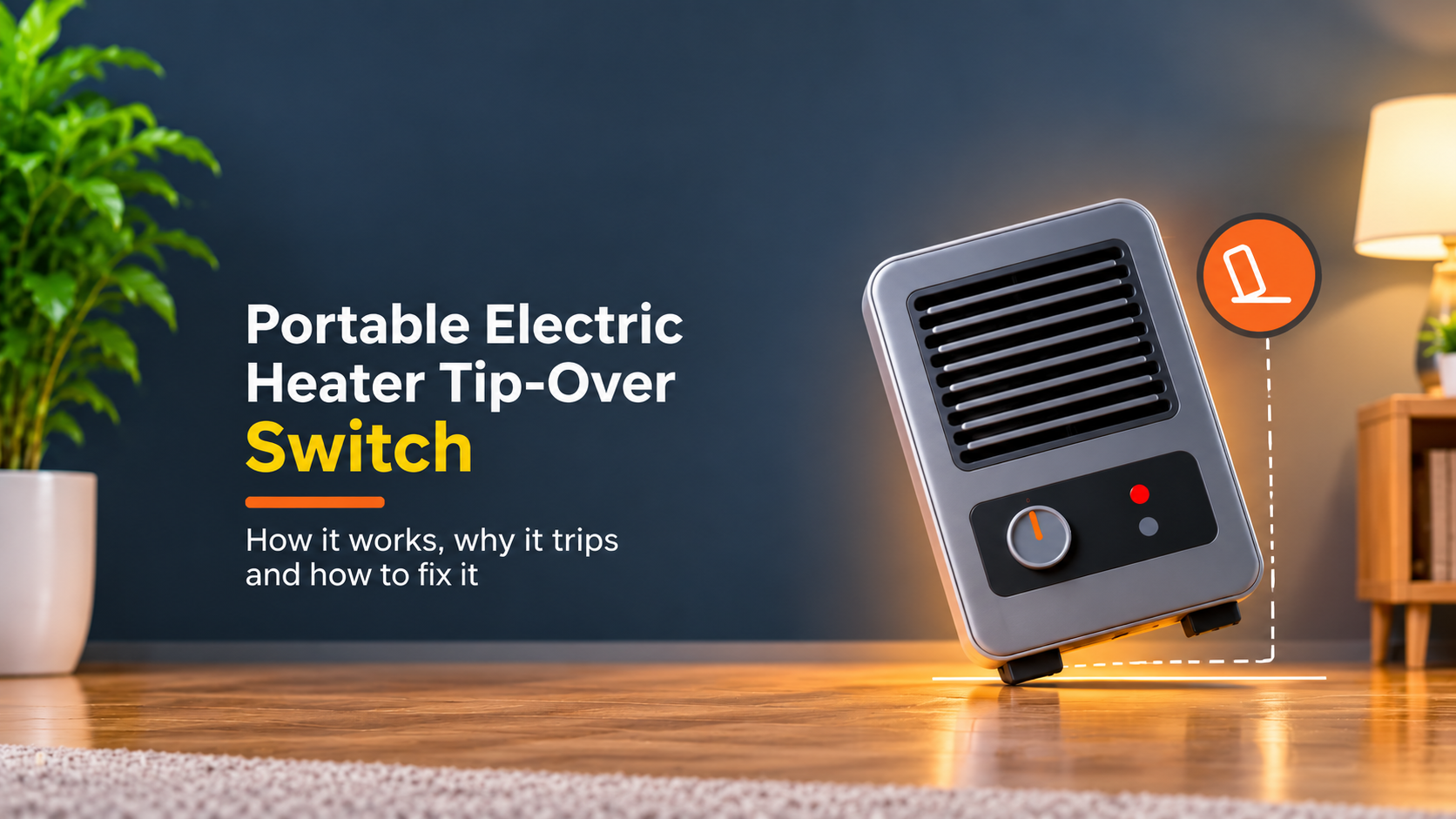
- Tip-over protection: automatically cuts power if the heater falls or is knocked over.
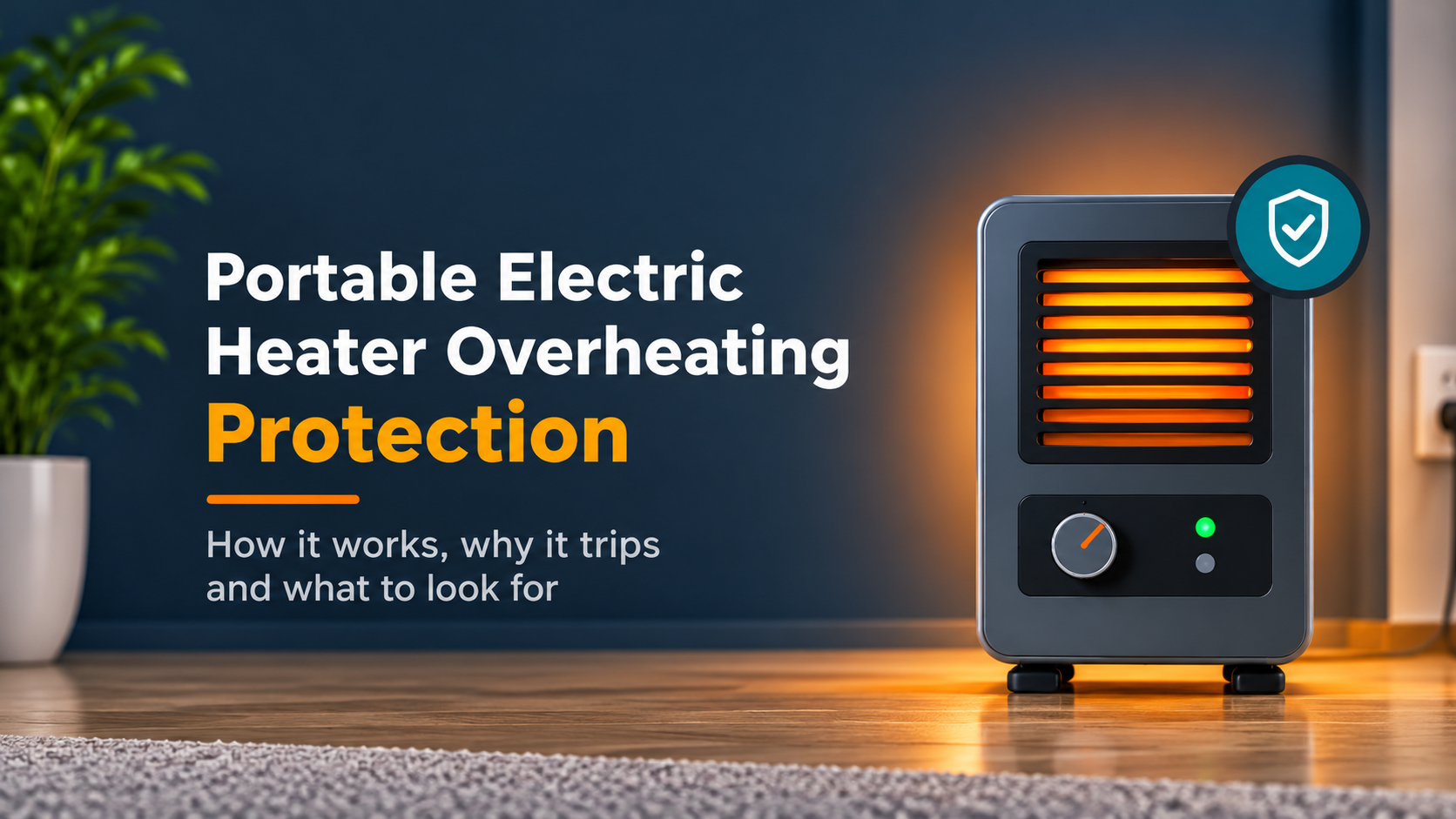
- Overheat protection: shuts the heater off if internal temperatures get too high.
- Adjustable thermostat: keeps temperatures under control and avoids constant full-power operation.
- Timer or auto shut-off: reduces the chance of a heater being left on by mistake.
- Cool-touch housing or protective guards: lower the risk of burns and accidental contact with fabric.
- Recognised safety certification: a mark from a reputable testing laboratory on the product and packaging.
- Sturdy base and a sensible cord: a stable base and a cord that is long enough to reach the wall outlet without an extension lead.
Special Situations
Bedrooms and Overnight Use
Bedrooms are risky because bedding and clothing are close by, and you can’t react to a problem while you are asleep. Pre-heat the room with a timer and switch the heater off before you sleep. If a manufacturer states that a particular model is designed for overnight use, follow its instructions exactly.
Homes with Children and Pets
Curious children and pets can knock over heaters, touch hot surfaces or chew cords. Place heaters out of reach, use models with cool-touch surfaces, and create a barrier or guard around the heater if necessary.
Garages, Workshops and Basements
These spaces often contain flammable liquids, sawdust, paint, solvents and fumes. Use only heaters designed for such environments, and keep all flammable materials far away. Never use a standard room heater near petrol, paint thinner or other volatile substances.
Rented Rooms and Older Buildings
Older wiring may struggle with the load of a modern heater. If lights dim when the heater switches on, outlets feel warm or breakers trip, don’t ignore it. Ask the landlord or an electrician to inspect the wiring.
Fuel-Burning Heaters and Carbon Monoxide
Beyond the fire risk, heaters that burn fuel can produce carbon monoxide, a colourless, odourless gas that is extremely dangerous. Only use fuel-burning heaters that are approved for indoor use, and follow the instructions on fuel type, refuelling and ventilation. For bedrooms and other sleeping areas, electric heaters are generally the safer choice. Install carbon monoxide alarms wherever fuel-burning appliances are used.
Smoke Alarms and Fire Preparedness
Even with careful use, it makes sense to be prepared.
- Install smoke alarms on every level of the home and in or near sleeping areas.
- Test them regularly and replace batteries as needed. Replace the alarms themselves when the manufacturer recommends it.
- Plan an escape route with two ways out where possible, and practise it with everyone in the household.
- Keep a suitable fire extinguisher where you can reach it easily, and learn how to use it. Choose one rated for electrical fires, and only use it if the fire is small and you have a clear exit behind you.
What to Do If a Heater Catches Fire
If a heater starts burning, your personal safety is the top priority. Heaters and the materials around them can burn quickly and produce toxic smoke.

- Cut the power only if it is safe. If you can reach the plug or the wall switch without risk, turn it off. Do not reach through flames or smoke.
- Get everyone out. Take people and pets, close doors behind you to slow the spread, and don’t stop to collect belongings.
- Call your local emergency number from a safe place outside the building.
- Never use water on an electrical fire. Water can conduct electricity and spread the fire. A suitable extinguisher can be used on a very small fire if you are trained and have a clear escape path.
- Don’t go back in until the fire service says it is safe.
After any incident, whether or not flames were involved, do not use the heater again. Have the heater, cord and the outlet inspected, and replace anything damaged.
Frequently Asked Questions
Are room heaters a fire risk?
They can be, especially when they are placed too close to flammable items, plugged into overloaded outlets, damaged or left unattended. Used correctly and kept in good condition, modern heaters with safety features can be used much more safely.
Is it safe to leave a heater on overnight?
Many safety organisations advise against it. If you need to warm a bedroom, use a timer to pre-heat the room and switch the heater off before you sleep. Always follow the manufacturer’s instructions.
How far should a heater be from the bed and curtains?
A widely recommended clearance is at least 3 feet (about 1 metre) from anything that can burn, including bedding, curtains, clothing and furniture. Check the manual for the exact distance for your model.
Can I use an extension cord with a room heater?
It is best to plug the heater directly into a wall outlet. Extension cords and power strips can overheat under a heater’s heavy load. If you have no alternative, only use one specifically rated for the heater’s power, and follow the heater manufacturer’s guidance.
Why does my heater smell like burning?
A brief smell when you first use a heater after storage can come from dust burning off the element. If the smell persists, smells like plastic or electrical burning, or comes with smoke or sparks, switch it off, unplug it and stop using it.
Which heater type is safest?
No heater is risk-free, but electric heaters with tip-over protection, overheat protection and a thermostat are generally safer for indoor use than fuel-burning models. Oil-filled radiators and panel heaters with cool-touch surfaces are popular for bedrooms, but the same placement and usage rules apply to every type.
How often should I replace a room heater?
There is no single lifespan for every model. Replace a heater if it is damaged, repaired improperly, shows warning signs, trips breakers, or is old enough that safety features may have worn out. Follow the manufacturer’s guidance for your model.
Final Thoughts
Room heaters are practical and convenient, but they demand respect. Nearly every heater fire can be traced back to ordinary, avoidable situations: a heater too close to a curtain, an overloaded power strip, a damaged cord or a unit left on when nobody was around. By choosing a heater with modern safety features, giving it plenty of space, plugging it directly into a wall outlet, keeping it clean and never leaving it unattended, you can dramatically reduce the risk.
Make safety a habit rather than an afterthought. Check your heater and its cord before each season, listen to the warning signs, test your smoke alarms and have an escape plan ready. A few minutes of care can keep you warm and your home safe all winter long.
This article is for general information only. Always follow your heater’s manufacturer instructions and the advice of your local fire and electrical safety authorities.