


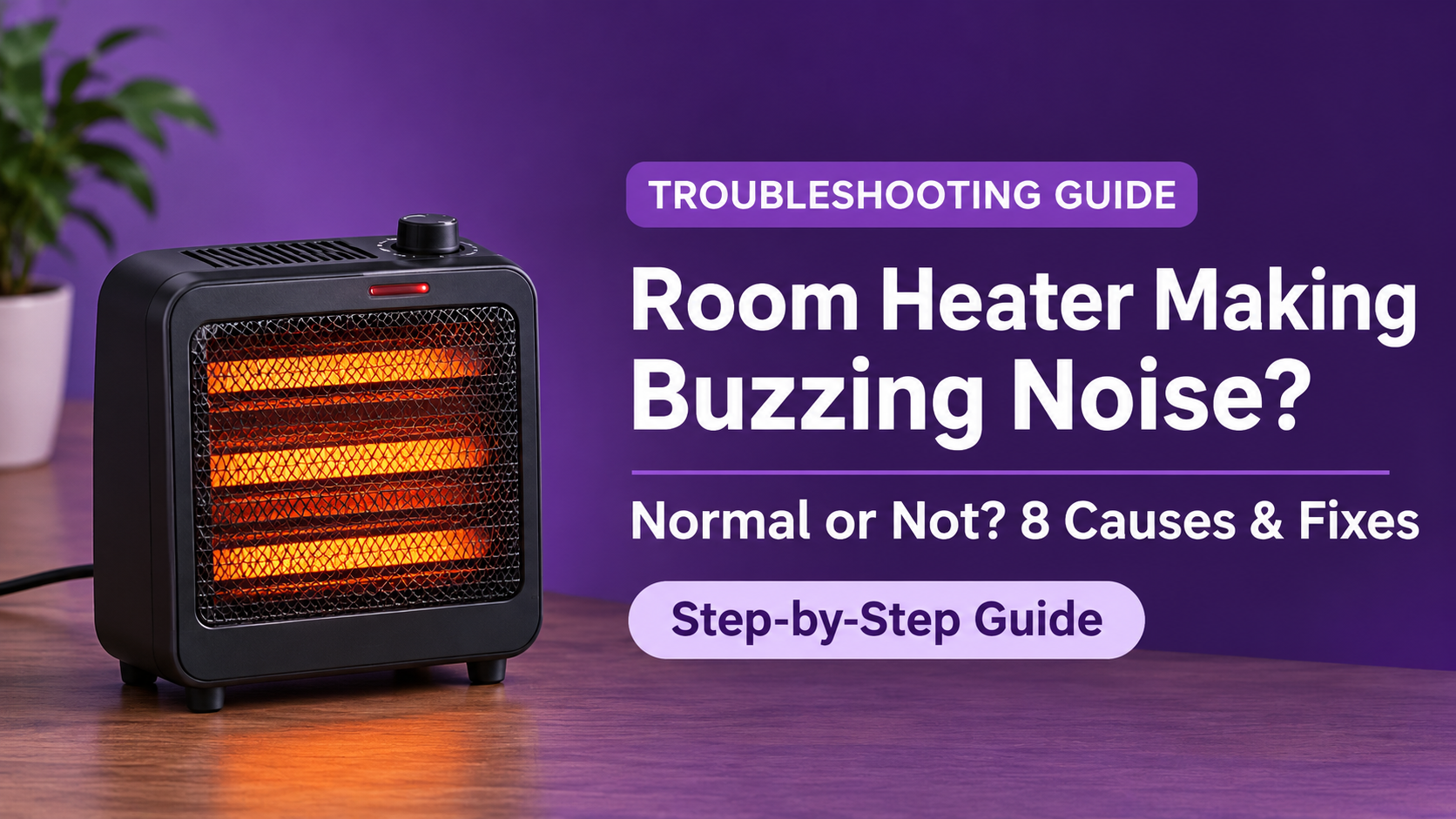

Room Heater Making Buzzing Noise? 8 Causes and Easy Fixes
A heater should bring quiet comfort, so a sudden hum or buzz can be worrying. A room heater making a buzzing noise is often caused by something simple, such as dust on the fan, a loose grille or a heater sitting on an uneven floor. In some cases, however, buzzing can point to an electrical problem that needs quick attention.
In this guide you will learn why heaters buzz, which sounds are normal, which are dangerous, how to troubleshoot step by step and when to call a technician or replace the heater.
Quick Answer: Why Is My Heater Buzzing?
The most common causes are dust or debris on the fan, loose screws or a loose grille, a worn fan motor or bearing, an uneven surface, an electrical hum from the transformer or relay, a loose plug or socket, and unstable voltage. A soft, steady hum is usually normal. Loud, growing, crackling or sizzling buzzing is not.

Normal Buzzing or Real Problem?

| Sound | Usually Means | Action |
|---|---|---|
| Soft steady hum | Normal fan or electrical hum | No action needed |
| Rattling buzz that changes with fan speed | Loose part or debris near the fan | Unplug, clean and tighten |
| Loud or rising buzz | Worn motor or bearing | Technician or replacement |
| Buzz that stops when you move the heater | Vibration against floor or wall | Place on flat surface |
| Buzzing with crackling or sizzling | Loose connection or arcing | Stop using, call a technician |
1. Fan Blade Hitting Dust or Debris
Dust and small particles collect on the fan blades and grille. Over time the fan becomes unbalanced or touches the debris, causing a buzzing or rattling sound that changes with fan speed. It can also reduce airflow and make the heater overheat.
- Switch off the heater, unplug it and let it cool for at least 30 minutes.
- Look through the grille with a flashlight for dust or small objects.
- Clean the vents and visible fan area with a soft brush or vacuum.
- Do not spray liquid or insert sharp tools.
2. Loose Grille, Cover or Screws
Fan vibration can make a loose grille, back cover or screw buzz against the body. This is one of the easiest buzzing problems to fix.
Fix: With the heater unplugged and cool, tighten visible screws and make sure the grille and covers are fully seated. Do not open sealed internal parts.

3. Worn Fan Motor or Bearing
A worn motor or dry bearing may hum, buzz, grind or squeal. The sound usually becomes louder over time, and the fan may spin slowly or unevenly. A weak fan cannot cool the inside of the heater, so the heater may overheat and shut off.
Fix: This needs professional repair or replacement. A heater with a failing motor is not worth running for long.
4. Heater Placed on an Uneven or Hard Surface
Vibration from the fan can make the whole heater buzz when it sits on an uneven floor, a thin table or touches a wall. This is a vibration noise, not a fault.
Fix: Place the heater on a flat, stable, hard surface with free space around it. Move it slightly away from walls and furniture.
5. Transformer or Electrical Hum
Digital heaters and models with electronic controls contain small transformers and power parts that may produce a faint hum. A light, steady hum that does not change is generally normal.
If the hum becomes loud, changes in pitch, or comes with heat or a smell, the control board may be failing and needs a technician.
6. Relay Chattering
A relay switches the heating element on and off. A healthy relay clicks occasionally, while a failing relay may buzz or chatter rapidly, especially with low voltage or worn contacts. A chattering relay can cause uneven heating and, over time, damage.
Fix: This is an internal electrical issue and needs professional service.
7. Loose Plug, Socket or Electrical Arcing
A loose plug or worn socket can arc, a tiny electrical spark, which creates a buzzing, crackling or sizzling sound. This is dangerous because arcing creates heat and can damage the plug, socket or wiring.
- Unplug the heater at once if you hear crackling or sizzling.
- Check the plug and socket for burn marks, melted plastic or a hot feel.
- Do not use extension cords or multi-plugs with a room heater.
- Have the socket or cord replaced by a qualified professional.
8. Low or Unstable Voltage
When the supply voltage drops or fluctuates, motors and relays may hum or buzz, and the heater can perform poorly. This is more common during peak winter load or when many heavy appliances run on the same circuit.
Fix: Plug the heater directly into a wall socket, avoid running other heavy appliances on the same circuit, and ask an electrician to check your supply if the problem happens with several appliances.
Buzzing Noise by Heater Type
| Heater Type | Common Buzz Source | Usually Normal? |
|---|---|---|
| Fan heater | Fan, loose grille, dust | Soft fan hum yes, rattling no |
| Ceramic heater | Fan, relay, controls | Light hum yes |
| Oil-filled radiator | Thermostat, vibration on floor | Very quiet is normal, buzzing is not |
| Halogen / infrared | Loose reflector, electrical hum | Faint hum yes |
Step-by-Step Troubleshooting Checklist
- Listen and find where the sound comes from: fan, body, plug or floor.
- Check if the sound changes with fan speed or heat setting.
- Unplug the heater and let it cool for at least 30 minutes.
- Clean the fan area, grille and vents with a soft brush or vacuum.
- Tighten loose grille parts and screws that are easy to reach.
- Move the heater to a flat, hard surface away from walls.
- Check the plug and socket for burn marks or heat.
- Run the heater again. If the buzzing is loud, growing or comes with a smell, stop and contact a technician.
When to Stop Using the Heater
- Buzzing with crackling, sizzling or popping
- A burning or melting plastic smell
- Sparks, smoke or visible damage
- A hot plug, cord or socket
- A fan that grinds, scrapes or stops
- A heater that buzzes and then shuts off repeatedly
Unplug the heater and never open it while it is connected to power. Heaters use high current, so internal repair should only be done by a qualified technician.
Repair or Replace?
Repair if the heater is relatively new, under warranty, or the problem is a loose part, a fan or a relay on a good-quality model.
Replace if the heater is more than 5 to 7 years old, shows electrical damage or arcing, has a failing motor or the repair cost is more than half the price of a new heater.
How to Prevent Buzzing Noise
- Clean vents and the fan area every 1 to 2 weeks in the season.
- Place the heater on a flat, stable surface.
- Keep it away from walls, curtains and furniture.
- Avoid dropping or knocking the heater.
- Use a direct wall socket and avoid extension cords.
- Store it dry and covered after winter and test it before the next season.
What to Look for in a New Room Heater
- Quiet operation, especially for bedrooms and study rooms.
- Safety features: tip-over switch, overheat protection and cool-touch body.
- Quality fan and motor with a stable, well-fitted grille.
- Quality thermostat and smooth controls.
- Right wattage for your room size.
- Warranty and local service support.
Frequently Asked Questions (FAQ)
Is it normal for a room heater to buzz?
A soft, steady hum from the fan or electronics is normal. Loud, rattling, growing or crackling buzzing is not normal and should be checked.
Why does my heater buzz when it is turned on?
The fan starts, the relay switches and electrical parts become active. A short, light buzz at startup is normal. A buzz that continues and grows is a sign of a loose part, a fan problem or an electrical fault.
Why is my heater humming but not heating?
The fan or transformer may be working while the heating element, thermostat or relay is not. Check the settings, clean the vents and, if there is still no heat, contact a technician.
Can dust cause a buzzing noise?
Yes. Dust on the fan blades or grille can cause imbalance, rattling and buzzing, and it can also make the heater overheat.
Is a buzzing heater dangerous?
A normal hum is not dangerous. Buzzing with sizzling, crackling, sparks, smoke, a burning smell or a hot plug can be dangerous, so unplug the heater and stop using it.
How do I stop my heater from buzzing?
Clean the fan area, tighten loose parts, place the heater on a flat surface and plug it directly into a wall socket. If it still buzzes loudly, have a technician check the motor, relay or wiring.
Final Thoughts
A room heater making a buzzing noise is often a small, fixable issue such as dust, a loose grille or an uneven surface. Learn to tell a normal hum from a warning sign, clean the heater regularly and keep it on a stable surface. If you hear crackling, notice a burning smell or feel a hot plug, stop using the heater at once. A professional repair or a new, quiet, well-built heater is the safest choice.