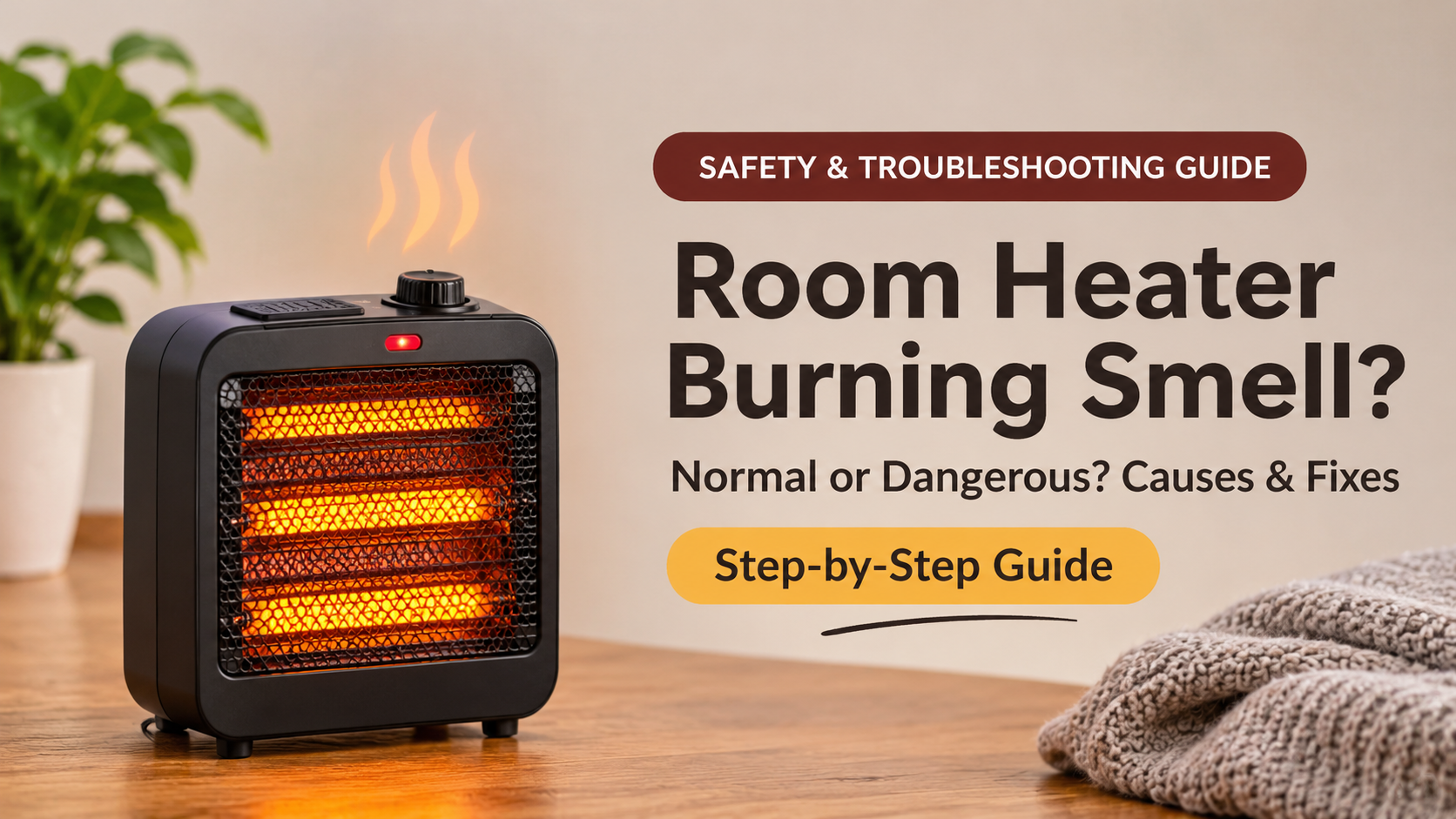

Room Heater Burning Smell? Causes, Safety Tips and Easy Fixes
You switch on your heater and suddenly the room smells like something is burning. It is a worrying moment, and you are right to take it seriously. A room heater burning smell can be completely harmless, such as dust burning off after months in storage, or it can be an early warning of overheating or an electrical fault.
In this guide you will learn why heaters smell, how to tell a normal smell from a dangerous one, what to do immediately, how to clean and fix common causes, and when to stop using the heater for good.
Quick Answer: Why Does My Heater Smell Like Burning?
The most common reason is dust and dirt burning off the heating element when you use the heater for the first time in a season. Other causes include a new-product smell, blocked vents and overheating, items too close to the heater, a dirty or failing fan motor, a hot plug or socket, burnt wiring and, in oil-filled models, an oil leak. A light dusty smell that fades in a few minutes is usually normal. A strong, sharp, fishy or plastic smell is not.

Safety First: What to Do Right Now
If the smell is strong, if you see smoke or sparks, or if anything feels hot where it should not, do not wait to find the cause.

- Switch off the heater and unplug it from the wall. Pull the plug, not the cord.
- Move people and pets away and open a window to ventilate the room.
- Let the heater cool for at least 30 to 60 minutes before touching it.
- Inspect the plug, cord and vents for melting, discoloration or damage, without opening the heater.
- If there is smoke, fire, or the smell is strong, do not use the heater again. If there is a fire, leave the area and call your local emergency number.
Normal Burning Smell or Real Danger?

| What You Notice | Likely Meaning | Action |
|---|---|---|
| Light dusty smell at first use of the season | Dust burning off the element | Normal, it should fade within minutes |
| Mild plastic or chemical smell on a new heater | New-product smell from coatings and parts | Ventilate the room, usually fades after a few uses |
| Hot dust smell that keeps coming | Dust on the element, grille or fan | Unplug, cool down and clean |
| Sharp, fishy or acrid smell | Overheated electrical parts or wiring | Unplug at once and call a technician |
| Melting plastic or rubber smell | Damaged cord, plug or internal parts | Stop using the heater |
| Smoke, sparks or discoloration | Serious fault or fire risk | Unplug and do not reuse |
1. Dust Burning Off the Heating Element
This is the most common and usually harmless cause. When the heater has been stored for months, dust settles on the heating element, grille and inside the body. When the heater heats up, the dust burns off and creates a light, dry, hot smell, similar to a toaster.
Fix: Run the heater in a ventilated room for 10 to 15 minutes and the smell should fade. To prevent it, clean the heater before storing it and again before the season starts.
2. New Heater First-Use Smell
New heaters can give off a faint plastic or chemical smell the first few times they are used, because protective coatings, lubricants and parts heat up for the first time.
Fix: Run the new heater for a short time in a well-ventilated room, away from people and pets, until the smell is gone. If the smell is strong, does not fade after a few uses or comes with smoke, stop using it and contact the seller or service center.
3. Blocked Vents and Overheating
When the air intake or outlet is blocked by dust, a cover or nearby furniture, heat cannot escape. Internal parts overheat, plastic can start to give off a smell, and the overheat protection may switch the heater off.
- Unplug the heater and let it cool for at least 30 minutes.
- Clean the grille, vents and filter with a soft brush or vacuum.
- Remove anything covering or touching the heater.
- Keep at least 3 feet of free space around the heater.
4. Items Too Close or Dropped on the Heater
Curtains, clothes, blankets, paper, pet hair or small objects touching or falling on the heater can scorch and create a burning smell. This is also a serious fire risk.
Fix: Unplug the heater, remove the item, check for scorch marks and clean the area. Never dry clothes on a heater and keep flammable items well away.
5. Dirty Fan or Failing Motor
A fan clogged with dust or a worn motor can overheat. A hot-motor smell is often sharp and electrical, and the fan may be slow, noisy or may stop. A weak fan also leads to overheating of the whole heater.
Fix: Clean the visible fan area. If the smell continues or the fan is weak, noisy or stopping, the motor needs professional repair or replacement.
6. Hot Plug, Cord or Socket
A loose plug, worn socket, thin extension cord or damaged cable can overheat and melt, producing a plastic or rubber burning smell. This is one of the most dangerous causes.
- Unplug the heater and check the plug and cord for melting, black marks or soft spots.
- Check the wall socket for discoloration or a hot feel.
- Never use extension cords or multi-plugs with a room heater.
- Replace a damaged cord, plug or socket through a qualified professional.
7. Burnt Wiring or Internal Electrical Fault
Loose connections, damaged insulation or a failing control board can overheat inside the heater. The smell is often sharp, acrid or fishy, and may come with buzzing, crackling, flickering, or the heater shutting off.
Fix: Stop using the heater. This is not a do-it-yourself repair. In most cases, replacing the heater is the safest choice.
8. Oil Leak in Oil-Filled Heaters
Oil-filled radiators are sealed, but a crack or leak can drop oil on a hot surface and create a burning oil smell. You may notice oil stains or drips under the heater.
Fix: Unplug the heater, keep it away from the floor and flammable surfaces, and stop using it. Oil-filled heaters with leaks should be replaced or inspected by a professional.
Burning Smell by Heater Type
| Heater Type | Common Smell Cause | Usually Normal? |
|---|---|---|
| Fan heater | Dust on element, dirty fan, blocked vents | Light dusty smell yes, sharp smell no |
| Ceramic heater | Dust, new-product smell, overheating | Light smell at first use yes |
| Oil-filled radiator | New-product smell, oil leak | Light smell at first use yes, oil smell no |
| Halogen / infrared | Dust on tube or reflector | Light smell at first use yes |
Step-by-Step Troubleshooting Checklist
- Switch off and unplug the heater, then ventilate the room.
- Let the heater cool for at least 30 to 60 minutes.
- Check the plug, cord and socket for heat, melting or black marks.
- Look for scorch marks, melted parts, stains or leaks on the heater body.
- Clean the vents, grille and visible fan area with a soft brush or vacuum.
- Remove anything near or on the heater and place it on a flat, hard surface.
- Test the heater for 10 to 15 minutes in a ventilated room while you stay nearby.
- If the smell is strong, comes back, or you see smoke or sparks, stop using the heater and contact a technician or replace it.
When to Stop Using the Heater for Good
- A strong, sharp, fishy or plastic burning smell
- Smoke, sparks, flames or flickering
- A melted, hot or discolored plug, cord or socket
- Buzzing or crackling sounds with the smell
- Scorch marks or melted plastic on the heater
- Oil leaks from an oil-filled heater
- Small electric shocks when touching the heater
Never open the heater while it is plugged in. Heaters use high current, so internal repairs should only be done by a qualified technician.
Repair or Replace?
Repair if the smell was caused by dust or a blocked vent and went away after cleaning, or if a qualified technician confirms a simple, safe fix on a good-quality or newer heater.
Replace if the heater has melted parts, burnt wiring, a damaged cord, a leaking oil radiator, a failing motor, is more than 5 to 7 years old, or the repair costs more than half the price of a new heater.
How to Prevent Burning Smells
- Clean the heater before storing it and again before the cold season.
- Clean vents and the grille every 1 to 2 weeks while in use.
- Keep at least 3 feet of clear space around the heater.
- Never cover the heater or dry clothes on it.
- Plug directly into a wall socket and avoid extension cords.
- Do not leave the heater running while you sleep or when you are away.
- Store it in a dry, covered place after winter.
What to Look for in a New Room Heater
- Safety features: tip-over switch, overheat protection and cool-touch body.
- Good build quality with a strong cord, plug and grille.
- Right wattage for your room size so it does not overwork.
- Quality thermostat with timer and auto shut-off.
- Flame-resistant materials and certified safety markings from your region.
- Warranty and local service support.
Frequently Asked Questions (FAQ)
Is it normal for a room heater to smell like burning?
A light dusty or hot smell for the first few minutes of the first use of the season is normal. A strong, sharp, plastic or fishy smell is not normal and needs attention.
Why does my heater smell like burning dust?
Dust on the heating element, grille or inside the heater burns off as the heater heats up. Clean the heater regularly to reduce the smell.
Why does my new heater smell?
New heaters can give off a faint plastic or chemical smell the first few times because coatings and parts heat up. Ventilate the room. If the smell is strong or does not fade, stop using it and contact the seller.
Why does my heater smell like burning plastic?
Possible causes are a melting plug or cord, overheating internal parts or an item touching the heater. Unplug it at once and do not reuse it until a professional has checked it.
Can a heater with a burning smell cause a fire?
Yes, if the cause is overheating, a damaged cord, burnt wiring or flammable items near the heater. Treat a strong or lasting burning smell as a warning.
How long should the burning smell last?
A normal dust smell fades within a few minutes. If it lasts longer, returns, grows stronger or comes with smoke or noise, stop using the heater.
Is it safe to sleep with a heater that smells like burning?
No. Never leave a heater running while you sleep, and never use a heater that has a strong or lasting burning smell.
Final Thoughts
A room heater burning smell is not always dangerous, but it should never be ignored. A light dusty smell at the start of the season is normal. A strong, sharp, plastic or fishy smell, smoke or a hot plug is a clear signal to unplug the heater at once. Clean your heater regularly, keep the area around it clear and use a direct wall socket. If you have any doubt, stop using the heater and choose a professional repair or a new, well-built heater with proper safety features.