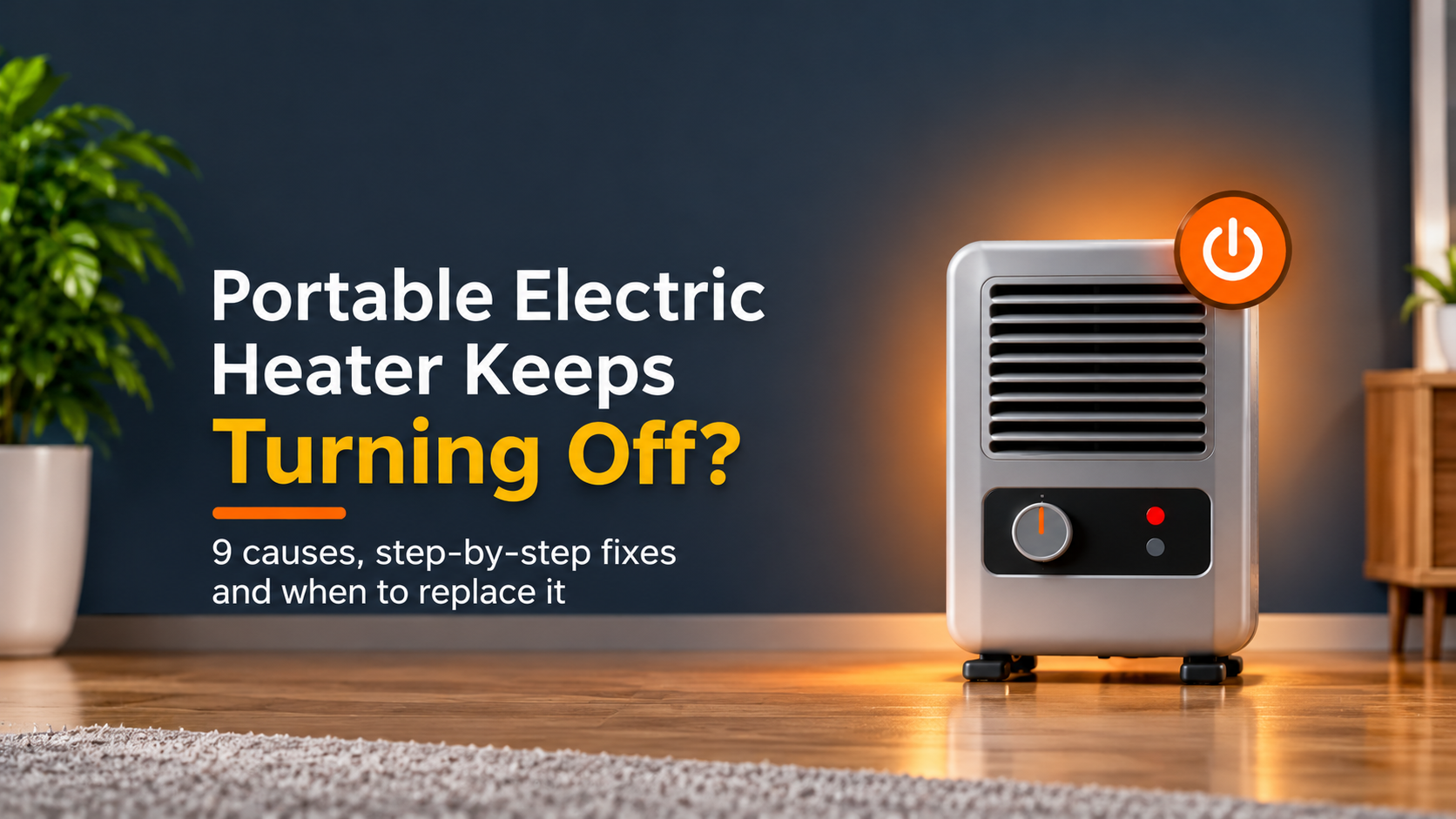
Portable Electric Heater Keeps Turning Off? 9 Causes and How to Fix Them
You switch on your portable electric heater, the room starts to warm up, and then it clicks off. A few minutes later it happens again. It is frustrating, especially on a cold night, and it is natural to wonder if the heater is broken or even unsafe.
Here is the reassuring part: in most cases, the heater is doing exactly what it was designed to do. Modern portable heaters include several safety systems that cut the power the moment something looks wrong. The trick is working out what is triggering them. This guide explains the nine most common reasons a portable electric heater keeps turning off, shows you how to test each one, and tells you when it is time to stop troubleshooting and replace the unit.
A portable electric heater that keeps shutting off is usually caused by one of five things: blocked vents or a dirty filter (overheat protection), the heater sitting on an uneven surface (tip-over switch), an overloaded circuit, the thermostat or timer working normally, or a damaged cord or plug. Unplug the heater, let it cool for 30 minutes, clean the vents, place it on a flat hard floor and plug it directly into a wall outlet that nothing else is using. That fixes the problem in a large share of cases.
In this guide you will learn:
- How the safety systems inside a portable heater work
- The 9 most common reasons for unexpected shut-offs, with signs and fixes
- A step-by-step troubleshooting routine you can finish in 15 minutes
- How to tell normal thermostat cycling from a real fault
- When to repair, when to replace, and what to look for in a new heater
Why Portable Heaters Shut Off on Their Own
An electric heater converts almost all of the electricity it uses into heat, and that heat has to go somewhere. If air cannot flow through the heater, if the heater falls over, or if the electrical supply is under strain, temperatures inside the casing can climb quickly. To prevent fires and burns, manufacturers fit several protective devices, and each one can switch the heater off.
Knowing these protections exist changes how you read the problem. A shut-off is not random. It is a signal, and the pattern of the shut-off (how long the heater runs, what it was sitting on, whether it restarts alone) usually points straight at the cause.
9 Common Reasons Your Portable Electric Heater Keeps Turning Off
1. Dust is clogging the vents, filter or fan
This is the number one cause. Over time, dust, pet hair and lint collect on the intake grille, the air filter (if your model has one) and the fan blades. Airflow drops, the internal temperature rises, and the overheat cut-out switches the heater off. Once it cools, the heater may restart, run for a while and shut off again.
Signs: the heater runs for 5 to 30 minutes, the casing feels very hot, airflow seems weak, or you notice a dusty or slightly burnt smell.
Fix: Unplug the heater and let it cool completely. Vacuum the intake and outlet grilles with a brush attachment, wash or wipe the filter if the manual allows it, and use a soft brush or compressed air to remove dust from the fan area. Never use water on internal parts.
2. Airflow is blocked by where the heater is placed
Even a clean heater can overheat if it sits too close to a wall, sofa, curtain, bed or a pile of laundry. Anything that covers the outlet grille traps hot air and forces the heater to cut out. Placing a heater in a tight corner or under a desk has the same effect.
Signs: the heater shuts off soon after you move it into a new spot, or the nearby wall or furniture feels hot.
Fix: Keep at least 3 feet (about 1 metre) of clear space around the heater, in front and on the sides. Keep it away from fabrics, paper and anything flammable.
3. The tip-over switch is being triggered
Every modern portable heater has a tilt or tip-over switch that cuts power if the unit falls. These switches can be sensitive. A heater on thick carpet, a rug edge, a slightly sloped floor or a wobbly surface can tilt just enough to trip it. Dust or debris around the switch can also make it stick.
Signs: the heater turns off after being bumped or moved, or it only shuts off when standing on carpet.
Fix: Move the heater to a flat, hard, stable surface. Check that all feet or wheels are in place and that nothing is wedged underneath. If the switch is accessible on the base, gently clear any dust from around it.
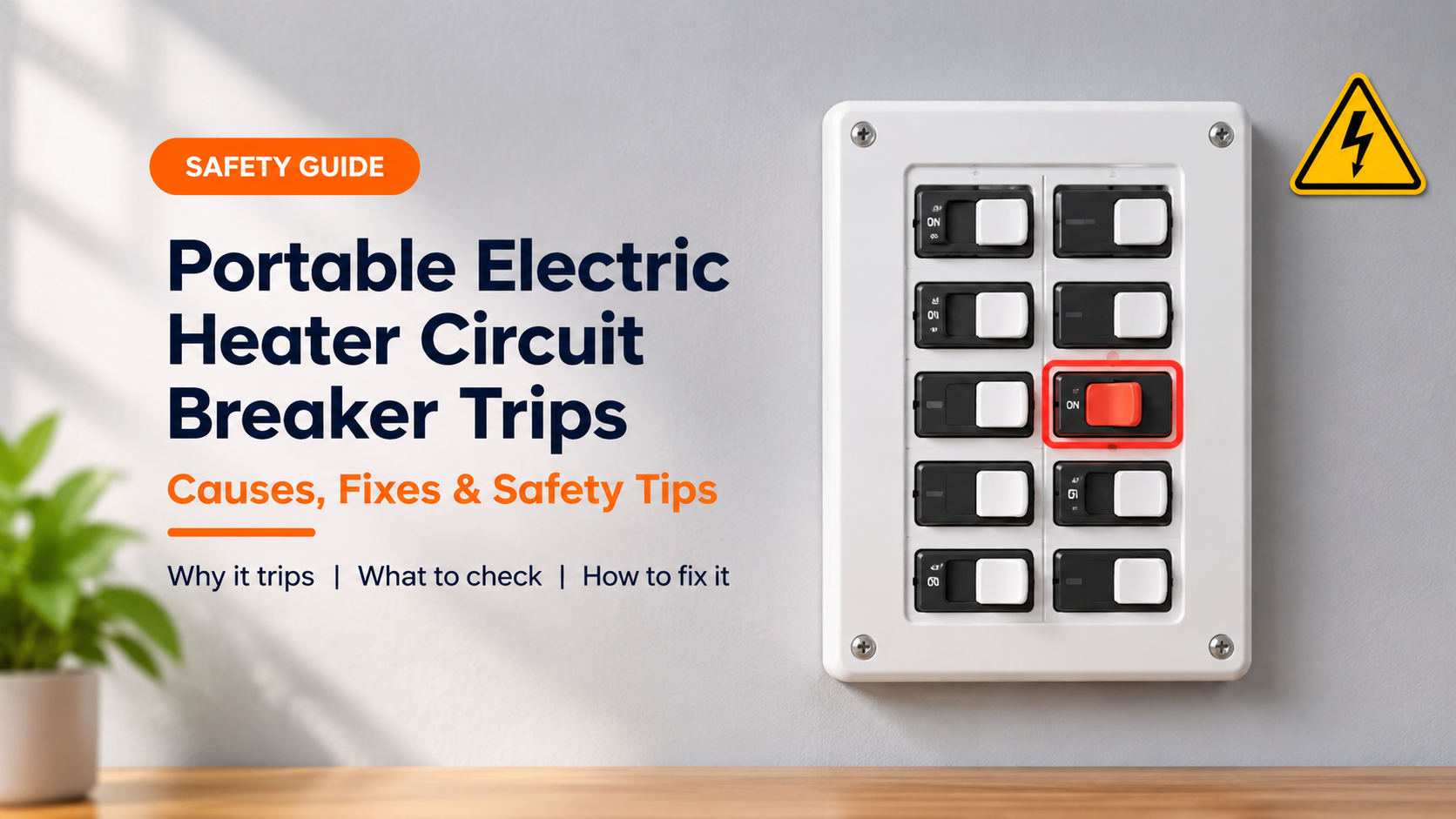
4. The circuit is overloaded or the breaker is tripping
A typical 1,500 watt heater draws about 12.5 amps on a 120 volt circuit. A standard 15 amp circuit should carry no more than about 12 amps continuously, so a heater alone sits right at the limit. Add a vacuum cleaner, microwave, kettle, hair dryer or even a TV and computer on the same circuit, and the breaker can trip, which cuts power to the heater.
Some outlets and breakers are also fitted with arc-fault (AFCI) or ground-fault (GFCI) protection, which can trip on the small electrical noise that heater thermostats naturally create. If the heater works fine on a different circuit, this is the likely cause.
Signs: a click at the breaker panel, other devices going dead in the same room, or the heater shutting off when another appliance starts.
Fix: Plug the heater into a wall outlet on a different circuit, and make sure nothing else heavy is running on that circuit. Do not keep resetting a breaker that trips repeatedly. If it keeps happening, have a qualified electrician check the wiring.
5. An extension cord or power strip is being used
Most heater manuals say to plug the heater directly into a wall outlet, and for good reason. Extension cords and power strips add resistance, and a heater pulls so much current that the cord itself can overheat. Many power strips have their own built-in breaker that trips well before the wall breaker does.
Signs: the cord or strip feels warm or hot, the strip’s reset button pops out, or the heater works when plugged straight into the wall.
Fix: Plug the heater directly into the wall. If you absolutely must use an extension cord, use a short, heavy-duty one rated for at least the heater’s wattage, fully uncoiled, and check it often for heat.
6. The plug, cord or outlet is damaged or worn
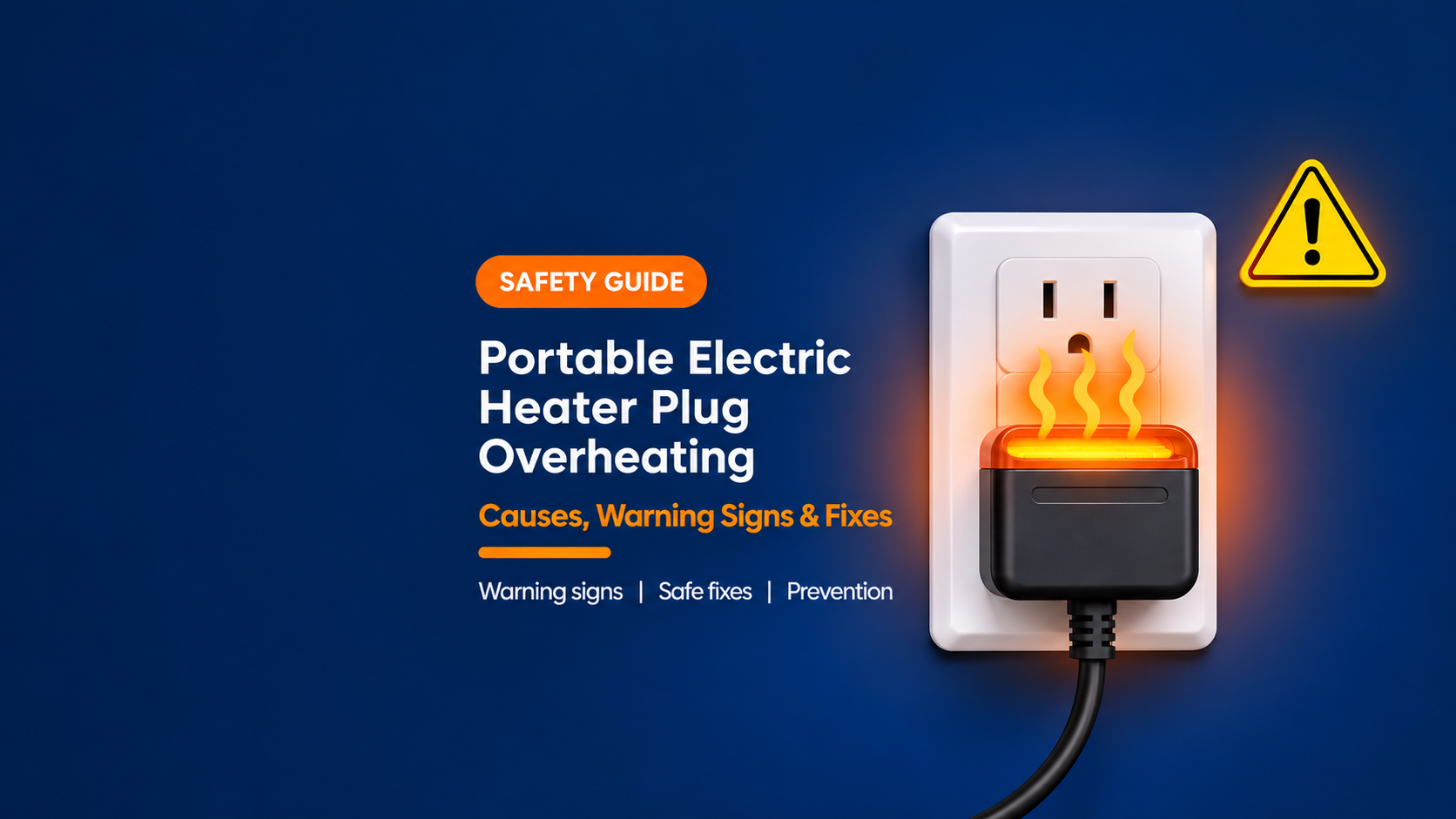
A loose outlet, a bent plug prong or a frayed cord creates resistance, and resistance creates heat. Many heaters now use a plug with a built-in leakage protection device (the type with TEST and RESET buttons). If that device senses a fault, it cuts the power at the plug itself.
Signs: the plug is too hot to hold, looks discolored or melted, the outlet is warm or buzzes, the heater cuts out when you move the cord, or the reset button on the plug keeps popping.
If the plug, cord or outlet shows melting, scorching or a burning smell, unplug the heater immediately and stop using it. Do not try to repair a heater cord yourself.
7. The thermostat is simply doing its job
Not every shut-off is a fault. A thermostat switches the heating element off when the room reaches your set temperature and switches it back on when the room cools. If the room is small, well insulated or already fairly warm, you may see the heater cycle on and off often. A heater placed near a draft, a window or another heat source can also be fooled by its own temperature sensor.
Signs: the heater turns off when the room feels comfortable and restarts by itself later, with no overheating or tripped breaker.
Fix: Raise the set temperature a few degrees, or switch to a continuous heating mode if your model has one. Move the heater away from drafts, doors and direct sunlight so the sensor reads the real room temperature.
8. A timer, ECO mode or auto shut-off setting is active
Many heaters include a timer that switches them off after 1 to 12 hours, plus ECO or smart modes that cycle power to save energy. A remote control or app schedule that was set up earlier can also silently turn the heater off. Some models even reset to a default timer after a power cut.
Signs: the heater turns off at regular, predictable times, and the display shows a timer icon or ECO light.
Fix: Check the display and remote, cancel any timer, turn off ECO mode, and reset the heater to its default settings following the manual.
9. A thermostat, thermal fuse or internal part has failed
If you have worked through everything above and the heater still shuts off, an internal component is probably failing. A worn thermostat can read the temperature wrongly. A thermal fuse, which is a one-time safety part, may have blown. A failing fan motor can reduce airflow and cause overheating even when the vents are clean. Heating elements and wiring also weaken with age, and many inexpensive heaters last only a few seasons of regular use.
Signs: the heater shuts off within seconds or minutes in every location and on every outlet, makes grinding or rattling noises, or does not heat at all.
Never open a heater to bypass a thermostat, thermal fuse or tip-over switch. These parts are what stand between a minor fault and a fire. If the heater is under warranty, contact the seller or manufacturer. If it is out of warranty, replacing it is usually the safest and most economical choice.
Step-by-Step Troubleshooting Routine
Use this routine to find the cause quickly, working from the easiest checks to the hardest. Always unplug the heater and let it cool before touching it.
- Unplug and cool down. Leave the heater unplugged for at least 30 minutes. This resets any overheat protection that is temporarily triggered.
- Inspect the plug and cord. Look for discoloration, bent prongs, cracks or soft spots. Replace the heater if you find damage.
- Clean the heater. Vacuum the grilles, clean the filter and brush dust from the fan area.
- Reposition it. Place it on a flat, hard surface with 3 feet (1 metre) of clear space around it.
- Use a wall outlet. Remove any extension cord or power strip and use a circuit that is not shared with other high-power appliances.
- Check the settings. Turn off the timer and ECO mode and set the thermostat to its highest setting for a test.
- Run a test. Run the heater for 30 minutes while staying in the room. Note how long it runs before shutting off, and whether the casing, plug or cord gets unusually hot.
Quick Diagnosis Table
| What you notice | Most likely cause | First thing to try |
|---|---|---|
| Shuts off after 5 to 30 minutes, casing very hot | Overheat protection (dust or blocked airflow) | Clean vents and filter, clear space around the heater |
| Shuts off after being bumped or on carpet | Tip-over switch | Move to a flat, hard surface |
| Breaker clicks or other devices lose power | Overloaded circuit | Use a different circuit with nothing else running |
| Cord or power strip feels hot | Extension cord or strip overload | Plug directly into the wall |
| Plug is hot or discolored, reset button pops | Damaged plug, cord or outlet | Stop using it and have it inspected |
| Turns off when room is warm, restarts later | Normal thermostat cycling | Raise the set temperature, move away from drafts |
| Turns off at the same time every day | Timer, ECO mode or schedule | Cancel the timer and reset to defaults |
| Shuts off within seconds everywhere | Failed thermostat or thermal fuse | Contact the maker or replace the heater |
When to Stop Using Your Heater and Replace It
Troubleshooting is worth the effort, but there are clear signs that a heater has reached the end of its life. Stop using it and replace it if you notice any of the following:
- A melted, scorched or discolored plug, cord or outlet
- A persistent burning smell that does not fade after the first few uses
- Sparks, crackling or visible flames inside the grille
- Shut-offs that continue after cleaning, repositioning and testing on a different circuit
- A cracked casing, loose internal parts or a fan that grinds
- An age of many years, combined with repeated shut-offs
Most portable heaters are not worth repairing. The parts are sealed, replacement thermostats and fuses are hard to source, and a poor repair can create a fire risk. If your heater is still within its warranty, contact the manufacturer or seller first. Otherwise, replacement is usually the safer choice.
How to Stop Your Heater From Shutting Off Again
A little regular care keeps a heater running reliably and safely for much longer.
- Every week during use: wipe the casing and check that the vents are free of dust.
- Every month: vacuum the grilles and filter, and inspect the plug and cord.
- At the start and end of each season: do a deep clean, check for damage and store the heater in a dry place, ideally in its original box.
- Every time you use it: place it on a flat, hard surface, plug it directly into the wall and keep it clear of fabrics and furniture.
- Never leave it unattended for long periods, and do not run it while you sleep unless the manual clearly says it is designed for that.
Choosing a Reliable Replacement Heater
If your heater has reached the end of its life, a few features make a big difference to both safety and reliability.
- Safety certification: look for recognised safety marks for your country on the heater and the plug.
- Overheat protection and a tip-over switch: both should be listed in the specifications.
- An adjustable thermostat: this gives you control and reduces unnecessary cycling.
- A removable, washable filter or easy-to-reach vents: easy cleaning means fewer overheating shut-offs.
- A thick, well-made cord and plug: a heavier cord handles the current better.
- The right wattage for the room: a common rule of thumb is about 10 watts per square foot of floor space, so a 150 square foot room needs roughly 1,500 watts.
| Heater type | Best for | Why it might shut off | Things to know |
|---|---|---|---|
| Ceramic fan heater | Fast heat in small to medium rooms | Dusty intake, blocked airflow, tip-over switch | Heats quickly, but needs regular cleaning |
| Oil-filled radiator | Steady, quiet heat in bedrooms | Overheat cut-out if covered, thermostat cycling | Slow to warm up, but holds heat well |
| Infrared / radiant heater | Heating people directly in one spot | Tip-over switch, overheat protection | Warms objects and people, not the whole room |
| Panel / convection heater | Quiet, even background heat | Thermostat cycling, timer settings | Low surface temperature and low noise |
Frequently Asked Questions
Why does my space heater turn off after a few minutes?
The most common reason is overheat protection. Dust on the vents or filter, or a heater placed too close to a wall or furniture, reduces airflow and the internal temperature rises until the safety cut-out switches the heater off. Cleaning the vents and giving the heater more space usually fixes it.
Is it normal for a portable heater to turn on and off by itself?
Yes, if it is doing so because of the thermostat. When the room reaches your set temperature, the heater switches off, and it switches on again when the room cools. It is not normal if the heater shuts off while the room is still cold, if the casing is extremely hot, or if the breaker trips.
Why does my heater keep tripping the breaker?
A heater draws a lot of power, and other appliances on the same circuit can push the total over the breaker’s limit. Try a different circuit with nothing else running. If the breaker still trips, the heater or the wiring may be faulty and should be checked by a professional.
Can a dirty filter make a heater shut off?
Yes. A clogged filter restricts airflow, which makes the heater overheat and triggers the safety cut-out. Cleaning the filter is one of the simplest and most effective fixes.
Should I use an extension cord with my space heater?
It is best not to. Heaters draw a high current and extension cords or power strips can overheat. Plug the heater directly into a wall outlet whenever you can.
How long do portable electric heaters last?
It depends on the model and how often it is used. Many inexpensive heaters last only a few seasons, while better-built ones, particularly oil-filled radiators, often last much longer with regular cleaning and careful use.
Can I reset my portable heater?
Many heaters reset automatically once they cool down. Otherwise, unplug the heater for 30 minutes and plug it back in. Models with a reset button on the plug or casing can be reset by pressing it after the cause of the shut-off has been dealt with.
Final Thoughts
When a portable electric heater keeps turning off, it is almost always protecting you from something: restricted airflow, an unstable surface, an overloaded circuit or a damaged cord. Start with the simple fixes, which are cleaning the vents, moving the heater to a flat surface and plugging it straight into the wall. They solve most cases. If the heater still shuts off, or if you see signs of damage or overheating, stop using it and replace it. A new heater costs far less than the damage a faulty one can cause.
This article is for general information only. Always follow the manual for your specific heater, and have a qualified electrician look at any repeated breaker trips or signs of damaged wiring.