








How to Prevent Pillows from Going Flat: 12 Simple Tips That Work
A good pillow keeps your head and neck properly supported, which helps you sleep comfortably and wake up without stiffness. But even the best pillow can lose its shape. One day it feels soft and full, and a few months later it looks thin, lumpy, and lifeless.
The good news is that flat pillows are mostly preventable. In this guide, you will learn how to prevent pillows from going flat, why it happens, how to care for each pillow type, how to wash and dry pillows correctly, when to replace them, and which habits keep them fluffy for much longer.
Why Do Pillows Go Flat?
To protect your pillows, you first need to know what damages them. A pillow goes flat when the fill loses its loft, which is its ability to spring back and fill space. The main causes are:
- Nightly compression. Your head presses on the pillow for six to eight hours every night, gradually breaking down and squashing the fill.
- Sweat and moisture. Body heat, sweat, and humidity make fill clump together and lose bounce.
- Improper washing and drying. Washing with too much detergent, using high heat, or drying a pillow only partly can leave the fill matted or mildewed.
- Low-quality fill. Cheap fiberfill and low-density foam break down much faster than quality materials.
- Age. Every pillow has a lifespan. Over time the fill breaks down no matter how well you care for it.
- Lack of fluffing and rotating. Using the same pillow the same way every night concentrates pressure in one spot.
- Sleeping position and habits. Folding, hugging, or bunching up your pillow strains the fill.
- Storing pillows poorly. Crushed in a closet or in a damp spot, pillows lose shape quickly.
12 Ways to Prevent Pillows from Going Flat
1. Fluff Your Pillows Every Morning
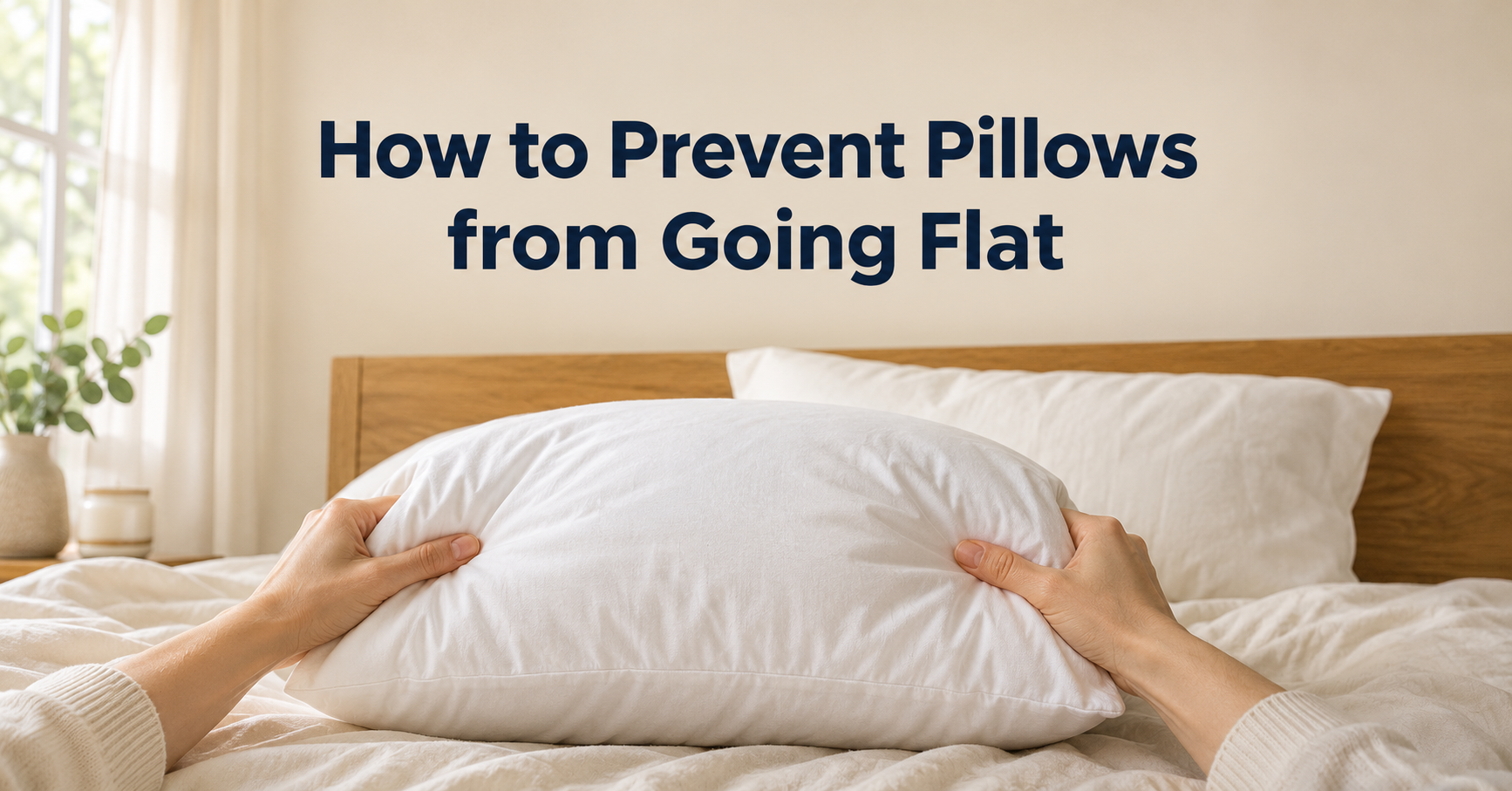
This is the easiest and most effective habit. Each morning, hold the pillow by the sides, squeeze and shake it, then punch and pat it back into shape. Fluffing breaks up clumps and redistributes the fill so that it can recover from the night’s compression. It takes less than a minute.
2. Rotate and Flip Your Pillows
If you have more than one pillow, rotate them regularly. Flip each pillow and turn it end to end every few days so that wear is spread evenly. This stops one area from always taking the pressure.
3. Use a Pillow Protector and a Pillowcase
A breathable, zippered pillow protector acts as a barrier against sweat, body oils, and dust, which are the things that make fill clump and wear out. Add a pillowcase on top and wash it weekly. Washing the case and protector is far easier than washing the pillow itself.
4. Wash Your Pillows the Right Way
Check the care label first. Many down, feather, and polyester pillows can go in a washing machine, but memory foam and latex should never be machine washed. For washable pillows, wash two at a time to keep the drum balanced, use a small amount of gentle detergent, and run an extra rinse cycle to remove soap, which can leave fill sticky and heavy.
5. Dry Pillows Completely
Moisture trapped inside a pillow is one of the main causes of flat, smelly pillows. Dry on low heat and stop to fluff and reshape every 20 to 30 minutes. Add a few clean dryer balls or tennis balls in a clean sock to break up clumps and restore volume. Never use a pillow that is even slightly damp inside.
6. Air Out Pillows in Fresh Air and Sunlight
Take pillows outside on a dry, breezy day, ideally in indirect sun, for an hour or two. Fresh air releases moisture and odors and helps the fill loosen up. Do not leave them out too long in strong direct sunlight, as it can weaken some fabrics.
7. Choose the Right Pillow for Your Sleeping Position
A pillow that does not suit your sleeping style gets squashed faster. Side sleepers typically need a higher loft and firmer support, back sleepers do best with medium loft, and stomach sleepers need a thin, soft pillow. A good fit means less crushing and better comfort.
8. Buy Quality Fill
Higher-quality fill holds its shape better. Good down, quality down alternative, shredded latex, and dense memory foam usually last longer than cheap fiberfill. It costs more upfront but often saves money over time.
9. Keep the Bedroom Dry
High humidity makes fill damp and encourages mildew. Keep the bedroom well ventilated and, if needed, use a dehumidifier. Let the bed air out for a few minutes before making it in the morning.
10. Avoid Using Pillows for Things They Were Not Made For
Sitting on pillows, squashing them against the headboard, or using them as props damages the fill. Use separate cushions for lounging and reading.
11. Store Pillows Properly
If you store spare pillows, put them in breathable cotton bags in a cool, dry spot. Avoid vacuum-sealing them for long periods, because compression can permanently flatten the fill. Never store pillows in damp basements or garages.
12. Replace Pillows on Time
Even with perfect care, pillows wear out. Replace them when they will not bounce back, are lumpy, are stained, or smell even after washing. Using an old pillow can strain your neck and disrupt your sleep.
Care Guide by Pillow Type
Different fills behave differently. Use this table to match your pillow type with the best care approach:
| Pillow Type | Why It Goes Flat | How to Keep It Fresh | Typical Lifespan |
|---|---|---|---|
| Down | Clusters clump and compress | Fluff daily; wash gently and dry fully with dryer balls | 5 to 10 years with good care |
| Feather | Quills break and flatten | Fluff often; air out in the sun; wash carefully | 3 to 5 years |
| Down alternative / Polyester | Fibers mat and clump | Fluff daily; machine wash and dry on low with dryer balls | 1 to 3 years |
| Memory foam | Foam softens and loses springback | Spot clean only; air out; do not wash in the machine | 2 to 4 years |
| Latex | Material wears and crumbles with age | Air out; use a protector; replace when it crumbles | 3 to 5 years |
| Buckwheat | Hulls break down into dust | Empty and refresh hulls; keep dry | 2 to 3 years, hulls refreshed as needed |
How to Wash and Fluff a Pillow Step by Step
- Read the label. Confirm the pillow is machine washable.
- Pretreat stains. Dab a little mild detergent on stains and let it sit a few minutes.
- Load two pillows. This balances the machine.
- Use gentle settings. Choose a warm, gentle cycle with a small amount of mild liquid detergent.
- Add a second rinse. This removes all soap residue.
- Press out water. Gently squeeze, never twist or wring the pillow.
- Dry on low. Add dryer balls or clean tennis balls.
- Pause and fluff. Break up clumps every 20 to 30 minutes.
- Check for dryness. Make sure the middle is completely dry before use.
How to Tell If Your Pillow Is Worn Out
Try the fold test. Fold the pillow in half and squeeze the air out. When you let go, a healthy pillow springs back quickly. If it stays folded or opens slowly, the fill has lost its loft and the pillow should be replaced.
Other signs that a pillow has reached the end of its life include permanent lumps, yellow stains, a lingering odor, waking up with neck pain, and a pillow that needs constant bunching to feel comfortable.
Common Mistakes That Flatten Pillows
- Washing foam pillows in a machine. This can break down the foam.
- Using too much detergent. Residue makes fill stiff and clumpy.
- Drying on high heat. Heat can damage fill and shrink the cover.
- Skipping the full dry. Damp fill leads to mildew and flatness.
- Never fluffing. Compressed fill stays compressed.
- Keeping a pillow too long. Old pillows lose support no matter what you do.
- Ignoring the pillow protector. Sweat and oils shorten pillow life.
Helpful Products for Longer-Lasting Pillows
These products make pillow care easier and help protect the fill:
- Breathable zippered pillow protector: keeps sweat, oils, and dust out of the pillow.
- Wool or rubber dryer balls: break up clumps and speed up drying.
- Spare pillowcases: make weekly washing easy.
- Mild liquid detergent: gentle on fill and easy to rinse out.
- Adjustable-fill pillow: lets you add or remove fill to refresh the loft.
- Pillow refill fiber or down: useful for topping up a thinning pillow.
- Dehumidifier: keeps bedroom humidity under control.
- Cotton storage bags: let spare pillows breathe while stored.
Can You Revive a Flat Pillow?
Sometimes. If the pillow is still in good condition, try this: fluff it thoroughly, air it out in the sun, then wash and dry it correctly with dryer balls. Many down, feather, and polyester pillows recover well. Adjustable-fill pillows can be topped up with extra fill. If the pillow fails the fold test after all of this, replacement is the best option.
Frequently Asked Questions
Why do my pillows go flat so quickly?
Most pillows flatten because the fill gets compressed night after night and absorbs moisture from sweat and humidity. Low-quality fill, poor washing, and lack of fluffing speed it up.
Can a flat pillow be fixed?
Often yes. Fluffing, airing it out in the sun, and washing and drying it correctly with dryer balls can restore the loft of many down, feather, and polyester pillows. If it fails the fold test, it is time to replace it.
How often should I fluff my pillow?
Fluff it every morning. It only takes a few seconds and helps the fill spread back out and recover.
How often should I wash pillows?
Wash most washable pillows every three to six months, and wash pillowcases weekly. Use a pillow protector to extend the time between washes.
Should I put pillows in the dryer?
If the care label allows it, yes. Use low heat and add clean dryer balls or tennis balls to break up clumps. Make sure the pillow is completely dry to avoid mildew.
How long do pillows last?
Most pillows last one to three years, though high-quality down and latex pillows can last longer with good care. Replace a pillow when it will not hold its shape, has lumps, or smells.
Do pillow protectors really help?
Yes. A breathable protector blocks sweat, oils, and dust from reaching the fill, which helps the pillow stay cleaner and fluffier for longer.
Does the way I sleep make pillows go flat?
Side and stomach sleepers who hug or scrunch their pillows may flatten them faster. Choosing the right loft and firmness for your sleeping position reduces the strain.
Final Thoughts
Preventing pillows from going flat comes down to a few easy habits: fluff daily, rotate often, protect the fill with a pillow protector, wash and dry correctly, keep the room dry, and replace the pillow when it has reached the end of its life.
With a little regular care, your pillows can stay full, supportive, and comfortable for much longer, which means better sleep and fewer neck aches.