







How to Clean Canvas Wall Art Safely: A Complete Guide
Canvas wall art adds color, texture, and personality to a room. But over time, even the most beautiful piece collects dust, cobwebs, fingerprints, and kitchen grease. Because canvas is porous and delicate, many people are afraid to clean it and end up leaving it dirty, or worse, they use the wrong method and damage it.
The good news is that cleaning canvas wall art is easy when you know the right approach. In this guide, you will learn how to clean canvas wall art safely, how to identify your type of canvas, how to remove dust, stains, and smells, what to avoid, and how to keep your art looking fresh for years.
Why Canvas Art Needs Gentle Cleaning
Canvas is a woven fabric, usually cotton or polyester, covered with paint or a printed image. The surface is textured, which traps dust easily. At the same time, the ink or paint can react badly to water, solvents, and scrubbing. Moisture can also seep into the fabric and the wooden frame behind it, causing warping, stains, or mold.
That is why the golden rule of canvas cleaning is simple: start with the gentlest method and move up only if you need to.
First, Identify Your Canvas Type
Not all canvas art is the same, and the right cleaning method depends on what you have:
| Canvas Type | What It Is | Safe Home Cleaning | Avoid |
|---|---|---|---|
| Printed canvas (giclée or photo print) | A digital image printed on canvas, often with a protective coating | Soft brush dusting; barely damp microfiber on coated prints after a test | Soaking, alcohol, rubbing, abrasive sponges |
| Acrylic painting | Original paint on canvas, may or may not be varnished | Soft brush dusting; spot clean only with great care | Water on unvarnished paint, solvents, scrubbing |
| Oil painting | Original oil paint, often with varnish and aged surface | Dry dusting only; call a conservator for dirt or stains | Water, soap, vinegar, or any cleaner |
| Unframed fabric canvas print | Printed fabric stretched on a frame | Soft brush and very light spot cleaning | Hot water, harsh chemicals, heavy moisture |
If you are not sure what you have, treat it as delicate and stick to dry dusting. For any original, valuable, or sentimental painting, ask a professional art conservator before using anything other than a soft, dry brush.
What You Need
- A soft, clean, dry dusting brush, such as a wide makeup brush or artist’s brush
- Several clean, soft microfiber cloths
- Distilled water, which avoids mineral marks
- Cotton swabs for small spots
- Mild liquid soap, only a few drops, for stubborn marks on coated prints
- A clean dry towel for blotting
Before You Start: Preparation Tips
- Take the canvas down and lay it flat on a clean, soft towel, or support it firmly while working on it on the wall.
- Wash and dry your hands so oils do not transfer onto the surface.
- Remove jewelry, which can scratch the canvas.
- Work in good lighting so that you can see dirt and any damage.
- Check for flaking paint, cracks, or loose areas. If you see any, do not clean the surface. Dust only, or consult a professional.
How to Clean Canvas Wall Art Step by Step
Step 1: Dust the Surface Gently
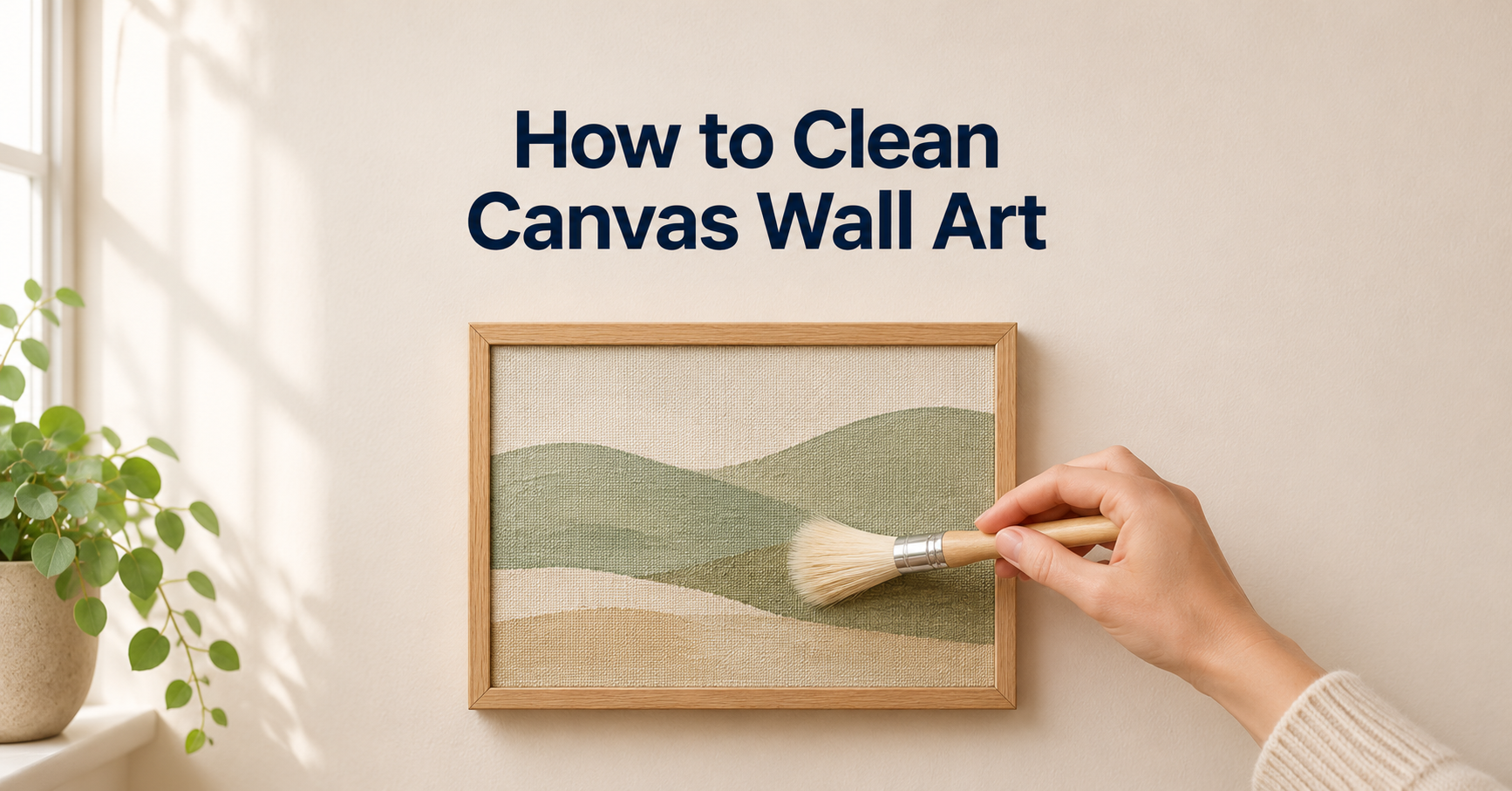
Use the soft, dry brush and sweep the canvas lightly from top to bottom, in one direction. Do not press. This lifts loose dust from the weave without pushing it deeper. Wipe the brush on a clean cloth from time to time. You can also use a dry microfiber cloth with very light strokes. For dust in the texture, a gentle puff of air from a small hand blower held at a distance can help, but avoid strong compressed air, which can damage the surface.
Step 2: Clean the Frame and Back
Dust the sides and the back of the stretcher frame with a dry cloth. Dust there can fall onto the front later. Do not wet the back of the canvas.
Step 3: Test a Hidden Spot
If the canvas is a coated printed canvas and still looks dirty after dusting, try a damp cloth, but test first. Dampen a clean microfiber cloth with distilled water, wring it until it is barely moist, and dab a hidden corner or edge. Wait a few minutes and check for color transfer, dullness, or tackiness. If anything changes, stop immediately.
Step 4: Wipe Lightly if the Test Is Safe
With the barely damp cloth, wipe the surface in gentle, even strokes in one direction. Do not rub in circles and do not press hard. Rinse the cloth often and wring it well. The canvas should never feel wet.
Step 5: Treat Small Marks or Fingerprints
If a spot remains, add a tiny drop of mild soap to a damp cotton swab and dab the mark lightly. Do not scrub. Then dab with a swab dampened with plain distilled water to remove the soap, and blot dry with a clean towel. Always test soap in a hidden corner first.
Step 6: Let It Dry Completely
Leave the canvas upright or flat in a well-ventilated, dry room, away from direct sun and heat, until it is completely dry. Do not use a hairdryer, heater, or direct sunlight to speed it up, as heat can cause cracking, warping, or fading.
Step 7: Rehang and Check the Position
Once dry, rehang the art in a place with good airflow, away from heat sources, steam, and direct sun. Make sure it is level and securely hung.
Cleaning Guide for Common Problems
| Problem | Safe Approach | Avoid |
|---|---|---|
| Loose dust and cobwebs | Soft dry brush or dry microfiber cloth, lightly | Wet cloths on dusty canvas, which smears dirt |
| Dust in the textured weave | Soft brush used in gentle strokes; low-power air puff from a distance | High-pressure air or hard brushes |
| Fingerprints and light smudges (coated prints) | Barely damp microfiber with distilled water, then a dry cloth | Rubbing, alcohol, or household sprays |
| Kitchen grease film | Very small amount of mild soap on a damp cloth, tested first, then blot with a clean damp cloth | Degreasers and strong cleaners |
| Smoke or musty smell | Air out in a ventilated, dry room away from direct sun; use a bowl of baking soda nearby | Spraying perfume or fabric sprays on the canvas |
| Mildew spots | Move the art to a dry area; for valuable art call a conservator; on inexpensive prints, test a tiny dab first | Bleach or scrubbing |
| Pet hair | Soft brush or a lightly used lint roller on the back frame only; microfiber cloth on the front | Sticky rollers on paint or print surface |
What Not to Use on Canvas Art
- Bleach, ammonia, or window cleaners: they can fade, stain, and break down paint and coatings.
- Alcohol, vinegar, or solvents: they can strip color or varnish.
- Baby wipes or disinfecting wipes: they contain chemicals and oils that may leave residue.
- Magic erasers and abrasive sponges: they scrape off the surface.
- Soaking or spraying water directly: moisture can warp the frame and damage the fabric.
- Hot hair dryers or sunlight for drying: heat can crack paint and fade colors.
- Paper towels: they can leave lint and scratch the surface.
How to Remove Mildew or Musty Smell
If you see small spots of mildew or notice a musty smell, first move the art to a dry, ventilated place and let it air out. Lower the humidity in the room with a dehumidifier. For an inexpensive printed canvas, you can test a very small hidden spot with a cloth barely dampened with diluted white vinegar and blot dry, but stop if the color changes. For original paintings or widespread mold, do not attempt a home fix. A professional conservator can treat it without damaging the artwork.
How Often Should You Clean Canvas Art?
- Every 1 to 2 months: light dusting with a soft brush or dry cloth.
- Every 6 to 12 months: a gentle damp wipe on coated printed canvases, if needed.
- As needed: remove fingerprints or small marks right away, before they set.
- Original artwork: dry dusting only, plus professional cleaning when required.
How to Protect Canvas Art and Keep It Clean Longer
- Hang art away from direct sunlight, which fades colors.
- Keep it away from kitchen stovetops, bathrooms, and radiators.
- Maintain moderate humidity to prevent mold and warping.
- Dust the room regularly, so less dust lands on the art.
- Use an air purifier with a HEPA filter if your home is dusty.
- Avoid smoking indoors, as smoke leaves a yellow film.
- Do not touch the surface with bare hands.
- Consider a protective spray or varnish made for canvas prints, applied by following the product’s directions, if the print is not already coated.
- Consider framing with glass or acrylic if you want maximum protection.
Helpful Products for Canvas Art Care
These simple products help you clean and protect canvas art:
- Soft artist or makeup brush set: ideal for dusting the weave.
- Microfiber cloth set: gentle, lint-free cloths for wiping.
- Distilled water: prevents mineral spots.
- Hand air blower: a gentle way to lift dust from textured areas.
- Cotton swabs: perfect for small marks.
- Protective canvas varnish or sealing spray: adds a protective layer to prints that are not coated.
- HEPA air purifier: reduces airborne dust.
- Hygrometer and dehumidifier: help keep humidity under control.
- Picture hanging hardware: keeps the canvas secure after rehanging.
When to Call a Professional
Contact a professional art conservator if the artwork is an original, valuable, antique, or sentimental piece; if the paint is flaking or cracked; if there is mold, water damage, or heavy smoke staining; or if you are not sure what the canvas is made of. Professional cleaning protects the piece and its value.
Frequently Asked Questions
Can I use water to clean canvas wall art?
Only on printed canvases with a protective coating, and only with a barely damp cloth and distilled water after a spot test. Never use water on oil paintings, unvarnished acrylic paintings, or any art you cannot replace.
What is the best way to dust a canvas painting?
Use a clean, soft, dry brush or a dry microfiber cloth with very light strokes. Work in one direction and avoid pressing into the texture.
How do I remove stains from canvas art?
Test a hidden corner first. For coated printed canvases, try a tiny amount of mild soap on a barely damp cloth and blot gently. For stains on paintings, consult a professional conservator.
Can I clean canvas art with alcohol or vinegar?
It is best to avoid them. They can strip coatings, fade colors, or damage paint. Use only the gentlest methods, and test first if you must use anything beyond water.
How often should I clean canvas wall art?
Dust it gently every month or two. A deeper wipe on a coated printed canvas is only needed once or twice a year, or when it is visibly dirty.
How do I get the smell out of canvas art?
Air it out in a dry, well-ventilated room away from direct sunlight. Reduce humidity and avoid spraying the surface. Strong persistent smoke or mold odors may need professional treatment.
Can I put canvas art in a bathroom or kitchen?
It is not ideal. Steam, grease, and humidity can damage canvas and encourage mold. If you do, choose a coated, water-resistant print and keep it away from direct steam and stovetop splatter.
Should I clean the back of a canvas?
You can dust the back and wooden frame lightly with a dry cloth. Do not wet the back of the canvas, as moisture can cause warping and mold.
Final Thoughts
Cleaning canvas wall art does not need to be complicated. Start by identifying the type of canvas, dust it gently with a soft brush, test carefully, and only use a barely damp cloth on coated printed canvases. Keep water, chemicals, and heat away from the surface, and call a professional for original or valuable pieces.
With gentle care and a little regular dusting, your canvas art can stay bright, clean, and beautiful for many years.