








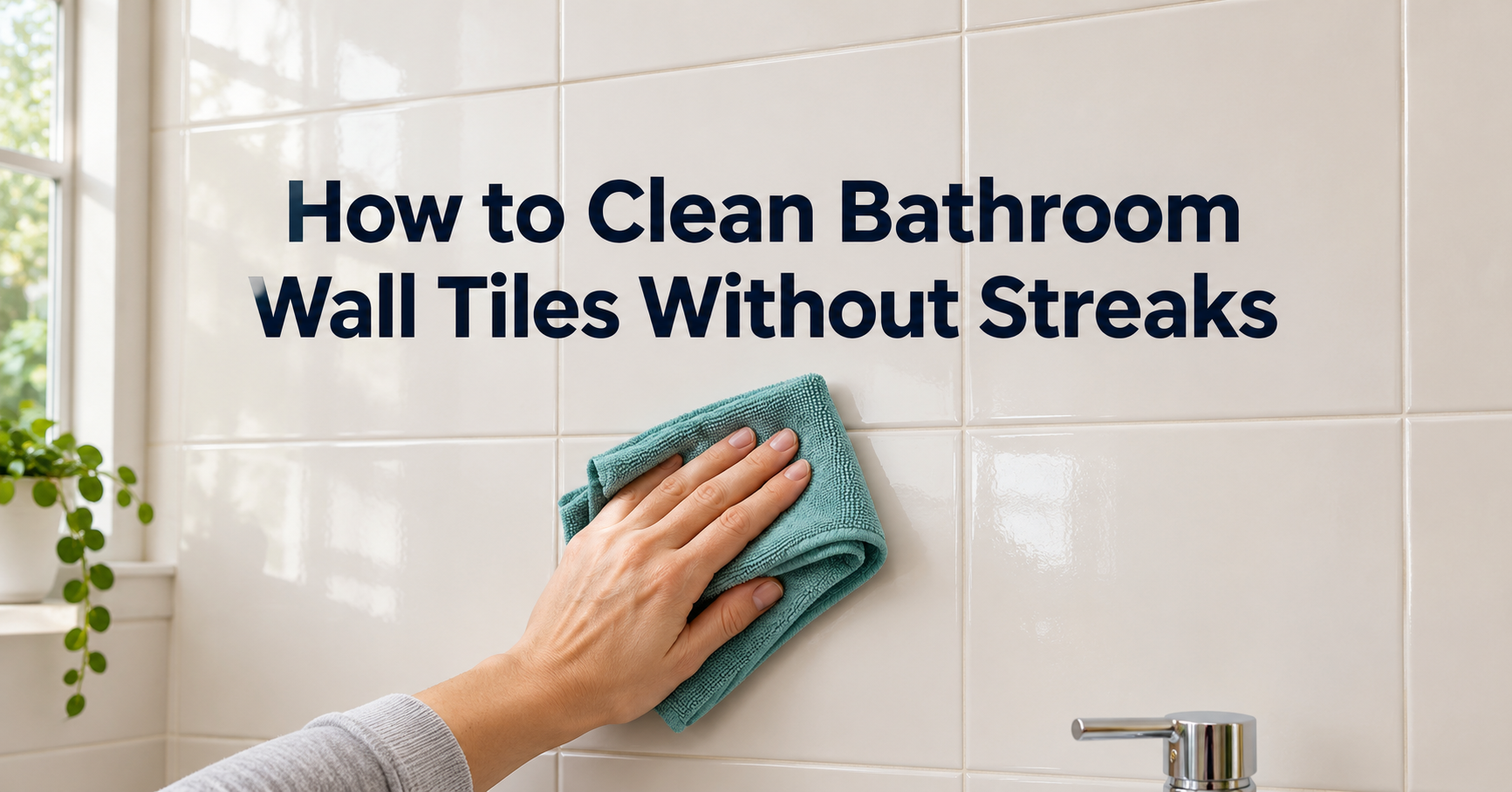
Introduction: Why Do Bathroom Wall Tiles Get Streaky?
You scrub your bathroom tiles until they look clean, only to watch cloudy streaks and smears appear as they dry. It is one of the most frustrating cleaning problems. Streaks make tiles look dirty even when they are not, and they can hide real buildup like soap scum and hard water deposits.
The good news is that streak-free tiles are easy to achieve once you understand what causes streaks and use the right method. This guide covers the causes, the best cleaners, a step-by-step process for every tile type, and tips to keep walls shining.
What Causes Streaks on Bathroom Tiles?
- Soap scum and body oils: A thin film left behind forms cloudy patterns when wiped.
- Hard water minerals: Calcium and magnesium dry into white spots and streaks.
- Too much cleaning product: Leftover cleaner dries into a visible film.
- Not rinsing: Soap and cleaner residue stay on the surface.
- Dirty cloths or sponges: They spread grime instead of removing it.
- Drying by air: Water droplets dry slowly and leave mineral marks.
- Cleaning in direct heat or when tiles are warm: The cleaner dries before you can wipe it off.
- Using the wrong cleaner: Oily or waxy products leave a film on glossy tiles.
What You Will Need
- Warm water and a bucket
- White vinegar or a tile-safe cleaner
- Mild dish soap
- Baking soda (for stubborn spots)
- Spray bottle
- Soft sponge or non-scratch scrub pad
- Soft-bristle brush or old toothbrush for grout lines
- Squeegee
- Clean microfiber cloths (at least two)
- Rubber gloves
Step-by-Step: How to Clean Bathroom Wall Tiles Without Streaks
Step 1: Ventilate and Prepare
Open a window or run the exhaust fan. Wear rubber gloves. If the bathroom is hot from a recent shower, wait for the tiles to cool, because warm walls dry cleaner too quickly and cause streaks.
Step 2: Dust and Pre-Rinse
Wipe the tiles with a dry microfiber cloth, or lightly rinse the wall with warm water, to remove loose dirt and dust. This stops grime from smearing across the wall.
Step 3: Mix Your Cleaner
Choose one of these gentle, effective solutions:
- Vinegar solution: Mix equal parts warm water and white vinegar in a spray bottle. Great for soap scum and hard water on ceramic and porcelain tiles.
- Dish soap solution: Mix a few drops of mild dish soap into a bucket of warm water for everyday dirt and grease.
- Baking soda paste: Mix baking soda with a little water into a thick paste for stubborn stains.
Caution: Never use vinegar on natural stone tiles like marble, travertine, or limestone, since acid etches the surface. Use a pH-neutral stone cleaner instead. Never mix vinegar with bleach.
Step 4: Apply and Let It Sit
Spray the solution onto a small section of tiles and let it work for 3 to 5 minutes. Work in sections from the top of the wall downward to prevent drips from creating new streaks.
Step 5: Scrub Gently
Use a soft sponge or non-scratch pad in circular motions. Use a soft brush on the grout lines. Avoid steel wool and abrasive powders, which scratch glossy tiles and make them hold dirt.
Step 6: Rinse Thoroughly
This is the step most people skip, and it is the main cause of streaks. Rinse the wall with clean warm water using a clean sponge or a spray bottle of plain water. Change the water if it becomes cloudy.
Step 7: Squeegee the Wall
Starting at the top, pull a squeegee down the tiles in overlapping vertical strokes. Wipe the blade with a cloth after each pass. This removes the water before it can dry and leave minerals behind.
Step 8: Buff Dry with Microfiber
Finish with a clean, dry microfiber cloth, using straight, overlapping strokes. Buffing removes any remaining moisture and gives glossy tiles a polished shine.
Best Cleaning Method by Tile Type
| Tile Type | Best Cleaner | Avoid |
|---|---|---|
| Ceramic and porcelain | Vinegar and water, or dish soap solution | Abrasive powders |
| Glass tiles | Glass cleaner or diluted vinegar | Scouring pads |
| Natural stone (marble, travertine) | pH-neutral stone cleaner | Vinegar, lemon, acidic cleaners |
| Glossy tiles | Dish soap solution, then squeegee | Waxy or oily products |
| Matte or textured tiles | Soft brush with mild cleaner | Heavy cleaner buildup |
How to Remove Tough Stains Without Streaking
- Hard water spots: Spray with undiluted white vinegar (ceramic and porcelain only), wait 5 to 10 minutes, scrub gently, and rinse well.
- Soap scum: Apply a baking soda paste, let it sit for 10 minutes, scrub, and rinse.
- Mold and mildew: Use a bathroom-safe mold cleaner or a vinegar solution, scrub the area, rinse, and dry completely.
- Grout discoloration: Brush with baking soda paste and rinse well. Clean grout makes the whole wall look cleaner.
Tips to Keep Tiles Streak-Free Longer
- Squeegee after every shower: It takes 30 seconds and prevents most buildup.
- Run the exhaust fan: Less moisture means fewer spots.
- Use a daily shower spray: Lightly mist the walls to stop soap scum forming.
- Use a water softener or filter: It reduces mineral deposits if you have hard water.
- Use less cleaner: A small amount, properly rinsed, works better than a heavy dose.
- Keep microfiber cloths clean: Wash them without fabric softener, which leaves residue.
- Clean weekly: Light, regular cleaning is easier than heavy scrubbing.
Common Mistakes to Avoid
- Skipping the rinse: Residue is the number one cause of streaks.
- Using dirty cloths: They redeposit grime and leave lint.
- Cleaning in direct heat: Product dries before you can wipe it.
- Using paper towels: They leave lint and can leave smears.
- Mixing cleaning chemicals: Never combine bleach with vinegar or ammonia. This creates toxic fumes.
- Ignoring the grout: Dirty grout dulls the look of clean tiles.
- Letting water air dry: It leaves mineral spots on hard water walls.
Frequently Asked Questions
What is the best cleaner for streak-free bathroom tiles?
A mix of equal parts warm water and white vinegar works well for ceramic and porcelain tiles. For natural stone, use a pH-neutral cleaner. Always rinse and dry afterward.
Why do my tiles still look cloudy after cleaning?
Cloudiness is usually leftover cleaner, soap scum, or hard water minerals. Rinse thoroughly, squeegee, and use a deeper vinegar or baking soda treatment if needed.
Can I use glass cleaner on bathroom tiles?
Yes, on glazed ceramic, porcelain, and glass tiles it can give a streak-free shine. Avoid it on natural stone.
How often should I clean bathroom wall tiles?
A quick wipe or squeegee after showers and a full clean once a week keeps buildup under control.
Is vinegar safe for all tiles?
No. Vinegar is safe for most ceramic and porcelain tiles, but it can damage natural stone such as marble and limestone, and may weaken some grout over time if overused.
Final Thoughts
Streak-free bathroom tiles come down to four things: using a gentle cleaner, rinsing thoroughly, squeegeeing, and buffing dry. Avoid heavy product buildup and harsh tools, and keep up with quick weekly care. With the right technique, your bathroom walls will stay sparkling, smooth, and free of streaks.