Handy Heater Turbo Energy Efficiency: Real Running Costs, Pros, Cons and Smart Saving Tips

Disclosure: This article may contain affiliate content. If you buy through a partner button on this site, we may earn a small commission at no extra cost to you. Our analysis stays independent.
When winter arrives, heating bills climb fast. Many households look for a cheaper way to stay warm in one room instead of heating the whole home. That is where the Handy Heater Turbo comes in: a compact, 800-watt ceramic heater that plugs straight into a wall outlet. But how energy efficient is it really, and will it actually reduce your bill? This guide gives you honest numbers, a clear cost breakdown and practical tips.
Table of Contents
- What is the Handy Heater Turbo?
- Key specifications
- Is it really energy efficient?
- How much does it cost to run?
- How to use it more efficiently
- Pros and cons
- Who should buy it (and who should not)
- Safety guidelines
- Frequently asked questions
- Final verdict
What Is the Handy Heater Turbo?
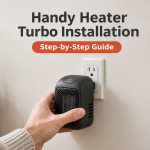
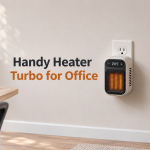
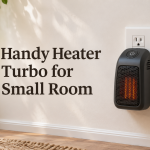
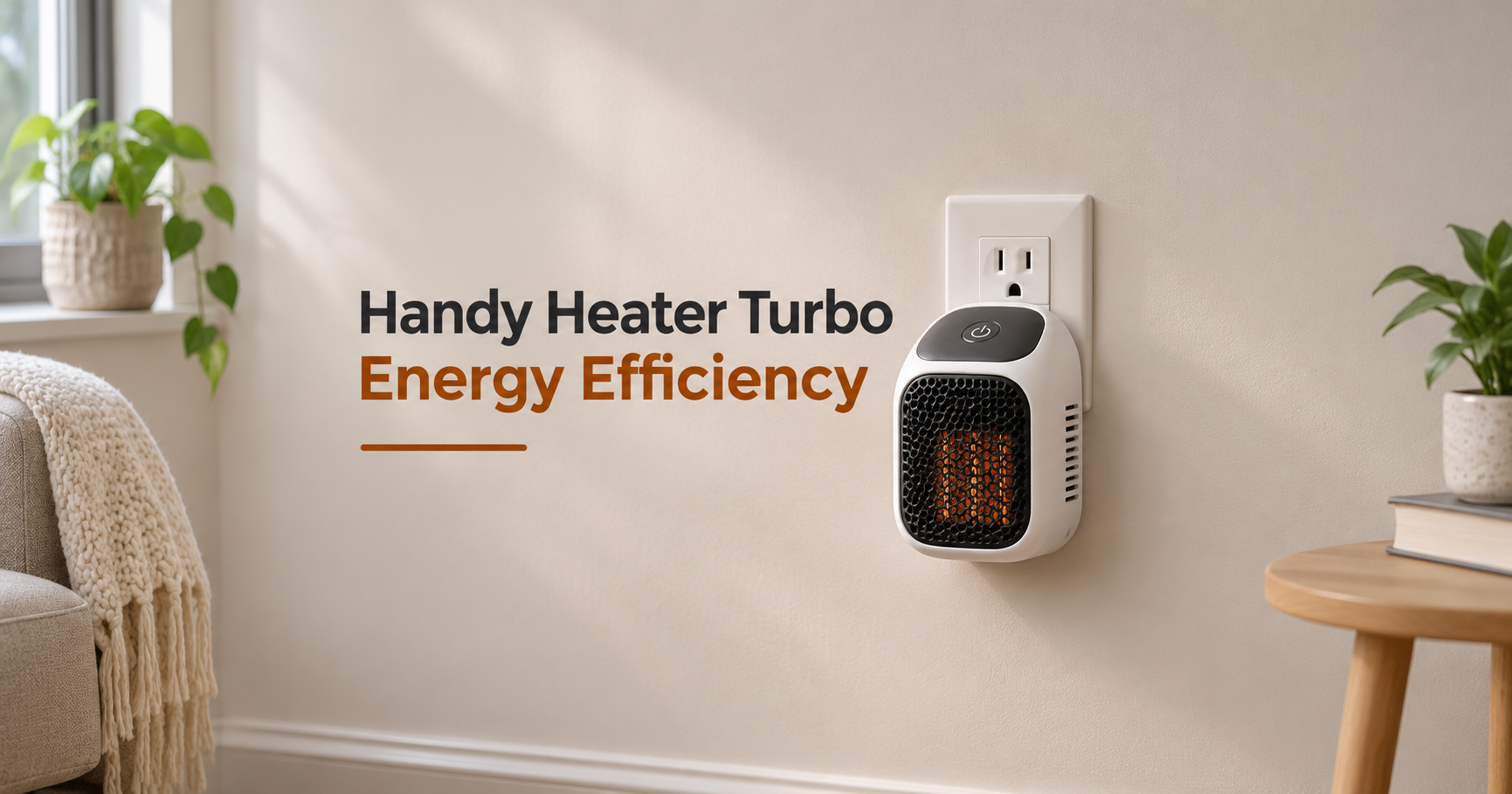
The Handy Heater Turbo, often sold as the Turbo 800 and made by Ontel, is a small wall-outlet space heater. It uses a ceramic heating element, so it warms up quickly and produces a steady flow of heat. Because it sits directly in the socket, it needs no floor space and has no trailing cord, which makes it popular for bedrooms, bathrooms, home offices and under-desk use.
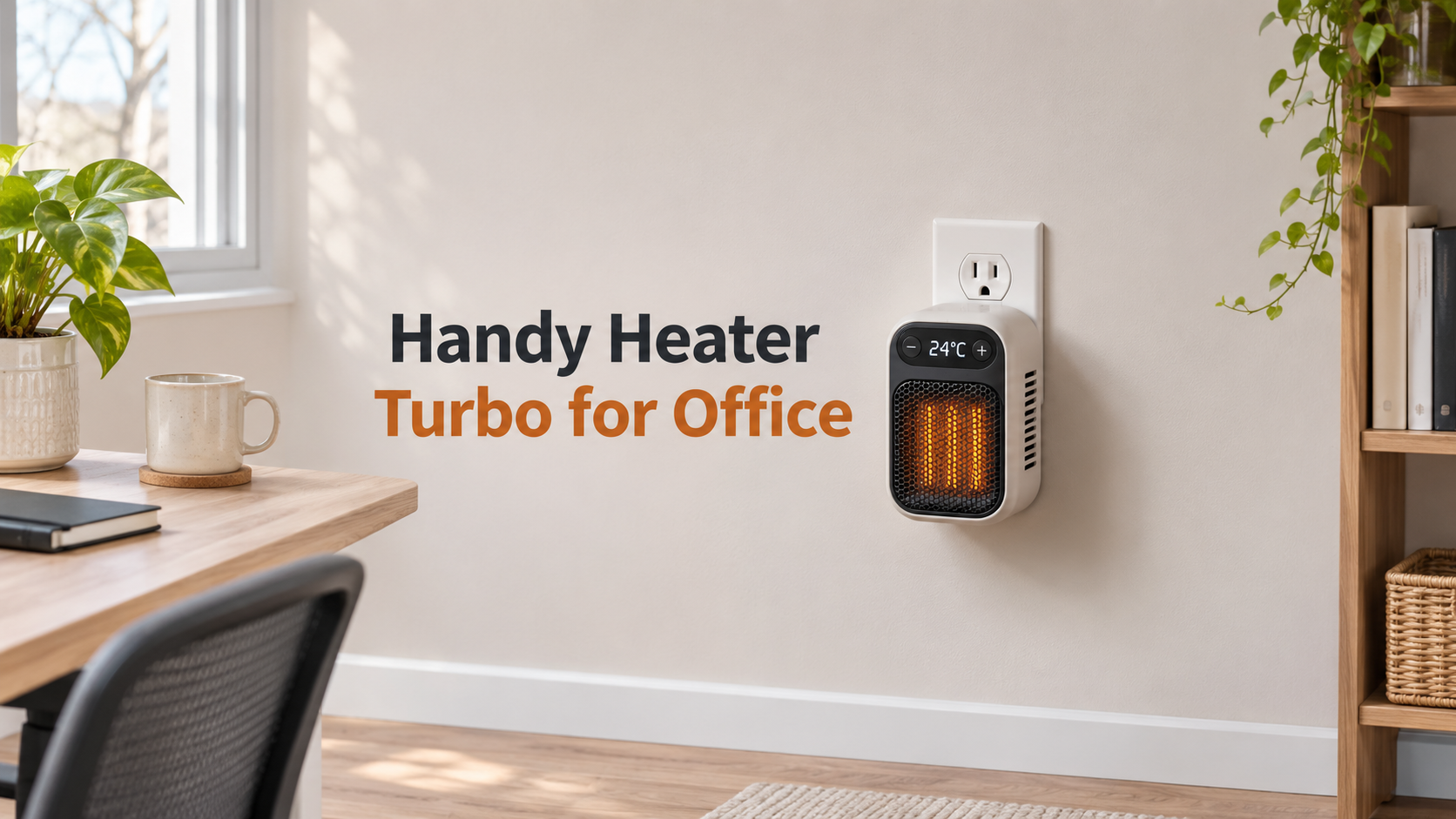
The unit includes a digital LED display, an adjustable thermostat, a 12-hour programmable timer and automatic shut-off. Those controls matter for energy use because they let the heater work only when you need it.

Key Specifications
- Power: 800 watts at 120 volts.
- Heat output: roughly 2,730 BTU per hour (800 W × 3.412).
- Thermostat range: 60°F to 90°F.
- Timer: programmable up to 12 hours.
- Safety: auto shut-off, stay-cool housing and ETL listing.
- Size and weight: about 5.75 × 9 × 4.5 inches and around 1.5 lbs.
Is the Handy Heater Turbo Really Energy Efficient?
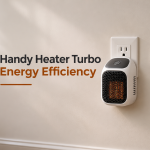
This is the most important question, so here is the plain truth. Every electric heater, whether ceramic, oil-filled or infrared, converts almost 100% of the electricity it uses into heat. So the Handy Heater Turbo is not magically more efficient than another electric heater at turning watts into warmth. Claims that it “cuts your bill by half” should be treated with caution.
Where it can save you money is in how you use it:
- Targeted heating. Warming one small room or one workspace costs less than raising the temperature of the whole house.
- Low wattage. At 800 W it draws roughly half of a typical 1500 W portable heater.
- Thermostat control. Once the room reaches your set temperature, the heater cycles off, so it does not draw full power constantly.
- Programmable timer. You can stop it from running while you are asleep or away.
In short, the Turbo is efficient as a spot heater, not a replacement for central heating.
How Much Does the Handy Heater Turbo Cost to Run?
You can calculate the running cost with a simple formula: watts ÷ 1,000 × hours × electricity rate (per kWh). Using an example rate of $0.16 per kWh (check your own bill, as rates vary widely):
- Per hour at full power: 0.8 kWh × $0.16 = about $0.13.
- Per 8-hour night at full power: about $1.02.
- Per month, 8 hours a day at full power: about $30.
In real life the thermostat switches the element off once the room is warm, so actual use is often lower, especially in a well-insulated space. For comparison, a 1500 W heater costs about $1.92 for the same 8 hours at full power.

How to Get the Best Energy Efficiency From Your Turbo

- Set a sensible temperature. Most people feel comfortable between 68°F and 72°F. Every extra degree increases run time.
- Use the 12-hour timer. Schedule it to warm the room shortly before you arrive or wake up, instead of running all day.
- Heat only the room you are in. Close the door so the warm air stays put.
- Seal drafts. Weatherstripping, door sweeps and thick curtains can reduce heat loss at very low cost.
- Keep airflow clear. Do not block the unit with furniture or curtains, which can force it to work harder and is unsafe.
- Match the room size. Retailers list coverage from around 100 sq ft up to 250 sq ft. In practice, expect the best results in small, closed rooms near the lower end of that range.
- Layer up. A blanket or warm clothing plus a low thermostat setting is cheaper than a hot room.
Pros and Cons
| Pros | Cons |
|---|---|
| Low 800 W draw suits small spaces and budgets | Limited heat output of about 2,730 BTU per hour |
| Plugs into the wall, so no floor space or cord clutter | Not suited to large or open-plan rooms |
| Adjustable thermostat and 12-hour timer | Some users report a small fan noise |
| Auto shut-off and stay-cool housing | Heats nearby area faster than the whole room |
| Lightweight, compact and affordable | Savings depend on habits, not the device alone |
Who Should Buy the Handy Heater Turbo?
It is a good fit for:
- People who want extra warmth in a bedroom, bathroom or home office.
- Renters and students with limited space.
- Anyone who works at a desk and wants to warm their feet and legs.
- Households aiming to turn down the main thermostat while heating only the occupied room.
You may want a different heater if:
- You need to heat a large living room, basement or garage.
- Your main goal is rapid, powerful heating for a big area.
- You want built-in tip-over protection for floor-standing use, since this model is designed for wall outlets.
Safety Guidelines
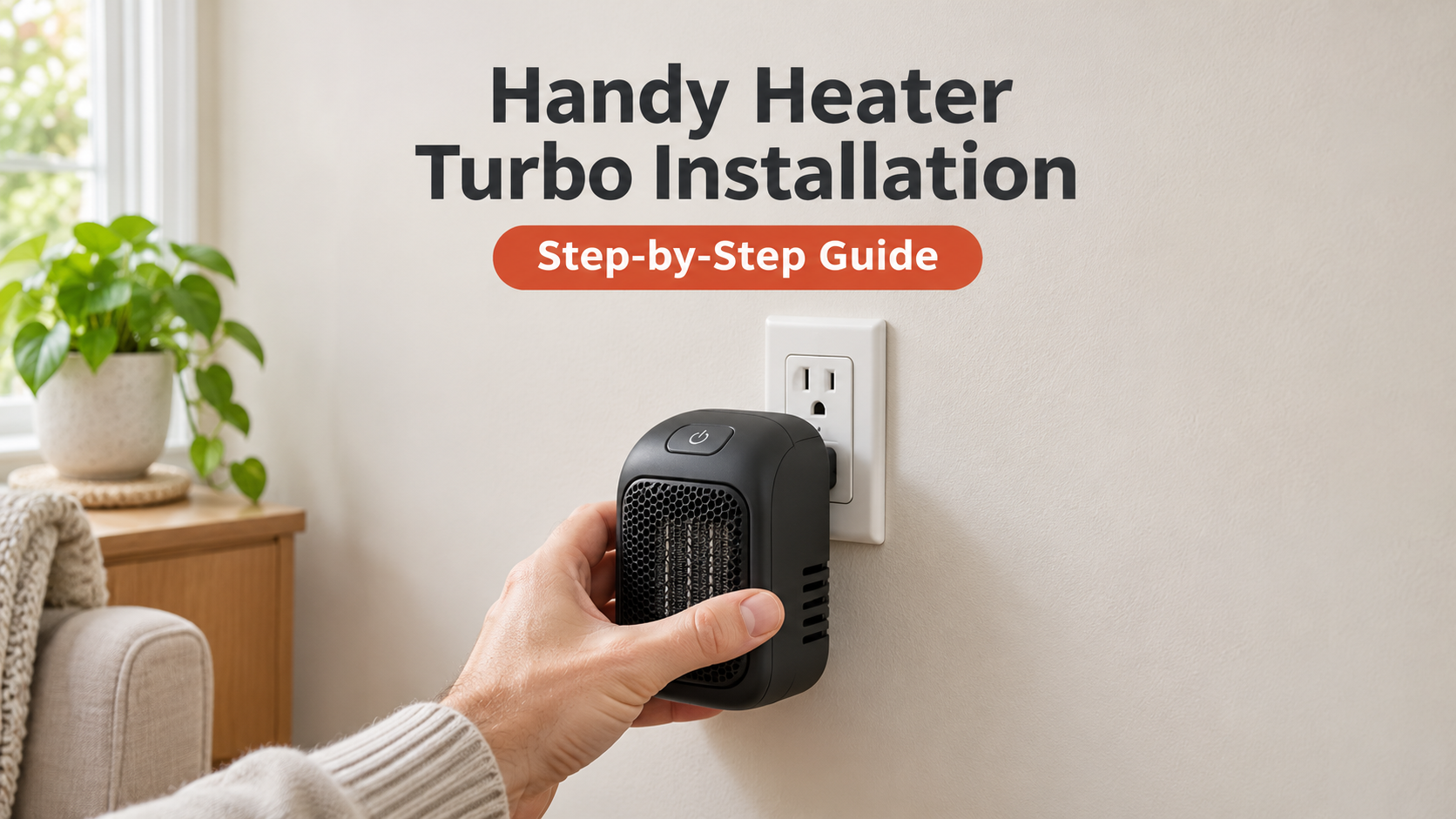
- Plug it directly into a wall outlet. Avoid extension cords and power strips.
- Do not run other high-wattage appliances on the same circuit at the same time.
- Keep curtains, bedding and furniture well away from the front of the unit.
- Check the plug and outlet for warmth or discoloration, and stop using it if you notice either.
- Keep it away from water and do not use it outdoors.
- Follow the manufacturer’s manual and install smoke detectors in rooms where you use heaters.
Frequently Asked Questions
How many watts does the Handy Heater Turbo use?
The Turbo 800 is rated at 800 watts. One reviewer who measured it reported about 725 watts in use, which is close to the rating.
Will it lower my electricity bill?
It can, but only if it replaces heating a larger space. Used alongside a lowered central thermostat, it may reduce overall cost. If you run it in addition to your regular heating, your bill will rise.
Can I leave it on all night?
The timer and auto shut-off make overnight use convenient, but follow the manual, keep the area clear and consider a shorter timer for extra safety.
How large a room can it heat?
Marketing figures range up to about 250 sq ft, while many retailers list around 100 sq ft. For comfortable results, think small rooms, offices and personal zones.
Is it noisy?
It is marketed as quiet, though a small fan sound is normal for a heater of this size.
Is it better than a 1500 W heater?
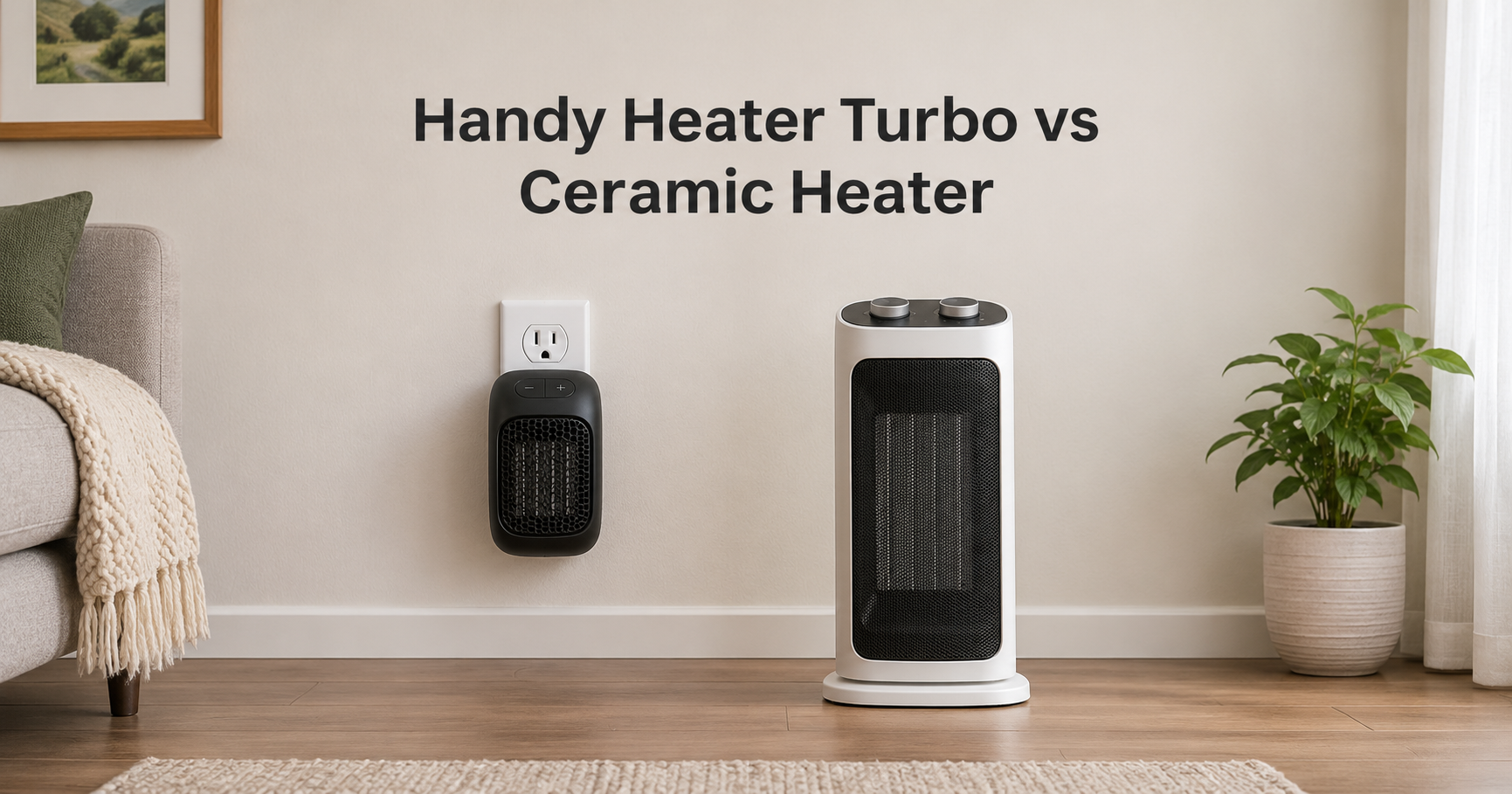
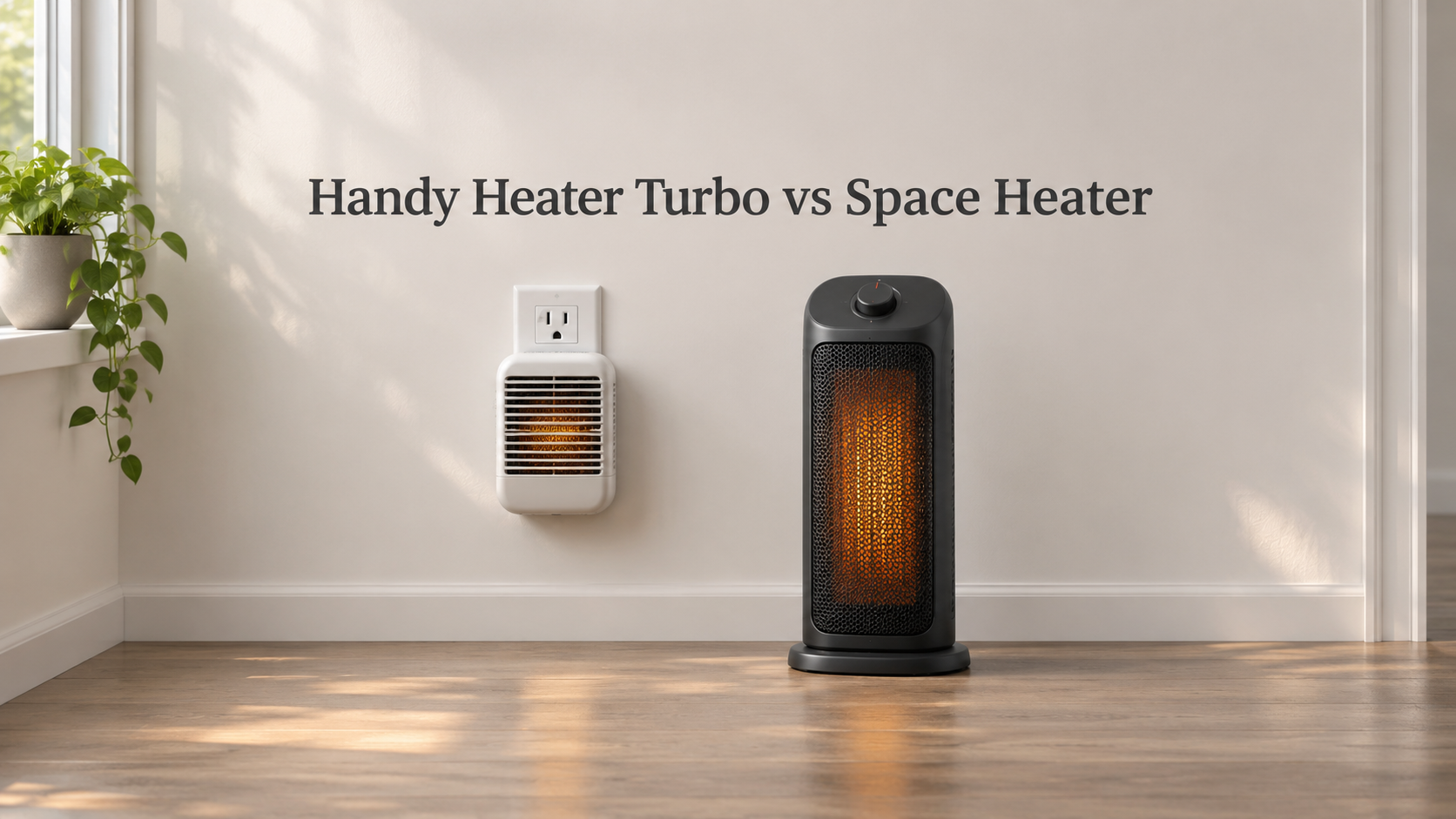
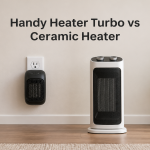
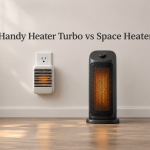
It uses less power and takes up no floor space, but it also produces less heat. Choose it for small spaces and efficiency, and a 1500 W unit for bigger rooms.
Final Verdict
The Handy Heater Turbo is not a miracle device, but it is a smart, affordable personal heater. Its low 800 W draw, thermostat, 12-hour timer and wall-mounted design make it a practical choice for warming one small area while keeping your total energy use under control. Use it for spot heating, pair it with draft sealing and sensible settings, and you can enjoy a warmer winter without a shocking electricity bill.
Bottom line: Best for small rooms and personal spaces. Not designed to heat large areas. Savings come from smart use.