





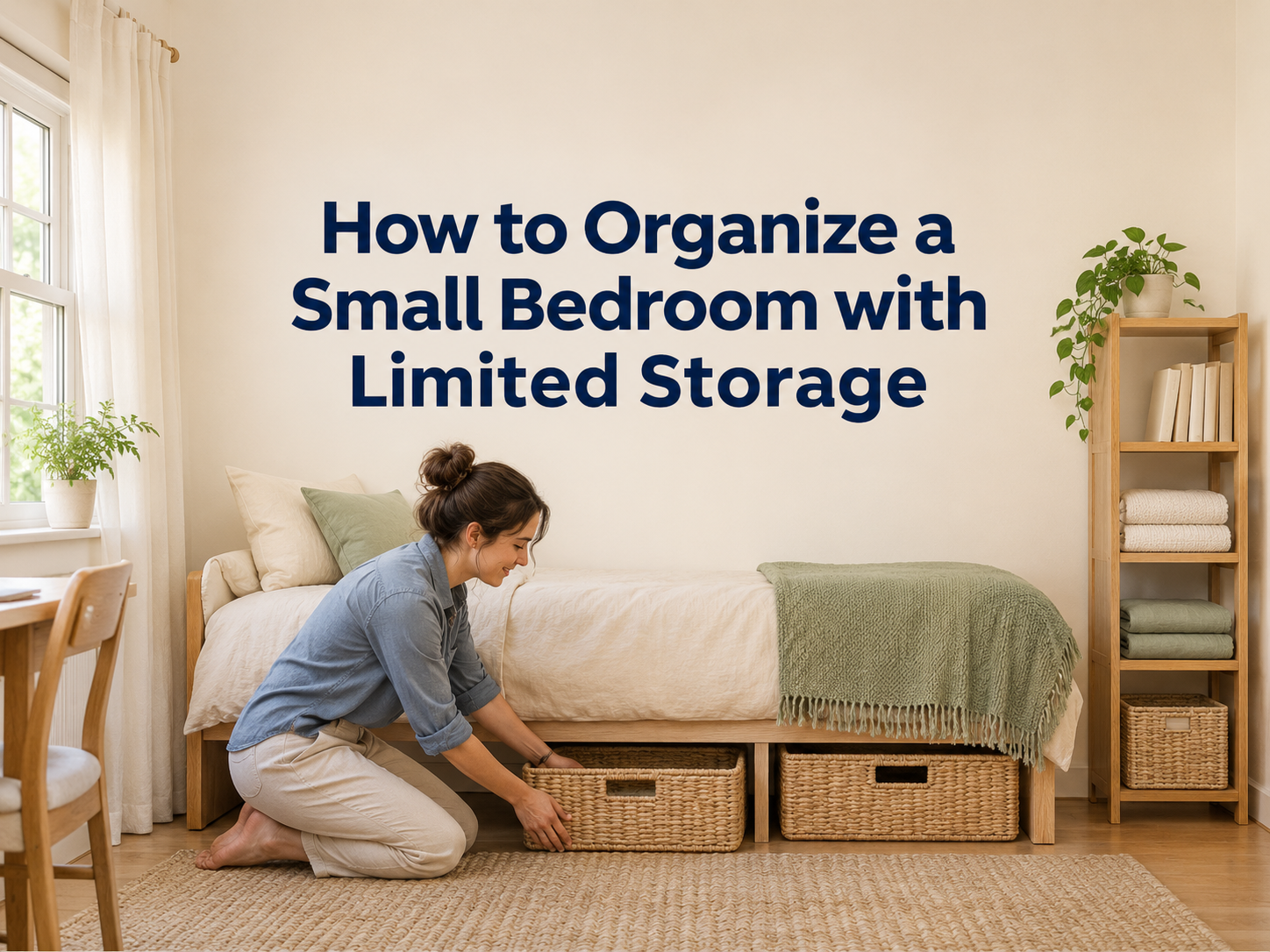
How to Organize a Small Bedroom with Limited Storage: 12 Practical Steps
A small bedroom with little storage can feel like a daily puzzle. Clothes spill off the chair, the floor disappears under bags and the nightstand turns into a dumping ground. The good news is that most small rooms are not short on space as much as they are short on a plan. Once you know how to organize a small bedroom with limited storage, you can make a compact room feel open, restful and easy to keep tidy.
This guide walks through twelve practical steps: decluttering, planning zones, using vertical space, hidden storage spots, furniture choices, visual tricks and habits that keep the room organized. You do not need a big budget or a renovation. Most ideas work in rentals too.
Why Small Bedrooms Get Cluttered So Quickly
- Too many roles. One room often has to hold sleep, clothes, work, hobbies and guests.
- Floor-focused storage. Furniture sits on the floor and the wall height above it stays empty.
- No homes for small items. Chargers, jewelry, books and skincare have nowhere to live, so they land on every surface.
- Overfull closets. When a wardrobe is packed, clothes migrate to chairs, hooks and the bed.
- Visual noise. Mismatched containers and open piles make a room look smaller than it is.
Step 1: Declutter Before You Buy Anything
The most common mistake is buying organizers first. Storage products only help if you are storing things you actually use. Start by reducing what you own in the room.
- Empty one zone. Pick the wardrobe, one drawer or the nightstand, and take everything out.
- Sort into groups. Keep, donate or sell, discard, and “belongs in another room”.
- Decide honestly. If you have not worn or used it in a year and it has no special meaning, let it go.
- Contain what stays. Give each category a specific home before you put it back.
If an item does not fit its designated space, you own too much of that category, not too little storage.
Step 2: Divide the Room into Zones
Zoning stops everything from mixing together. Think about what happens in your room and give each activity a defined area, even if it is only one corner.
- Sleep zone: bed, lamp, a few bedtime items. Keep it as calm as possible.
- Dressing zone: wardrobe, shoes, mirror, laundry basket.
- Work or hobby zone: a compact desk or fold-down surface with its own storage.
Measure the room and the furniture before rearranging. Leave roughly 60 to 75 cm for main walking paths and make sure doors and drawers can open fully.
Step 3: Use Vertical Space
When floor space is limited, go up. Walls are the biggest unused storage area in most small bedrooms. Match the item to the height at which it is easiest to reach.
- Install wall shelves above the bed, desk or door for books, plants and baskets.
- Choose tall, narrow bookcases or shelving units that use corners and take little floor space.
- Hang wall-mounted hooks or a rail for bags, hats, scarves and robes.
- Use the top of the wardrobe for lidded boxes holding off-season items.
Anchor tall furniture and heavy shelves to the wall studs to prevent tipping, especially in households with children or pets.
Step 4: Make the Bed Work Harder
The bed is usually the largest object in a small room, so it should provide storage too.
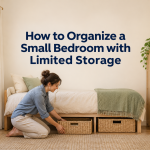
- Under-bed bins: shallow containers with wheels or lids suit shoes, spare linen and out-of-season clothes.
- Raised bed frames: bed risers add vertical space for deeper bins.
- Storage beds: drawers or a lift-up base hide bulky items like duvets.
- Headboard shelves: a headboard with a shelf or cabinet can replace a nightstand.
Keep the area under the bed tidy and dry. Vacuum it regularly to prevent dust buildup, and avoid storing anything that traps moisture.
Step 5: Rethink the Closet or Wardrobe
A well-organized wardrobe can hold far more than a messy one.
- Use slim, matching hangers. They save a surprising amount of rail space and look neater.
- Add a second hanging rod for shirts and folded trousers where there is enough height.
- Fold knits and T-shirts upright in drawers so you can see everything at once.
- Use hanging organizers or shelf dividers for sweaters, bags and accessories.
- Rotate seasons: store off-season clothes in vacuum or lidded bags on the top shelf or under the bed.
- Use the door’s inside for an over-door organizer for shoes, scarves or cosmetics.
Step 6: Find the Hidden Storage Spots
Walk around your room and look at every surface and gap. Even narrow spaces can hold slim shelves, hooks or flat containers. Behind the door, above the wardrobe and between furniture pieces are often forgotten.
Step 7: Choose Multi-Functional Furniture
When you pick furniture, aim for pieces that do two jobs.
| Furniture | Best for | Space-saving benefit |
|---|---|---|
| Storage bed or ottoman bed | Bulky bedding, spare clothes | Uses the dead space below the mattress |
| Bench with storage | End of bed, entry | Seating plus a place for shoes or blankets |
| Wall-mounted or floating desk | Work or study area | Frees the floor beneath |
| Floating nightstand | Bedside essentials | Leaves floor open and eases cleaning |
| Dresser with tall drawers | Clothes | Stacks storage in a small footprint |
| Wardrobe with mirrored doors | Dressing zone | Storage plus a full-length mirror |
| Folding or nesting tables | Occasional use | Disappear when not needed |
Step 8: Organize Small Items with Containers
- Use drawer dividers for socks, underwear and accessories.
- Keep a small tray on the nightstand for essentials, so the surface holds only what you use nightly.
- Use a charging station or cable box to hide cords.
- Label bins and boxes, especially on high shelves, so you do not have to pull everything down to find something.
- Pick containers in one or two matching colors. Uniform storage looks calmer and makes the room feel bigger.
Step 9: Use Visual Tricks to Make the Room Feel Larger
- Light, soft colors on walls and bedding reflect light and open up the room.
- Mirrors opposite a window bounce natural light and add depth.
- Furniture on legs lets you see the floor underneath, which feels more spacious.
- Curtains hung high and wide make ceilings appear taller.
- Good lighting from wall lamps frees nightstand space and removes dark corners.
- One focal point such as a headboard or artwork keeps the eye from jumping around.
Step 10: Compare Your Storage Options
| Solution | Works best when | Watch out for |
|---|---|---|
| Under-bed bins | You have bed clearance or a raised frame | Dust; heavy items that are hard to slide out |
| Wall shelves | Walls are free and sturdy | Overloading; mount into studs or use proper anchors |
| Over-door organizers | The door has no heavy use or glass | Door clearance and hinge strain |
| Slim hangers and rod add-ons | The closet is crowded | Weight limits on the rod |
| Tall narrow shelving | A corner or gap is available | Stability; anchor to the wall |
| Lidded boxes on top shelves | You store seasonal items | Labeling and weight; keep heavier boxes lower |
Step 11: Tips for Renters
- Choose freestanding shelves and rolling carts over drilled units where possible.
- Use adhesive hooks within their weight limits for light items.
- Use tension rods in alcoves or wardrobes for extra hanging space.
- Check your lease before drilling, and keep fixings and spare parts to restore the wall when you leave.
Step 12: Build Habits That Keep the Room Organized
- The one-in, one-out rule: when something new comes in, something leaves.
- A 10-minute nightly reset: clothes to the hamper or hanger, surfaces cleared, bed made.
- A weekly check: return stray items, empty bins and wipe surfaces.
- A seasonal review: swap clothes, donate what you did not use and reassess your storage.
Common Mistakes to Avoid
- Buying storage before decluttering.
- Choosing bulky furniture that eats the floor.
- Ignoring wall height and the space above the door.
- Blocking walkways, windows or the wardrobe doors.
- Using many different container styles, which creates visual clutter.
- Overloading shelves, rails and hooks beyond their rated weight.
- Skipping measurements and ending up with items that do not fit.
What to Look for When Buying Storage
- Correct dimensions: measure width, depth, height and door swing before you buy.
- Weight ratings: check what shelves, hooks and rods are rated to carry.
- Sturdy materials: solid frames, strong zippers and reinforced bases last longer.
- Easy access: pull-out drawers and wheels save effort.
- Breathable fabric or ventilated boxes for clothes and linen, to avoid musty smells.
- A consistent look: choose a simple color palette so everything blends together.
Frequently Asked Questions
Where should I start when organizing a small bedroom?
Start by decluttering one area, such as the closet or a dresser. Reducing what you own makes every other step easier and cheaper.
How can I add storage without a closet?
Use a freestanding wardrobe or garment rack, a dresser, under-bed bins, wall hooks and wall shelves. Tall narrow shelving can also use a corner efficiently.
What is the best bed for storage in a small room?
A bed with built-in drawers or a lift-up base is ideal, or a standard frame on risers with bins underneath.
How do I stop my small bedroom from looking cluttered?
Keep surfaces mostly clear, use closed or matching containers, limit decor to a few pieces and do a short nightly reset.
Are mirrors really helpful?
Yes. A large mirror reflects light and visually extends the space, and it can double as part of your dressing zone.
How much should I leave open on the floor?
Aim for a clear walkway of about 60 to 75 cm and enough room to open doors and drawers comfortably.
Final Thoughts
Learning how to organize a small bedroom with limited storage is mostly about three things: owning less, using every level of the room and giving each item a clear home. Declutter first, set up zones, build upward and choose furniture that works twice as hard. Then keep it going with a short daily reset. Start with one drawer or one shelf today, and let the progress build from there.