





Why Is My Canvas Painting Warping? Causes, Fixes and Prevention Guide
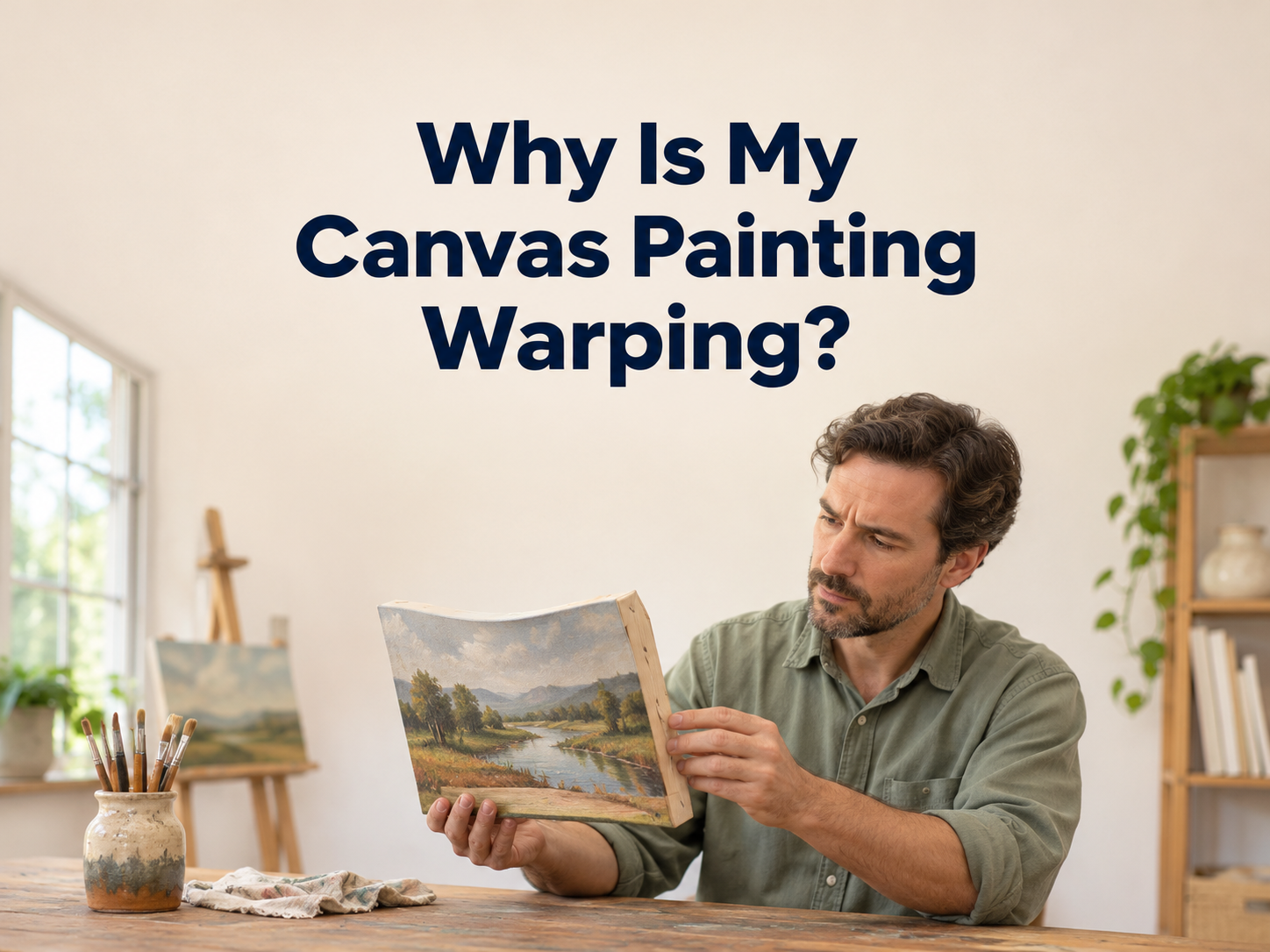
You finish a painting you are proud of, step back to admire it, and notice the surface rippling, the corners lifting or the whole canvas bowing like a shallow dish. It is frustrating, and it leaves many artists asking the same question: why is my canvas painting warping?
The good news is that warping is almost always explainable, and in most cases it is fixable. This guide explains exactly what causes a canvas to warp, how to diagnose the problem on your own painting, how to repair it step by step, and how to prevent it from happening again. Whether you paint with acrylics, oils or mixed media, you will find practical answers below.
Quick Answer
A canvas painting warps because the tension across the canvas becomes uneven. The most common reasons are humidity and temperature changes, a weak or twisted stretcher frame, loose or over-tight stretching, heavy wet paint or pouring, and unsealed or unevenly primed surfaces. Fixing it usually means re-tensioning the canvas, reinforcing the frame and stabilizing the room where the painting lives.
What Does a Warped Canvas Look Like?
Not every warp is the same, and identifying the type tells you the cause. Here are the most common forms:
- Sagging or rippling canvas: the fabric looks loose, wavy or drum-less when you tap it. This points to lost tension.
- Bowed frame: one or more wooden bars curve inward or outward, pulling the whole painting out of square.
- Twisted frame: the painting will not sit flat on a wall or table because opposite corners rise.
- Curling corners or edges: usually seen on canvas boards, panels or paintings with uneven priming.
- Cupping: the whole surface curves toward or away from you, common on thin panels and large unbraced canvases.
The 9 Most Common Causes of Canvas Warping
1. Humidity Changes
Canvas is made from natural fibers such as cotton or linen, and these fibers absorb and release moisture from the air. When humidity rises, the fibers swell and the weave tightens. When the air dries out, the fibers relax and the canvas can slacken. These swings change the tension across the stretcher bars again and again, and over time the frame and fabric both lose their shape.
2. Temperature Swings
Heat dries out both the canvas and the wooden frame, while cold, damp rooms add moisture. Hanging a painting above a radiator, near a fireplace, beside a heater vent or in direct sunlight exposes one side to much more stress than the other, which is a classic recipe for warping.
3. Weak or Cheap Stretcher Bars
Thin, low-grade or unseasoned wood bends under constant canvas tension. Budget stretcher bars are often made from fast-dried pine that twists as it settles. If the frame moves, the canvas moves with it.
4. No Cross Brace on Large Canvases
As a general rule, large canvases (roughly 30 inches or 75 cm on the longest side and above) need a cross brace or center support. Without one, long bars have nothing resisting the pull of the fabric, and they curve inward in the middle.
5. Stretching Too Tight (or Too Loose)
Canvas stretched too tightly puts constant strain on the frame and can cause the bars to bow. Canvas stretched too loosely sags, ripples and loses its drum-tight feel after a few weeks. The goal is firm, even tension, not maximum tension.
6. Heavy or Wet Paint Application
Thick layers of wet acrylic, acrylic pouring, heavy water-based washes and impasto add weight and moisture to the front only. As the paint dries, it shrinks and pulls the canvas with it. Large pours on a canvas without a brace are among the most common reasons artists see sudden warping.
7. Uneven Priming or Unsealed Back
If the front is primed with several coats of gesso and the back is bare, the two sides absorb and release moisture at different rates. That imbalance can cause the canvas to cup or ripple. Insufficient gesso also leaves the fabric more reactive to changes in the air.
8. Storage and Transport Problems
Leaning paintings at an angle for months, stacking heavy items on top, rolling canvases too tightly or shipping them in damp conditions can all deform either the frame or the fabric.
9. Using Canvas Boards or Thin Panels
Canvas boards, thin hardboard and MDF panels are especially sensitive to moisture on one side. When only the front is sealed, the panel curves toward the drier side, a problem often described as cupping.
Warping Problem, Cause and Fix at a Glance
| Problem | Most Likely Cause | Recommended Fix |
|---|---|---|
| Loose, rippling canvas | Humidity drop, canvas stretched loosely | Tap in corner keys, mist the back lightly, or restretch |
| Frame bowing inward | Weak bars, no cross brace | Add a cross brace or move to sturdier bars |
| Frame twisted | Cheap or unseasoned wood | Replace stretcher bars and restretch |
| Sagging after acrylic pouring | Heavy wet paint pulling the fabric | Use a braced canvas or rigid panel for pours |
| Curling panel or board | Only one side sealed | Seal the back, weight flat while it settles |
| Warping that keeps returning | Unstable room climate | Control humidity and temperature, relocate the painting |
How to Fix a Warped Canvas Painting Step by Step
Step 1: Check the Room and the Frame First
Before touching the painting, look at where it has been stored or hung. Check for damp walls, heat sources and sunlight. Then place a straightedge along each frame bar and look for gaps. This tells you whether the problem is the fabric, the frame or both.
Step 2: Re-Tension the Canvas With Keys
Many stretcher frames include small wooden wedges called keys (or tuning wedges). They fit into slots at the inside corners of the frame. Gently tapping them in with a small hammer pushes the corners outward, which tightens the canvas evenly. Work on opposite corners in turn and stop as soon as the surface is firm. Over-tightening can crack dried paint.
Step 3: Use the Light Water Mist Method for Mild Sagging
For a slightly slack canvas that has no keys, a traditional method is to mist the back of the canvas lightly with clean water from a fine spray bottle, then let it dry flat and away from direct heat. As the fibers dry they contract and the canvas tightens. Never soak the fabric, never spray the painted side, and test on a less important piece first. Valuable or antique works should not be treated this way at home.
Step 4: Reinforce or Replace the Frame
If a bar is visibly bowed or twisted, re-tensioning will only hide the problem for a short time. Add a cross brace if the canvas is large, or remove the canvas and restretch it on new, well-made stretcher bars. This is often the most permanent solution.
Step 5: Flatten Curling Boards and Panels Gently
For cupped boards or panels, seal the back with a matching coat of gesso or sealer so both sides behave the same. Then place the piece flat, with clean paper under it and even weight on top, and give it several days to settle. Force or sudden changes can crack the paint.
Step 6: Restretch When Nothing Else Works
If the canvas is still baggy after all of the above, restretching is the best option. Remove the staples carefully, pull the canvas taut with canvas pliers, and staple from the center of each side outward, alternating sides. Using a professional framer or conservator is wise for valuable paintings.
How to Prevent Canvas Warping in the Future
Prevention is much easier than repair. These habits will protect your paintings for years:
- Choose quality stretcher bars. Look for kiln-dried, straight-grain wood with a bevelled edge so the canvas never touches the bar.
- Add a cross brace on large canvases. It costs very little compared with losing a finished painting.
- Prime properly. Apply two to three even coats of acrylic gesso on the front, and consider sealing the back of boards and panels as well.
- Use the right support for the technique. For heavy pours, thick impasto or wet mixed media, choose a braced canvas or a rigid cradled wood panel.
- Let paint dry fully and flat. Allow each layer to dry before moving the painting upright.
- Control the environment. Aim for moderate humidity and steady temperature, and keep paintings away from windows, vents and damp walls.
- Hang and store with care. Use proper hanging hardware, avoid leaning paintings at an angle for long periods and never stack heavy items on them.
- Varnish or finish appropriately. A suitable varnish or sealant adds a protective layer against moisture and dust.
Useful Supplies for Preventing and Repairing Warped Canvas
If you paint regularly, a few inexpensive supplies make a big difference. Here is what to look for when shopping:
- Gallery-wrap canvases with braced frames: choose thick, sturdy bars and a cross brace for anything large.
- Canvas stretching pliers and a staple gun: essential for clean, even restretching.
- Canvas keys (wedges): a cheap replacement if yours are lost.
- Acrylic gesso: choose a smooth, quality brand and apply several thin coats.
- A digital hygrometer and thermometer: a small device that shows whether the room is safe for your art.
- Cradled wood panels: an excellent rigid alternative for pours and heavy techniques.
- Fine-mist spray bottle: for controlled, gentle moisture when tightening a slack canvas.
- Quality varnish: a final protective layer for finished paintings.
When to Call a Professional Conservator or Framer
Home repairs are fine for modern, low-value paintings, but ask a professional if the painting is valuable, old, sentimental or oil-based with thick or cracking paint. Also seek help if the warping returns after repair, if the paint is flaking, or if you see signs of mold. A framer or conservator can restretch, reline and stabilize a painting safely.
Frequently Asked Questions
Can a warped canvas be fixed?
Yes, in most cases. Sagging and mild ripples can be corrected with keys, a light mist on the back or restretching. Bowed frames usually need a cross brace or new bars.
Why did my canvas warp after painting?
Wet paint, especially thick acrylic or large pours, adds moisture and weight to one side and pulls on the fabric as it dries. Humidity and temperature changes in the room can add to the effect.
Does a canvas painting warp from humidity?
Yes. Canvas fibers absorb and release moisture, which changes tension. Repeated swings between damp and dry air are one of the top causes of warping.
Should I wet the back of a canvas to tighten it?
A light mist of clean water on the back can tighten a slightly slack canvas as it dries. Never soak it, never wet the painted side, and avoid the method on valuable or antique work.
How do I stop a large canvas from bowing?
Use a cross brace or a center support, choose thicker stretcher bars and keep the painting in a stable environment. For very large works, a rigid panel can be a better choice.
Is it normal for a new canvas to be slightly loose?
Slight looseness can happen when canvases adjust to a new environment. If the sag stays after a few weeks, use the corner keys to tighten it gently.
Can I flatten a rolled canvas painting?
Yes, but only if the paint is fully dry and flexible. Unroll it paint-side up, let it relax flat for several days and then restretch it on bars. Do not unroll cold, brittle paintings quickly.
Do acrylic paintings warp more than oil paintings?
Not by nature. Warping depends mostly on the support, the frame, the paint thickness and the environment. Acrylic pours and water-heavy techniques simply put more moisture on the canvas, so they can show it faster.
Final Thoughts
So, why is your canvas painting warping? In nearly every case the answer is uneven tension caused by humidity, temperature, a weak frame or the way the painting was made and stored. The solution starts with diagnosing the type of warp, then tightening, reinforcing or restretching the canvas, and finally fixing the environment so the problem does not come back.
Choose well-made stretcher bars, add a cross brace on large canvases, prime evenly, and keep your artwork in a steady, moderate room. With these habits your paintings will stay flat, sharp and beautiful for years to come.