








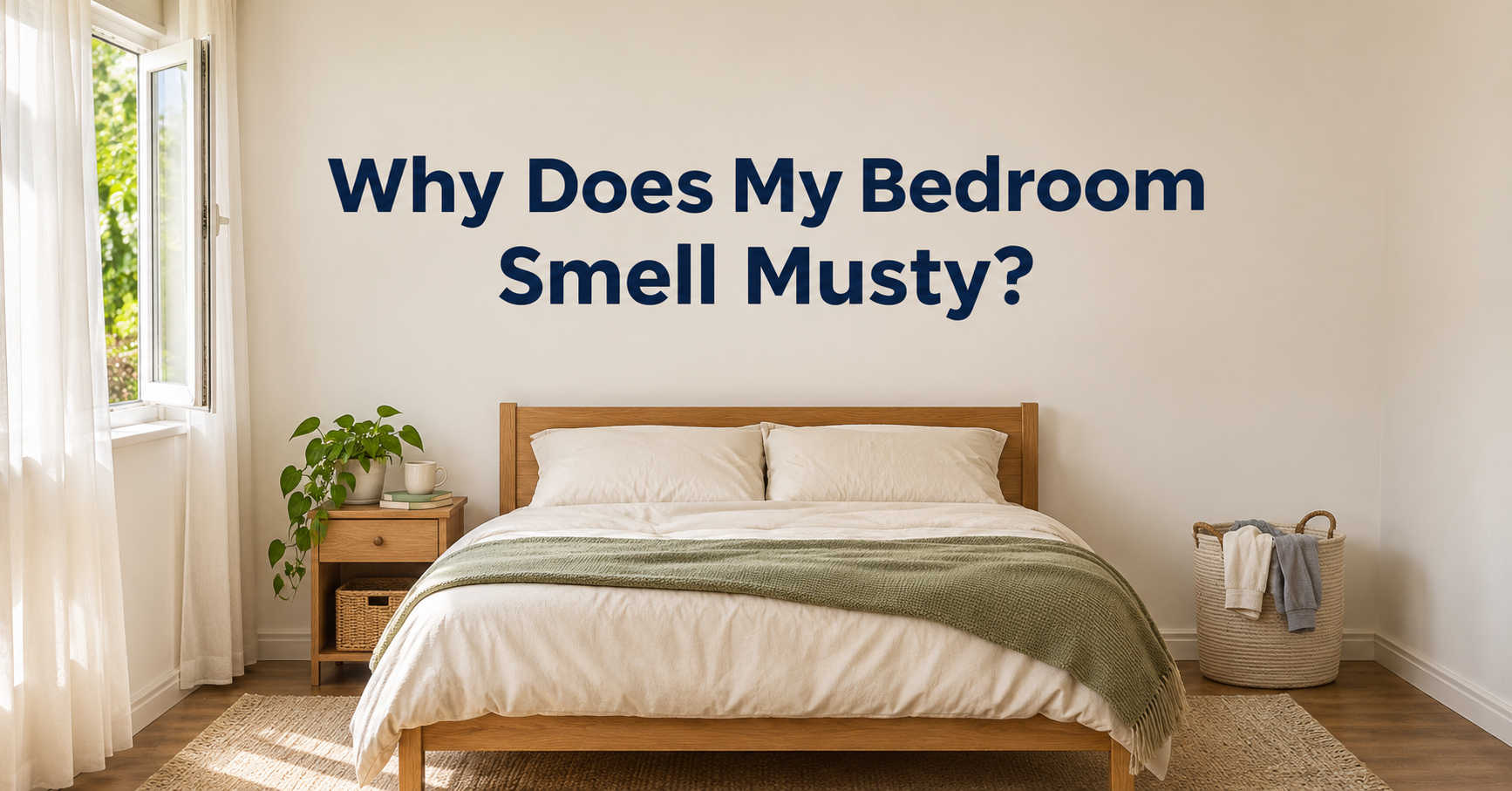
Why Does My Bedroom Smell Musty? Causes, Fixes and Prevention Tips
You walk into your bedroom and notice it right away: a stale, damp, earthy smell that makes the room feel unclean no matter how often you tidy up. If you keep asking yourself why your bedroom smells musty, you are not alone. It is one of the most common household odor problems, and it is almost always linked to moisture.
The good news is that a musty bedroom can be fixed once you know the cause. In this complete guide, you will learn what creates that odor, how to find the exact source, how to remove it step by step, and how to stop it from coming back.
What Does a Musty Smell Actually Mean?
A musty smell is the odor of mold, mildew, and bacteria growing in damp conditions. As these microorganisms grow, they release gases called microbial volatile organic compounds (MVOCs). These gases create the sour, earthy, wet-cardboard smell that most people describe as musty.
This means the smell is not just unpleasant. It is a signal that moisture is present somewhere in your bedroom and that something is growing because of it. Treat the smell as a clue and follow it to the source.
The Most Common Reasons Your Bedroom Smells Musty
1. High Humidity
Humidity is the number one cause. When indoor relative humidity stays above 60%, mold and mildew can begin to grow on walls, fabrics, wood, and bedding. Warm climates, rainy seasons, and tightly sealed homes all push humidity up. Signs include foggy windows, a clammy feeling in the air, and sheets that feel slightly damp.
2. Hidden Mold and Mildew
Mold loves dark, undisturbed places. Check behind the bed, behind wardrobes, in window corners, along baseboards, and on the ceiling near exterior walls. Black, green, gray, or white fuzzy spots, along with a strong earthy odor, are classic signs.
3. Poor Ventilation
Without fresh airflow, moisture from breathing, sweat, laundry, and humid weather has nowhere to go. A bedroom that stays closed all day can build up stale, heavy air very quickly, especially if it has few windows or no exhaust fan.
4. Damp Bedding and an Old Mattress
While you sleep, your body releases moisture into the sheets, pillows, and mattress. If bedding is not washed often or the mattress cannot breathe, bacteria and mildew can develop. If the smell becomes stronger when you lie down, your bedding or mattress is a likely source.
5. Carpets and Rugs
Carpet traps dust, spills, pet dander, and moisture. If it was ever wet, even slightly, mold may be growing in the pad or backing underneath. Rugs placed over a damp floor can also stay wet for a long time without anyone noticing.
6. Leaks and Water Damage
A small roof leak, a leaking window, a cracked pipe in the wall, or water seeping through the foundation can keep a wall or ceiling damp for months. Look for yellow or brown stains, peeling paint, bubbling wallpaper, and soft or warped surfaces.
7. Closets and Stored Clothes
Closets often have no airflow. Clothes packed tightly together, damp laundry put away too soon, and shoes stored with moisture inside can all create a musty smell that spreads into the bedroom each time you open the door.
8. Dirty Air Conditioners and Vents
Air conditioners remove moisture from the air, which collects on coils and in drain pans. If the filter, coil, or drain is dirty, mold can grow inside the unit and blow a musty smell into the room every time it turns on. Dust-filled vents can add to the problem.
9. Ground-Floor and Basement-Adjacent Rooms
Bedrooms on the ground floor, above a basement, or next to a bathroom often have more moisture because of damp soil, concrete floors, and steam from nearby rooms. These rooms need extra attention to humidity control.
Quick Reference: Causes, Signs, and Fixes
| Cause | Common Signs | Best Fix |
|---|---|---|
| High indoor humidity | Foggy windows, damp air, clammy sheets | Run a dehumidifier and keep humidity under 50% |
| Hidden mold or mildew | Dark spots, fuzzy patches, strong earthy odor | Clean small areas; call a pro for large growth |
| Poor ventilation | Stuffy air, odor worse after closed doors | Open windows daily and use exhaust fans |
| Damp mattress or bedding | Smell gets stronger when you lie down | Air out, wash, and protect the mattress |
| Carpets and rugs | Musty odor near the floor | Deep clean and dry fully; lift and check underneath |
| Leaks or water damage | Stains, peeling paint, bubbling wallpaper | Find and repair the leak, then dry the area |
| Closets and stored clothes | Odor when opening wardrobe doors | Declutter, add airflow, use moisture absorbers |
| Dirty AC or vents | Smell when the AC turns on | Clean filters and coils; service the unit |
How to Find the Source of the Musty Smell
Do not start with air fresheners. Covering the smell hides the clue you need. Instead, follow these steps to track down the source:
- Use your nose. Walk around the room and smell the bed, closet, carpet, corners, and walls. The smell is strongest near the source.
- Check humidity. A small hygrometer shows the relative humidity. A reading above 50% for long periods means mold has a chance to grow.
- Inspect walls and ceilings. Look for stains, discoloration, bubbling paint, and dark spots, especially on outside walls and in corners.
- Move the furniture. Pull the bed, dresser, and wardrobe a few inches away from the walls and check behind them.
- Lift the mattress. Check the underside and the bed base for dark or damp patches.
- Check the floor. Feel the carpet for dampness and look under rugs.
- Inspect the AC and vents. Remove the filter and look for dust, slime, or dark spots.
- Look outside. Check gutters, roof edges, window seals, and soil sloping toward the wall.
How to Get Rid of a Musty Smell in Your Bedroom
Step 1: Open the Room and Increase Airflow
Open windows and doors for at least 30 minutes every day, preferably creating a cross breeze. Use a fan to move stale air out. Fresh air is free and it is the fastest way to start reducing humidity.
Step 2: Wash Everything Washable
Strip the bed and wash sheets, pillowcases, blankets, and mattress protectors in hot water if the label allows it. Wash curtains, throw pillows covers, and any fabric that has been in the room. Dry everything completely, ideally in sunlight, because damp fabric starts the smell again.
Step 3: Refresh the Mattress and Pillows
Take the mattress outside into sunlight if possible, or stand it up in a ventilated area. Sprinkle baking soda across the surface, leave it for several hours, then vacuum thoroughly. Replace pillows that are old, yellowed, or still smell musty after washing.
Step 4: Clean Mold and Mildew from Surfaces
For small areas of surface mold on hard materials, scrub with a mixture of mild detergent and water, or with a white vinegar solution, then dry the area completely. Wear gloves and a mask, and keep the room ventilated. Never mix bleach with vinegar or ammonia, because the fumes are dangerous.
Step 5: Deep Clean the Carpet
Vacuum slowly with a good filter, then deep clean with a carpet cleaner and dry it quickly using fans. If the carpet or pad is soaked or has mold underneath, replacement may be the only lasting solution.
Step 6: Fix the Moisture Source
Cleaning alone will not work if water keeps entering the room. Repair leaking roofs, windows, pipes, and gutters. Seal gaps and cracks and make sure water drains away from your home’s outside walls.
Step 7: Lower Humidity with a Dehumidifier
A dehumidifier is one of the most effective tools for a musty bedroom. Choose a size that matches the room, set the target humidity to around 45%, and empty the tank regularly or use continuous drainage. In small rooms and closets, moisture-absorbing containers can help as a secondary measure.
Step 8: Clean the Air Conditioner
Turn off and unplug the unit, then wash the filter, wipe the coils where accessible, and clear the drain line. If the smell remains, schedule a professional service for a deep cleaning.
Step 9: Clear Remaining Odor
After the moisture and mold are handled, use an air purifier with a HEPA filter and activated carbon to catch spores and odor particles. Bowls of baking soda or activated charcoal bags can help absorb what is left. Avoid heavy perfumes and sprays, since they only cover the problem.
Helpful Products for a Fresher Bedroom
Once you understand the cause, a few well-chosen products can make the job easier and keep the smell from returning:
- Dehumidifier: removes excess moisture from the air and is the best long-term tool for damp rooms.
- Digital hygrometer: a low-cost device that shows humidity so you can act before mold grows.
- HEPA air purifier with activated carbon: captures spores and reduces lingering odors.
- Breathable mattress protector: shields the mattress from sweat and spills and is easy to wash.
- Moisture absorbers and charcoal bags: useful for closets, drawers, and small enclosed spaces.
- Mold and mildew cleaner: designed for hard surfaces and useful for small patches of growth.
- Slatted bed base or bed risers: improves airflow beneath the mattress.
How to Prevent Your Bedroom from Smelling Musty Again
- Keep indoor humidity between 30% and 50% and check it weekly.
- Air out the bedroom every day, even in cold weather, for a short time.
- Wash sheets weekly and mattress protectors monthly.
- Never put away clothes or towels that are still damp.
- Leave a small gap between furniture and walls so air can move.
- Do not dry laundry inside the bedroom unless a dehumidifier is running.
- Use the exhaust fan after showers if the bathroom is attached.
- Clean and service your air conditioner regularly.
- Fix leaks the moment you notice them, because moisture spreads fast.
- Declutter closets and leave space between clothes for airflow.
Is a Musty Smell Bad for Your Health?
Mold spores can irritate the nose, throat, eyes, and lungs. People with asthma, allergies, or weakened immune systems may react more strongly, and long exposure while sleeping can lead to congestion, coughing, headaches, and poor sleep quality. If you or your family have symptoms that improve when you leave the room, take that seriously and deal with the cause promptly.
When to Call a Professional
Some situations are too big to handle on your own. Contact a qualified mold remediation or building professional if:
- The mold covers a large area, roughly more than a few square feet.
- The smell stays strong after cleaning and drying.
- You suspect mold inside walls, ceilings, or floors.
- There was flooding or a major plumbing leak.
- Someone at home has serious breathing problems that may be linked to the room.
Frequently Asked Questions
Is a musty smell in the bedroom dangerous?
It can be. The smell usually points to mold or mildew, and breathing mold spores may trigger sneezing, coughing, itchy eyes, or worsen asthma and allergies, especially during sleep. Treat the smell as a warning sign and fix the cause quickly.
Why does my bedroom smell musty even after cleaning?
Surface cleaning does not remove the moisture source. If humidity stays high, or if mold is hiding behind furniture, inside walls, under carpet, or in the mattress, the odor returns. Find and fix the moisture first.
Why does my bedroom smell musty at night?
Closed windows and doors trap breath moisture overnight. Two people can release a surprising amount of water vapor while sleeping, and without airflow the humidity climbs and the smell becomes stronger.
Can a dehumidifier get rid of a musty smell?
Yes, it can help a lot by lowering humidity so mold and mildew stop growing. However, it will not remove mold that is already established, so clean affected surfaces as well.
Does baking soda remove musty smells?
Baking soda absorbs light odors and works well for small spaces like drawers and closets, but it is not a fix for mold or a damp room. Use it as a helper, not the main solution.
How long does it take to get rid of a musty smell?
Mild cases improve within a few days of airing, cleaning, and drying. Problems caused by leaks or heavy mold can take weeks, because the area must dry completely and be repaired.
Final Thoughts
A musty bedroom smell is your home telling you that moisture is trapped somewhere. By checking humidity, improving airflow, cleaning bedding and fabrics, repairing leaks, and using a dehumidifier when needed, you can remove the odor for good and protect your health at the same time.
Start by finding the source, fix the moisture, and then maintain good habits. With a little consistency, your bedroom can feel clean, dry, and fresh again.