






Introduction: Why Bathroom Rugs Get Moldy
Bathroom rugs and bath mats work hard. They catch drips, absorb water from wet feet, and sit in one of the dampest rooms in your home. That makes them a perfect home for mold and mildew. A moldy bath mat can look dark and spotty, smell musty, ruin your bathroom, and even irritate your skin, nose, and lungs, especially if you have allergies or asthma.
The good news is that preventing mold on bathroom rugs is simple once you know what causes it. This guide covers why mold grows, how to prevent it, how to clean a mat that already has mold, and which rug types resist moisture best.
What Causes Mold in Bathroom Rugs?
- Constant dampness: Mold needs moisture, and rugs that never dry between uses give it exactly that.
- Poor ventilation: Bathrooms without a working exhaust fan or window trap humid air.
- Rugs with non-breathable backing: Rubber or vinyl backings trap water against the floor.
- Dirt, soap scum, and body oils: These give mold organic material to feed on.
- Warm temperatures: Mold thrives in warm, still, humid conditions.
- Leaving wet items on the rug: Damp towels and clothes left on the mat keep it wet.
- Infrequent washing: Bathroom rugs need much more frequent cleaning than other rugs.
Signs Your Bathroom Rug Has Mold or Mildew
- A musty or sour smell, even after drying
- Black, green, gray, or white spots or fuzzy patches
- Slimy or sticky texture
- Discoloration on the rug backing or the floor underneath
- Allergy symptoms like sneezing or itchy eyes in the bathroom
How to Prevent Mold in Bathroom Rugs
1. Hang Your Rug to Dry After Each Use
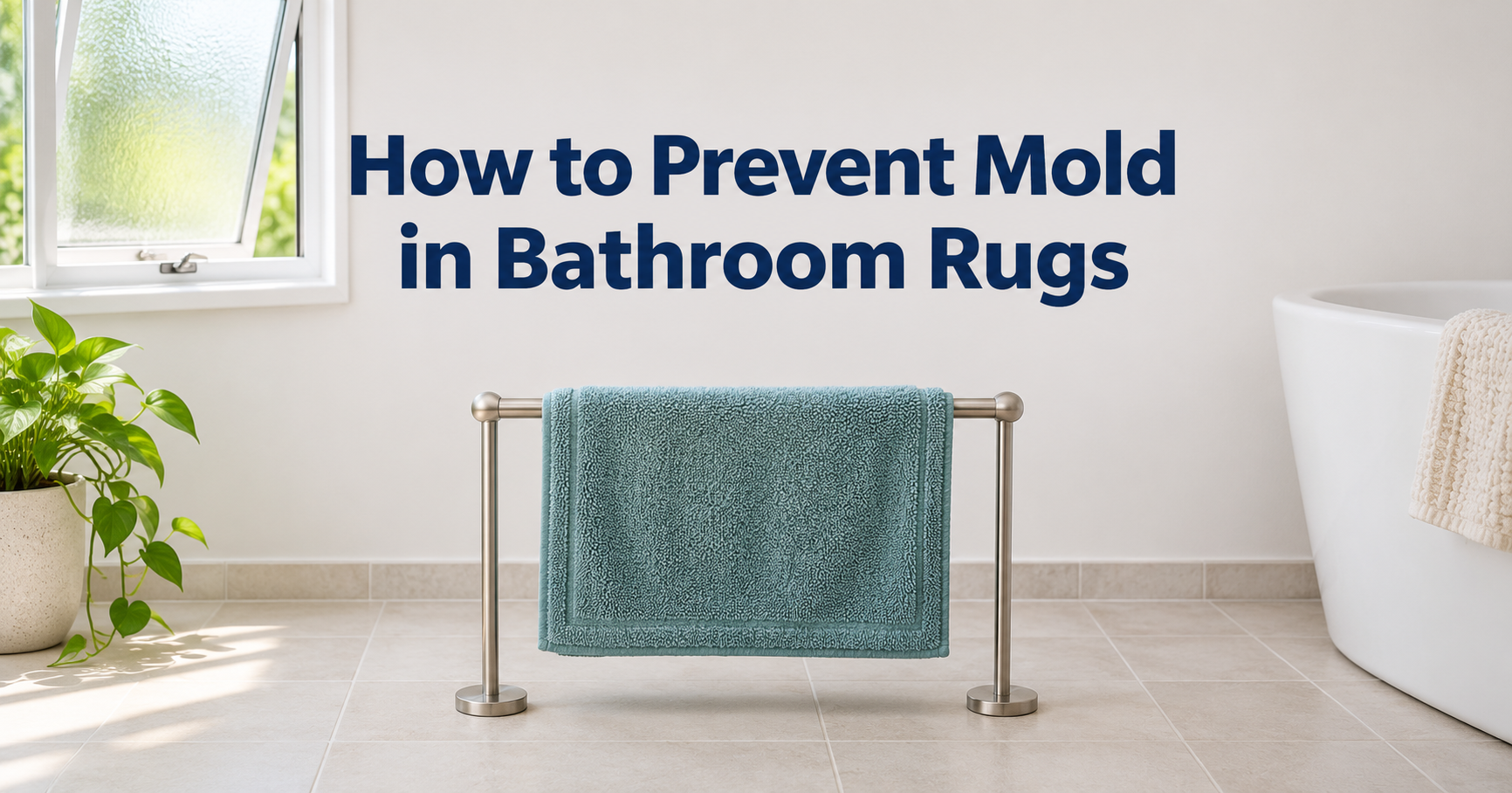
This is the single most effective step. After showering, lift the rug and hang it over the side of the tub, a towel bar, or a drying rack so both sides dry fully. Even 30 minutes of airflow makes a big difference.
2. Improve Bathroom Ventilation
Run the exhaust fan during and for at least 20 to 30 minutes after each shower, or open a window. A small dehumidifier can help in bathrooms with poor airflow.
3. Wash Bathroom Rugs Weekly
Machine wash bath mats at least once a week, or every one to two weeks for low-traffic bathrooms. Use warm water, a good detergent, and a cup of white vinegar in the rinse cycle to kill mold spores and neutralize odors. Check the care label first.
4. Dry Completely Before Putting Back
Tumble dry on a low or medium setting, or hang the rug outdoors in the sun, which also has a natural disinfecting effect. Never return a damp rug to the floor.
5. Choose Quick-Drying and Mold-Resistant Rugs
Look for microfiber, cotton, bamboo, or quick-dry fabrics with a breathable backing. Some synthetic mats and rugs are made specifically to resist mold and mildew, and thin, lightweight mats dry faster than thick, heavy ones.
6. Use a Rug with a Breathable or Perforated Backing
Backings with holes or a mesh pattern let air and water escape. Solid rubber backings trap moisture underneath, so lift and dry these rugs more often.
7. Keep the Floor Under the Rug Dry
Wipe up puddles, and dry the floor beneath the mat regularly. Trapped water between the rug and the floor causes mold on both.
8. Rotate or Rinse Between Washes
Keep a spare rug and alternate them. This lets each one dry fully while the other is in use.
How to Remove Mold from a Bathroom Rug
If mold has already started, act quickly. Wear gloves and a mask, and avoid breathing in spores.
- Take the rug outside and shake or brush off loose spores away from your home.
- Check the care label. Most cotton and microfiber bath mats are machine washable.
- Pre-treat the spots with a mix of equal parts white vinegar and water, and let it sit for 15 to 30 minutes.
- Wash on the warmest setting the label allows, adding detergent and one cup of white vinegar or baking soda. Never mix vinegar and bleach.
- Dry completely, preferably in direct sunlight or on a high heat dryer setting if allowed.
- Check the rug. If the smell or stains remain, repeat the process once. If mold persists, replace the rug.
Important: Rugs with heavy, deep-set mold, or a rubber backing that cannot be cleaned, are better thrown away. Mold can spread through the fibers and affect your health.
Which Bathroom Rug Materials Resist Mold Best?
| Material | Drying Speed | Mold Resistance |
|---|---|---|
| Microfiber | Fast | Good |
| Bamboo or wood slat mats | Very fast | Very good |
| Cotton (thin) | Moderate | Good if washed often |
| Memory foam | Slow | Poor unless dried well |
| Thick shag | Slow | Poor to moderate |
| Quick-dry synthetic or mold-resistant mats | Fast | Very good |
Common Mistakes to Avoid
- Leaving the rug flat and wet: Without airflow, mold appears within a day or two.
- Using thick, heavy rugs in humid bathrooms: They hold water for hours.
- Not washing often enough: Soap scum and body oils feed mold.
- Using fabric softener: It can reduce absorbency and trap moisture in the fibers.
- Ignoring musty smells: An odor often means mold is already growing.
- Using a rubber-backed rug on wet floors without lifting it: Water collects underneath and ruins both the rug and the floor.
- Mixing bleach and vinegar: This creates toxic fumes. Use one or the other, never together.
Frequently Asked Questions
How often should I wash my bathroom rug?
Once a week is ideal, especially in humid bathrooms or homes with several people. Low-use bathrooms can go up to two weeks.
Can I use vinegar to kill mold on a bath mat?
Yes. White vinegar helps kill many mold types and neutralizes odors. Use it in the wash or as a pre-treatment, and check the care label first.
Is a moldy bathroom rug dangerous?
It can be. Mold may trigger allergies, breathing problems, and skin irritation, particularly in children, older adults, and people with asthma.
Should I use a rug in a bathroom at all?
Yes, if you choose a quick-dry mat and care for it properly. Rugs improve safety by preventing slips, as long as you keep them clean and dry.
How long should a bathroom rug last?
A well-maintained rug lasts one to three years. Replace it sooner if it keeps smelling musty or shows stubborn spots after washing.
Final Thoughts
Preventing mold in bathroom rugs comes down to one rule: keep them dry and clean. Hang the rug after every shower, ventilate the room, wash it weekly, and choose a quick-drying, breathable mat. With these simple habits, your bathroom rug will stay fresh, safe, and mold-free for much longer.