

Small plug-in heaters are everywhere right now, and the Handy Heater Turbo is one of the most talked-about. It promises quick warmth, a digital thermostat, and a timer, all in a compact unit that plugs straight into a wall outlet. But does it live up to the hype, or is it just another gadget that sounds better than it performs?
In this guide, we break down the Handy Heater Turbo pros and cons honestly, so you can decide whether it fits your space and your expectations before you spend any money.
Quick Verdict
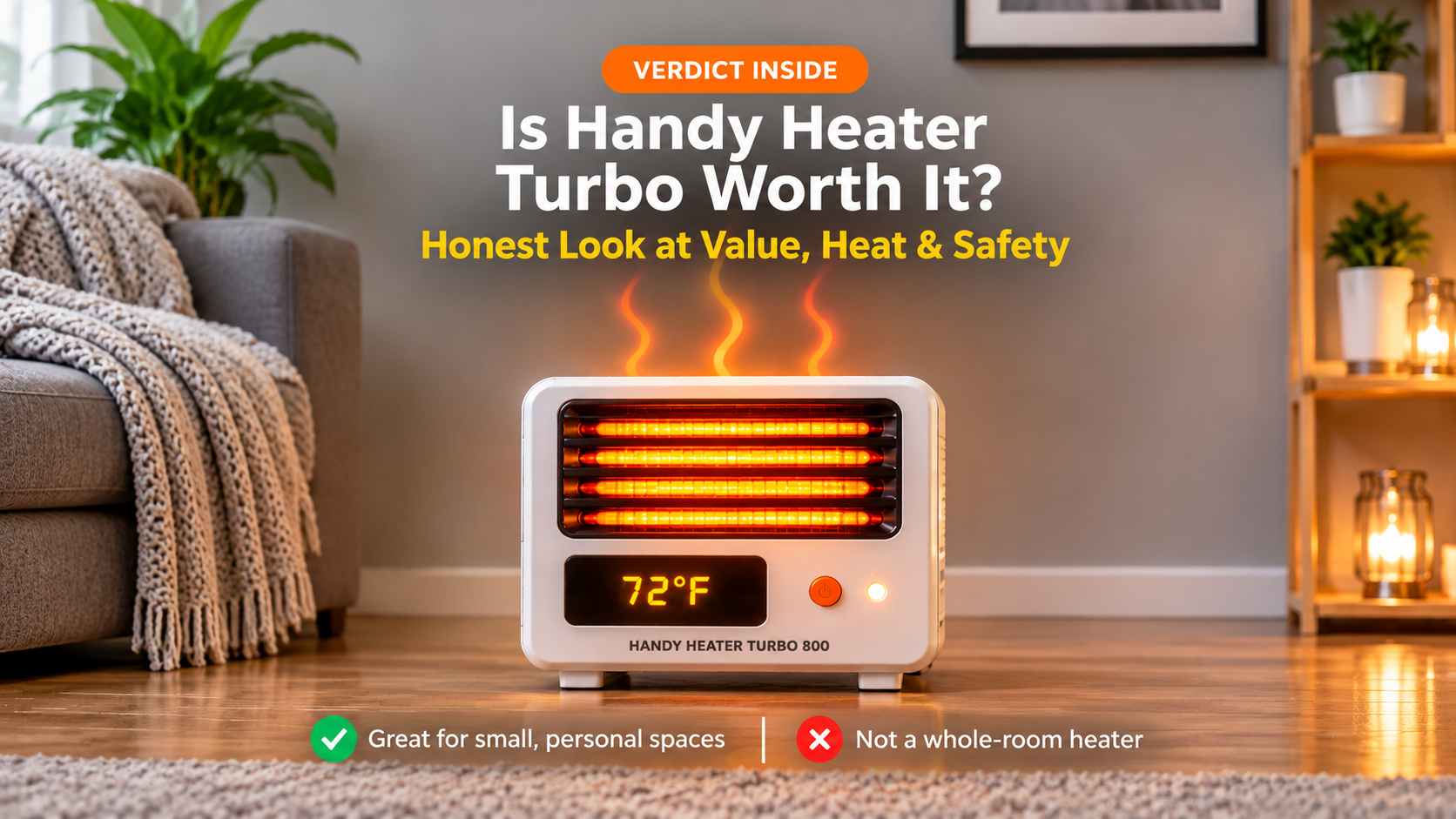
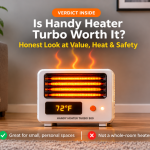
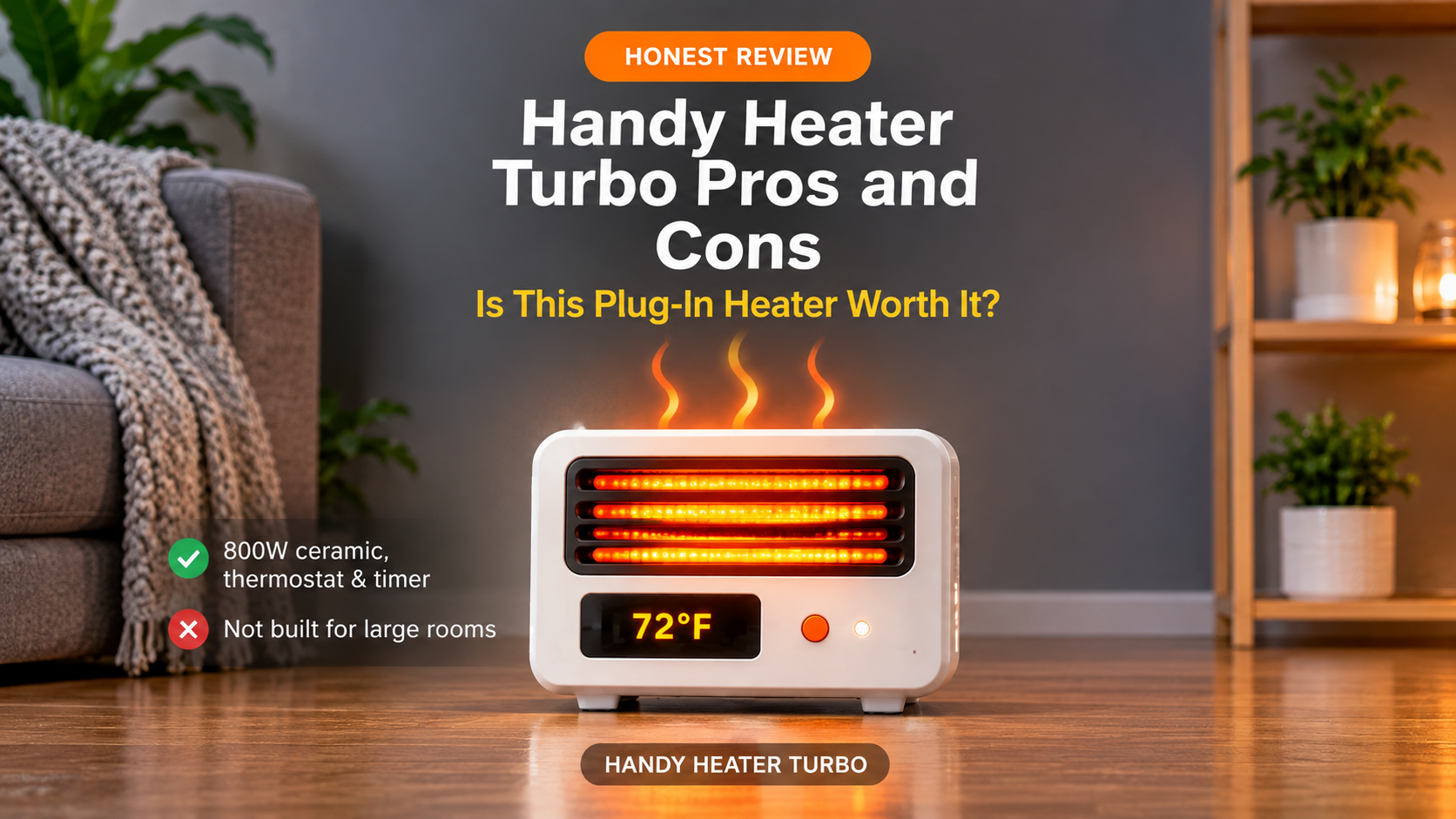
The Handy Heater Turbo is a good choice for small, personal spaces such as a desk area, small bedroom, or home office, especially if you like the idea of a thermostat, a timer, and no floor clutter. It is not a good choice if you want to heat a large living room or replace your main heating. Its 800-watt output is the biggest strength for energy use and the biggest limit for heating power.
What Is the Handy Heater Turbo?
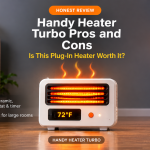
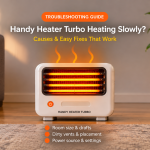
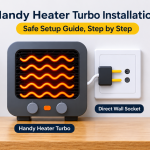
The Handy Heater Turbo, commonly sold as the Handy Heater Turbo 800, is a compact ceramic space heater that plugs directly into a standard wall outlet. Instead of sitting on the floor like a traditional portable heater, it mounts on the outlet itself, which keeps the floor clear and removes the need for a long power cord.

| Feature | Details |
|---|---|
| Heating power | 800 watts (about 2,730 BTU per hour) |
| Heating element | Ceramic, forced-air heating |
| Thermostat range | Approximately 60°F to 90°F (about 15°C to 32°C) |
| Timer | Programmable, up to 12 hours |
| Display | Digital LED display |
| Safety | Auto shut-off and overheat protection, stay-cool housing |
| Installation | Plugs directly into a standard wall outlet, no assembly |
Note: Exact features, packaging, and model names (such as Turbo 800, Turbo Heat, or Copper Core versions) can vary by seller, so always check the details on the product page you buy from.
Handy Heater Turbo Pros

1. Saves Floor Space
Because it plugs straight into the wall, there is nothing to trip over and no bulky base taking up room. This is a real advantage in small bedrooms, offices, dorm rooms, and tight corners where a traditional space heater would be in the way.
2. Adjustable Digital Thermostat
Many compact heaters only offer high or low settings. The Handy Heater Turbo lets you pick a target temperature, and the thermostat helps the unit maintain it instead of running at full power all the time. That means more comfortable, steadier warmth.
3. 12-Hour Programmable Timer
The built-in timer lets you schedule heating, which is useful if you want the room to be warm when you wake up or sit down to work. It also helps prevent the heater from running longer than you intended.
4. Quiet Operation
Ceramic heaters with small fans generally run much more quietly than larger fan heaters. For a bedroom, home office, or video calls, low noise is a genuine advantage.
5. Fast Personal Warmth
Ceramic heating elements warm up quickly, so you can feel warm air soon after switching the unit on. For feet under a desk, a chilly corner, or a small bathroom, this quick response is where the heater performs best.
6. Built-In Safety Features
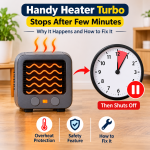
Auto shut-off, overheat protection, and a stay-cool housing add peace of mind. These features do not replace common-sense safety, but they are important on any electric heater.
7. Affordable and Easy to Use
The price is usually modest compared with larger heaters, and there is no setup. Plug it in, set the temperature, and you are done. It also makes a practical gift or backup heater for a cold spot in the home.
Handy Heater Turbo Cons
1. Only 800 Watts of Heating Power
Most full-size portable heaters use 1,500 watts, nearly double the Handy Heater Turbo. That extra power matters. At 800 watts, the heater simply cannot add as much heat to a room, so it will feel slow in colder or larger spaces.
2. Not Suitable for Large Rooms
Product listings often say it can cover up to around 250 square feet, but that is best treated as an upper limit under ideal conditions. In a well-insulated small room it can feel great. In a big living room, open-plan area, or drafty space, expect it to be a spot heater at best.
3. Fixed Position and Occupied Outlet
Since the heater plugs into the wall, you cannot move it to where you are sitting. It also uses an outlet, and depending on the outlet design it may crowd or block the second socket. If the outlet is behind furniture or in an awkward spot, the warm air may not reach you effectively.
4. Basic Controls and No Remote
You adjust everything on the unit itself. If the outlet is low or hard to reach, changing the temperature or timer can be inconvenient, and there is no remote control to help.
5. Mixed Feedback on Long-Term Durability
Many buyers are happy with how it performs, but as with many budget electrical products, some users report that a unit eventually stopped heating. Check the warranty and return policy of the seller before buying, and keep your receipt.
6. It Still Uses Electricity
Any electric heater adds to your bill, and 800 watts running for many hours is not free. Used wisely, in short sessions and in small rooms, the cost is reasonable, but it is not a magic way to cut heating costs.
7. Marketing Claims Can Be Optimistic
Online ads often present compact heaters as powerful enough for any room. Realistic expectations are important: it is a small personal heater, not a whole-room solution.
Who Should Buy the Handy Heater Turbo?

It is a good fit if you:
- Need extra warmth at a desk, workstation, or a single chair.
- Want to take the chill off a small bedroom or home office.
- Prefer a clutter-free, plug-in design with a thermostat and timer.
- Are on a budget and want a simple secondary heater.
You should skip it if you:
- Want to heat a large living room or open-plan space.
- Need a main heat source for a very cold home.
- Want a heater you can move around the room.
- Expect fast results in a drafty or poorly insulated area.
Handy Heater Turbo vs a Typical 1,500-Watt Space Heater
| Feature | Handy Heater Turbo (800W) | Typical Portable (1,500W) |
|---|---|---|
| Heating power | About 2,730 BTU/hr | About 5,100 BTU/hr |
| Best room size | Small rooms and personal zones | Small to medium rooms |
| Placement | Fixed at the wall outlet | Move anywhere with an outlet |
| Floor space | None | Needs floor or table space |
| Electricity use | Lower per hour | Higher per hour |
| Heat-up feel | Gentle, personal | Stronger, faster |
How Much Does It Cost to Run?
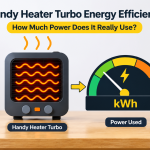
At 800 watts, the heater uses about 0.8 kilowatt-hours (kWh) of electricity for every hour it runs at full power. The thermostat can reduce that in practice, because the unit does not heat continuously once the room reaches your set temperature. To estimate your cost, multiply 0.8 by the hours of use and by your electricity rate.

For example, at a rate of $0.15 per kWh, running it for 4 hours a day for a month would use roughly 96 kWh, or around $14. Your actual cost depends on your local rate and how long the heater cycles on.
Tips to Get the Best Results
- Plug it directly into a wall outlet. Do not use extension cords or power strips with a heater.
- Keep the area in front clear. Furniture, curtains, and bedding should stay several feet away.
- Close the door. Heating one room is far more effective than heating a whole floor.
- Reduce drafts. Use a draft stopper and thick curtains to keep warmth in.
- Use the timer. Preheat before you need the room, then let the thermostat do the rest.
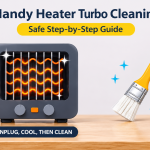
- Keep the vents clean. Unplug it and gently remove dust so airflow stays strong.
- Check the outlet. It should be in good condition and not loose, and it should feel only normal warm, never very hot.
Safety Notes
- Never cover the heater or block its air vents.
- Keep it away from water, curtains, bedding, and anything flammable.
- Stop using it immediately if you notice a burning smell, smoke, sparks, a damaged plug, or an unusually hot outlet.
- Safety organizations generally advise against leaving heaters running unattended or while you sleep, so follow the manual that comes with your unit.
- Never open the casing or try to repair it yourself.
Buying Tips
- Buy from a reputable seller. Look for clear return and warranty terms.
- Check the exact model. Names, wattage, and features can differ between versions.
- Keep your receipt and packaging in case you need a return or warranty claim.
- Compare prices. The cost can vary quite a bit between stores and promotions.
- Be realistic. Choose the size of heater that matches the size of your room.
Frequently Asked Questions
Is the Handy Heater Turbo worth buying?
Yes, for small personal spaces. If you want a quiet, compact, plug-in heater with a thermostat and timer, it offers good value. If you need to heat a large room, you will likely be disappointed.
How many watts does the Handy Heater Turbo use?
The common Turbo 800 model is rated at 800 watts, which is about 0.8 kWh per hour at full power.
How big a room can it heat?
Listings often claim up to about 250 square feet, but it performs best in smaller, enclosed rooms such as a bedroom, bathroom, or home office.
Does it have a thermostat and timer?
Yes. It has an adjustable thermostat (roughly 60°F to 90°F) and a programmable timer of up to 12 hours.
Is it safe to leave on all night?
Although it includes auto shut-off and overheat protection, it is generally safest not to leave any heater running unattended or while you sleep. Follow the instructions that come with your unit.
Is it better than a regular space heater?
It depends on what you need. It saves floor space and is quiet, but a typical 1,500-watt portable heater is more powerful and can be moved around. For small spaces the Handy Heater Turbo is convenient; for bigger spaces a stronger heater is the better match.
Can I use it with an extension cord?
No. Heaters should be plugged directly into a wall outlet because extension cords and power strips can overheat.
Final Verdict
The Handy Heater Turbo does what a compact plug-in heater should do: it provides quiet, convenient warmth for small spaces, with a thermostat, a 12-hour timer, and useful safety features, all at an affordable price. Its main drawbacks are equally clear: only 800 watts of power, a fixed position at the outlet, limited suitability for large rooms, and some mixed reports on long-term durability.
If you set the right expectations and use it in a small, draft-free room, it can be a handy little helper for cold mornings and chilly desks. If you want a heater to warm a whole living area, choose a more powerful model instead. Matching the heater to your space is the real secret to being happy with your purchase.