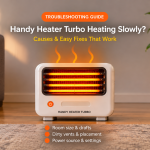

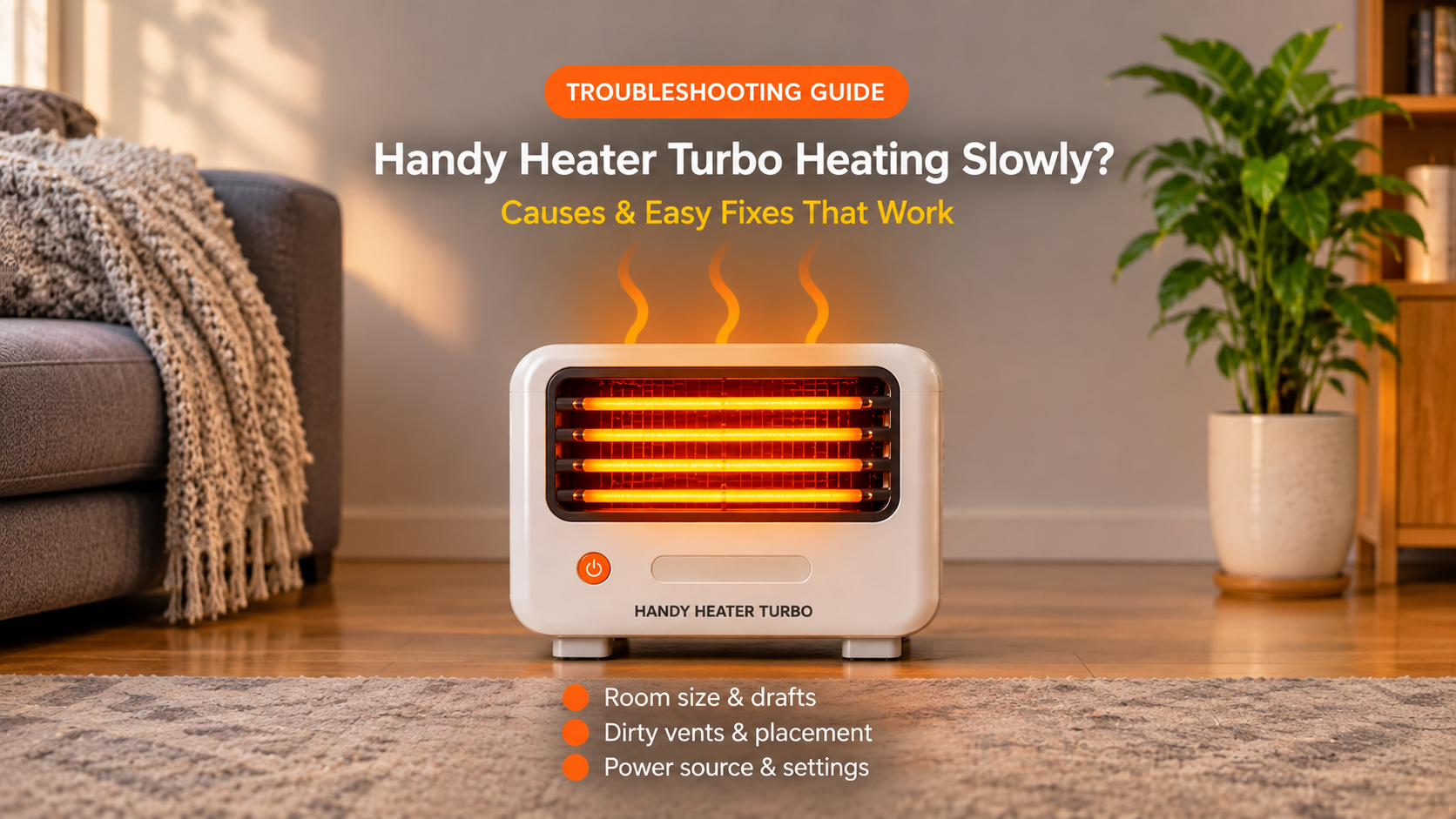

You plug in your Handy Heater Turbo, expecting cozy warmth in minutes, but a quarter of an hour later the room still feels chilly. It is frustrating, especially on a cold morning or a freezing evening. The good news is that a Handy Heater Turbo heating slowly is rarely a sign that the heater is broken. In most cases, the cause is something simple that you can fix yourself in a few minutes: the size of the room, cold drafts, poor placement, dusty vents, a weak power source, or the wrong settings.
In this complete guide, you will learn what slow heating really looks like, the nine most common reasons behind it, a step-by-step fix, and practical tips to make your room feel warmer faster.
Quick Answer
If your Handy Heater Turbo is heating slowly, check these first:
- Room size: It is a compact heater, so it works best in small, enclosed spaces.
- Drafts: Close doors and block gaps around windows.
- Placement: Keep it on a flat floor with open space in front of it.
- Vents: Unplug it and gently remove dust from the grille and intake.
- Power: Plug it directly into a wall outlet, not an extension cord.
- Settings: Raise the temperature setting and give it 15 to 20 minutes.
What to Expect From the Handy Heater Turbo
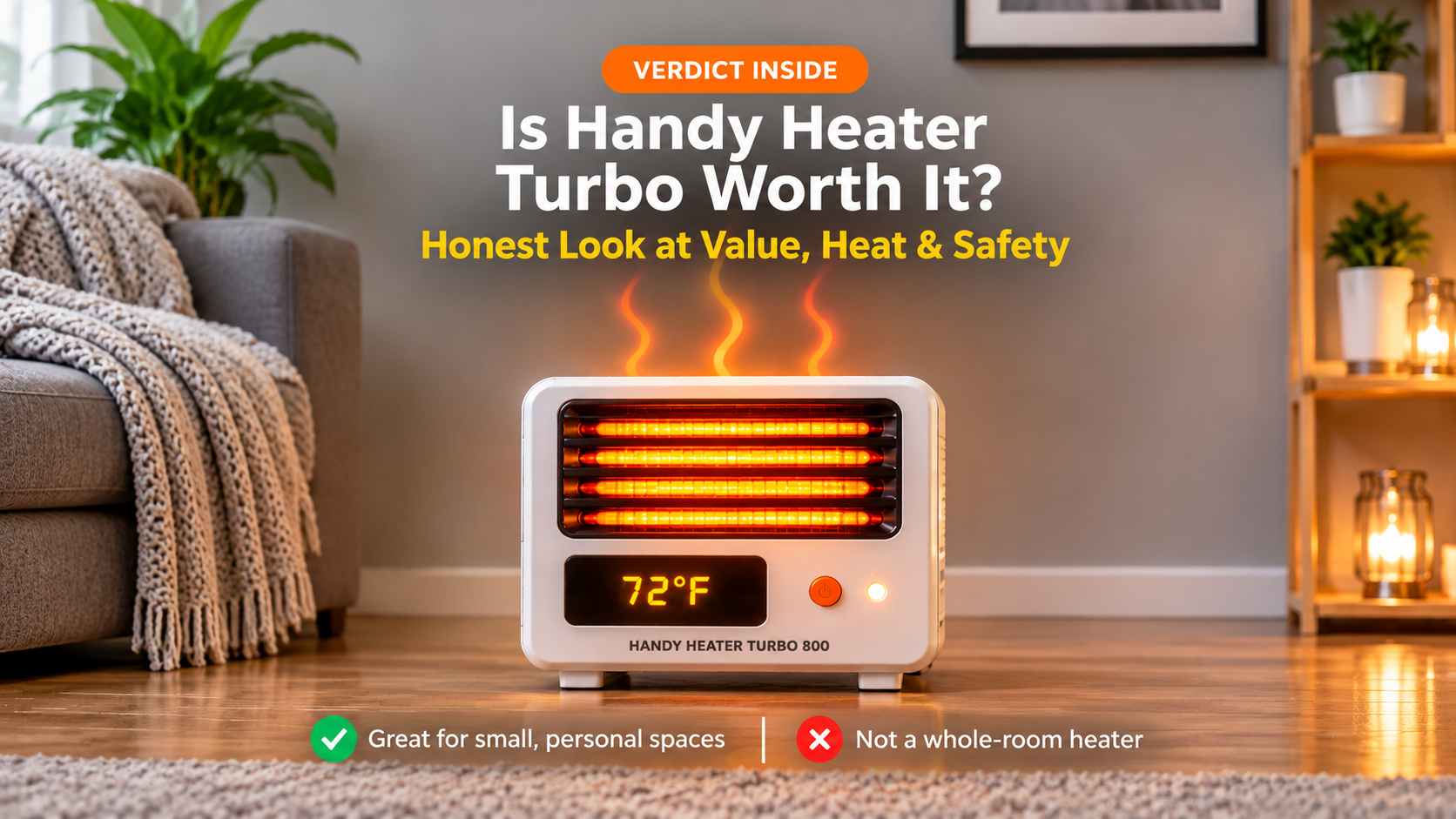
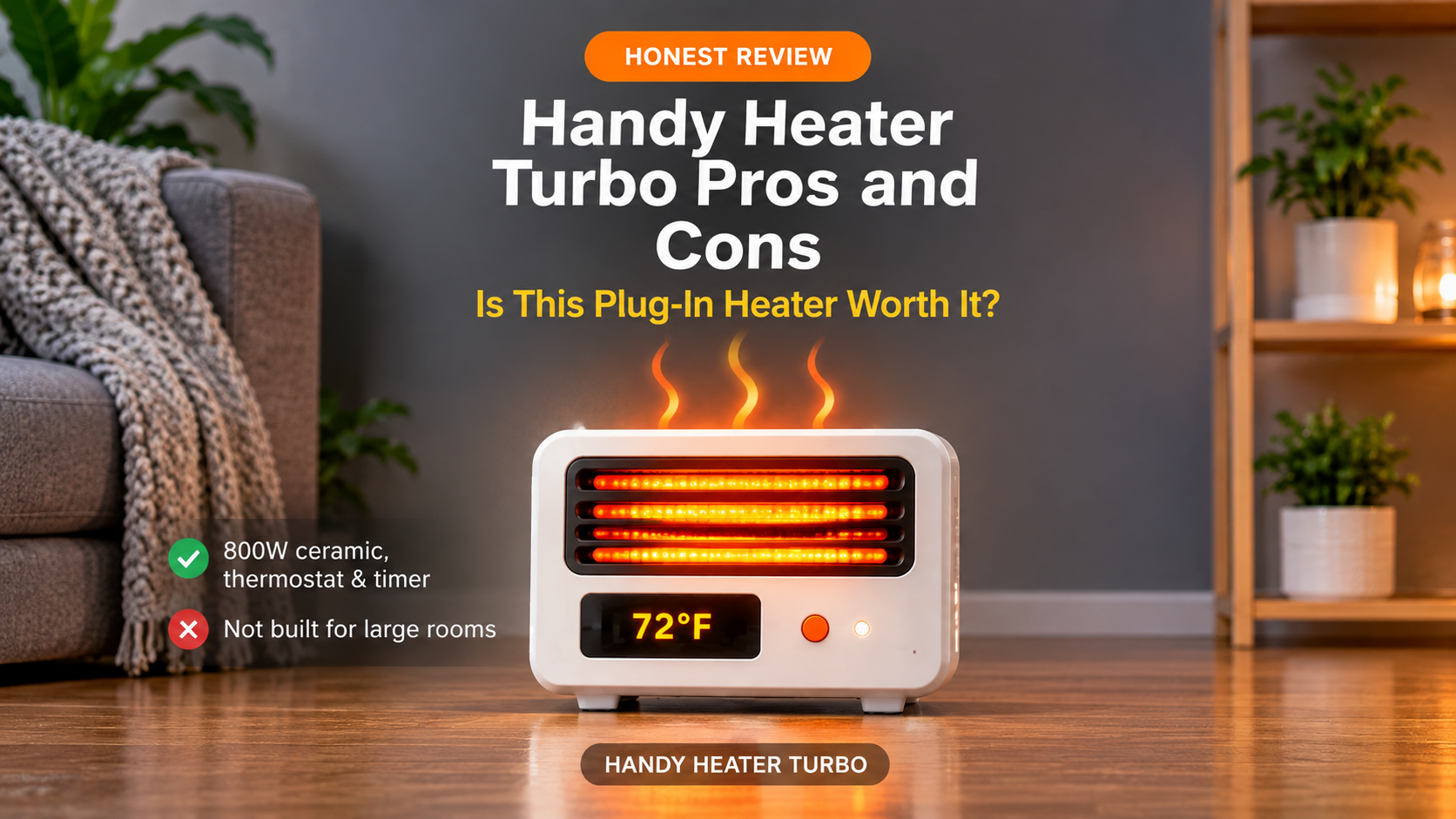
Before troubleshooting, it helps to know what a heater like this is designed to do. The Handy Heater Turbo is a compact, portable heater meant for personal and small-space warming. It heats the air close to it and pushes warm air outward. It is not a replacement for central heating, and it will not warm a large, open room the way a big radiator or furnace can.
What Is Normal?
- Warm air starts to come out within a minute or two of switching on.
- You feel a clear difference near the heater within a few minutes.
- A small room gradually becomes more comfortable over roughly 15 to 30 minutes, depending on how cold it was to start.
What Is Not Normal?
- Only cool or lukewarm air after many minutes of running.
- No noticeable warmth even when you sit right in front of the heater.
- A burning smell, sparks, a hot plug, or a damaged cord.
- The heater switching itself off again and again.
Why Is Your Handy Heater Turbo Heating Slowly?
Here is a quick overview of the most common culprits, followed by a detailed look at each one.

1. The Room Is Too Large for a Compact Heater
This is the number one reason people feel disappointed. A compact heater can only add a limited amount of heat to the air around it. In a big living room, an open-plan area, or a space with high ceilings, that heat spreads out and disappears quickly, so the room never seems to warm up.
How to fix it: Use the heater in a smaller area such as a bedroom, home office, bathroom (away from water), or right beside your desk or sofa. If you are heating a large room, treat the heater as a spot heater for the area where you are sitting rather than for the whole room.

| Space Type | How a Compact Heater Performs |
|---|---|
| Desk or personal space | Excellent, you feel the warmth quickly |
| Small bedroom or bathroom | Good, especially with the door closed |
| Medium living room | Slow, best used as a spot heater near you |
| Large open-plan area | Not suitable as the main heat source |
2. Cold Drafts and Poor Insulation
If cold air keeps leaking in, your heater is fighting a losing battle. Gaps under doors, old window frames, thin curtains, and uninsulated walls all let heat escape almost as quickly as it is produced. Tile or concrete floors also pull warmth away from the room.
How to fix it: Close the door and windows, place a draft stopper or rolled towel at the bottom of the door, hang thicker curtains, and lay a rug on cold floors. Even small changes make a noticeable difference.
3. The Heater Is in the Wrong Spot
Heaters need room to breathe. If the Handy Heater Turbo is pushed into a corner, hidden behind a sofa, or placed right against a curtain, the airflow is blocked and the warm air cannot circulate. The heat stays trapped near the unit while the rest of the room stays cold.

How to fix it: Place the heater on a flat, stable, hard surface with clear space around and in front of it. A common safety guideline is to keep at least three feet (about one meter) between a heater and furniture, bedding, or curtains. Point it toward the area where you sit or sleep.
4. The Temperature Setting Is Too Low or the Wrong Mode Is Selected
It sounds obvious, but it is a very common reason. If the thermostat is set only a little above the current room temperature, the heater may heat gently or cycle off quickly. If it has multiple modes or power levels, you may also be on a lower setting without realizing it.
How to fix it: Raise the temperature setting and select the stronger heating mode while the room is warming up. Once the room is comfortable, you can lower it again.
5. Dust and Blocked Air Vents
Over time, dust, pet hair, and lint collect on the air intake and the front grille. When air cannot flow freely, less heat is delivered into the room, and the heater can run hotter inside, which may trigger its safety features to reduce output. This is one of the easiest problems to fix and one of the most overlooked.
How to fix it:
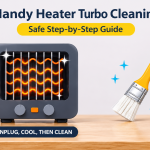
- Switch the heater off, unplug it, and let it cool down completely.
- Use a soft brush or a vacuum with a brush attachment to remove dust from the grille and vents.
- Wipe the outside with a dry or barely damp cloth.
- Make sure it is fully dry before plugging it in again.
Important: Never pour water or spray liquid into the heater, and never open the casing.
6. A Weak or Overloaded Power Source
Heaters draw a lot of electricity compared with most household devices. If the Handy Heater Turbo is connected to a thin extension cord, a worn power strip, or an outlet shared with other appliances, it may not receive steady power. That can reduce its performance, and it is also a safety risk because overloaded cords can overheat.
How to fix it: Plug the heater directly into a wall outlet that is in good condition. Avoid sharing that outlet with other high-power devices such as kettles, hair dryers, or irons while the heater is running. If the plug or outlet feels very hot, stop using it and have the outlet checked by a qualified electrician.
7. The Room Started Out Extremely Cold
A room that has been unheated all night, or a space with very cold walls and floors, needs much more energy to warm up. The air heats first, but the cold surfaces keep absorbing that heat. The result is that the first 20 to 30 minutes feel slow even when the heater is working normally.
How to fix it: Turn the heater on earlier, before you need the room. Keep the door closed and be patient, since the room will feel much warmer once the walls and furniture begin to warm up.
8. The Thermostat Sensor Is Getting Confused
If your heater has a built-in thermostat, it measures the air around it. When the unit sits in a small nook, close to another heat source, or in direct sunlight, the sensor may think the room is already warm and reduce its output or switch off early, even though you are still cold.
How to fix it: Move the heater into a more open spot away from other heat sources and sunlight. If it still switches off too early, set the temperature a little higher than you normally would.
9. A Possible Internal Fault or Defective Unit
If you have tried everything above and the heater still produces little or no warmth, there may be an internal fault, such as a failing heating element, a faulty thermostat, or a defective fan. This is less common, but it does happen with any electrical product.
How to fix it: Do not try to repair it yourself. Stop using it and contact the seller or manufacturer for support, a replacement, or a refund. More on that below.
Step-by-Step: How to Fix a Handy Heater Turbo That Heats Slowly
Follow these steps in order. Most users find the problem within the first three or four.

- Unplug the heater and let it cool. Always start with safety.
- Clean the vents and grille. Remove dust and lint with a soft brush or vacuum brush attachment.
- Plug it directly into a wall outlet. Remove any extension cord or power strip from the equation.
- Raise the temperature setting. Choose the highest suitable heat mode while the room warms up.
- Reposition the heater. Put it on a flat floor with open space around it, facing the area where you will be.
- Reduce drafts. Close the door, shut windows, and block obvious gaps.
- Wait 15 to 20 minutes. Give the room time to respond before judging the result.
- Test it in a smaller room. If it heats well in a small space but not a large one, the issue is room size, not a fault.
How Often Should You Clean Your Heater?
A quick dusting every two to four weeks during heavy use keeps airflow strong and performance steady. If you have pets, carpets, or a dusty environment, check it more often. At the end of the winter season, clean it thoroughly and store it in a dry place, ideally covered, so dust does not build up while it is not in use.
Tips to Make Your Room Feel Warmer, Faster
- Close the door. Keep the warm air inside the room you are using.
- Use thick curtains. They add a layer of insulation over cold glass.
- Add rugs or mats. They stop heat from being absorbed by cold floors.
- Sit closer. A compact heater works best within a few feet of you.
- Preheat the room. Switch it on 15 to 20 minutes before you need the space.
- Layer up. Warm clothing and a blanket make the heater feel more effective.
- Heat only one room. Concentrating heat in one space is far more efficient.
Safety Rules While Troubleshooting
- Always unplug the heater before cleaning or moving it.
- Never cover the heater or place clothes, towels, or blankets on top of it.
- Keep it away from water, curtains, bedding, paper, and other flammable materials.
- Do not use extension cords or overloaded power strips.
- Never open the casing or attempt electrical repairs yourself.
- Safety organizations generally advise against leaving portable heaters running unattended or while you sleep.
- Stop using it immediately if you notice a burning smell, smoke, sparks, a damaged cord, or an unusually hot plug.
When to Contact the Seller or Manufacturer
If the heater still produces weak heat after cleaning, correct placement, a direct wall connection, and a fair test in a small room, it is time to ask for help. Signs that point to a real fault include:
- Blowing only cold or barely warm air even after 15 to 20 minutes.
- Repeatedly switching itself off.
- Unusual noises, smells, or flickering lights on the unit.
- Visible damage to the cord, plug, or casing.
Before you reach out, keep your order number, purchase date, and a short description of the problem ready. A short video or photo can also help the support team understand the issue. Check your return or warranty window early, because these periods are often limited.
Is the Handy Heater Turbo Right for Your Needs?
A compact heater like this is a good fit when you want fast, close-range warmth: beside your desk, in a small bedroom, in a home office, or in a small bathroom. It is portable, easy to move around, and simple to use. However, if your main goal is to heat a large living area or an entire floor, a compact heater will always feel slow, no matter how well it works. In that case, a higher-capacity heater or a proper central heating solution is a better match. Choosing the right tool for the size of your space is the best way to avoid disappointment.
Frequently Asked Questions
How long should the Handy Heater Turbo take to heat a room?
You should feel warm air within a minute or two. A small room usually feels noticeably warmer in about 15 to 30 minutes, depending on the starting temperature, insulation, and drafts. Larger rooms may never reach a fully comfortable level.
Why is my Handy Heater Turbo blowing cool air?
Short bursts of cooler air can be normal at start-up or when the thermostat cycles. If it keeps blowing cool air continuously, check the temperature setting, clean the vents, plug it directly into a wall outlet, and contact support if the problem continues.
Can an extension cord make my heater heat slowly?
Yes. A thin or overloaded extension cord can limit the power reaching the heater and may overheat. Always use a wall outlet for heaters.
Will the Handy Heater Turbo heat my whole house?
No. It is designed for personal and small-space heating. It works best as a supplemental heater in the room you are using.
Why does my heater keep turning off?
Common reasons are a thermostat that believes the room is already warm, blocked vents causing the safety features to activate, or a power supply problem. Clean the vents, move the heater to an open spot, and use a wall outlet. If it still happens, contact the seller.
Can I leave it running overnight?
For safety, it is generally best not to leave any portable heater running unattended or while you sleep. Always follow the instructions that came with your unit.
Final Thoughts
When your Handy Heater Turbo seems to be heating slowly, the cause is usually something simple and fixable: a room that is too big, cold drafts, poor placement, dusty vents, a weak power source, or settings that are too low. Work through the steps in this guide, give the room enough time to warm up, and keep realistic expectations for a compact heater. If you have done everything right and it still underperforms, contact the seller for support or a replacement rather than trying to repair it yourself. With the right setup, you can enjoy fast, comfortable warmth exactly where you need it.