


Cold air often creeps in right by the window, which is exactly where curtains hang. So it is no surprise that many people place a heater in that corner to take the chill off. But using a portable electric heater near curtains is one of the most common and most dangerous placement mistakes in homes. Curtains are light, loose and made of fabric that can catch fire quickly, and a heater produces concentrated heat.
The good news is that you do not have to choose between staying warm and staying safe. In this guide you will learn how far a heater should be from curtains, why this combination is risky, which heater features reduce danger and how to arrange your room so that you stay cosy without worry.
Is It Safe to Use a Portable Electric Heater Near Curtains?
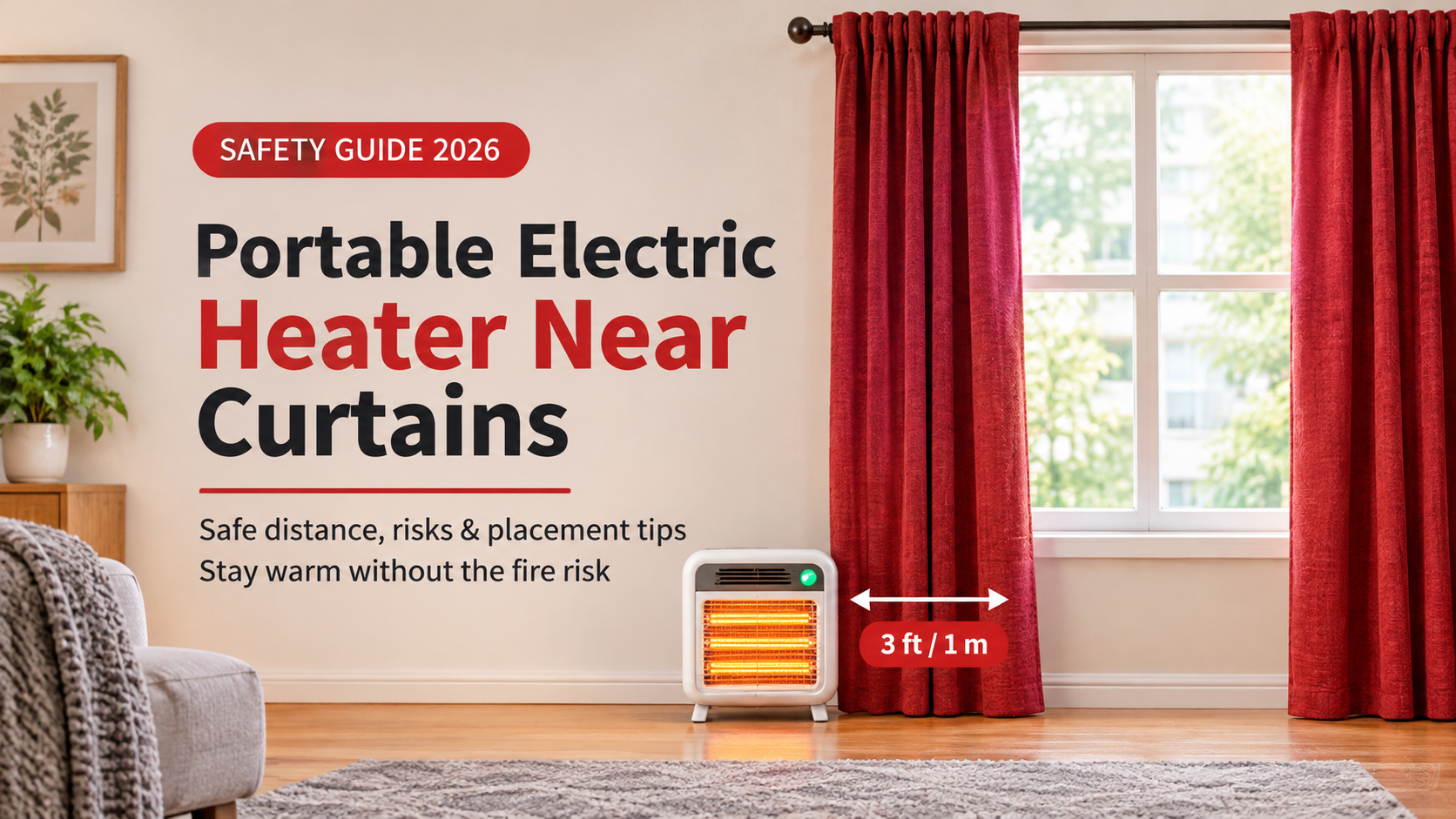
In short, no, not close to them. Fire safety organisations commonly advise keeping space heaters at least three feet (about one metre) away from anything that can burn, including curtains, bedding, furniture, clothes and paper. Many heater manufacturers include the same instruction in their manuals. Electric heaters are generally cleaner than fuel-burning ones, but their heating elements and hot surfaces can still ignite nearby fabric.
If a heater is placed right beside a curtain, even a draught from an open window can push the fabric toward the heater. In a short time, the cloth can overheat, smoulder or ignite. Because curtains reach from ceiling to floor, flames can climb quickly and spread to the ceiling, walls and furniture.
Why Curtains and Heaters Are a Dangerous Mix
- Light and loose fabric: Curtains move with air currents and can touch a hot surface without anyone noticing.
- Large surface area: A large, thin fabric surface burns faster than a thick, compact object.
- Vertical flame spread: Fire travels upward along hanging fabric very quickly.
- Radiant heat: Infrared and other radiant heaters can heat fabric from a short distance without any contact.
- Fan airflow: Fan heaters can blow curtains toward the heater or fill the fabric with hot air.
- Dust build-up: Dusty curtains ignite more easily and spread heat more readily.
- Window position: Heaters near windows often sit in draughts, which move fabric even more.
How Far Should a Heater Be From Curtains?
The general rule is at least 3 feet (1 metre) in every direction. This includes the front, sides and top of the heater. Always follow the exact distance listed in your heater’s instruction manual, since some models require more space.
What If My Room Is Small?
In a small room, it can be hard to leave a full metre of space. In that case, you should still avoid placing the heater near the window. Relocate it to a bare wall, the middle of a clear floor area or beside a hard surface, as long as the cord and surroundings are safe. If there is no place that keeps the safe distance, consider a different heating method such as a wall-mounted heater designed for tight spaces, or an oil-filled radiator that has a lower surface temperature.
Do Curtain Materials Matter?
Yes, fabric type changes how fast a curtain catches fire and how it behaves in heat. No curtain should be treated as safe, but some materials are more risky than others.
| Curtain Material | Heat Behaviour | Risk Level Near Heater |
|---|---|---|
| Sheer cotton or voile | Thin and light, ignites quickly | Very high |
| Polyester or nylon | Can melt, drip and stick to skin | High |
| Cotton and linen | Burn readily when untreated | High |
| Heavy velvet or thick wool | Burns slower, still flammable | Moderate |
| Flame-retardant treated fabric | Resists ignition and spread | Lower, but keep distance |
Flame-retardant curtains reduce risk but do not make it safe to put a heater right next to them. Treat the clearance rule as non-negotiable no matter what fabric you have.
Warning Signs That Your Heater Is Too Close
- The curtain feels warm or hot when you touch it.
- You notice a burning or scorched smell.
- Fabric looks yellowed, brown or discoloured near the heater.
- The curtain moves toward the heater when a window opens or a fan runs.
- The heater keeps switching off because of overheat protection.
- You see smoke, even a faint haze.
If you notice any of these signs, switch off and unplug the heater immediately, move it away and check the area before using it again.
Heater Features That Add Safety
No feature replaces keeping a safe distance. Still, a modern heater with proper protection gives you a stronger safety margin.
- Tip-over protection: The heater switches off if it falls over, which can happen if a curtain pulls it or someone bumps it.
- Overheat protection: An internal cut-off turns the unit off when temperatures get too high or air flow is blocked.
- Cool-touch exterior: The outer body stays at a lower temperature, so brief contact with fabric is less dangerous.
- Adjustable thermostat: Stops the heater from running at full power constantly.
- Timer or auto shut-off: Turns the heater off after a set time, helping if you fall asleep.
- Protective grille: Narrow spacing keeps fabric and fingers away from the hot element.
- Safety certification: Choose a model tested to recognised electrical and fire safety standards.
Best Types of Heaters if You Have Curtains
If your room has window curtains and limited space, the heater type affects how risky the setup is.
Oil-Filled Radiators
They have a lower surface temperature than many other heaters and offer steady, gentle warmth. They are a popular choice for bedrooms and living rooms, as long as you still keep them away from curtains.
Ceramic Fan Heaters
They heat quickly and often come with tip-over and overheat protection. Their airflow can move lightweight curtains, so position them away from windows and aim the airflow into the room, not toward fabric.
Infrared Heaters
Infrared heaters throw radiant heat at objects and people. That is great for comfort, but nearby fabric can heat up even without contact, so extra caution is needed.
Wall-Mounted or Panel Heaters
Flat, mounted units sit off the floor and take up less space. They are well suited for small rooms, and the fixed position makes accidental movement toward curtains less likely. Follow the maker’s mounting height and clearance rules.
Smart Ways to Warm a Window Area Safely
The area by the window feels cold because glass loses heat and lets in draughts. Instead of putting a heater there, fix the cause of the chill:
- Use thermal or lined curtains: Thick lined curtains reduce heat loss, but keep them off the floor and away from heaters.
- Seal draughts: Apply weather stripping or draught tape around window frames.
- Add window film: Insulating film cuts heat loss through glass.
- Tie curtains back when the heater runs: Use a holdback or tieback so fabric hangs well clear of the heater.
- Use shorter curtains or blinds: Blinds or sill-length curtains stay away from floor-level heaters.
- Place the heater on a different wall: Heat a spot near where you sit, not where the cold comes from.
Safe Setup Checklist
- Measure the distance from the heater to the nearest curtain and confirm it is at least 3 feet (1 metre).
- Check that windows or fans cannot blow the curtains toward the heater.
- Put the heater on a flat, hard, stable floor, not on a rug, bed or sofa.
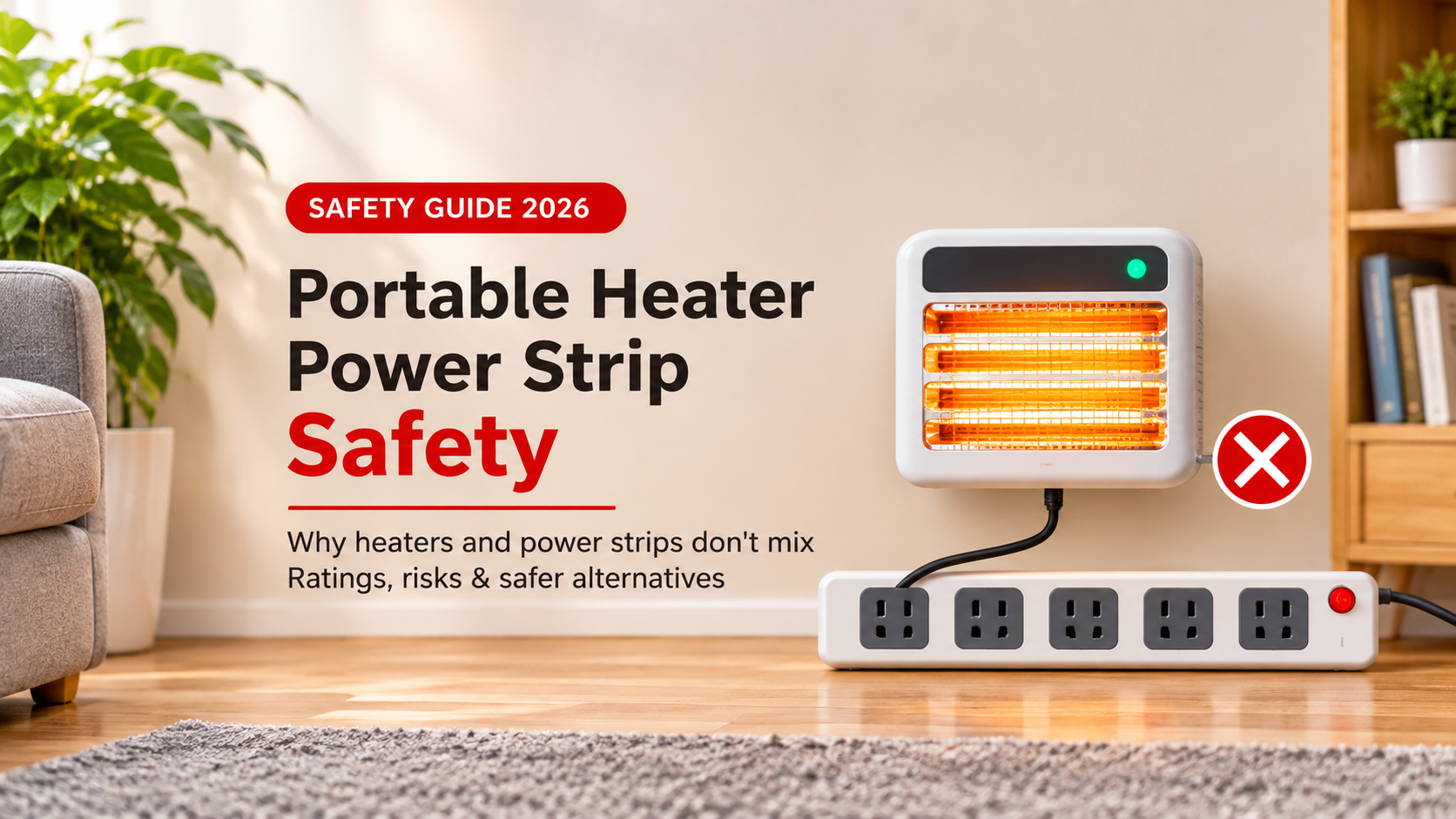
- Plug it straight into a wall socket and avoid extension leads or multi-plugs.
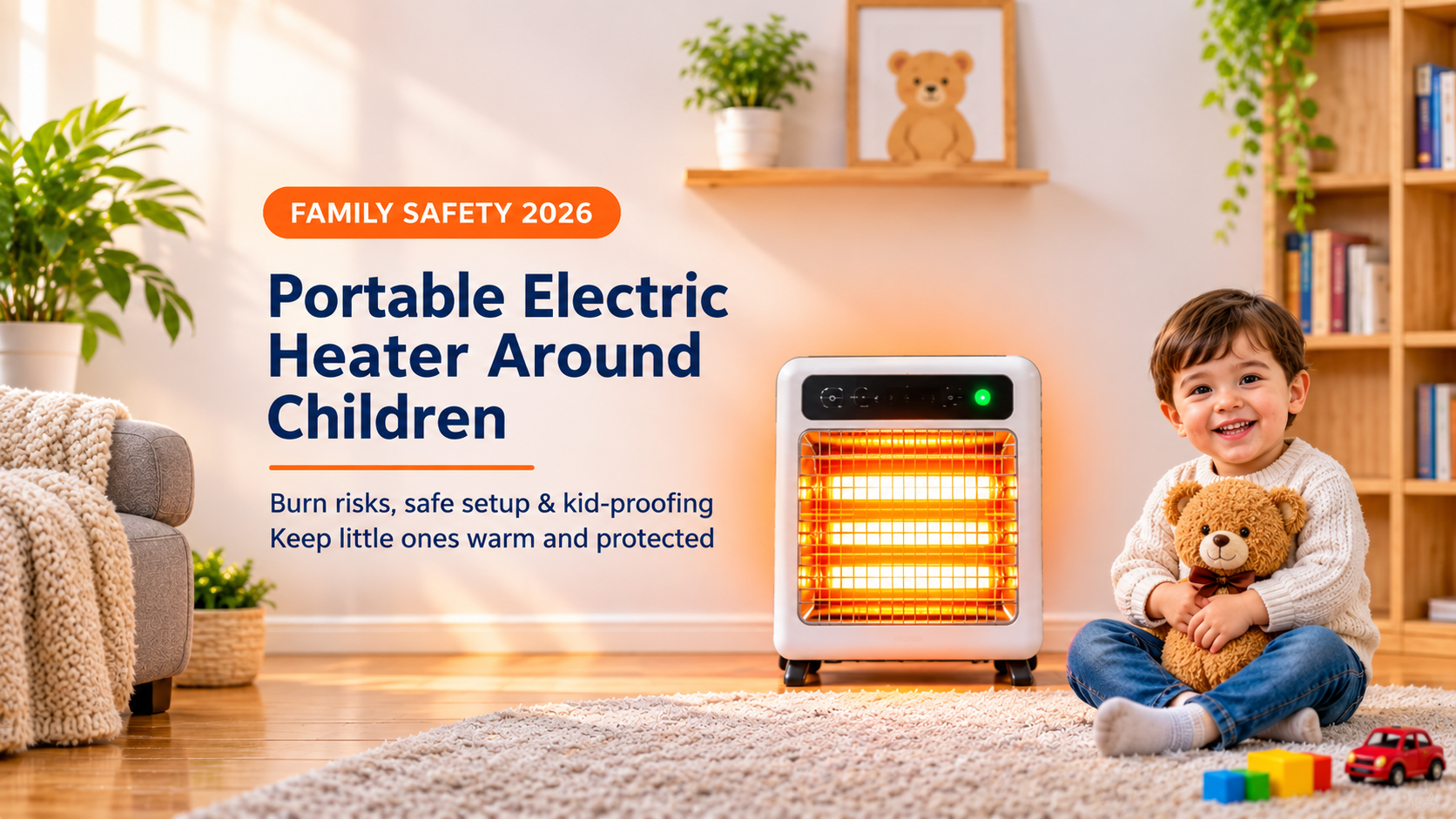
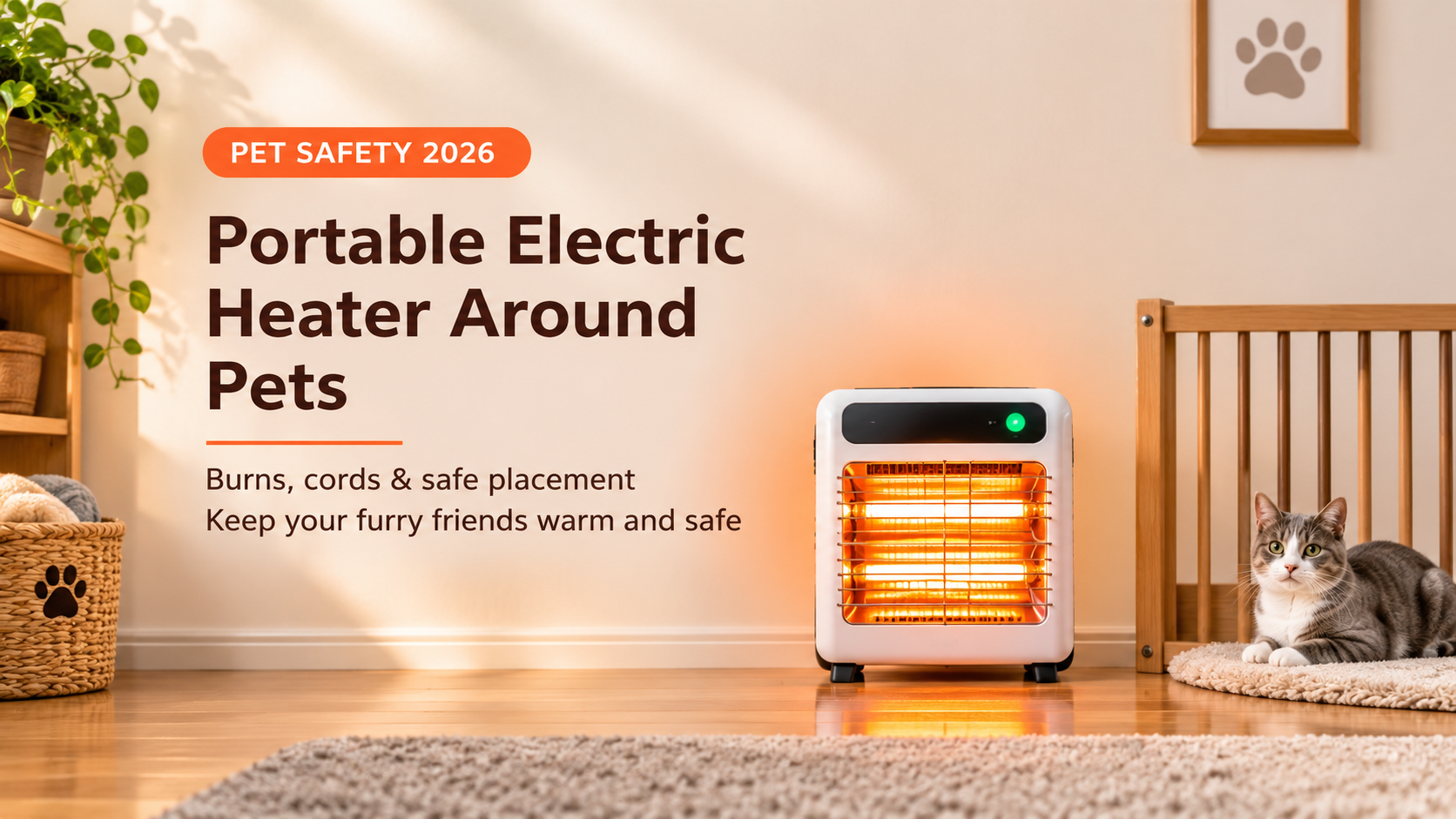
- Keep children and pets away from the heater with a clear play area.
- Test your smoke alarm and make sure it works in the room.
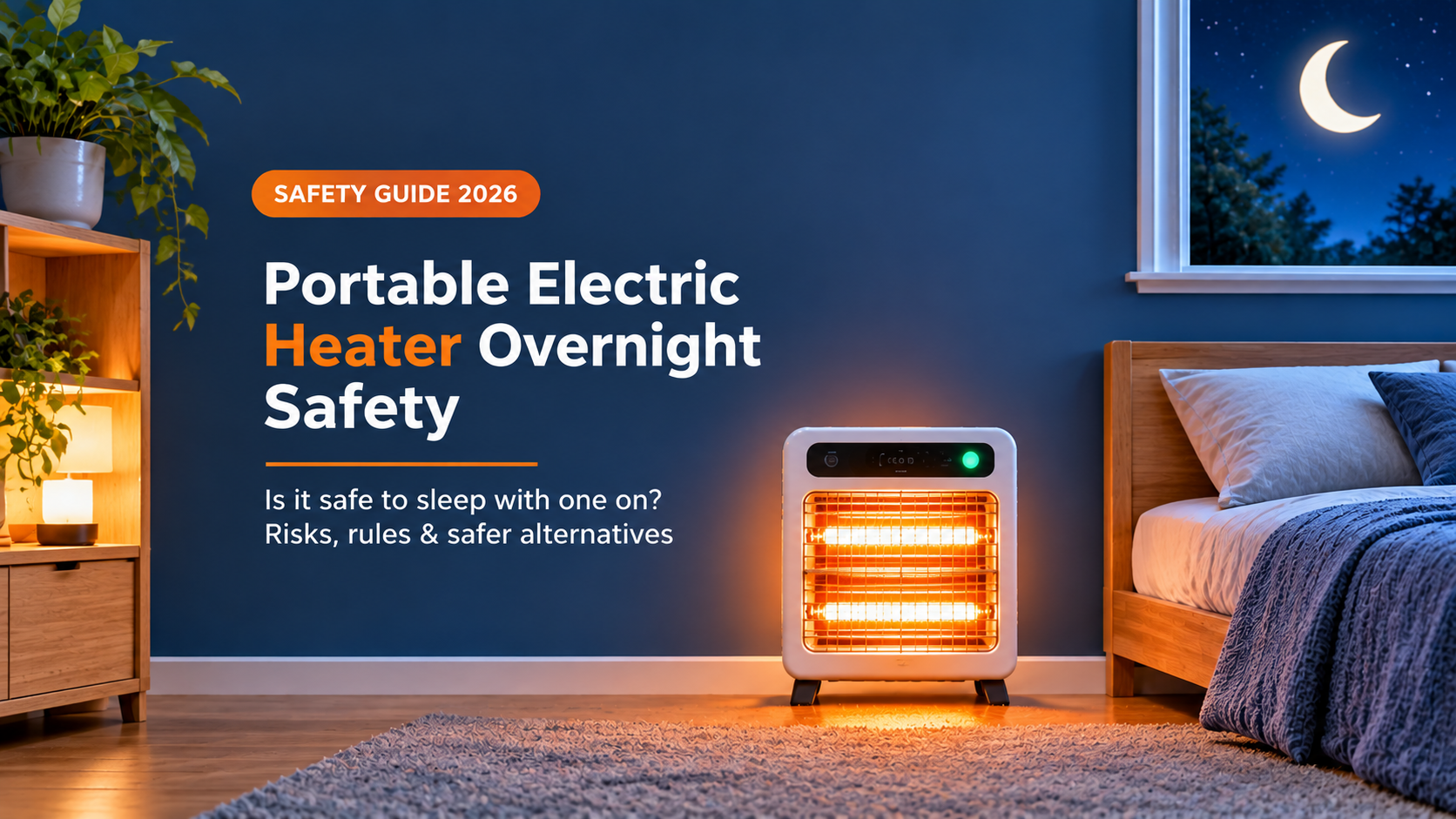
- Turn the heater off when you leave the room or go to sleep.
- Clean dust from the heater’s vents and from nearby curtains regularly.
What to Do If a Curtain Starts to Burn
Fire spreads fast on fabric. Do not try to be a hero:
- If it is safe and the fire is tiny, unplug the heater, but do not take any risks.
- Get everyone out of the room and the building immediately.
- Close the door behind you to slow the spread.
- Call your local emergency number from outside.
- Never go back inside for belongings.
Common Mistakes People Make
- Placing a heater under a window because that is where it is coldest.
- Assuming a flame-retardant curtain removes the need for clearance.
- Pushing the heater against the wall or curtains in a small room.
- Leaving the heater on overnight in a bedroom with curtains.
- Using a heater with a damaged cord or loose plug.
- Drying wet clothes, towels or socks over the heater.
Frequently Asked Questions (FAQ)
How close can a space heater be to curtains?
Keep it at least 3 feet (about 1 metre) away from curtains in all directions, or follow the larger distance in your heater’s manual.
Can a portable electric heater set curtains on fire?
Yes. If fabric touches the heater or gets close enough to overheat, it can smoulder or ignite, even if the heater is electric.
Is an oil-filled heater safe near curtains?
It has a lower surface temperature than many heaters, but it still gets hot. It is not safe to push it against curtains, so keep the recommended distance.
Are flame-retardant curtains safe next to a heater?
They resist ignition better, but they can still be damaged or burn under enough heat. You should still keep a safe distance.
Can I put a heater under a window?
It is not recommended if curtains hang in that area. If you must, tie the curtains back well away from the unit and keep the full clearance distance.
Is it safe to leave a heater on while I sleep?
It is better to turn it off. If you must use it, choose a model with a thermostat, timer, tip-over and overheat protection, and keep everything flammable far away.
Do tip-over switches protect against curtain fires?
They help if the heater falls, but they do not stop heat from igniting fabric when the heater stands upright, so distance still matters most.
What is the safest heater for a bedroom with curtains?
A heater with a thermostat, timer, tip-over protection, overheat protection and a cooler outer surface, placed well away from curtains and bedding, is the safest approach.
Final Thoughts
Using a portable electric heater near curtains is a risk you can easily avoid. Keep at least three feet (one metre) of clear space, choose a heater with modern safety features, tie curtains back and fix window draughts at the source. A small change in placement can protect your family and home while still keeping the room warm.
Always read your heater’s manual, never leave it running unattended and treat the clearance rule as the first line of defence. Comfort is great, but safety always comes first.