
Winter mornings in an office can be brutal. The air conditioning is set for the average person, your feet are freezing under the desk, and asking the facilities team to turn the heat up rarely works. That is exactly the problem a personal heater tries to solve, and the Handy Heater Turbo is one of the most talked-about small options in this category.
In this guide we explain what the Handy Heater Turbo is, how it works, what it can and cannot do in an office, how much it costs to run, and which safety rules you must follow. By the end you will know whether it is the right Handy Heater Turbo for your office or whether you should choose something else.
Quick Summary
- What it is: a small 800W ceramic heater that plugs straight into a wall outlet.
- Best for: cold feet and legs in a cubicle, a small private office or a home office corner.
- Standout features: adjustable thermostat, digital LED display, 12-hour programmable timer, auto shut-off and quiet operation.
- Main limits: modest heat output, personal-space coverage only, and a 120V design that suits North American outlets.
- Typical price: roughly $20 to $50 depending on the store and bundle.
What Is the Handy Heater Turbo?
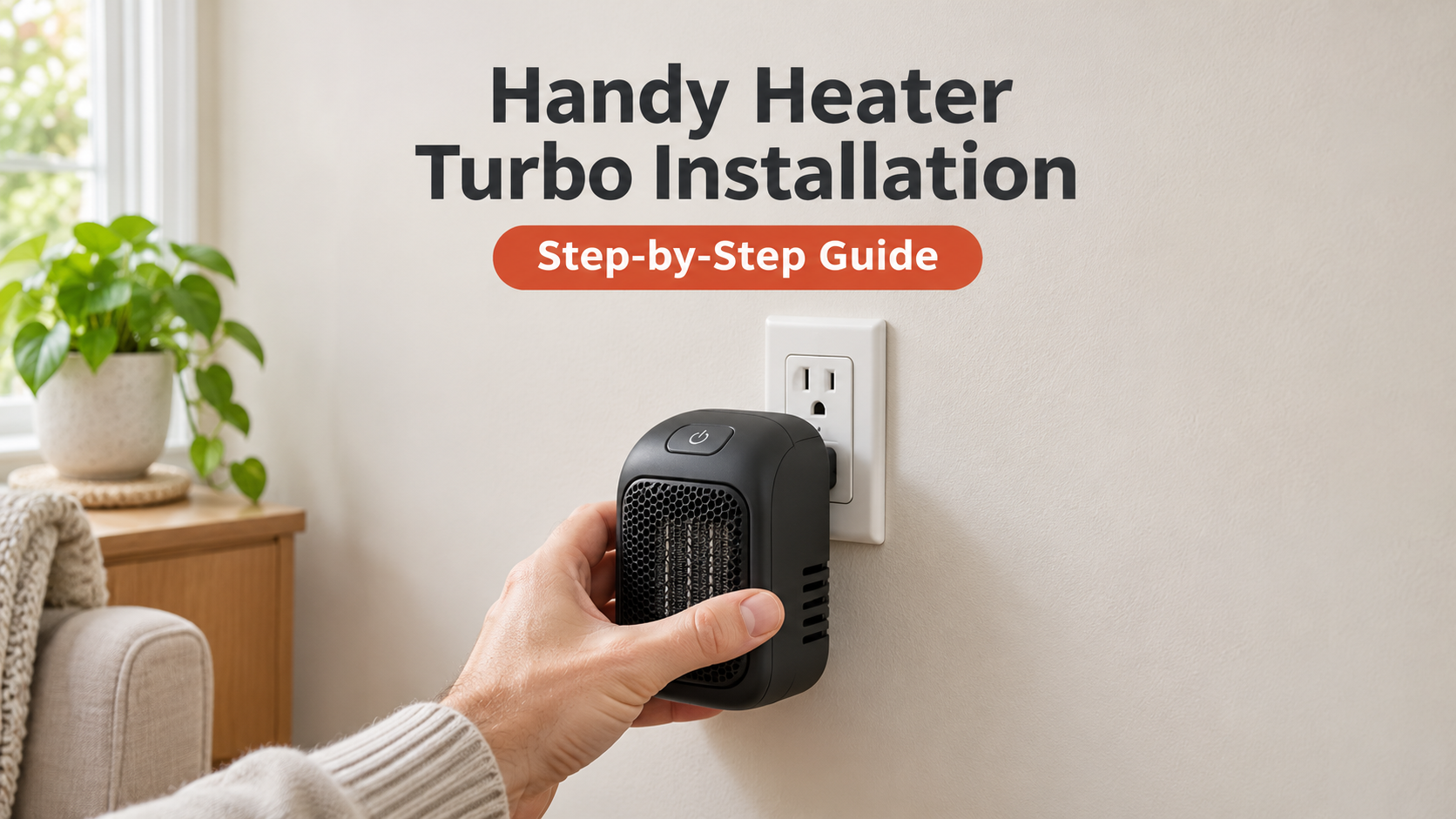
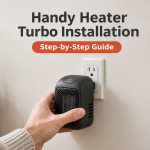
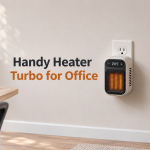
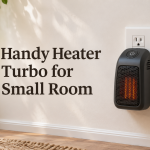
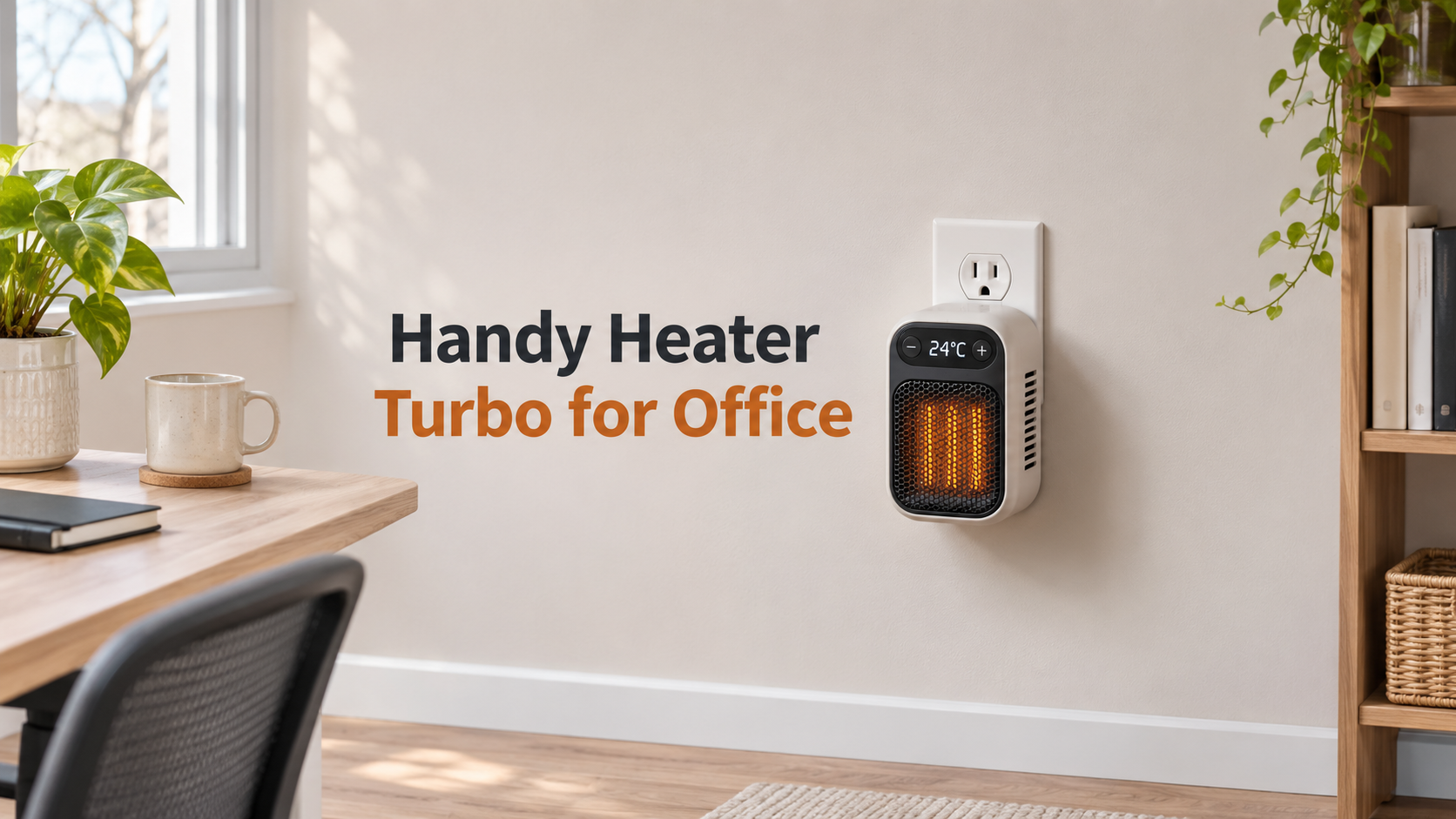
The Handy Heater Turbo (often sold as the Turbo 800) is a compact plug-in space heater made under the Handy Heater brand. Unlike a bulky floor heater, it mounts directly into a standard wall outlet. There is no stand, no long cord and no tipping hazard from a box sitting on the floor, which makes it popular for small workspaces where every inch counts.
Inside the plastic housing is a ceramic heating element. When you plug the unit in and set a target temperature, the thermostat switches the element on and off to keep the air around you near that number. A small digital display shows the temperature, and a timer lets you decide how many hours it should run.

Key Specifications at a Glance
Specifications can vary slightly between retailers and packaging versions, so always compare the details on the box you receive. The figures below are the ones most commonly listed.
| Feature | Typical Specification |
|---|---|
| Power | 800 watts |
| Voltage | 120V (North American outlets) |
| Heating element | Ceramic |
| Thermostat range | 60°F to 90°F (about 16°C to 32°C) |
| Timer | 12-hour programmable timer |
| Display | Digital LED |
| Safety features | Stay-cool housing and auto shut-off |
| Size | About 5.6 x 3.5 x 5.6 inches |
| Approx. heat output | About 2,730 BTU per hour |
| Use | Indoor only |
How Well Does It Heat an Office?
This is the question that matters most, and honesty is important here. Some product pages say the heater can warm a room of up to about 250 square feet. In real life, an 800-watt heater produces roughly 2,730 BTU per hour, which is about half of what a standard 1500-watt portable heater delivers. That is enough to take the chill off a small area, but it will not transform a large open-plan floor.

Think of the Handy Heater Turbo as personal comfort heating, not room heating. It works best when it is close to you. Placed on a wall outlet under or beside your desk, it warms the air around your feet and legs, which is where most people feel the cold first.

Main Features Explained
1. Wall-Outlet Design
Because the heater sits flush in the outlet, it saves desk and floor space and avoids a trailing cord. In a shared office this also means fewer things for colleagues to trip over. The trade-off is that its position is fixed: you can only place it where an outlet exists.
2. Adjustable Thermostat
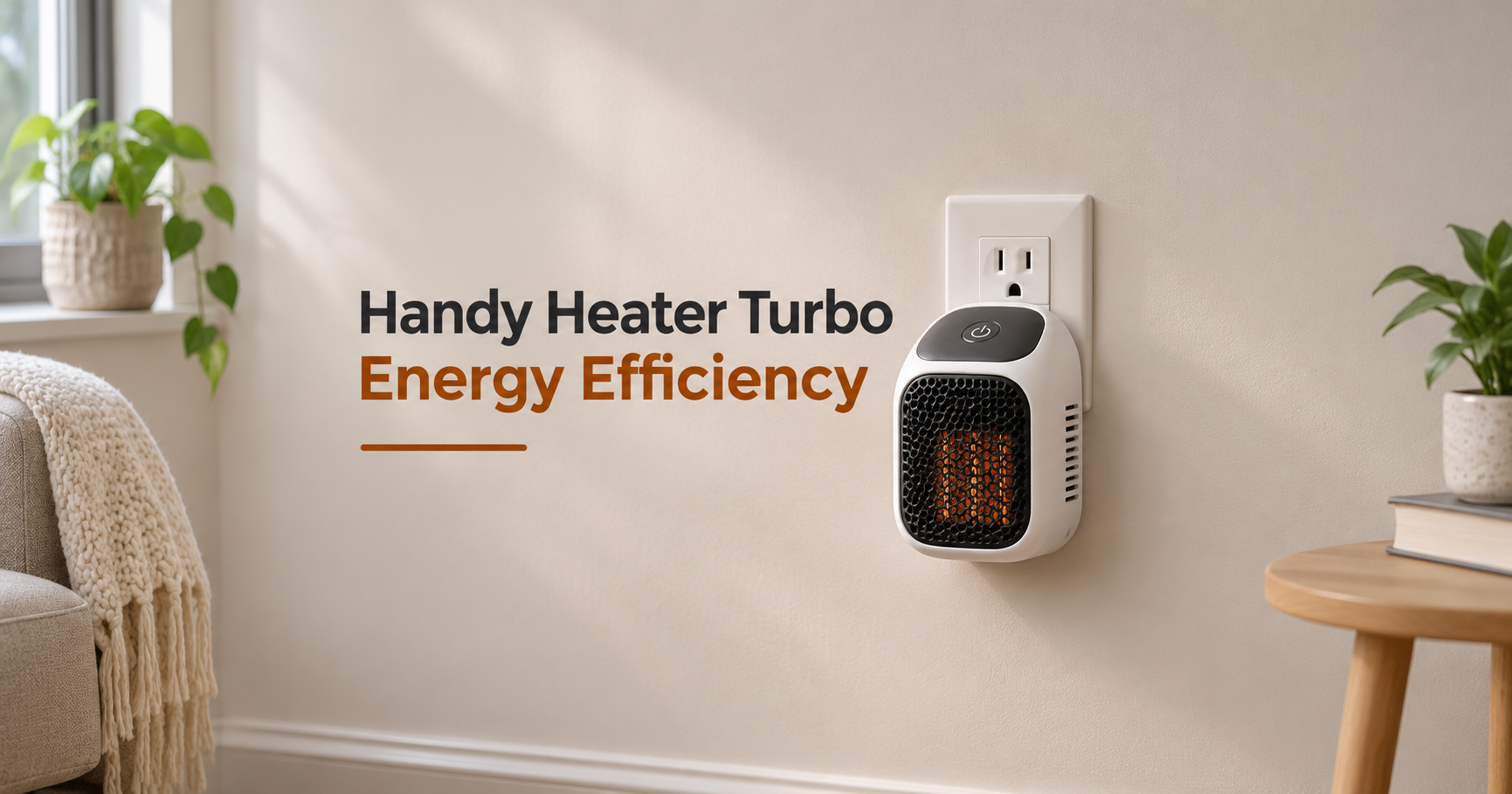
The thermostat lets you set a temperature between 60°F and 90°F. When the room reaches your target, the heater pauses, then restarts when the temperature drops. This helps you avoid overheating and keeps electricity use lower than a heater that runs at full power all day.
3. 12-Hour Programmable Timer
The timer is useful in an office because you can set the heater to switch off after a chosen number of hours. It is a simple way to make sure the unit is not left running after everyone has gone home.
4. Quiet Operation
Many fan heaters are noisy enough to disturb calls and meetings. The Handy Heater Turbo is described as quiet, which is a big advantage in a library-style workspace or a shared room where focus matters.
5. Stay-Cool Housing and Auto Shut-Off
The outer housing is designed to stay cooler than the heating element, and the auto shut-off feature helps reduce risk. These are important basics for any heater used around desks, chairs and paperwork.
Advantages and Disadvantages
Pros
- Very small and lightweight, easy to pack away after winter.
- No floor space needed, because it plugs directly into the wall.
- Thermostat, timer and digital display at a low price.
- Quiet enough for shared and professional workspaces.
- Low running cost compared with larger heaters.
Cons
- Limited heat output, so it is not suitable for large rooms.
- Fixed position, so you cannot move it around like a portable heater.
- Designed for 120V outlets, so check compatibility before buying outside North America.
- Some buyers report that heat feels gentle rather than powerful in very cold rooms.
- Safety listings can differ by retailer, so verify the certification marks on the actual product.
Is It Right for Your Office?

Choose it if you sit at a desk with a nearby wall outlet, you mostly need warmth for your feet and legs, and you want something quiet, cheap and tidy. It is also a good backup heater for a small home office.
Skip it if you need to heat a large room quickly, you want a heater you can carry from place to place, or your building uses 220V to 240V outlets and you do not want to deal with adapters or converters.
How Much Does It Cost to Run?
At 800 watts, the heater uses 0.8 kilowatt-hours (kWh) of electricity for every hour at full power. Multiply that by your electricity rate to see the cost. The table below assumes continuous full-power use for an 8-hour day and 22 working days per month. In practice the thermostat cycles the heater on and off, so real costs are usually lower.
| Electricity rate (per kWh) | Per hour | Per 8-hour day | Per month (22 days) |
|---|---|---|---|
| $0.10 | $0.08 | $0.64 | $14.08 |
| $0.15 | $0.12 | $0.96 | $21.12 |
| $0.25 | $0.20 | $1.60 | $35.20 |
The simple formula is: watts ÷ 1000 × hours × electricity rate = cost.
Office Heater Safety Rules
Heaters are one of the most common causes of electrical and fire incidents in winter, so safety deserves attention. Safety guidance from university fire safety offices recommends choosing ceramic heaters with built-in thermostats and automatic shut-off protection. The Handy Heater Turbo includes these basic features, but you still need to use it correctly.

- Plug it directly into the wall. Never use an extension cord or power strip with a heater.
- Keep the area clear. Paper, cardboard, curtains and cables should stay at least 3 feet (about 1 metre) away.
- Inspect the outlet. If the plug or outlet feels very hot, smells odd or shows discoloration, unplug it and stop using it.
- Do not leave it running unattended. Use the timer and switch it off when you leave.
- Never cover it. Blocking the vents can cause overheating.
- Follow workplace rules. Many offices require approval for personal heaters, so ask your manager or facilities team first.
- Check the certification. Look for recognised safety marks on the product and packaging, and read the manual before the first use.
Tips to Get Better Warmth From a Small Heater
- Sit close. A personal heater works best within a few feet of you.
- Block drafts. A rolled towel under a door or a small draft stopper makes a noticeable difference.
- Dress in layers. A light sweater plus a small heater is more comfortable than a heater alone.
- Use the thermostat sensibly. Setting it around 68°F to 72°F (20°C to 22°C) is comfortable for most people and avoids wasted energy.
- Start early. Switch it on when you arrive, so the area is comfortable by the time you settle in.
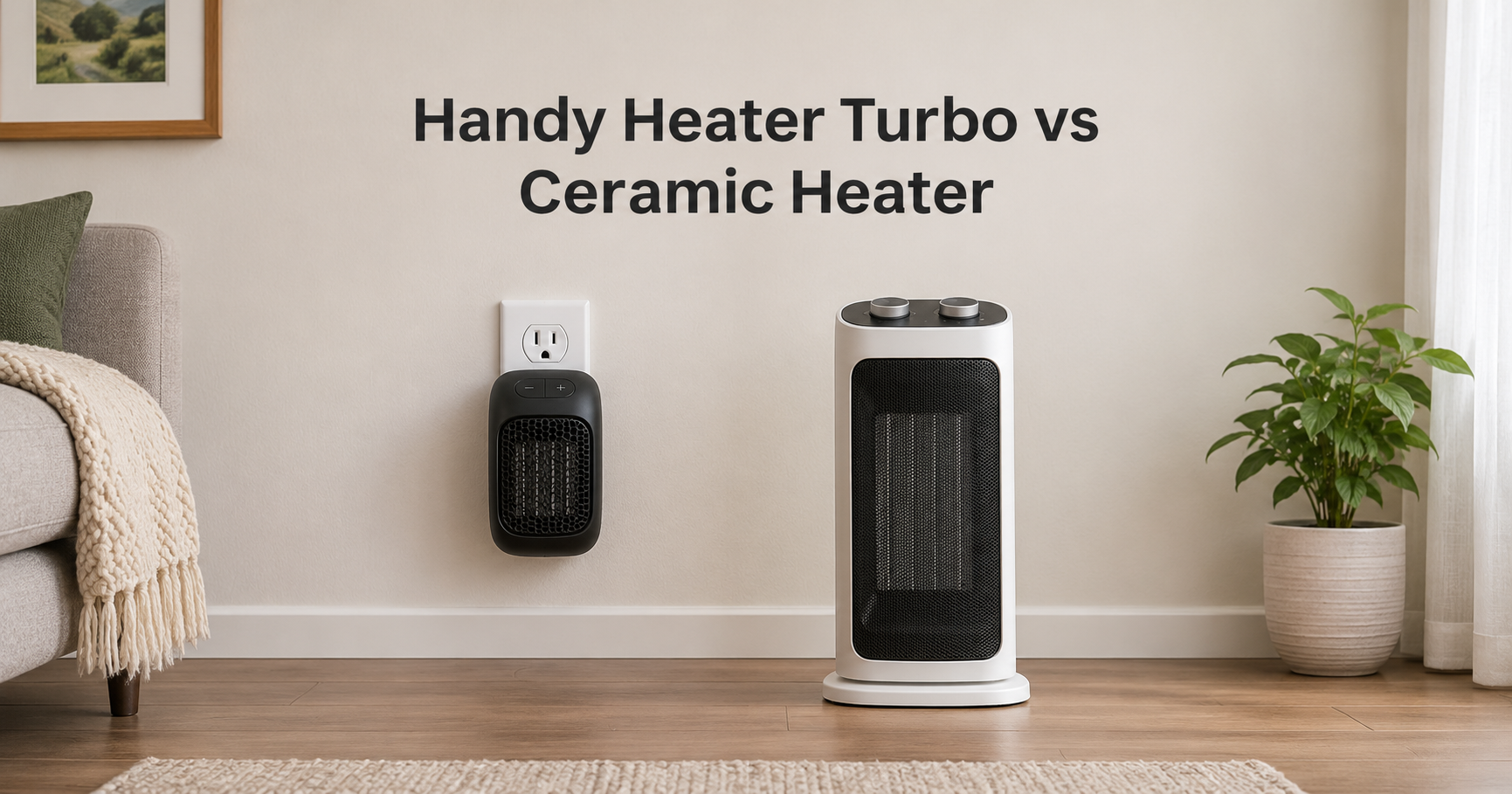
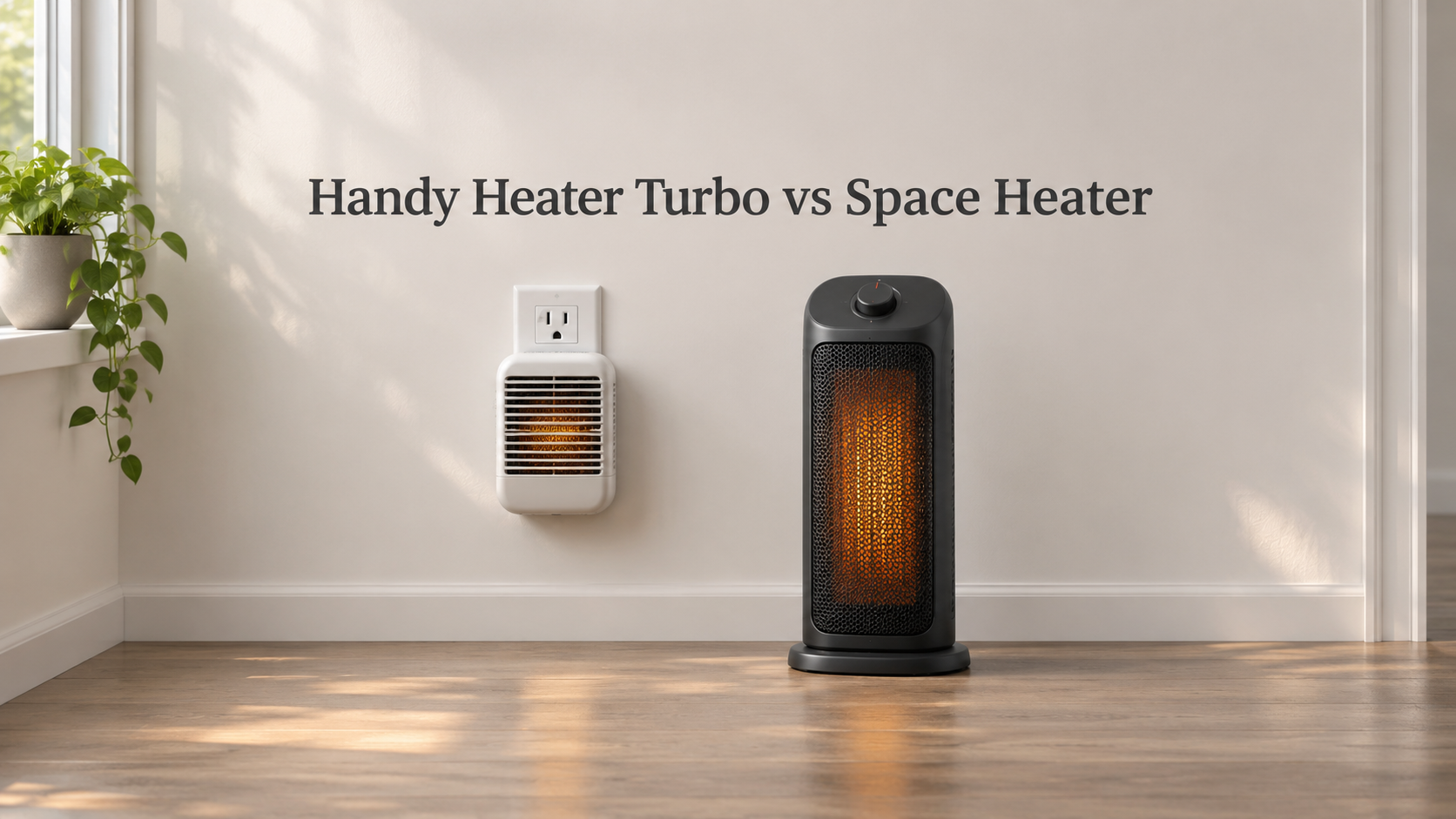
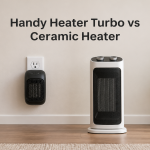
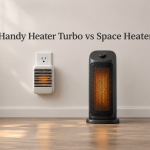
Handy Heater Turbo vs Other Office Heater Types
| Type | Heat power | Portability | Best for |
|---|---|---|---|
| Handy Heater Turbo (wall outlet) | Low to medium (800W) | Fixed to the outlet | Feet and legs, cubicles, small rooms |
| Desktop ceramic heater (up to 1500W) | Medium to high | Easy to move | Desks and small offices |
| Floor tower or oscillating heater | High | Moderate | Larger private rooms |
| Under-desk panel heater | Low | Fixed under the desk | Targeted leg warming |
Frequently Asked Questions
Is the Handy Heater Turbo good for an office?
Yes, for personal warmth. It is quiet, compact and has a thermostat and timer. It is not designed to heat a large office or open-plan space.
How many watts is the Handy Heater Turbo?
The common Turbo 800 model uses 800 watts.
Can I plug it into an extension cord?
No. Heaters draw a lot of current, so they should be plugged directly into a wall outlet and never into an extension cord or power strip.
Is it safe to leave on all day?
It has a thermostat, a timer and auto shut-off, but no heater should be left running while you are away. Use the timer and turn it off when you leave.
Will it work with 220V or 240V outlets?
The model discussed here is built for 120V. If your office uses a higher voltage, choose a heater made for your local supply instead of using improvised converters.
How much does it cost?
Prices usually range from about $20 to $50, depending on the retailer, the model version and any bundle deals. Prices change often, so compare a few sellers before you buy.
Does it make noise?
It is described as quiet in operation, which makes it suitable for shared workspaces, though you may hear a faint click when the thermostat switches on and off.
Final Verdict
The Handy Heater Turbo is a sensible, low-cost way to fight the winter chill at your desk. Its wall-outlet design, thermostat, timer and quiet running are genuine strengths, and the small price makes it an easy trial purchase. Its limits are just as clear: 800 watts will warm your personal space, not your entire office.
If you want targeted warmth for cold feet in a cubicle or a small room, it is a good choice. If you need serious heat for a bigger area, look at a higher-wattage desktop or floor heater instead. Before buying, check the voltage, confirm your workplace allows personal heaters, and compare the current price from a few trusted sellers.
Disclosure: this article is for general information. Product details, prices and certifications can change, so always read the manual and packaging of the exact model you receive, and follow your local electrical and workplace safety rules.