
Disclosure: this site may earn a small commission if you buy through our recommendations, at no extra cost to you. Our comparisons are based on published specifications, safety guidance and customer feedback.
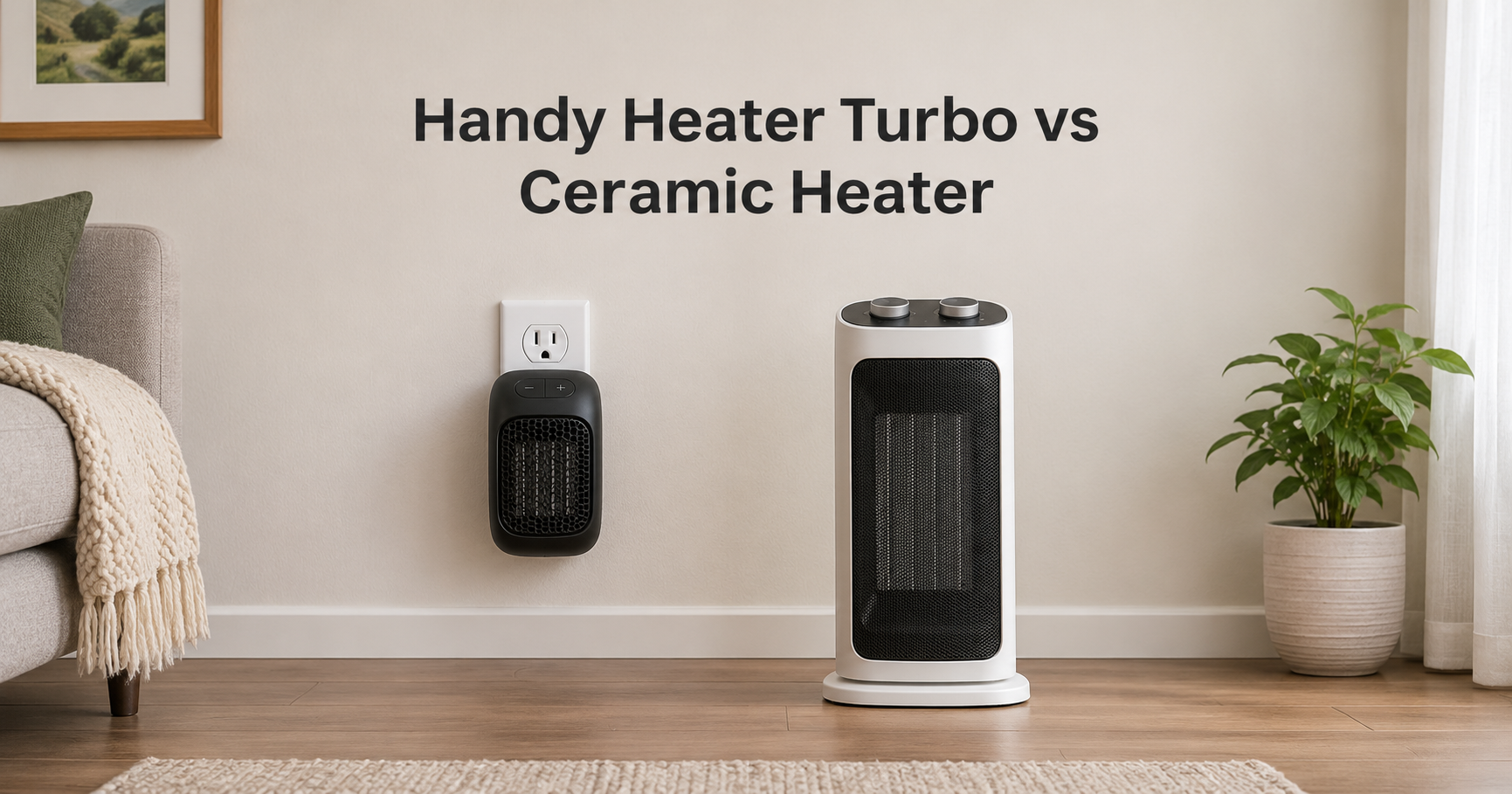
Winter is here, and if your home has a cold corner, a chilly bathroom or a freezing home office, you have probably wondered whether a tiny plug-in heater can do the job or whether you need a proper space heater. The Handy Heater Turbo is everywhere right now, advertised as a space-saving heater that plugs straight into your wall. A traditional space heater is bigger, stronger and more flexible.
So which one should you buy? In this guide we compare the Handy Heater Turbo vs a typical space heater on power, room coverage, running cost, features, portability and safety, so you can pick the right heater instead of the one with the loudest advertising.
Quick Answer: Handy Heater Turbo vs Space Heater
- Pick the Handy Heater Turbo if you want gentle, targeted warmth for a desk, bathroom, nursery corner or very small room, and you want to save floor space.
- Pick a regular space heater if you need to warm a full bedroom, living room or larger office, or if you want to carry the heater from room to room.
That is the short version. The details below explain why, and they can save you from wasting money.
Table of Contents
- What is the Handy Heater Turbo?
- What counts as a “space heater”?
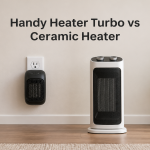
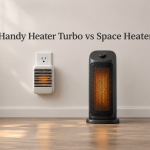
- Side-by-side comparison
- Heating power and room size
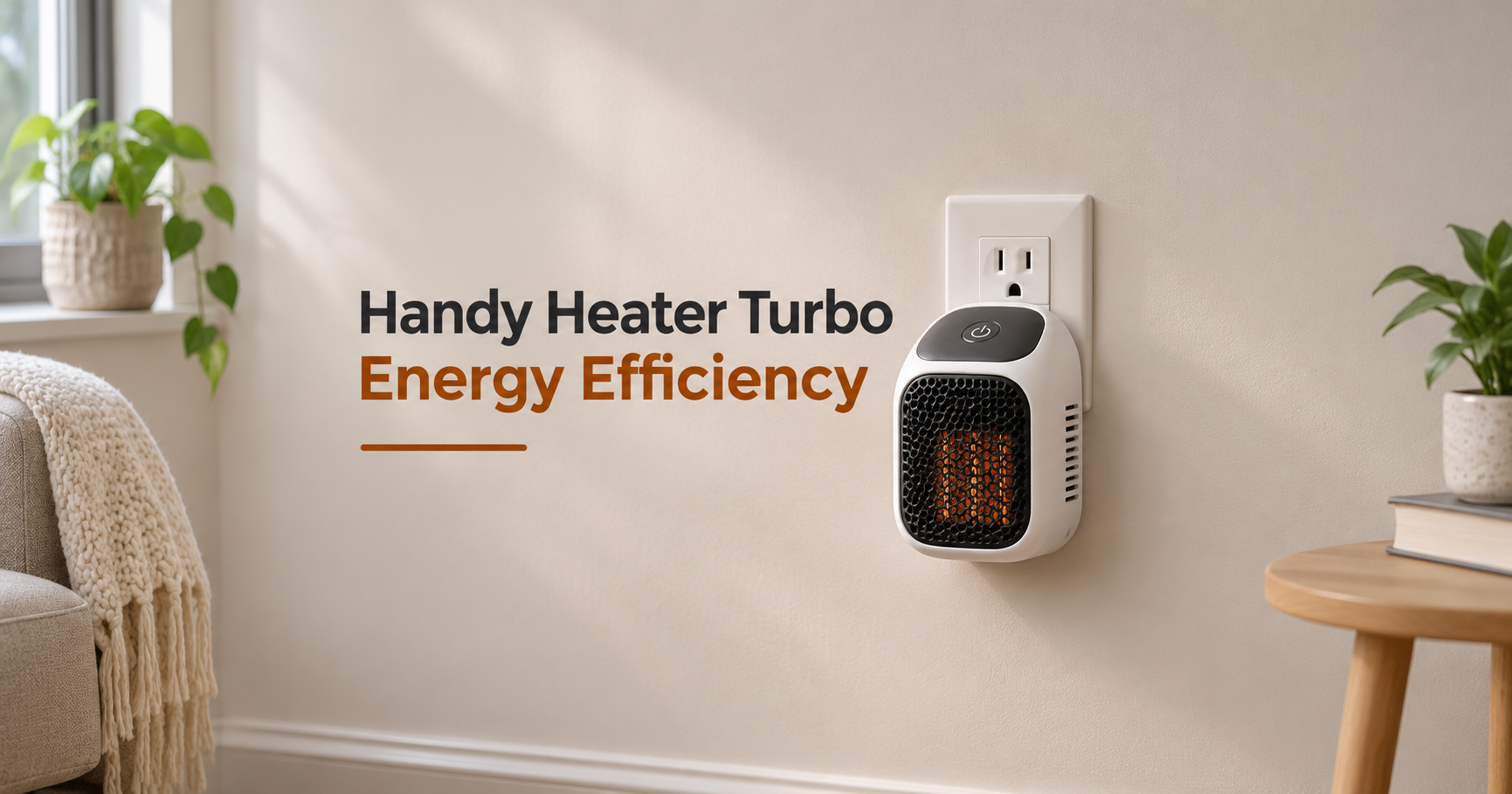
- Running cost and energy use
- Features and convenience
- Safety: what you must know
- Pros and cons
- Who should buy which heater?
- Buying tips
- Frequently asked questions
- Final verdict
What Is the Handy Heater Turbo?
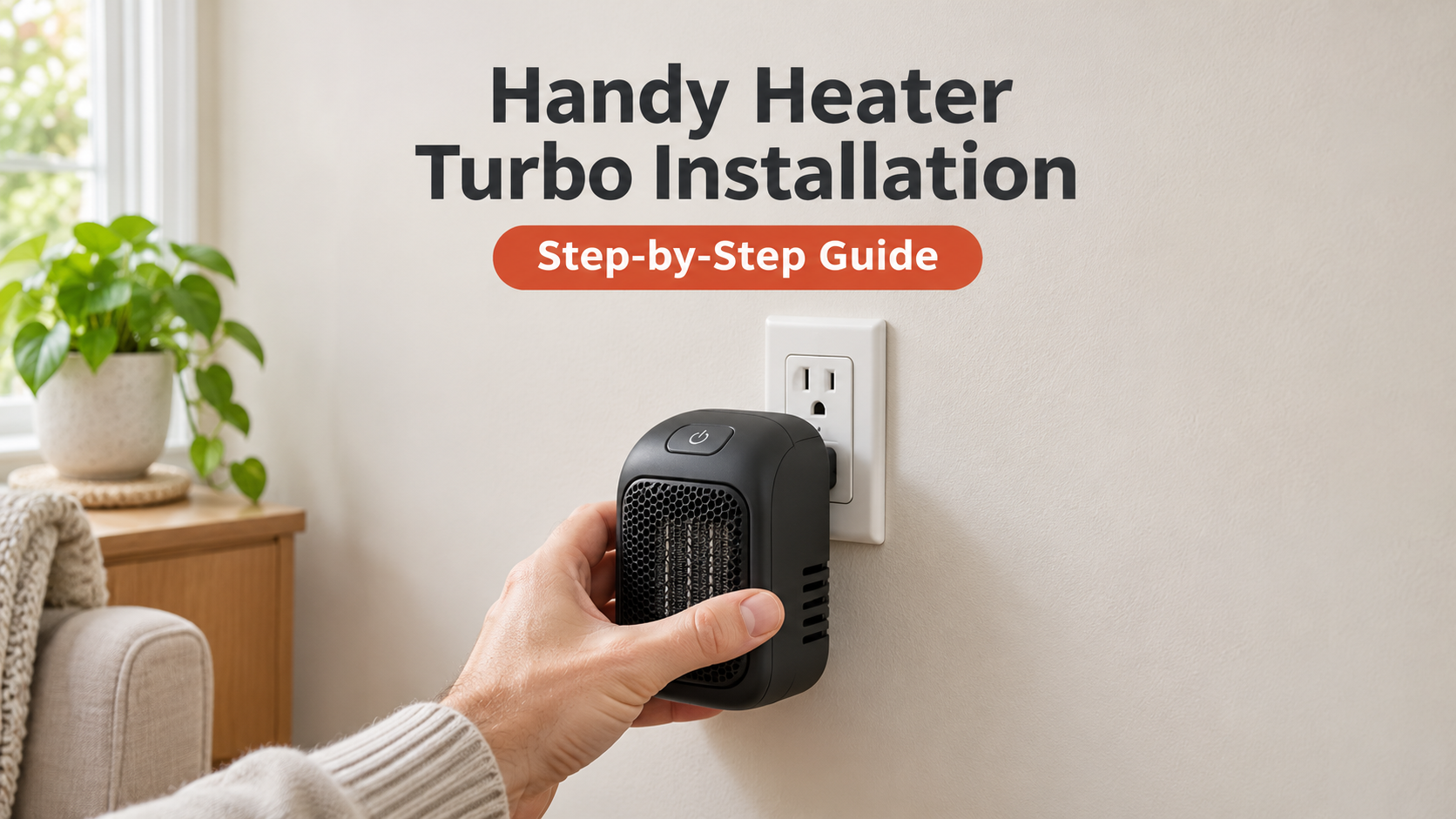
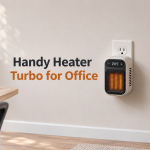
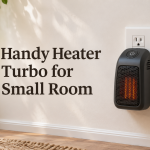
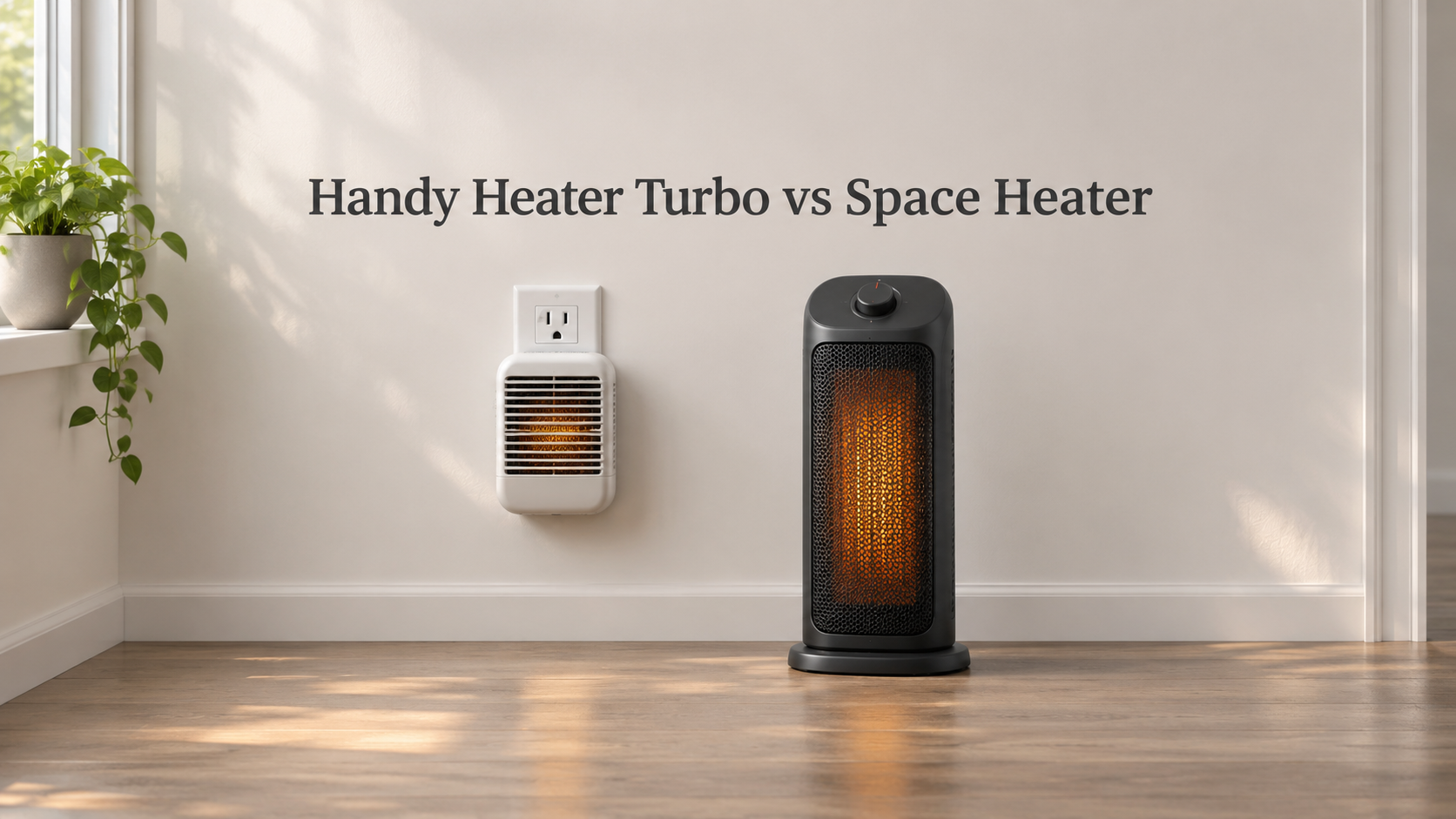
The Handy Heater Turbo (sold in the popular Turbo 800 version by the brand Ontel) is a compact ceramic heater that plugs directly into a standard wall outlet. Instead of sitting on the floor with a long power cord, it hangs from the outlet itself, so it takes up almost no room.
Based on retailer listings, the main specifications are:
- Power: 800 watts at 110-120 volts
- Heat output: roughly 2,700 BTU per hour (one retailer lists 2,714 BTU)
- Heating technology: ceramic heating element
- Thermostat: adjustable, usually 60°F to 90°F, with a digital LED display
- Timer: programmable 12-hour timer
- Safety: auto shut-off and overheat protection, with an ETL listing mentioned by at least one major hardware retailer
- Typical price: usually about $20 to $35, though some retailers charge more
Marketing claims say it can warm up to about 250 square feet, while at least one retailer lists the heated area as only about 100 square feet. As you will see below, the lower number is much closer to real life.
What Counts as a Space Heater?
“Space heater” is a broad term for any portable heater that warms one room or area instead of the whole house. Technically, the Handy Heater Turbo is also a small space heater, but when people compare it with a “space heater” they usually mean a standard floor or tabletop model. The common types are:
Ceramic fan heaters
These blow air across a hot ceramic element. They warm up quickly and are the most common type, usually rated up to 1,500 watts.
Oil-filled radiator heaters
These heat oil sealed inside metal fins. They are slower to start but stay warm after being switched off and run very quietly, which makes them popular for bedrooms.
Infrared (radiant) heaters
These warm people and objects directly, rather than the air. They are good for spot heating where you sit or work.
Tower and oscillating heaters
These are tall, slim fan heaters that rotate to spread warmth across a room, often with a remote control and several heat settings.

Side-by-Side Comparison
| Feature | Handy Heater Turbo | Typical Space Heater |
|---|---|---|
| Power | 800 watts | Up to 1,500 watts |
| Approx. heat output | About 2,700 BTU/hr | About 5,100 BTU/hr at 1,500 W |
| Best room size | Up to roughly 80-100 sq ft in practice | Roughly 150 sq ft and up |
| Placement | Plugs into the wall outlet | Floor or tabletop |
| Floor space needed | None | Yes |
| Thermostat | Yes, digital, 60-90°F | Common, depends on model |
| Timer | 12-hour programmable | Common on mid-range and up |
| Oscillation / remote | No remote listed | Often available |
| Tip-over protection | Not applicable (wall-mounted) | Standard on most newer models |
| Portability | Move between outlets | Very portable |
| Typical price | About $20-$35 | $30-$150+ |
Heating Power and Room Size: The Real Difference
Here is the key fact most advertisements skip: nearly all electric resistance heaters turn almost 100% of the electricity they use into heat. An 800-watt heater and a 1,500-watt heater are both “efficient” in that sense. The difference is simply how much heat they produce per hour.
You can convert watts to BTU by multiplying by 3.412:
- 800 watts × 3.412 = about 2,730 BTU per hour
- 1,500 watts × 3.412 = about 5,118 BTU per hour
A common rule of thumb is about 10 watts per square foot of floor area for a room with average insulation and standard ceiling height. Using that rule:
- An 800-watt heater suits roughly 80 square feet, like a bathroom, a small home office or a nursery corner.
- A 1,500-watt heater suits roughly 150 square feet, like a typical bedroom.
Claims such as “heats up to 250 square feet” usually assume a mild, well-insulated space or that the heater is only taking the edge off the cold. In a cold, drafty room, an 800-watt unit will warm the area right around it, not the whole room.
This matches real customer feedback. One local TV reviewer who compared a Handy Heater with another space heater found the Handy Heater raised the room temperature by only about one degree, while the other heater raised it from 70 to 73 degrees. On the other hand, shoppers who use it as a personal heater report that it keeps feet and hands comfortable at a desk. That is exactly the job it is built for.

Running Cost and Energy Use
Because electric heaters convert electricity to heat at about the same rate, running cost depends almost entirely on wattage and how long it runs. The formula is simple:
Cost = kilowatts × hours × your electricity rate per kWh
As an example, assume an electricity rate of $0.17 per kWh and eight hours of use per day for 30 days (240 hours):
- Handy Heater Turbo (800 W, running continuously): 0.8 kW × 240 h × $0.17 = about $32.64 per month
- Space heater at 1,500 W on high: 1.5 kW × 240 h × $0.17 = about $61.20 per month
- Space heater at 750 W on low: 0.75 kW × 240 h × $0.17 = about $30.60 per month
These are example figures, so check your own electricity bill for your real rate. The important lesson is that the Turbo is cheaper per hour than a 1,500-watt heater, but that is only because it produces less heat. If the 800-watt unit cannot warm your room, you may end up running it longer, or adding another heater, and lose the savings.
The smartest way to save money with either heater is to heat the person, not the whole house. Warm only the room you are using, close the door, and use the thermostat so the heater cycles off once the room is comfortable.

Features and Convenience
Where the Handy Heater Turbo wins
- Zero floor footprint. It hangs from the outlet, so there is no cord on the floor and no heater to trip over.
- Low price. It is one of the cheapest thermostat-equipped heaters you can buy.
- Simple controls. A digital display, a thermostat and a 12-hour timer cover the basics.
- Quiet operation. Listings describe it as quiet enough for bedrooms and offices.
- Easy to pack. It is light and compact, so it is handy for travel, dorm rooms and RVs where outlets are available.
Where a regular space heater wins
- More heat. Up to 1,500 watts nearly doubles the output.
- Placement freedom. You can put it where you need the warmth, not only where the outlet is.
- Extra features. Oscillation, remote controls, multiple heat levels and tip-over switches are common.
- Heating type choice. You can choose oil-filled, infrared or fan models to suit your room and noise needs.
- Frees up the outlet. A wall-hung heater can block the second socket on a duplex outlet.
Safety: What You Must Know Before You Buy
Safety matters more than any spec on the box. According to estimates from the U.S. Consumer Product Safety Commission, portable space heaters are involved in about 1,700 home fires, 80 deaths and 160 injuries each year. Most of these accidents come from misuse, such as leaving a heater unattended, placing it near flammable items or using damaged cords.
Safety points for the Handy Heater Turbo
- It puts constant load on one outlet. At 800 watts it draws roughly 6.7 amps on a 120-volt circuit, which is fine for a healthy outlet. A worn, loose or old outlet can overheat, so check it before use.
- Never use it with an extension cord or power strip. Safety agencies advise plugging heaters directly into the wall.
- Check the plug and outlet regularly. If the outlet feels hot, smells like burning or looks discolored, unplug the heater and call an electrician.
- Keep curtains, bedding and furniture well clear. The usual guideline is about three feet.
- Buy from a trusted seller. Reviews mention packaging and versions that vary, and one buyer reported receiving a model with a different temperature range than the one advertised. Always check the label, wattage and safety listing on the item you receive.
Safety points for regular space heaters
- Choose a model with tip-over and overheat protection. Both are standard on good modern units.
- Look for a recognized testing mark such as UL or ETL on the product.
- Place it on a flat, stable surface, never on carpet edges, furniture or an unstable stand.
- Never run the cord under rugs, and do not use extension cords or power strips.
- Never leave any heater running while you sleep or leave the house. Leaving heaters unattended is one of the leading causes of heater fires.

Whichever heater you choose, also make sure your home has working smoke alarms on every floor and near sleeping areas, and test them monthly.
Pros and Cons
Handy Heater Turbo
Pros
- Very affordable
- No floor space needed
- Thermostat and 12-hour timer included
- Quiet and lightweight
- Good for personal, spot or small-space heating
Cons
- Limited heat output (800 watts)
- Not suited to large or drafty rooms
- Heat only comes from where the outlet is
- No remote and no oscillation
- Can block the second socket on the outlet
Typical Space Heater
Pros
- Higher heat output, up to 1,500 watts
- Place it anywhere in the room
- Wide choice of types, sizes and features
- Safety features like tip-over protection are standard
Cons
- Takes up floor space
- Costs more to run at full power
- Prices range from budget to expensive
- Cords can be a trip hazard
Who Should Buy Which Heater?
Buy the Handy Heater Turbo if you:
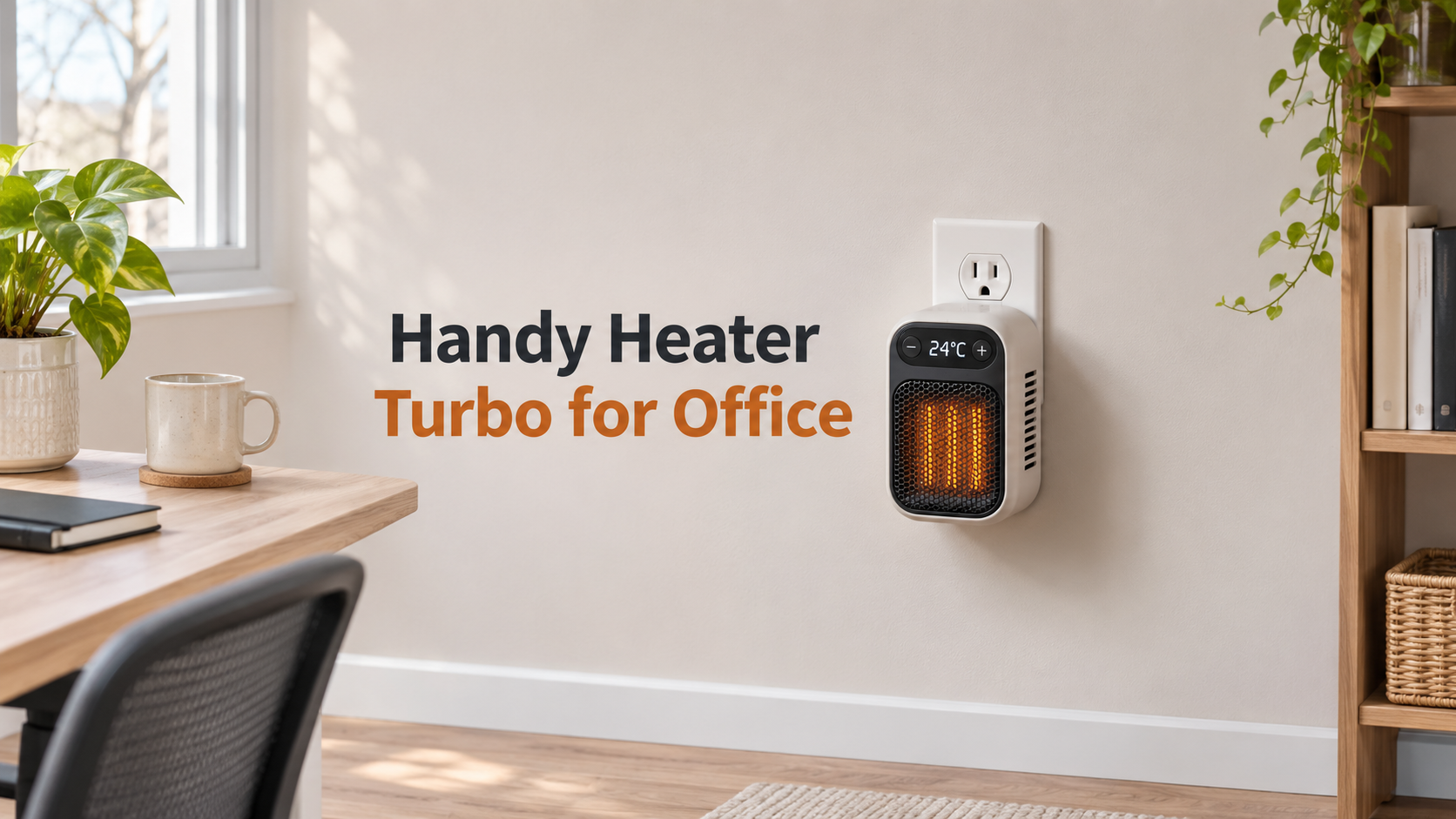
- Want to warm a desk, bathroom or small room
- Have no floor space for a heater
- Need a cheap backup heater for chilly evenings
- Rent or travel and want something light and simple
Buy a regular space heater if you:
- Need to heat a full bedroom, living room or large office
- Want more heat output and more control options
- Want to move the heater between rooms
- Prefer features like oscillation, a remote and tip-over protection

Buying Tips Before You Order
- Measure your room first. Multiply length by width in feet, then use roughly 10 watts per square foot as a starting guide.
- Check the safety listing. Look for UL or ETL on the product label or packaging.
- Read recent reviews. Look for comments about real room-warming performance, not just first impressions.
- Compare the full price. Prices for the same Handy Heater Turbo model vary widely between stores, so compare a few sellers.
- Check the warranty and return policy. This is especially useful for low-cost heaters.
- Inspect your outlet. If it is loose, old or warm to the touch, use a floor-standing heater plugged into a better outlet or have an electrician check it.
Frequently Asked Questions
Is the Handy Heater Turbo as good as a regular space heater?
For small, personal spaces it can be a good low-cost choice. For heating a whole bedroom or living room, a regular 1,500-watt space heater will usually perform better because it produces almost twice as much heat.
How many square feet can the Handy Heater Turbo heat?
Marketing materials claim up to about 250 square feet, but a more realistic expectation is about 80 to 100 square feet, especially in cold or poorly insulated rooms.
Is the Handy Heater Turbo safe to leave on overnight?
Safety agencies recommend never leaving any space heater running while you sleep. Even with auto shut-off, it is safest to turn it off and use extra blankets or a safer central heating option for overnight warmth.
Does the Handy Heater Turbo save electricity?
It uses less electricity per hour than a 1,500-watt heater because it is a lower-wattage device. It is not more efficient at turning electricity into heat. If it cannot warm the room, you may not save anything.
Can I plug a space heater into an extension cord?
No. Heaters draw a lot of power, and extension cords and power strips can overheat. Plug heaters directly into a wall outlet.
What is the best alternative to the Handy Heater Turbo?
For small rooms, look for a compact 1,500-watt ceramic or oil-filled heater with tip-over and overheat protection and a UL or ETL listing. For personal warmth at a desk, an infrared mini heater is also a good option.
How much does the Handy Heater Turbo cost?
Retail listings generally show prices from about $20 to $35, though some retailers list it higher. Always compare the final price including shipping.
Final Verdict: Handy Heater Turbo vs Space Heater
The Handy Heater Turbo is a smart, budget-friendly way to get gentle warmth in a very small space without giving up any floor area. It is easy to use and quiet, and it makes sense as a personal or backup heater.
A regular space heater is the better choice when you need real room-heating power, flexible placement and more features. For most bedrooms, living rooms and larger offices, a well-chosen 1,500-watt model will give you the comfort the Turbo’s marketing promises.
Our recommendation: if your space is under about 100 square feet and you value price and convenience, the Handy Heater Turbo is worth considering. For anything bigger, or if you want maximum control and safety features, go with a quality space heater. Whichever you buy, follow the safety rules, never leave it unattended and keep a working smoke alarm nearby.
Stay warm and stay safe this winter.