Handy Heater Turbo for Small Room: Complete Buying Guide, Safety Tips & Running Cost

When winter nights get cold, a small room can feel freezing even with the door shut and a blanket on your lap. Turning on a big central heating system just for one tiny bedroom, study or home office is wasteful, and that is exactly why the handy heater turbo for small room has become so popular. It is light, quick to warm up, easy to carry, and can make a chilly corner comfortable in just a few minutes.
But with so many options on the market, it is easy to buy the wrong one. Some heaters are too weak, some are too power-hungry, and some lack basic safety features. In this complete guide, we explain how a turbo heater works, how to pick the right wattage, what features really matter, how much it costs to run, and how to use it safely.
What you will learn in this guide
- What a handy turbo heater is and how it works
- Why it suits small rooms better than other heaters
- The right wattage for your room size
- Key features to check before buying
- Running cost and ways to save electricity
- Safety rules, maintenance tips and common mistakes
- Answers to the most frequently asked questions
What Is a Handy Heater Turbo?
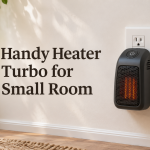
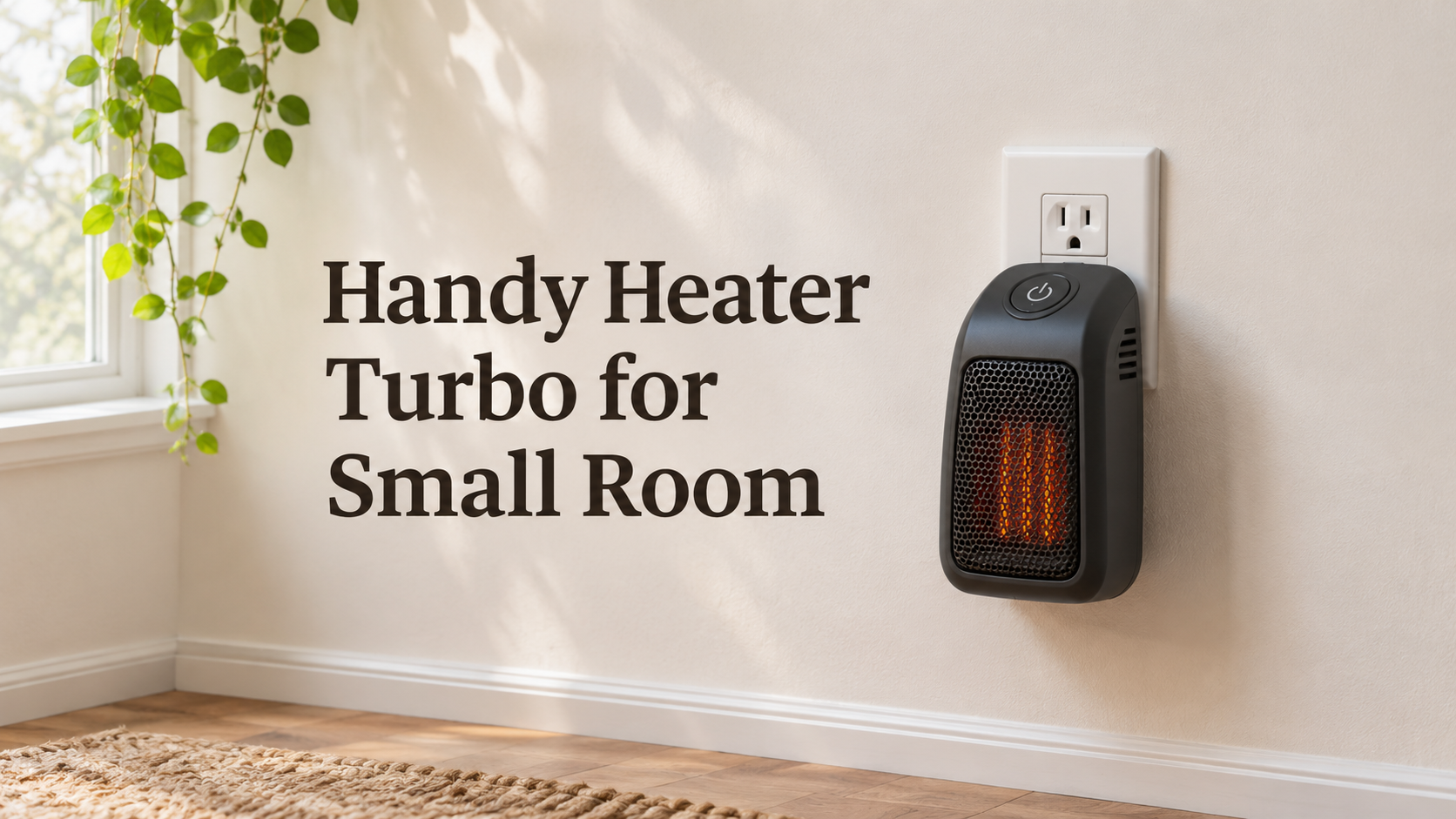
A handy heater turbo is a compact electric fan heater designed to warm up a small space quickly. Inside the body there is a heating element, usually ceramic or metal coil, and a fan that blows air across it. The fan pushes the warm air straight into the room, which is why you feel the heat almost immediately after switching it on.
The word “turbo” usually refers to the powerful fan and the fast warm-up. Most models in this category are small enough to carry with one hand, sit on a desk or floor, and plug into a normal wall socket. Many come with two or three heat settings plus a fan-only mode for hot days.
Note: “Handy heater” and “turbo heater” are common market names rather than one single standard product. Specifications such as wattage, safety features and warranty differ between brands, so always read the label and manual of the exact model you plan to buy.
How Does a Turbo Heater Work?
The working principle is simple and easy to understand. Electricity flows through the heating element and makes it hot. At the same time, a small motor spins the fan. The fan pulls cool air from the room, pushes it across the hot element, and sends it back out as warm air.

Because the warm air is pushed forward by the fan, heat reaches you faster than it would from a heater that relies only on natural convection. This is the main reason turbo heaters feel so effective in the first ten minutes.
Why a Turbo Heater Is a Smart Choice for Small Rooms
Large heaters are built to handle big spaces and often waste energy in small ones. A compact turbo heater matches the size of the job. Here are the main advantages:
- Fast heating: The fan spreads warm air quickly, so the room feels comfortable within minutes.
- Compact and portable: You can move it from the bedroom to the study or bathroom area (kept dry and safe) without any effort.
- Affordable to buy: Small fan heaters are generally cheaper than oil radiators, panel heaters and large ceramic towers.
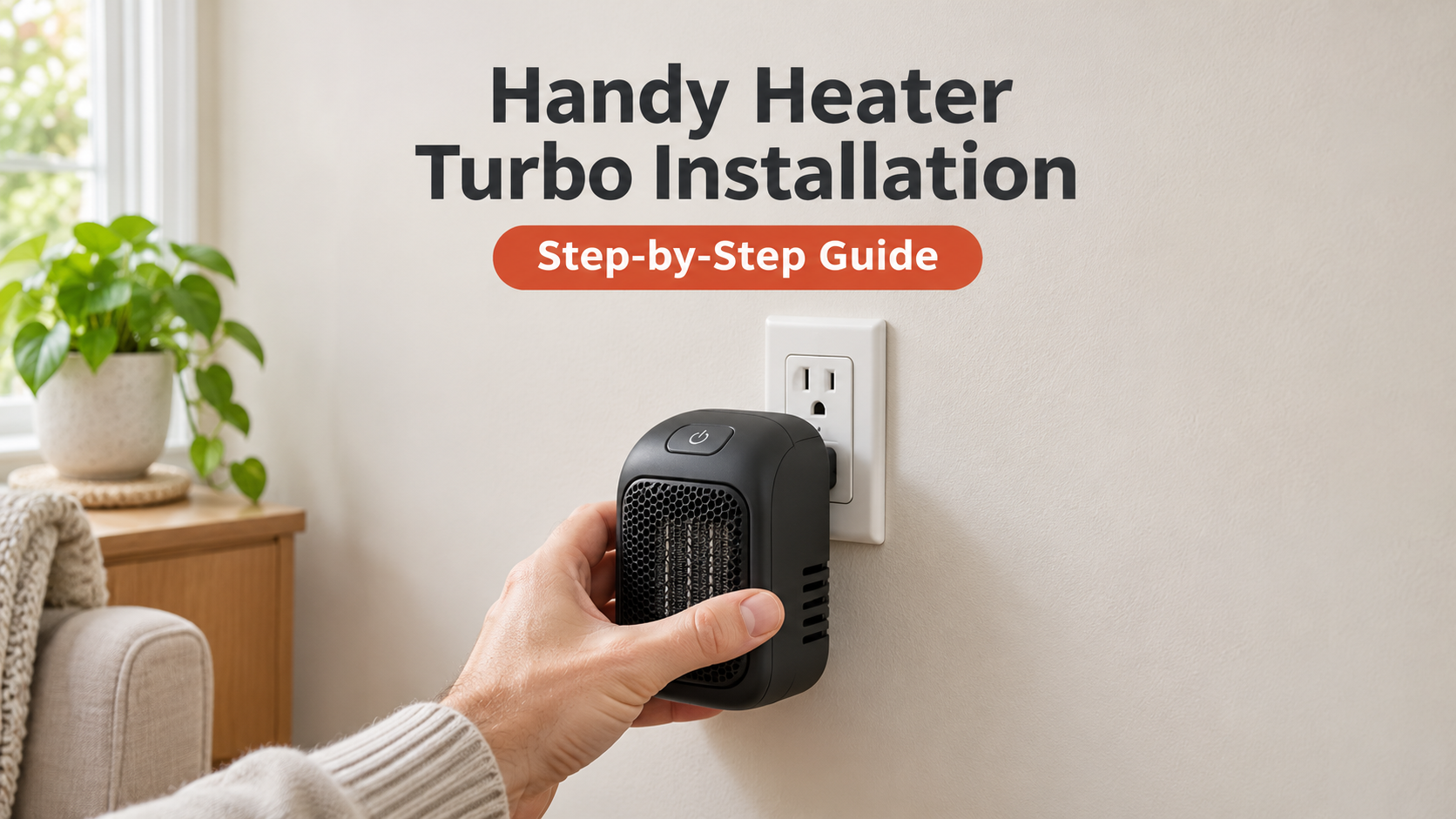
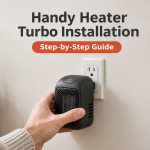
- Easy to use: Plug in, choose a setting and you are done. No installation is needed.
- Zone heating: You only heat the room you are using instead of the whole home.
- Year-round use: Many models have a cool-air mode that works like a simple fan in summer.
- Space saving: It fits on a table, shelf or under a desk, which is perfect for tight rooms.
Who Should Buy a Handy Turbo Heater?
This type of heater is a good match for:
- Students who study in a small room during cold evenings
- People working from a small home office or a corner desk
- Families who need quick warmth in a bedroom before sleep
- Elderly family members who feel the cold more easily
- Renters who cannot install a fixed heating system
- Anyone who needs short bursts of heat rather than all-day heating
If you need steady, silent heat for a large room all night, a different type such as an oil-filled radiator may be better. We compare these types later in this article.
How to Choose the Right Wattage for Your Room
Wattage tells you how much heating power the unit can deliver. Too low and the room never feels warm. Too high and you waste electricity and may overload the circuit. A common rule of thumb is about 10 watts for every square foot of floor area.

| Room Size | Typical Use | Suggested Power |
|---|---|---|
| Up to 60 sq ft | Tiny study, prayer room, small nook | About 600 W |
| 60 – 100 sq ft | Small bedroom, home office | About 1000 W |
| 100 – 150 sq ft | Standard small room | About 1500 W |
These numbers are a starting point only. If your ceiling is high, your windows are single-glazed, or the room has gaps around the door, you may need slightly more power. On the other hand, a well-insulated room with a closed door may feel warm with a lower setting.
Key Features to Look for Before You Buy
Do not choose a heater only by price or appearance. The following features make a real difference in comfort and safety.
1. Adjustable Heat Settings
Look for at least two heat levels, such as low and high, plus a fan-only option. This lets you start strong to warm the room quickly and then reduce the setting to save power.
2. Built-in Thermostat
A thermostat switches the heating element on and off to keep the room near your chosen temperature. This prevents overheating and lowers your electricity use.
3. Overheat Protection
If the internal temperature rises too high, this feature cuts the power automatically. It is one of the most important safety functions for any electric heater.
4. Tip-Over Switch
If the heater is knocked over by a child, a pet or by accident, a tip-over switch turns it off immediately. This is especially important in homes with children.
5. Ceramic (PTC) Heating Element
Ceramic heating elements heat up fast and are generally designed to limit their own temperature, which adds an extra layer of protection compared with simple exposed coils. Many modern compact heaters use this technology.
6. Low Noise Level
Because the fan runs while the heater is on, some models can be noisy. If you plan to use it while studying, working or sleeping nearby, check user feedback about fan noise before you decide.
7. Portability and Build Quality
A carry handle, a stable base and a flame-retardant body are good signs. Check that the power cable is long enough and thick enough, and that the plug fits tightly in the socket.
8. Timer or Oscillation (Optional)
Some models offer a timer for automatic shut-off or an oscillating head that spreads heat wider. These are useful extras but not essential for a very small room.
How Much Does It Cost to Run a Turbo Heater?
The running cost depends on the heater’s wattage, how many hours you use it, and your local electricity rate. The formula is easy:
Cost = (Watts ÷ 1000) × Hours × Electricity Rate per Unit

For example, a 1500 W heater running for 2 hours uses 3 units (kWh) of electricity. Multiply that by your own per-unit rate to find the exact cost. A 1000 W heater used for the same time would use 2 units, which is one third less.
Simple Ways to Save Electricity
- Close the door and windows before turning the heater on.
- Start on high to warm the room, then switch to low or let the thermostat take over.
- Heat only the room you are using.
- Use thick curtains and a rug to hold heat inside.
- Block gaps under doors with a draft stopper.
- Wear warm clothes so you can set the thermostat a little lower.
- Turn the heater off when you leave the room.
Safety Tips for Using a Heater in a Small Room
An electric heater is safe when used correctly, but a small room leaves less margin for mistakes. Follow these rules every time.

- Keep a clear zone. Keep curtains, bedding, clothes, paper and furniture at least 3 feet (about 1 metre) away from the front of the heater.
- Plug directly into the wall. Heaters draw high current. Extension cords and cheap multi-plugs can overheat. Use a good-quality wall socket.
- Use a flat, stable surface. Place it on a hard floor or a sturdy table, never on a bed, sofa or carpet pile that can block the air intake.
- Never cover the heater. Do not dry clothes or towels on top of it. Blocked airflow causes overheating.
- Do not leave it running unattended. Turn it off when you leave the room, go out or fall asleep.
- Keep it dry. Do not use it where water can splash on it, and never touch it with wet hands.
- Check the cable and plug. If the cable is hot, frayed or discoloured, stop using the heater and have it checked.
- Keep children and pets away. The front grille and body can become hot.
- Ventilate briefly. Electric heaters do not burn fuel, but a closed room can feel stuffy. Open a window for a few minutes now and then.
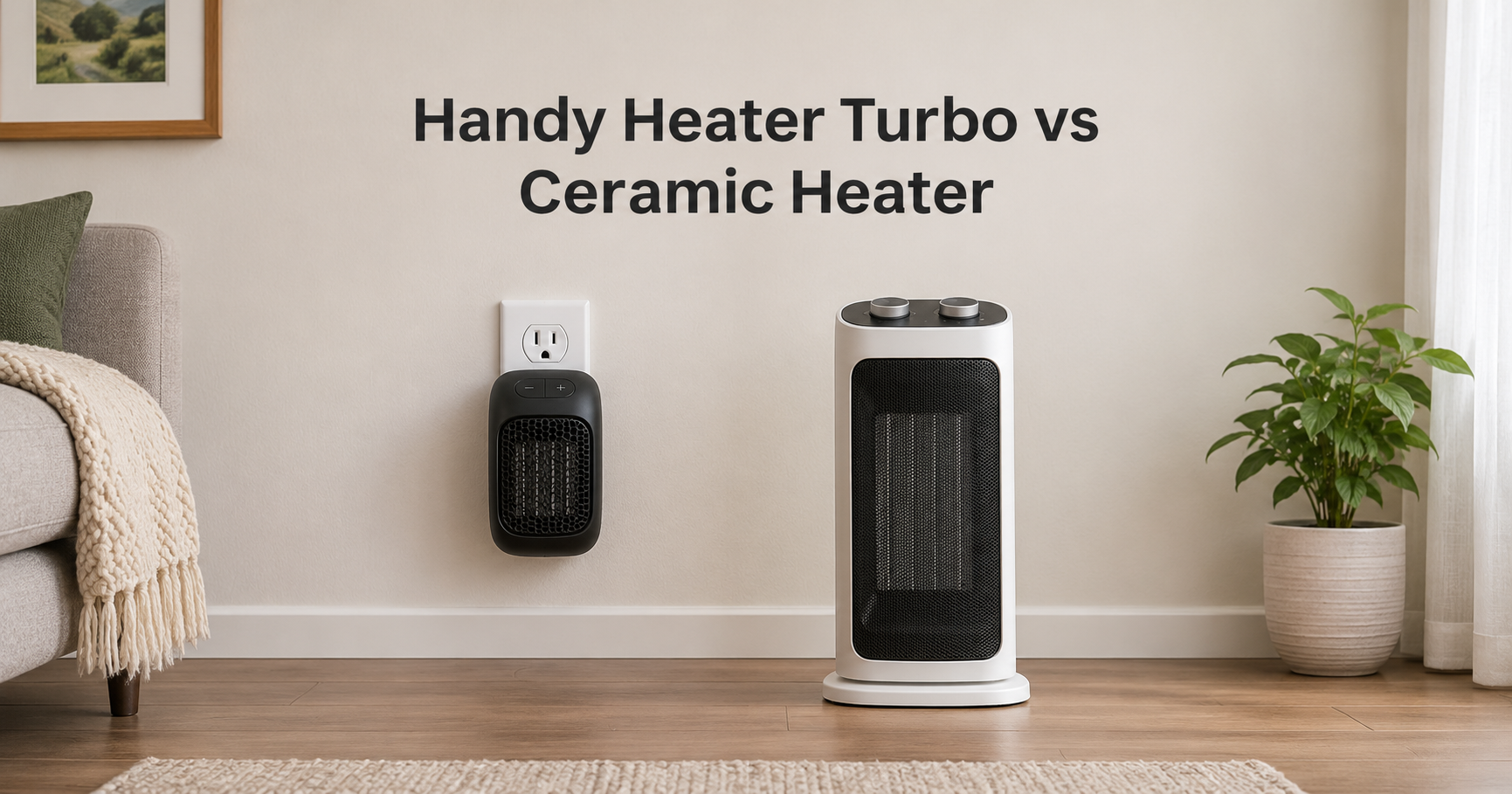
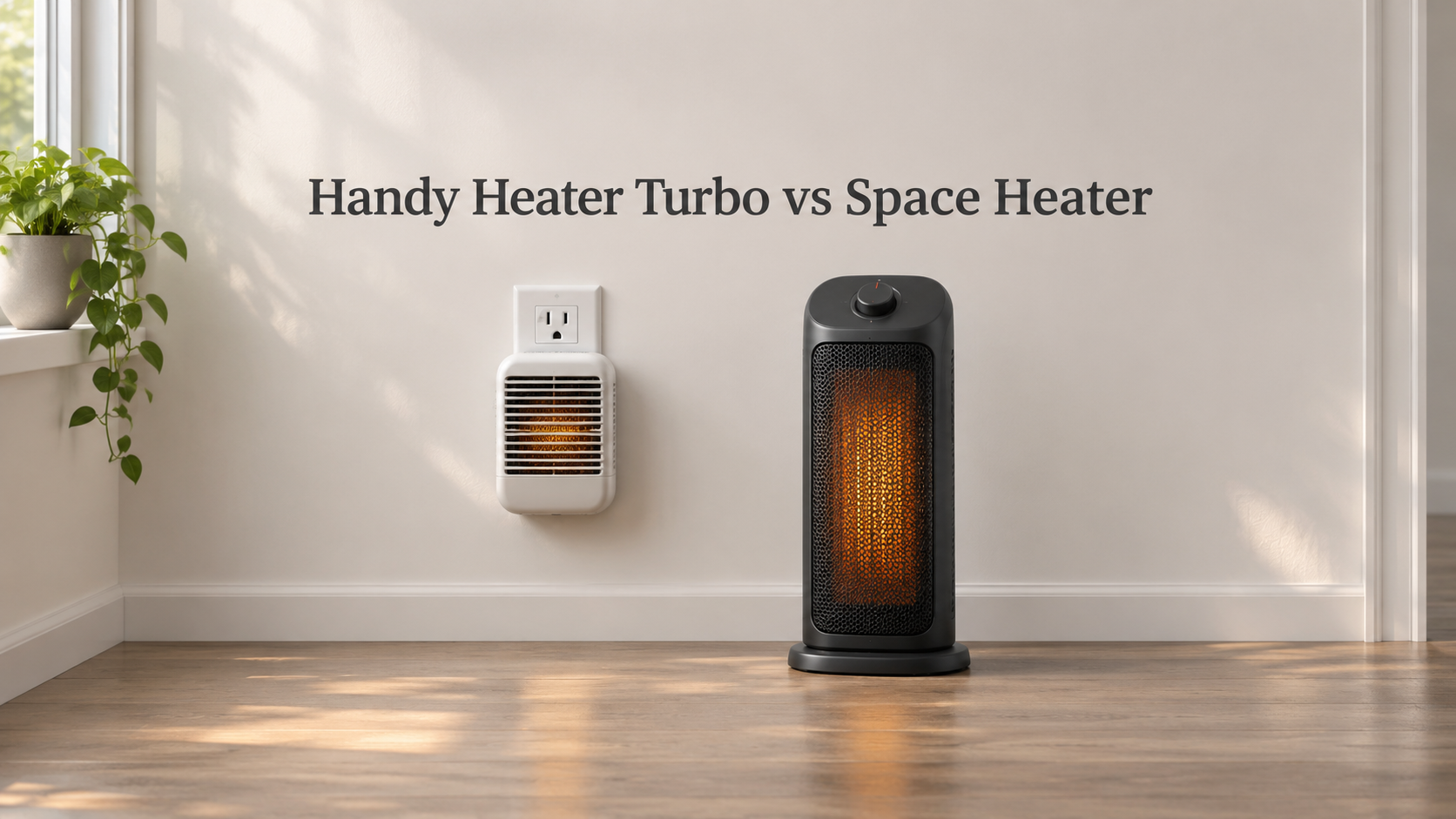
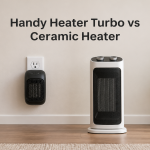
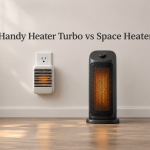
Turbo Heater vs Other Room Heaters
A turbo fan heater is not the only option. This table shows how it compares with other common small-room choices.
| Heater Type | Heat-Up Speed | Noise | Best For |
|---|---|---|---|
| Turbo / Fan Heater | Very fast | Moderate (fan) | Quick warmth in small rooms |
| Oil-Filled Radiator | Slow | Very quiet | Steady, long-lasting heat |
| Infrared / Radiant Heater | Instant on the body | Silent | Spot heating near you |
| Panel / Convector Heater | Medium | Quiet | Wall-mounted or low-profile use |
If your priority is speed, price and portability, the handy turbo heater is hard to beat. If you want near-silent all-night warmth, consider an oil-filled or panel model instead.
Pros and Cons of a Handy Turbo Heater
| Pros | Cons |
|---|---|
| Warms a small room in minutes | Fan produces some noise |
| Lightweight and easy to move | Heat stops soon after switching off |
| Budget-friendly purchase price | Can dry out the air in a closed room |
| No installation required | Not suitable for large rooms |
| Fan-only mode for summer | Needs supervision and safe placement |
How to Get the Best Results From Your Heater
- Close the door and windows so warm air stays inside.
- Place the heater on a flat surface and point it toward the area where you sit, not directly at your face.
- Start on the highest setting for the first 10 to 15 minutes.
- Lower the setting or use the thermostat once the room is comfortable.
- Turn the heater off when you leave, or when you are ready to sleep.
Cleaning and Maintenance Tips
Dust builds up on the fan and grille and can reduce airflow, create a burning smell and shorten the life of the heater. A little care goes a long way.
- Unplug the heater and let it cool completely before cleaning.
- Wipe the outer body with a slightly damp soft cloth.
- Use a soft brush or a vacuum cleaner with a brush attachment on the grille and vents.
- Never pour water on the heater or put it in water.
- Before the cold season begins, run it for a short time in a ventilated room to burn off any stored dust. A slight smell at first use is common, but a strong or continuing burning smell means you should stop using it.
- Store it in a dry, covered place during summer, ideally in the original box.
Common Mistakes to Avoid
- Buying a model that is too weak or too strong for the room size.
- Using extension cords or overloaded multi-plugs.
- Ignoring safety features just to save a little money.
- Placing it too close to a bed, sofa or curtains.
- Sleeping with it on and unattended all night.
- Forgetting regular cleaning, which hurts performance.
- Not checking the warranty and after-sales support.
Quick Buying Checklist
- Wattage suits your room size
- Has overheat protection and a tip-over switch
- Adjustable heat levels and a thermostat
- Reasonable fan noise based on user feedback
- Strong body, firm plug and a proper power cable
- Clear warranty and reliable seller
- Fits the space where you plan to use it
Frequently Asked Questions (FAQ)
Is a handy turbo heater good for a small room?
Yes. A compact fan heater is one of the most practical choices for a small room because it heats quickly, is easy to move and costs less than many other heater types. Just match the wattage to your room size.
How many watts do I need for a small room?
As a general guide, use about 10 watts per square foot. That means roughly 600 W for a very small space, around 1000 W for a 60 to 100 sq ft room and up to 1500 W for a room near 150 sq ft.
Does a turbo heater use a lot of electricity?
It uses power in proportion to its wattage and the hours you run it. A 1500 W model uses 1.5 units (kWh) every hour. Using the thermostat, closing the door and heating only when needed can reduce the cost.
Is it safe to sleep with a heater on?
It is best not to. Safety experts generally advise turning room heaters off before sleeping. Warm the room first, then switch the heater off. If you must use one, choose a model with a timer, overheat protection and a tip-over switch, and keep it well away from bedding.
Does an electric heater reduce oxygen in the room?
No. Electric heaters do not burn fuel, so they do not use up oxygen. However, they can make the air feel dry, so brief ventilation and a bowl of water or a humidifier may help comfort.
Can I use a turbo heater in the bathroom?
Only if the product is specifically rated for bathroom use and you keep it away from water. A normal room heater should never be used where it can get wet.
Why does my heater smell when I first use it?
A light smell on first use usually comes from dust or manufacturing residue burning off. Run it in a ventilated room for a short while. If the smell is strong, smoky or does not go away, switch it off and contact the seller.
How long does a small heater last?
With regular cleaning, careful use and proper storage, a good quality heater can serve for many winters. Lifespan varies by brand and build quality.
Final Thoughts
A handy heater turbo for a small room is a simple, affordable and fast way to beat the winter cold. Choose a model with the right wattage, make sure it includes overheat protection and a tip-over switch, and place it safely on a flat surface with plenty of clear space around it. Use the thermostat wisely, clean it regularly and never leave it running unattended.
Follow the tips in this guide and you will enjoy a warm, comfortable and safe room all winter long without paying for more heater than you need.
Disclaimer: This article is for general information only. Product specifications and safety features vary by brand and model. Always follow the manufacturer’s manual and local electrical safety guidance.