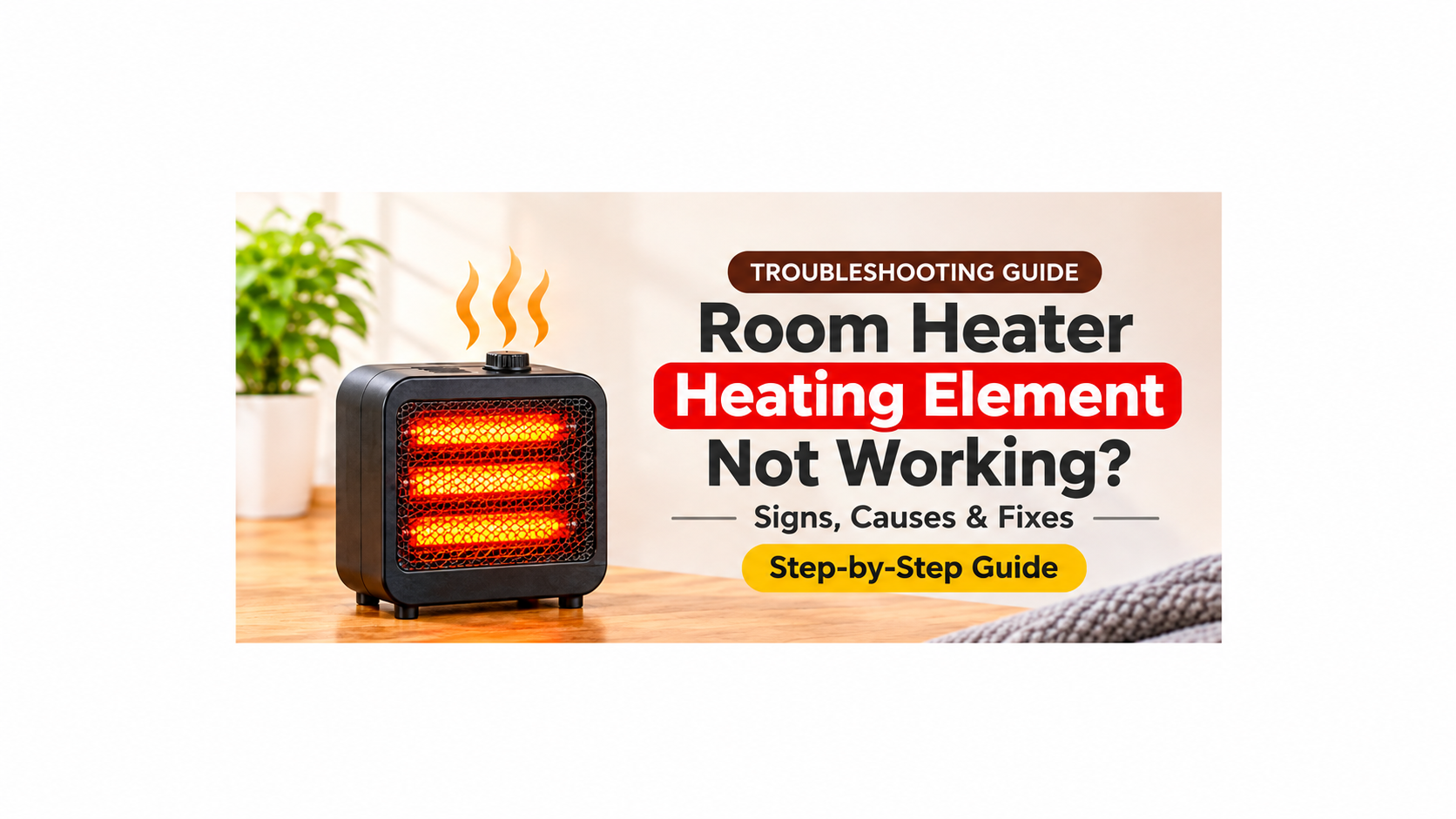
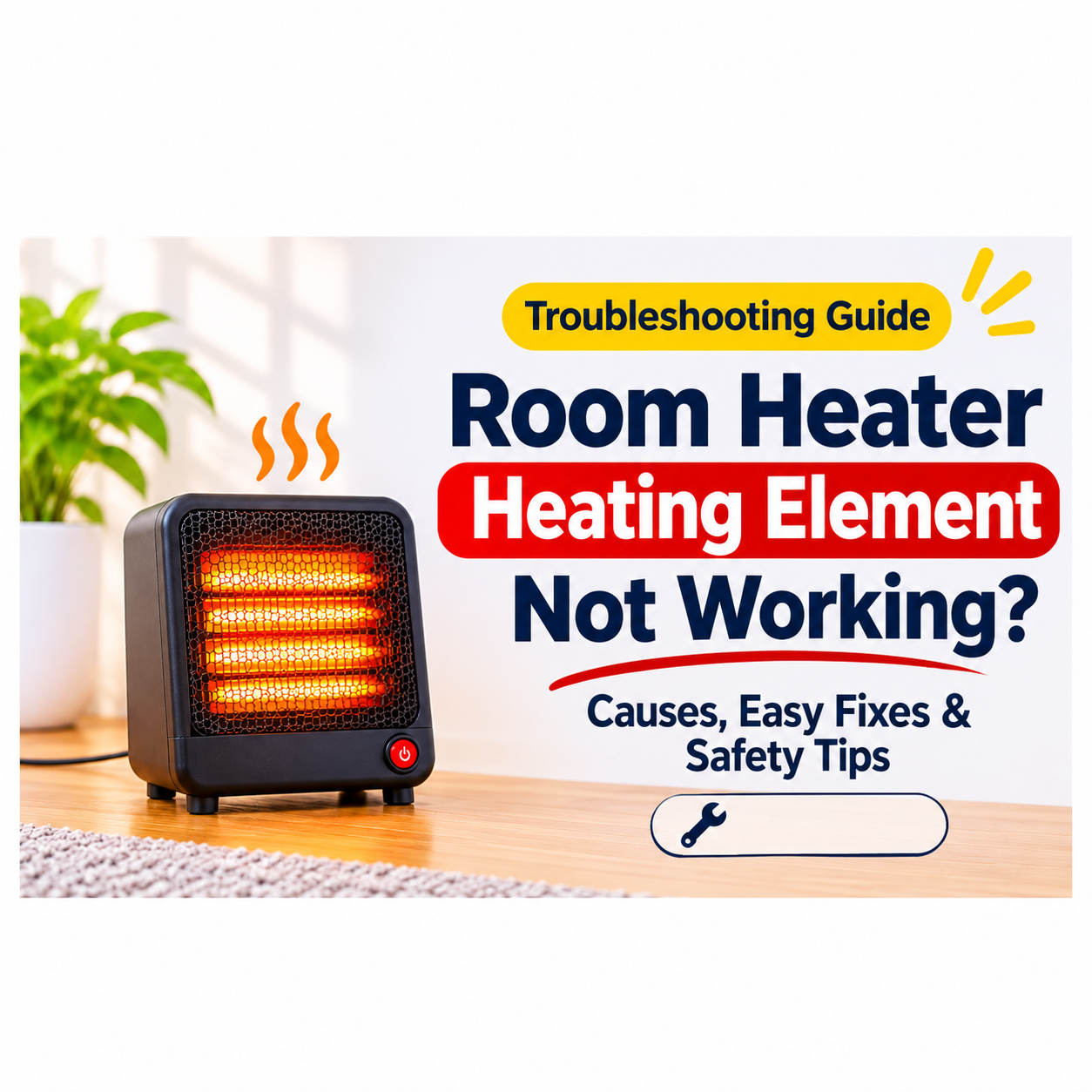
You switch on your room heater on a cold evening, the fan hums, the light glows, but the air stays freezing. When a room heater heating element is not working, it is one of the most frustrating winter problems. The good news: in many cases the element itself is not the real culprit. A tripped safety switch, a dead thermostat, or a dusty vent can make a perfectly good heater blow cold air.
This guide explains how a heating element works, the most common reasons it stops heating, how to test it safely, and when it is smarter to replace the heater instead of repairing it.
How a Room Heater Heating Element Works
The heating element is a coil or strip of resistance wire, usually made of nichrome (a nickel-chromium alloy). When electricity passes through it, the wire resists the current and turns that energy into heat. A fan or the heater’s design then pushes that warmth into the room.
Between the power plug and the element, several parts must work together: the power cord, the on/off switch, the thermostat, the tip-over switch, and the thermal fuse. If any one of them fails, the element receives no power and your heater stops heating.
Signs Your Heating Element Has Stopped Working
- The fan runs, but only cold or room-temperature air comes out.
- The heater turns on, but there is no orange glow (on radiant or quartz models).
- The heater heats for a few minutes, then switches off.
- There is a burning smell, but no heat.
- The heater does not turn on at all and the indicator light stays off.
- Heating is weak on one setting but normal on another (some models have multiple elements).
9 Common Reasons a Room Heater Is Not Heating
1. Faulty Power Outlet or Loose Plug
Before blaming the heater, check the outlet. Plug in a phone charger or lamp to confirm it works. Heaters draw a lot of power, so a worn or loose outlet may not supply enough current. Also check whether the plug or cord feels unusually hot, which signals a poor connection.
2. Tripped Circuit Breaker or Blown Fuse
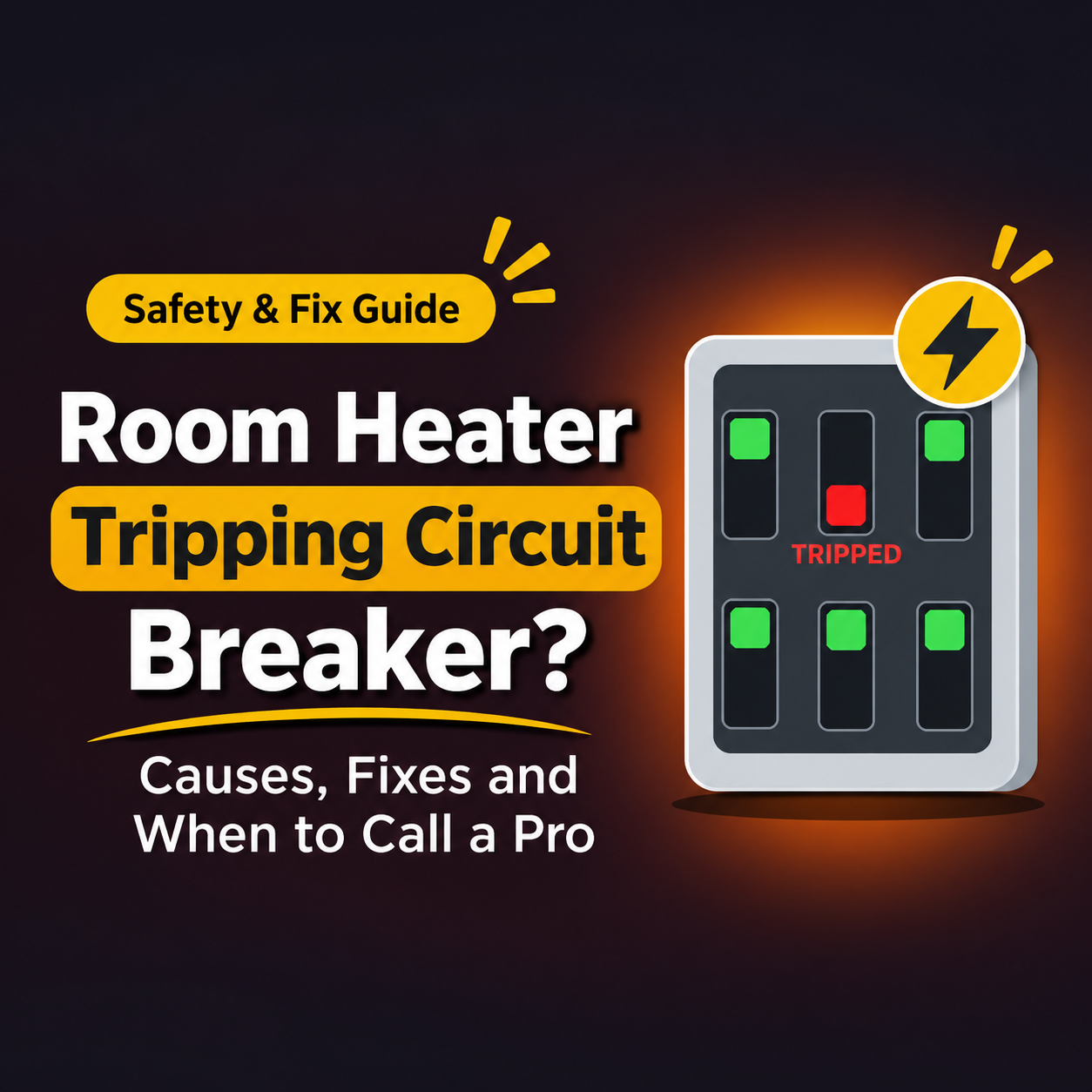
Room heaters often use 1000 to 2000 watts. Sharing a circuit with other appliances can trip the breaker. Reset it and try the heater alone on that circuit.
3. Damaged Power Cord
Bends, cuts, or crushed sections inside the cord can break the wire without showing any outside damage. If the cord is damaged, stop using the heater and replace the cord or the appliance.
4. Tripped Overheat Protection or Blown Thermal Fuse
Most heaters have an overheat cutoff. If dust blocks the air intake or the heater overheats, the protector trips and cuts power to the element. Some are resettable after cooling down. A thermal fuse, however, burns out permanently and must be replaced. This is one of the most common causes of “fan works, no heat.”
5. Stuck or Faulty Tip-Over Switch
A tip-over switch turns the heater off if it falls or sits on an uneven surface. Dust or a worn mechanism can make it think the heater is tilted, so the element never turns on. Move the heater to a flat, hard surface and try again.
6. Defective Thermostat
The thermostat tells the element when to switch on and off. If it fails, the element may never receive the signal. Turn the dial to maximum. If the heater still does not heat, the thermostat may be faulty.
7. Broken On/Off or Mode Selector Switch
Worn contacts inside the switch can let the fan run while cutting power to the element. If heat only works in certain switch positions, the selector switch is a likely cause.
8. Dust Build-Up and Blocked Air Flow
Dust coats the element and vents over time. Blocked airflow causes overheating, which trips the safety parts and can also burn the element out. Regular cleaning prevents many failures.
9. Burnt-Out or Broken Heating Element
After years of heating cycles, the resistance wire becomes brittle and eventually breaks. You may see a visible gap, a blackened spot, or a sagging coil. A broken element has no continuity and produces no heat.
How to Troubleshoot Step by Step
- Unplug the heater and let it cool completely.
- Test the outlet with a lamp or charger.
- Inspect the cord and plug for burns, melted plastic, or kinks.
- Check the breaker and reset it if tripped.
- Clean the vents with a soft brush or a vacuum on low suction.
- Place the heater on a flat, hard surface to reset the tip-over switch.
- Wait 30 minutes, plug it in, and set the thermostat to maximum.
- If it still does not heat, move on to testing the parts with a multimeter.
How to Test a Heating Element with a Multimeter
A multimeter in continuity or resistance mode is the most reliable way to check whether the element is broken. You will need a screwdriver and, for most models, careful removal of the back or front grille.
- Unplug the heater and remove the cover to reach the element and wiring.
- Take a photo of the wiring so you can reconnect everything correctly.
- Disconnect one wire from the element, then set your multimeter to the lowest resistance (ohms) or continuity setting.
- Touch one probe to each terminal of the element.
- A low reading (typically a few ohms to a few dozen ohms, depending on wattage) means the element is good. “OL”, no beep, or an infinite reading means the element is broken.
Use the same method on the thermal fuse, thermostat, and switch. Each should show continuity when in the “on” position. Any part with no continuity is faulty and needs replacement.
Repair or Replace: What Makes Sense?
| Problem | Usually Fixable? | Best Action |
|---|---|---|
| Tripped breaker or dusty vents | Yes | Reset and clean |
| Stuck tip-over switch | Often | Clean or replace switch |
| Blown thermal fuse | Yes (cheap part) | Replace with the exact same rating |
| Faulty thermostat or switch | Sometimes | Replace if the part is available |
| Broken heating element | Depends on model | Replace the element if available, or buy a new heater |
| Burnt wiring or melted plastic | No | Stop using; replace the heater |
As a simple rule, if the repair costs more than about half the price of a new heater, or the unit is older than 5 to 7 years, buying a new one is usually the wiser and safer choice.
Tips When Replacing a Heating Element or Part
- Match the wattage, voltage, shape, and size printed on the old part or the heater’s rating label.
- Use only parts designed for your heater model. A mismatched fuse or element is a fire risk.
- Make sure all connections are tight and insulated before closing the cover.
- Test the heater for the first time in a supervised area, away from curtains and furniture.
How to Prevent Heating Element Problems
What to Look for in a New Room Heater
If your old heater is beyond repair, choose a replacement with the right safety and comfort features:
- Overheat protection and tip-over shutoff: Essential safety features.
- Adjustable thermostat: Keeps the temperature steady and saves power.
- Suitable wattage: Roughly 10 watts per square foot of room area is a common guideline.
- Heating type: Fan, oil-filled, ceramic, quartz, and halogen heaters each suit different rooms and budgets.
- Low noise and portability: Important for bedrooms and offices.
- Warranty and spare parts availability: Makes future repairs easier.
Frequently Asked Questions
Why is my room heater fan working but there is no heat?
The fan and the element are powered through different paths. The most likely causes are a tripped overheat protector, blown thermal fuse, faulty thermostat, or a broken heating element.
Can I replace a heating element myself?
If you are comfortable with basic electrical work and the heater is unplugged, you can replace the element or related parts on many models. Always use an exact-match part. If unsure, ask a technician.
How long does a heating element last?
With normal use, a heating element can last several years. Frequent overheating, dust, and power surges shorten its life.
Why does my heater turn off after a few minutes?
This is often caused by blocked vents leading to overheating, or by a faulty thermostat or thermal cutoff. Clean the heater and test it on a flat surface.
Is it safe to use a heater with a burning smell?
A light dusty smell at the start of the season is normal and fades quickly. A strong burning or plastic smell is not. Unplug the heater immediately and inspect it before use.
How much does it cost to repair a room heater?
Small parts such as a thermal fuse or switch are usually inexpensive. A new element or a technician’s visit costs more, so compare the total repair cost to the price of a new heater.
Final Thoughts
When your room heater heating element is not working, do not rush to throw the heater away. Start with the simple checks: the outlet, the breaker, the cord, dusty vents, and the tip-over switch. Then test the thermal fuse, thermostat, and the element with a multimeter. Many heaters can be brought back to life with a small, inexpensive part.
Above all, put safety first. Unplug before opening, use matching replacement parts, and retire any heater with burnt wiring or melted plastic. A healthy, well-maintained heater will keep your room warm and your family safe all winter long.