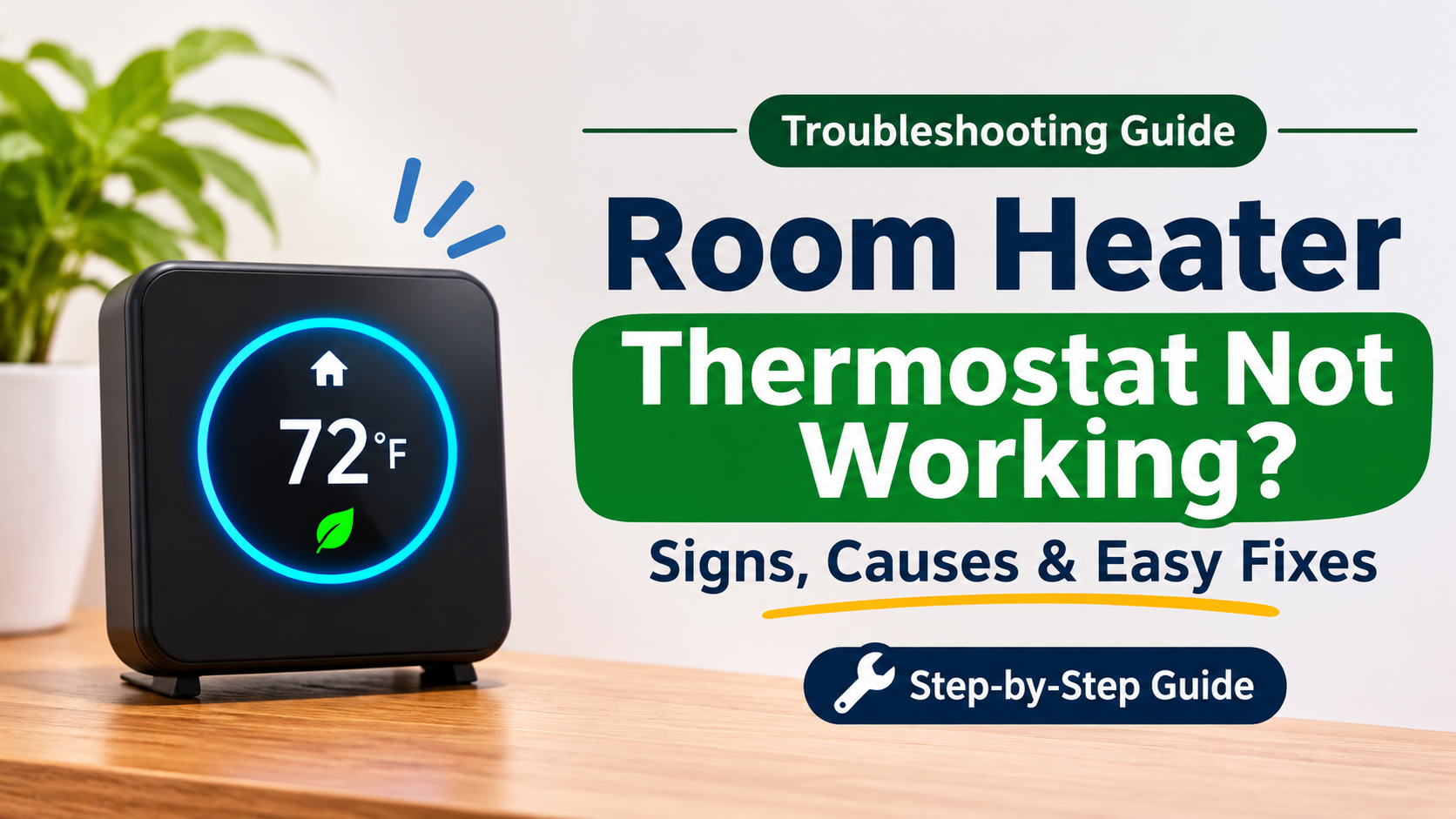

Room Heater Thermostat Not Working? Signs, Causes and Easy Fixes
The thermostat is the brain of your room heater. It decides when the heating element should switch on and when it should switch off. When the room heater thermostat is not working, the heater may stay cold, run nonstop, switch on and off again and again, or ignore the temperature you set. All of this wastes electricity and can be unsafe.
In this guide you will learn how a heater thermostat works, the clear signs of a failing thermostat, the most common causes, safe fixes you can try at home, and when you should call a technician or replace the heater.
Quick Answer: Why Is My Heater Thermostat Not Working?
A heater thermostat usually fails because of wrong settings, dust around the sensor, drafts that confuse the sensor, a worn dial or contacts, dead batteries in a digital model, a damaged sensor or a faulty control board. Check the settings and clean the heater first, then test the temperature with a separate thermometer.
How Does a Room Heater Thermostat Work?
The thermostat measures the temperature of the air near the heater. When the room is colder than your set temperature, it allows power to reach the heating element. When the room reaches the set temperature, it cuts the power. This on-off cycle keeps the room comfortable and saves energy.
| Thermostat Type | How It Works | Found In |
|---|---|---|
| Mechanical (bimetallic) | A metal strip bends with heat and opens or closes a contact | Basic fan and oil-filled heaters |
| Capillary (liquid filled) | A sealed tube expands with heat and moves a switch | Oil-filled radiators, some ceramic heaters |
| Digital (electronic sensor) | A sensor sends readings to a control board | Modern ceramic, tower and smart heaters |
7 Signs Your Heater Thermostat Is Failing

- The heater never turns on: the fan or light may work, but no heat is produced, even at maximum.
- The heater never turns off: it keeps heating even when the room is already hot.
- The room is too hot or too cold: the actual temperature is very different from the setting.
- Short cycling: the heater switches on and off every few seconds or minutes.
- The setting is ignored: turning the dial or changing the temperature makes no difference.
- The dial is loose or stuck: it spins freely, feels rough or does not click.
- Errors or a blank display: digital models may show strange numbers or error codes.
Common Causes of a Heater Thermostat Not Working
1. Wrong Settings or Mode
Before blaming the thermostat, make sure the heater is in heat mode, not fan-only, and that the temperature is set above the current room temperature. Many users also confuse Celsius and Fahrenheit on digital models.
2. Dust and Dirt Around the Sensor
Dust acts like a blanket and traps heat around the sensor, causing wrong readings. The heater may think the room is already warm and switch off too early, or it may overheat inside.
Fix: Unplug the heater, let it cool for at least 30 minutes, and clean the vents and sensor area with a soft brush or vacuum. Never spray liquid inside.
3. Drafts and Poor Placement
If the heater is near a window, door or cold draft, the sensor may feel cold air and keep the heater running. If it is too close to a wall, sofa or curtain, trapped warm air may cause early shut-offs.
Fix: Place the heater on a flat surface in an open area, away from drafts, with at least 3 feet of free space.
4. Dead Batteries or Power Issues (Digital Models)
Some digital thermostats or remote controls use batteries. Weak batteries, loose plugs or unstable voltage can cause blank screens or random behavior.
Fix: Replace batteries, plug the heater directly into a wall socket, and avoid extension cords.
5. Worn Dial or Dirty Contacts
On mechanical thermostats, the internal contacts can wear, burn or collect dust over the years. This causes the heater to turn on and off randomly or to stop heating at some settings.
6. Damaged Temperature Sensor
Digital heaters use a small sensor. If it is cracked, loose or dirty, it sends wrong readings to the control board. The heater may keep running or never start.
7. Faulty Control Board or Wiring
A burnt control board, loose wires or a failed relay can stop the thermostat from controlling the heater. This is an internal electrical fault and needs professional service.

Step-by-Step Thermostat Troubleshooting
- Unplug the heater and check the plug and cord for damage.
- Plug into a wall socket and set the mode to heat and the dial to maximum.
- Wait 5 to 10 minutes and see if the heating starts.
- Turn the dial slowly from low to high and listen for a click. Many mechanical thermostats click when switching.
- Unplug, cool down and clean the vents and sensor area.
- Move the heater away from drafts, windows and walls.
- Place a separate room thermometer nearby and compare it with the heater setting after 20 to 30 minutes.
- If the heater still ignores the settings, stop and contact a technician.
Quick Test: Is the Thermostat Really the Problem?
| What You Notice | Likely Cause |
|---|---|
| Heater heats only at maximum, not at lower settings | Dirty or worn thermostat or wrong calibration |
| Heater does not heat at any setting, fan works | Thermostat, heating element or overheat protection |
| Heater never turns off | Stuck thermostat contacts or faulty sensor |
| Heater switches off after a few minutes | Overheat protection, dust or short cycling thermostat |
| Blank display or error code | Power, battery or control board issue |
If the heater has no power at all, no lights and no sound, the problem is more likely a plug, socket, fuse or switch rather than the thermostat.
What You Can Fix vs What Needs a Technician

Thermostats are connected to high-current parts, so do not open the heater or test wires while it is plugged in. Internal testing with a multimeter and part replacement should be done by a qualified technician.
Repair or Replace?
Repair if the heater is fairly new, under warranty, or it is a premium model where only the thermostat is faulty.
Replace if the heater is more than 5 to 7 years old, the thermostat and other parts are failing, the heater stays on at all settings, or the repair cost is more than half the price of a new one.
Safety Warning: A Thermostat That Never Turns Off
A heater that never switches off, even in a hot room, is a safety risk. The overheat protection may be the only thing preventing damage. Unplug the heater, stop using it and get it checked.
- Never leave a heater running while sleeping or away from home.
- Keep it at least 3 feet from beds, curtains and furniture.
- Stop using it if you smell burning or see sparks or smoke.
- Do not use damaged cords or plugs.
How to Keep Your Heater Thermostat Working Longer
- Clean the vents and sensor area every 1 to 2 weeks in the heating season.
- Turn the dial gently and avoid forcing it past its limits.
- Place the heater on a flat surface away from drafts and walls.
- Use the heater in the correct room size to avoid constant operation.
- Store it dry and covered after winter.
What to Look for in a New Room Heater Thermostat
- Adjustable thermostat with clear markings or a digital temperature display.
- Accurate sensor and stable temperature control.
- Safety features: overheat protection, tip-over switch and auto shut-off.
- Timer and eco mode for energy saving.
- Right wattage for your room size.
- Warranty and local service support.
Frequently Asked Questions (FAQ)
How do I know if my room heater thermostat is bad?
Common signs are a heater that never turns on or never turns off, big differences between the setting and the real temperature, short cycling, a dial that is loose or stuck, or a digital display that shows errors.
Can I replace a heater thermostat myself?
It is not recommended unless you are trained. Thermostats connect to high-current wiring, so replacement should be done by a qualified technician or the service center.
Why does my heater only work at maximum setting?
This can be caused by a dirty or worn thermostat, a wrong calibration or a faulty sensor, so the heater never believes the room is cold enough at lower settings.
Why does my heater keep turning on and off quickly?
This is called short cycling. It can be caused by dust, drafts, poor placement, a faulty sensor or a failing thermostat.
Can a thermostat problem cause the heater to blow cold air?
Yes. If the thermostat does not send power to the heating element, the fan runs but the air stays cold.
How long does a room heater thermostat last?
With normal use, a thermostat can last many years, often as long as the heater. Heavy use, dust and frequent power fluctuations can shorten its life.
Final Thoughts
A room heater thermostat that is not working can make your room too cold, too hot, or waste electricity. Start with the simple checks: settings, cleaning, placement and power. Compare the heater with a separate thermometer, and do not attempt internal repair on your own. If the heater still ignores your settings, a professional repair or a new heater with a reliable thermostat is the safest choice.