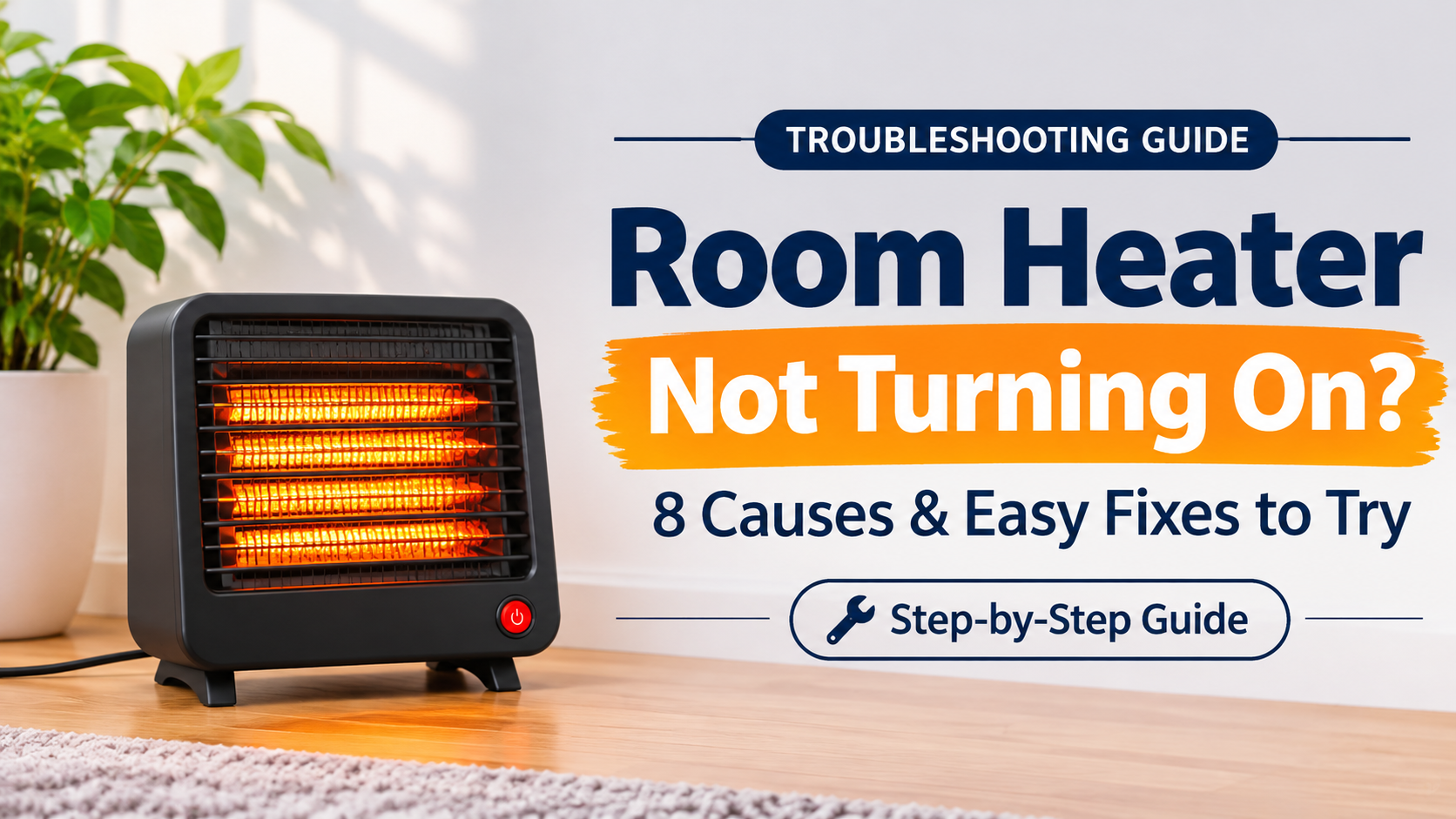

Room Heater Not Turning On? 8 Causes and Easy Fixes
You press the power button and nothing happens. No light, no fan, no warmth. A room heater not turning on is a frustrating problem, especially on a cold winter evening. The good news is that in many cases the fix is simple and takes only a few minutes, with no technician needed.
In this guide you will learn why a heater refuses to start, how to test each possible cause safely, which problems you can fix yourself and which ones need a professional. The steps apply to fan heaters, oil-filled radiators, ceramic heaters, halogen heaters and infrared heaters.
Quick Answer: Why Won’t My Room Heater Turn On?
The most common reasons are no power at the wall socket, a loose or damaged plug and cord, a tripped circuit breaker, an engaged tip-over switch, a tripped overheat protection, a faulty power switch, a broken thermostat or a blown internal thermal fuse. Always check the easy things first, because they solve most cases.

Safety First Before You Start
- Unplug the heater before touching, cleaning or inspecting it.
- Let the heater cool for at least 30 minutes if it was recently used.
- Keep your hands and the floor dry.
- Never open the heater body and touch internal wires while it is connected to power.
1. No Power at the Wall Socket
The heater may be perfectly fine while the socket is dead. Sockets can wear out, get loose, or lose power because of a local fault.
How to test: Plug a working device such as a lamp or phone charger into the same socket. If that device does not work either, the problem is the socket or the power supply, not the heater. Try another socket on a different circuit.
2. Loose, Burnt or Damaged Plug and Power Cord
Heaters draw a lot of current, so plugs and cords are under stress. Over time pins can loosen, cables can crack and connections can burn.
- Look for black marks, melted plastic, bent pins or a loose plug fit.
- Run your hand along the cord (unplugged) and feel for kinks, cuts or soft spots.
- Do not use the heater if the cord or plug is damaged. A replacement cord or professional repair is the safe choice.
3. Tripped Circuit Breaker or Blown Fuse
Room heaters use high wattage, often 1000 W to 2000 W. If other high-power appliances run on the same circuit, the breaker may trip and cut the power.
Fix: Go to your breaker panel, switch the tripped breaker fully off and then on. Replace a blown fuse with the same rating. If the breaker trips again as soon as you turn the heater on, stop and have the heater and wiring checked.

4. Tip-Over Switch Is Engaged
Modern heaters have a tip-over safety switch that cuts power if the heater tilts or falls. If the heater is on a carpet, a slope or was slightly bumped, the switch may stay in safety mode so the heater will not start.
Fix: Put the heater on a flat, hard, level surface. Switch it off, wait a minute and switch it on again. Check the bottom of the heater for debris that may keep the switch pressed.
5. Overheat Protection Has Tripped
If the heater overheated earlier, due to dust, blocked vents or covered surfaces, the overheat protection may have shut it down. Some models need time to cool or a manual reset before they restart.
Fix:
- Unplug the heater and let it cool for 30 to 60 minutes.
- Clean the air intake and outlet with a soft brush or vacuum.
- Look for a small reset button on the back or bottom and press it if present.
- Plug in and try again on a flat surface.
6. Faulty Power Switch or Control Knob
If the socket is working, the cord looks fine and the heater is still dead, the power switch or selector knob may be worn out. Signs include a switch that feels loose, clicks without response, or works only when you press it at a certain angle.
A switch replacement is usually a small repair, but it involves internal wiring, so it is best done by a technician.
7. Broken Thermostat
The thermostat decides when the heating element should start. If it fails, the heater may not start at all, or the element may not get power. Before assuming a fault, turn the thermostat to the maximum setting, because a very low setting can keep the heater off in a warm room.
If the heater still does not turn on at the highest setting, the thermostat may need replacing.
8. Blown Internal Thermal Fuse or Wiring Fault
Many heaters have a one-time thermal fuse inside. If the heater overheats badly, this fuse blows permanently and the heater is completely dead. Loose or burnt internal wires can create the same symptom.
This is an internal repair. If the heater is old or low-cost, replacing it is often safer and cheaper than repairing it.
Problems by Heater Type
| Heater Type | Common “Won’t Turn On” Cause | Quick Fix |
|---|---|---|
| Fan heater | Tip-over switch, overheat trip, dust | Level surface, clean vents, cool down |
| Oil-filled radiator | Cord or plug fault, thermostat setting | Test socket, set thermostat to max |
| Ceramic heater | Overheat protection, faulty switch | Reset and clean the grille |
| Halogen / infrared | Tip-over switch, burnt fuse | Level surface, check fuse |
Step-by-Step Troubleshooting Checklist
- Test the wall socket with another device.
- Inspect the plug and cord for damage.
- Check the circuit breaker and fuse.
- Place the heater on a flat, hard surface.
- Set the thermostat to maximum.
- Unplug for 30 to 60 minutes, clean the vents and press reset if available.
- Plug in again. If there is still no power, contact a qualified technician or consider replacing the heater.
When to Stop and Call a Professional

Heaters work with high current, so safety comes before saving money. Do not try to fix internal electrical parts unless you are trained to do so.
Repair or Replace?
Repair if the heater is relatively new, still under warranty, or the issue is a simple part like a cord, switch or thermostat on a quality model.
Replace if the heater is more than 5 to 7 years old, shows burning or melting, the internal fuse or wiring is damaged, or the repair cost is more than half the price of a new heater.
How to Prevent Your Heater From Failing Again
- Clean the vents every 1 to 2 weeks during use.
- Plug directly into a wall socket and avoid extension cords.
- Do not run other heavy appliances on the same circuit.
- Do not cover the heater or dry clothes on it.
- Test the heater before winter, not on the first cold night.
- Store it in a dry, covered place after the season.
What to Look for in a New Room Heater
- Right wattage for your room size.
- Safety features: tip-over switch, overheat protection and cool-touch body.
- Adjustable thermostat with multiple heat settings.
- Energy efficiency to control electricity cost.
- Warranty and local service support.
Frequently Asked Questions (FAQ)
Why is my room heater completely dead?
If there is no light, no sound and no heat, the cause is usually no power at the socket, a damaged cord or plug, a tripped breaker, or a blown internal fuse. Test the socket first.
Why does my heater not turn on after being moved?
Moving the heater may have engaged the tip-over switch or loosened the plug. Place it on a flat surface, reconnect it firmly and try again.
Why is the heater light on but it is not heating?
If the power light is on but there is no heat, the heating element, the thermostat or the overheat protection may be at fault. Set the thermostat to maximum, clean the vents and let the unit rest.
How do I reset my room heater?
Unplug it, let it cool for 30 to 60 minutes, clean the vents, press the reset button if your model has one, then plug it in again on a level surface.
Can a heater stop working because of dust?
Yes. Dust blocks airflow and causes overheating, which trips the safety protection and can shut the heater down.
Is it safe to keep trying again and again?
No. If the heater does not start after the basic checks, stop. Repeated attempts on a faulty heater or a tripping breaker can be dangerous.
Final Thoughts
When a room heater is not turning on, the cause is often simple: no power at the socket, a loose plug, a tripped breaker or a safety switch. Follow the steps in this guide in order, keep your safety first, and do not attempt internal electrical repair on your own. If the heater remains dead after the basic checks, a professional repair or a new, correctly sized heater will get your room warm again.