You turn the dial down but the heater keeps blasting. Or you set it to a comfortable temperature and the room never gets warm. Or the digital display says one thing while the room feels like another. When a room heater’s temperature control stops working, it affects comfort, electricity bills and sometimes safety. The good news is that many thermostat problems come from simple, fixable causes such as dust, wrong settings or poor placement. This guide explains how a heater’s temperature control works, the most common reasons it fails, how to troubleshoot it step by step, and when to repair or replace the heater.
How Does a Room Heater’s Temperature Control Work?
Understanding the basics makes troubleshooting much easier. A heater’s temperature control, usually called the thermostat, works like a small decision-maker:
- A sensor measures the temperature of the air around it.
- A controller compares that reading with the temperature you set.
- If the room is colder than the setting, the controller sends power to the heating element. If it is warm enough, it cuts the power.
- The cycle repeats continuously to keep the room near your chosen temperature.
Heaters use two main types of thermostat. A mechanical thermostat is a dial with a simple temperature-sensitive switch inside, often a bimetal strip that bends as it heats. An electronic or digital thermostat uses an electronic sensor and a control board with a display or buttons. Both can develop problems, but their typical faults differ.
Signs Your Heater’s Temperature Control Is Not Working
- The heater runs continuously and never switches off, even on a low setting
- The heater switches off too early and the room stays cold
- The heater keeps cycling on and off every few seconds or minutes
- The dial feels loose, spins freely or has no clear stops
- The digital display shows a wrong reading, an error code or does not respond
- The heater only works on one fixed power level
- The room temperature is very different from the temperature you set
- The heater gets extremely hot or the surface feels hotter than normal
9 Common Reasons a Heater’s Temperature Control Stops Working
1. Wrong settings or an active special mode
Before suspecting a fault, check the basics. Eco mode, fan-only mode, a timer, a fixed low or high power setting or a child lock can all change how the heater behaves. A thermostat set lower than the current room temperature will keep the heater off, which can look like a failure.
2. Dust and dirt on the sensor or inside the heater
Dust acts like a blanket. It can cover the temperature sensor and insulate it, causing slow or incorrect readings. It also traps heat inside the heater and may trigger the overheat protection. Dirty grilles and intakes are among the most common hidden causes.
3. The heater is placed in a bad spot
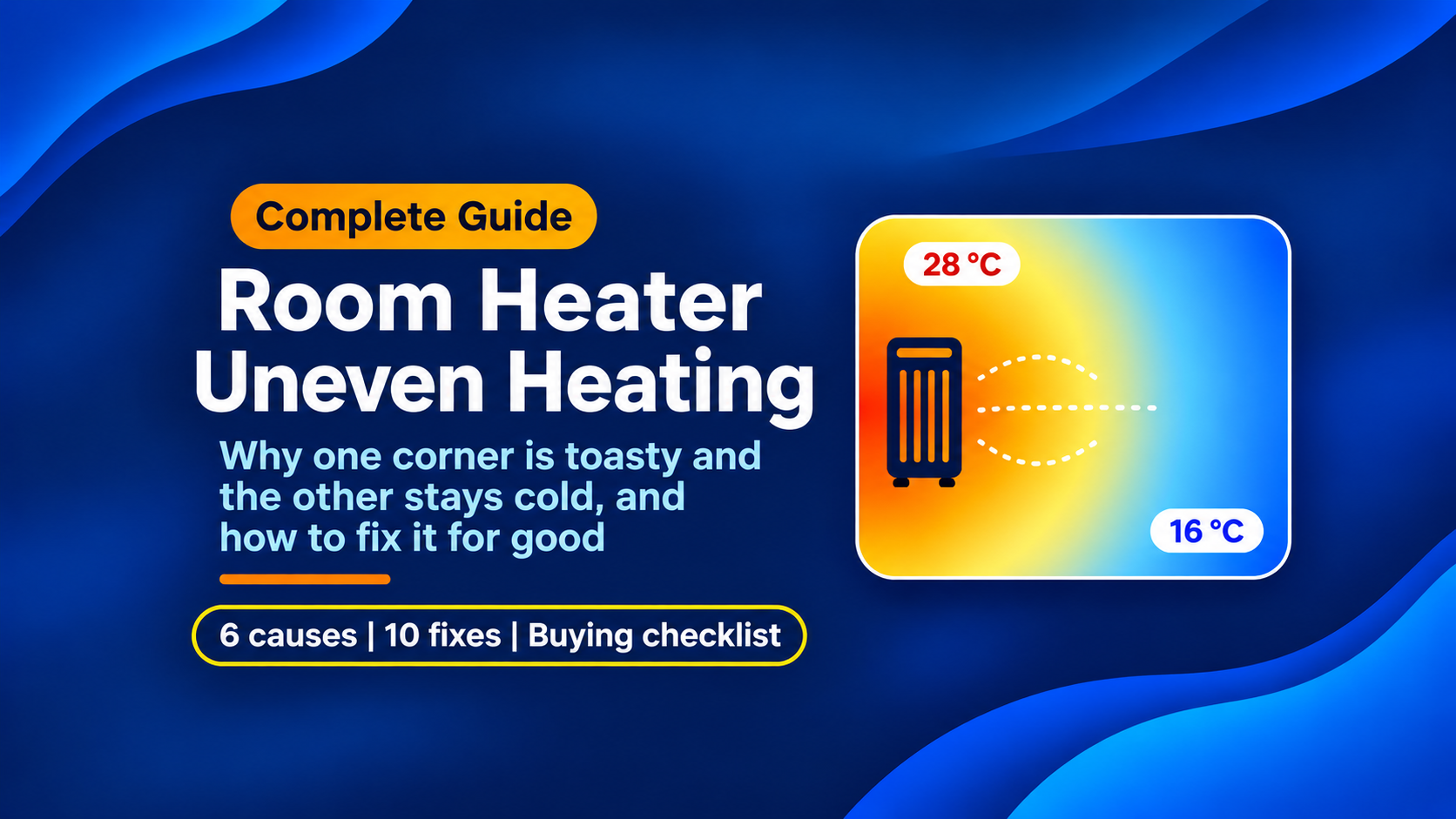
If the sensor is next to the heater’s own hot air stream, it may think the whole room is warm and switch off early. Placing the heater near a window, door or air vent with cold drafts, or near another heat source, can also confuse the sensor. Corners and enclosed spaces create uneven temperatures.
4. The room is too large or poorly insulated
Sometimes the thermostat is fine but the heater is not powerful enough for the space. It runs at full power and still cannot reach the target. Gaps around doors and windows, high ceilings and open-plan layouts all make this worse.
5. Faulty or worn mechanical thermostat
The metal parts inside a dial thermostat can weaken, stick or lose calibration over time. The result may be a heater that stays on, never comes on, or switches at the wrong temperature regardless of the dial position.
6. Loose, slipped or broken control knob
The knob can come off its shaft, slip or crack. The dial then shows one setting while the internal switch stays at another. This is a simple mechanical problem but it is easy to mistake for a thermostat failure.
7. Failed temperature sensor or control board
In digital heaters the sensor can fail or drift, giving false readings. The control board itself may develop faults from power surges, moisture, age or heat. Symptoms include flickering displays, error codes, unresponsive buttons and random shutoffs.
8. Stuck relay or switch
The relay is an electrical switch that physically connects the heating element to power. If its contacts weld together or stick, the heater can stay on even when the thermostat says it should turn off. This is a safety concern and the heater should not be used until repaired.
9. Power supply problems
An overloaded circuit, loose plug, damaged cord or extension cord can cause low voltage or interrupted power. The heater may then behave erratically and the controls may appear faulty. A remote with weak batteries can also stop the heater from responding to commands.
How To Troubleshoot a Heater With Temperature Control Problems
Always unplug the heater and let it cool completely before cleaning, moving or inspecting it.
Step 1: Check settings and modes
Set the thermostat to a high temperature and turn off eco mode, timers and any special function. If you have a remote, replace its batteries and try the buttons on the heater itself.
Step 2: Do a quick calibration check
Place a separate room thermometer a few feet away from the heater at about the same height. Compare its reading with the heater’s display or the room’s actual feel after 30 to 60 minutes. This helps you tell whether the heater is misreading the temperature or simply underpowered for the room.
Step 3: Clean the heater
With the heater unplugged, use a soft brush, dry cloth or vacuum with a brush attachment to remove dust from grilles, vents, fan blades and around the sensor area. Never spray or pour liquid on the heater.
Step 4: Improve placement
Move the heater away from walls, curtains and furniture, and keep it out of drafts. Leave about three feet (one meter) of clear space around it. Place it on a flat, hard surface at a central location where air can circulate.
Step 5: Inspect the knob and controls
Check that the dial turns smoothly with a clear click or resistance and that the knob is firmly attached. If it spins freely, it may have slipped off its shaft. For digital models, check that all buttons respond and the display is clear.
Step 6: Try a different socket
Plug the heater directly into a healthy wall socket, not an extension cord or adapter. If the behavior changes in another socket, the original socket or circuit was the problem.
Step 7: Power-cycle and reset
Switch the heater off, unplug it and wait 15 to 30 minutes. Plug it back in and test it. This clears temporary electronic glitches and resets overheat protection. Check the manual for a dedicated reset button.
Step 8: Observe the behavior over time
Run the heater for 30 to 60 minutes while keeping an eye on it. Note whether it cycles on and off, how the room temperature changes, and whether any smells, noises or hot spots appear. This information helps a technician diagnose the fault.
When To Stop Using the Heater
A failed temperature control can mean the heater does not shut off when it should. Stop using it immediately and unplug it if you notice:
- The heater stays on at full power and will not turn off
- Burning smells, smoke, sparks or crackling sounds
- The plug, cord or socket is very hot or discolored
- The housing or surface is far hotter than usual
- Cracks, exposed wires or melted plastic
- The display shows repeated error codes you cannot clear
Never bypass, jump or disable a thermostat, relay or thermal fuse. These parts protect against overheating and fire.
Repair or Replace Your Room Heater?
A simple fix, such as cleaning or tightening a knob, costs almost nothing. Replacing a thermostat, sensor or control board may be worth it for a good-quality or expensive heater, but only if done by a qualified technician. For an older, low-cost or heavily used heater, replacement is often the safer and more economical choice because newer models offer better thermostats and safety features. If the heater is under warranty, contact the seller or manufacturer instead of opening it up.
What To Look For When Buying a New Room Heater
If you are replacing a heater whose temperature control has failed, these features help you avoid the same problem:
- Accurate adjustable thermostat: Look for a clearly marked dial or a digital display with fine temperature steps for steady comfort.
- Digital control with a remote: Gives precise control and easier setting changes from across the room.
- Multiple heat settings: Allows you to choose lower power for gentle, longer heating.
- Overheat protection and tip-over switch: Essential safety features for any heater.
- Timer and eco mode: Helps control running time and electricity use.
- Right wattage for your room size: An undersized heater never reaches the set temperature; check the maker’s room-size guidance.
- Easy-to-clean design: Removable or accessible grilles make dust control simple.
- Quality build, solid plug and cord: Reduces electrical problems and unreliable behavior.
- Safety certification and warranty: Gives you support if the thermostat fails early.
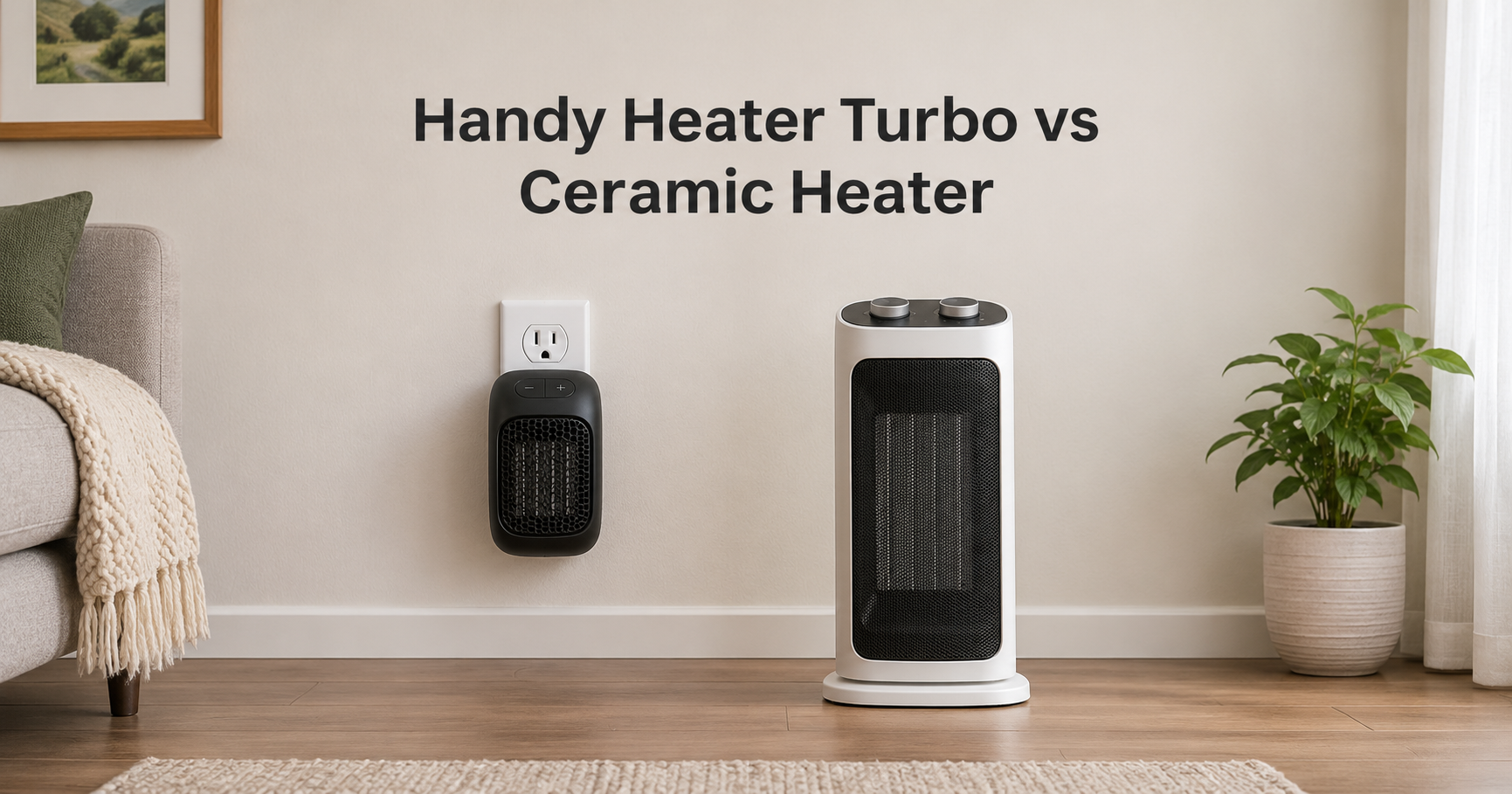
Oil-filled radiators are valued for steady, even warmth and slow, gentle cycling. Ceramic and fan heaters heat small spaces quickly and often include digital thermostats and remotes. Choose the type that suits your room size, usage pattern and safety needs.
Tips To Keep Your Heater’s Temperature Control Working Well
- Clean the grilles, vents and intake every month during heavy use
- Store the heater clean, dry and covered during warm months
- Avoid dropping or knocking the heater, which can damage internal controls
- Do not use extension cords or share the socket with other high-power appliances
- Keep the thermostat dial or buttons free from dirt and spills
- Check the plug, cord and knob at the start of every winter
- Read the manual to understand each mode and reset method
Frequently Asked Questions
Why is my room heater not responding to the temperature control?
Common causes include a special mode being active, a slipped knob, dust on the sensor, a faulty thermostat or a power supply problem. Check settings, clean the heater and test another socket first.
Why does my heater keep running and never turn off?
The thermostat may be faulty, the relay may be stuck, or the room may be too cold or too large for the heater. If it runs at full power and will not stop, unplug it and have it checked.
Why does my heater turn off before the room is warm?
The sensor may be reading its own hot air or a nearby heat source. A dirty sensor, overheat protection or a thermostat set too low can also cause this. Improve placement and clean the heater.
Can I fix a heater thermostat myself?
You can safely clean the heater, check settings and tighten a loose knob if it is a simple attachment. Replacing a thermostat, sensor, relay or board should be left to a qualified technician.
How do I know if the thermostat is bad?
If cleaning, correct settings and a different socket do not help, and the heater still behaves wrongly, the thermostat or control board is likely at fault. A technician can test it with proper tools.
Is it dangerous if the temperature control fails?
It can be. A heater that cannot shut off may overheat, damage nearby items or create a fire risk. Stop using it until it is inspected.
How often should a heater thermostat be replaced?
There is no fixed schedule. Thermostats can last for many years, but age, heavy use, dust and heat gradually wear them. Replace it when it becomes unreliable.
Final Thoughts
When a room heater’s temperature control is not working, the cause is often simple: the wrong mode, a dirty sensor, a slipped knob or poor placement. Work through the basics first, keep the heater clean and give it space to breathe. If it never switches off, shows error codes or smells of burning, stop using it and get it inspected. A heater with a reliable thermostat and good safety features keeps your room comfortable, your bills reasonable and your home safe.
Disclaimer: This article is for general information only. Always follow your heater’s manual and consult a qualified technician or electrician for repairs, internal parts or electrical problems.