





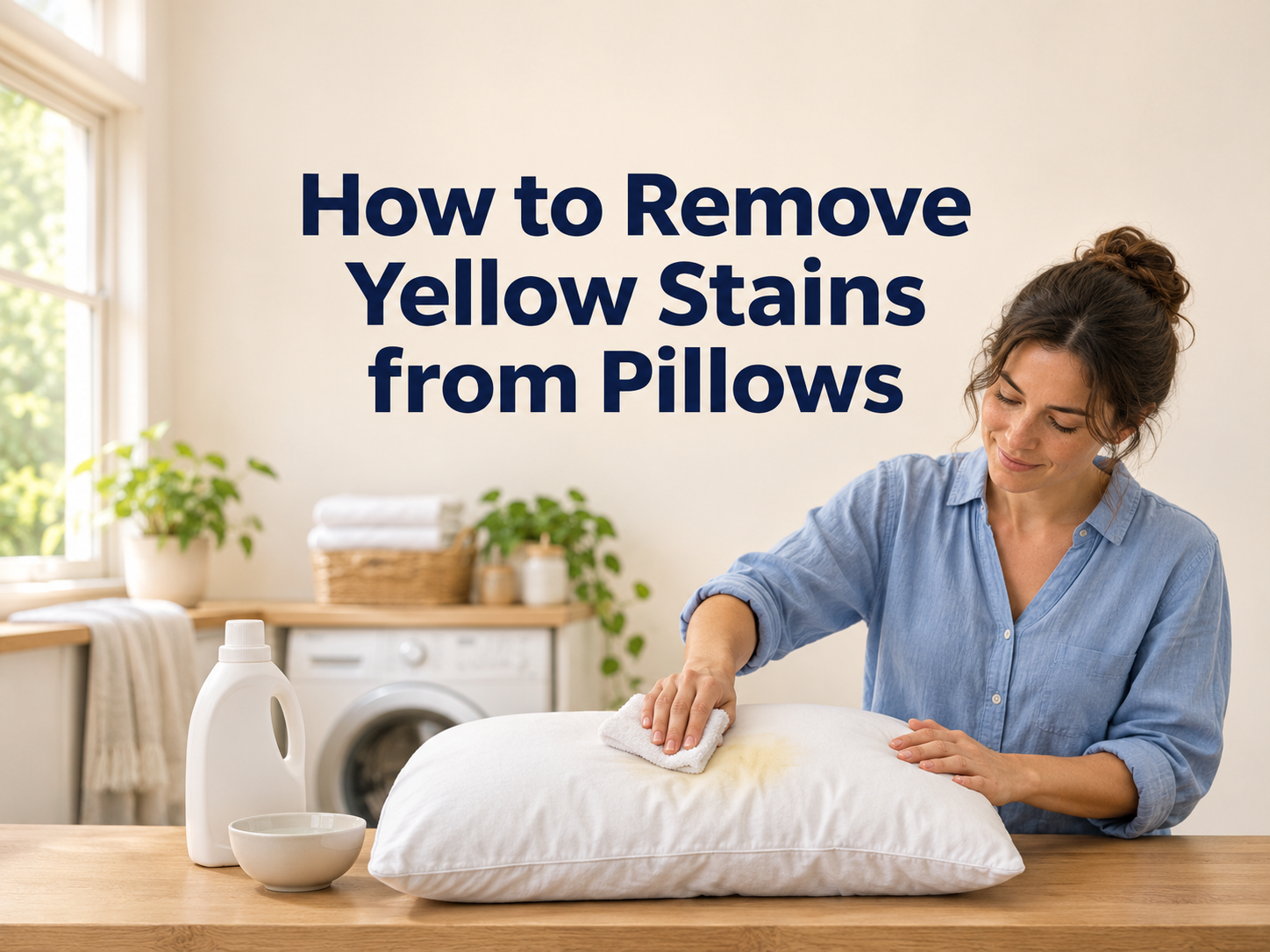
You pull your pillow out of the cupboard or strip the bed, and there it is: a dull yellow patch that no amount of fluffing will hide. Yellow stains on pillows are one of the most common bedding problems, and they usually appear even when you wash your pillowcases regularly. They look unhygienic, they can come with a stale smell, and they make a freshly made bed feel less inviting.
The good news is that most yellow pillow stains can be reduced or removed with simple, safe methods, using things you probably already have at home. This guide explains why pillows turn yellow, which method suits your pillow type and exactly how to clean and protect your pillows so the stains do not return.
Quick answer
To remove yellow stains from pillows, check the care label, then pre-treat the stain with a paste of baking soda and hydrogen peroxide or an enzyme or oxygen-bleach cleaner. Wash washable pillows on a gentle warm cycle with an extra rinse, dry them completely in the sun or on low heat, and spot clean foam or latex pillows by hand. Use a protector and wash pillowcases weekly to prevent new stains.
Why Do Pillows Turn Yellow?
Yellow stains are mostly caused by what your body produces overnight. You lose a surprising amount of moisture while you sleep, and it mixes with natural oils and skin cells. Some of it passes right through the pillowcase and soaks into the pillow, where it dries and slowly darkens.
1. Sweat
Sweat contains salts and proteins. When it dries repeatedly, it leaves a yellow-brown mark, which is why stains are often largest where your head rests.
2. Body oils and dead skin
Natural skin oils oxidise over time, the same way cooking oil turns yellow when exposed to air. They also attract dust and dirt.
3. Drool and saliva
Saliva contains proteins and enzymes that stain fabric and fill, and it often causes a distinct yellow patch near the edge of the pillow.
4. Hair products and skincare
Oils, serums, night creams, hair masks and dyes can transfer to the pillow, especially when they do not fully absorb before bed.
5. Trapped moisture and ageing
Pillows that never dry out completely, or that are old and rarely washed, develop a yellow tint as the filling oxidises. Humid bedrooms speed this up.
6. Spills and nighttime snacks
Drinks, medicines, ointments and food sometimes find their way onto the pillow and leave localised yellow or brown spots.
Before You Start: Check the Pillow Type and Label
The cleaning method depends on what is inside the pillow. Some fillings can go in the washing machine, while others are damaged by water. Always read the care label first, since it overrides general advice.
| Pillow type | Machine washable? | Best approach |
|---|---|---|
| Polyester or fiberfill | Usually yes | Gentle warm wash, extra rinse, thorough drying. |
| Down or feather | Often yes, check the label | Mild liquid detergent, low heat, dry with dryer balls until fully dry. |
| Memory foam | No | Spot clean the cover and foam surface, air dry. |
| Latex | No | Spot clean with mild soap, air dry in shade. |
| Buckwheat or bead | Cover only | Wash the cover, air the filling and keep it dry. |
Method 1: Baking Soda and Hydrogen Peroxide Paste (Spot Treatment)
This is one of the most popular and effective home methods for yellow stains on white or light-coloured pillows. Baking soda lifts and absorbs residue, and hydrogen peroxide (3 percent, the common pharmacy strength) works as a gentle oxygen-based brightener.
- Remove the pillowcase and protector. Treat the pillow directly.
- Mix a paste of about 2 tablespoons of baking soda with 1 tablespoon of 3 percent hydrogen peroxide, adding a drop of mild dish soap if you like.
- Apply the paste to the stain and spread it gently with a soft brush or cloth. Do not soak the pillow.
- Leave for about 30 minutes, then dab with a clean damp cloth to lift the paste.
- Rinse and dry. Blot with cool water, then dry completely in the sun or in a well-ventilated space.
Test first, and never mix with other cleaners
Hydrogen peroxide can lighten coloured or dark fabrics, so test a hidden spot first and use this method on white or light covers. Never mix peroxide with vinegar in the same container, and never mix bleach with vinegar, ammonia or other cleaners, because the combinations can release harmful fumes or irritants.
Method 2: Washing the Pillow in the Machine
For washable pillows, a full wash usually removes most yellowing, particularly when combined with a pre-treatment.
- Pre-treat visible stains with the paste above, or with an enzyme stain remover.
- Wash two pillows at the same time so the drum stays balanced. If you only have one, add a couple of clean towels.
- Use a gentle or delicate cycle with warm water and a small amount of mild detergent. An oxygen bleach booster can help on white pillows if the label allows.
- Run an extra rinse cycle so no detergent residue remains, since leftover soap can itself cause yellowing later.
- Dry on low heat with clean tennis balls or dryer balls, or dry in direct sunlight, until the pillow is completely dry. This can take several hours.
Make sure the inside is fully dry. A pillow that feels dry on the outside but is damp in the centre can develop mold and a musty smell.
Method 3: Vinegar and Water Rinse
White vinegar can help soften residue and reduce odour. Add half a cup to the rinse cycle of a washable pillow, or lightly dab a diluted solution of equal parts vinegar and water onto a stained area, then rinse and dry. Do not combine vinegar with hydrogen peroxide or bleach, and avoid it on delicate fabrics unless the label allows.
Method 4: Oxygen Bleach or Enzyme Cleaner
Oxygen-based laundry boosters and enzyme cleaners are designed for body stains such as sweat and saliva. Follow the product directions, soak or treat the stained area, and wash as above. Enzyme cleaners are especially good for protein stains.
A note on chlorine bleach
Chlorine bleach can react with sweat and body oils and can make yellow marks worse, while also weakening fabric and fillings. For pillows, oxygen-based products are generally the safer choice.
Method 5: Sunlight
Sunlight is a free, gentle brightener. After washing or spot cleaning, place the pillow in direct sun for a few hours, turning it halfway through. Sunlight helps remove moisture and odour and can gradually fade light stains on white fabric. Avoid long sun exposure for memory foam and latex, which can dry out and crumble, and for coloured fabrics that may fade.
Method 6: Cleaning Memory Foam and Latex Pillows
These pillows should not be soaked or machine washed. Instead:
- Remove and wash the cover according to its label.
- Mix mild soap with cool water and dab the stain with a damp cloth. Use as little liquid as possible.
- Sprinkle a little baking soda on the surface, leave for an hour, then vacuum it off to absorb moisture and odour.
- Air dry flat in a well-ventilated, shaded room. Make sure it is fully dry before using it again.
Method 7: Refreshing Pillows That Are Too Stained to Save
Some pillows are simply beyond saving. If stains are deep, the filling is lumpy and flat, or the pillow smells even after washing, it is time to replace it. A fresh pillow is cheaper than the time spent repeatedly cleaning a worn-out one.
How to Prevent Yellow Stains Coming Back
- Use a pillow protector under the pillowcase. A breathable, zippered protector blocks moisture and oils.
- Wash pillowcases weekly and protectors every month.
- Wash washable pillows every 3 to 6 months.
- Dry hair and skin products before bed. Let creams absorb first.
- Air the bed for a short time each morning so moisture can escape.
- Keep the bedroom ventilated and avoid too much humidity.
- Replace pillows when they stay flat, stained or smelly. Many pillows last roughly one to three years depending on the type and care.
Pro tips
- Treat stains as soon as you notice them. Fresh stains are far easier to remove than old ones.
- Rotate and fluff your pillows regularly to spread wear and let air in.
- Keep two sets of pillow protectors so you can swap while one is in the wash.
- Use white or light-coloured pillowcases if you like to spot treat with peroxide.
- Never store damp pillows in a closed cupboard.
Common Mistakes to Avoid
- Putting memory foam or latex pillows in the washing machine.
- Using chlorine bleach on sweat stains.
- Using too much detergent, which leaves residue that causes new yellowing.
- Not drying the pillow completely before putting the cover back on.
- Mixing cleaning products together.
- Skipping a pillow protector.
- Using very hot water on delicate or down pillows.
Frequently Asked Questions
Why do my pillows turn yellow even though I wash the pillowcase?
Moisture and oils pass through the case and into the pillow, where they dry and darken. A protector and regular pillow washing help prevent this.
Can I remove old yellow stains?
Often partly. Older stains are harder, but a pre-treatment, a gentle wash and sun drying can lighten them noticeably. Very deep stains may remain.
Is it safe to use hydrogen peroxide on pillows?
Generally yes in the 3 percent household strength on white or light fabrics, after a spot test. Rinse well and do not mix it with other cleaners.
How often should I wash my pillows?
Wash washable pillows every 3 to 6 months. Foam and latex pillows are spot cleaned and aired out regularly.
How do I dry a pillow completely?
Use low heat with dryer balls, or dry in direct sun, turning and fluffing often. Check the centre to make sure no dampness remains.
When should I replace a yellow pillow?
Replace it when stains and odours return soon after cleaning, the filling is flat or lumpy, or it no longer supports your head and neck.
Final Thoughts
Yellow stains on pillows are common, and they do not mean your bedding is dirty or that you are doing something wrong. They are the natural result of sweat, oils and time. With the right method for your pillow type, a careful drying routine and a simple protector, you can remove most stains and keep new ones from forming.
Start by checking the label, treat the stain early and dry the pillow thoroughly. A little regular care will keep your pillows clean, fresh and comfortable for much longer.