
You plugged in your Handy Heater Turbo Power expecting instant, powerful warmth, and instead you got a lukewarm breeze, a unit that will not turn on, or a faint burning smell. You are not alone. Compact plug-in and mini ceramic heaters sold under names like Handy Heater Turbo Power are popular because they are cheap, small and heavily advertised, but they also generate a steady stream of complaints.
This guide explains the most common Handy Heater Turbo Power problems, why they happen, what you can safely try at home, and when it is smarter to stop using the heater and replace it. Specifications vary between sellers and production batches, so always check the label on your own unit and the manual that came with it.
Quick Summary
- Most complaints come down to unrealistic expectations (low wattage, small heating area), outlet or cord problems, dust buildup and overheat protection switching the unit off.
- A burning smell, a hot plug or visible damage means unplug immediately and stop using the heater.
- Never use a small heater with an extension cord or power strip, and never leave it running unattended.
- If basic checks do not fix the problem, request a refund or replacement rather than attempting repairs.

What Is the Handy Heater Turbo Power?
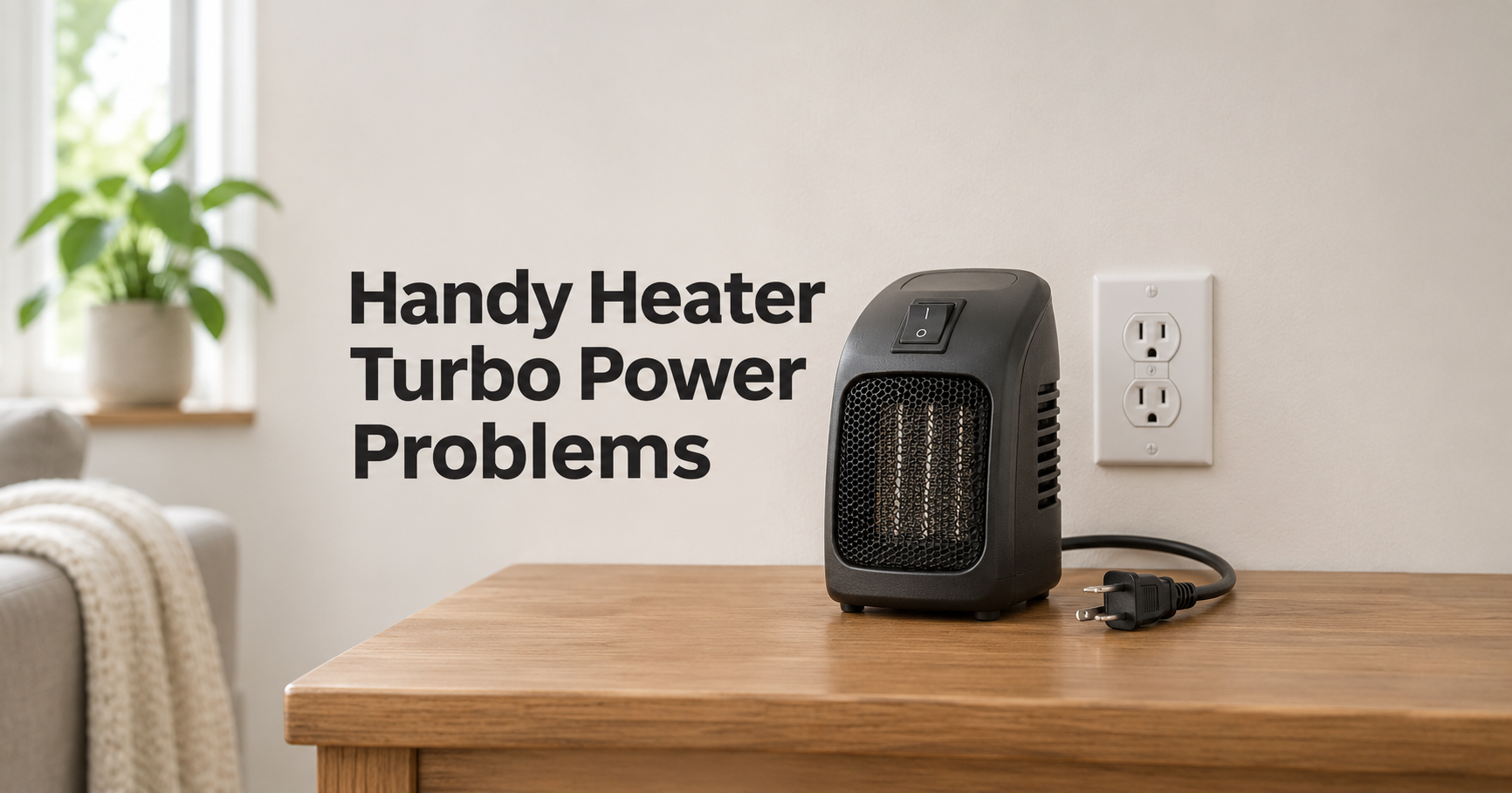
The Handy Heater Turbo Power is a compact electric heater of the kind usually marketed for personal spaces such as a desk, a small bedroom corner or a bathroom. Like most products in this category, it generally uses a ceramic heating element and a small fan to push warm air into the room. It is designed to be portable, quick to start and easy to store.
The key point is that small heaters of this style often draw far less power than a full-size space heater. Lower power means lower running cost and a smaller safety margin to worry about, but it also means limited heat output. Many frustrations start right here, when a personal heater is expected to warm an entire room.
Problem 1: The Heater Produces Weak or Lukewarm Heat
Why it happens
- Low wattage. A compact heater can only add so much heat per hour. In a cold or large room, it simply cannot keep up.
- Wrong room size. Open-plan areas, high ceilings and drafty rooms swallow small amounts of heat quickly.
- Blocked airflow. Dust-clogged vents or a heater pushed against a wall, couch or curtain reduce how much warm air actually reaches you.
- Fan or element wear. An aging fan moves less air, and a weakened element heats less effectively.
What to try
- Unplug the heater and let it cool completely.
- Gently clean the front and rear vents with a soft brush or a vacuum on a low setting.
- Move it at least three feet (about one meter) away from walls, furniture and fabric, and place it on a flat, hard surface.
- Use it close to where you sit, within roughly an arm’s length to a few feet, and close the door of the room to hold the warmth in.

Problem 2: The Heater Will Not Turn On
Common causes
- A dead or tripped wall outlet, or one controlled by a wall switch.
- A loose plug connection, especially in older or worn outlets.
- Overheat protection that has not yet reset after a previous shutdown.
- A damaged internal component, or a manufacturing defect.
What to try
Test the outlet with a lamp or phone charger first. Then try a different outlet, plugging the heater directly into the wall. If the heater has a reset or power switch, make sure it is in the correct position. Unplug it for about 15 minutes to allow any internal thermal protection to reset, then try again. If it still shows no sign of life, the unit is probably defective, and the safest move is to contact the seller.

Problem 3: The Heater Turns Off by Itself
Most modern heaters include a thermal cutoff that switches the unit off when internal temperatures climb too high. This is a safety feature, so a shutdown is not always a fault. It is a warning that heat is not escaping properly.
Typical triggers
- Dust-blocked vents that trap heat inside the housing.
- Placement too close to a wall, bed or curtain, which limits airflow.
- Extension cords or power strips, which can overheat and cut power.
- Long continuous runs in a warm, enclosed space.
What to do
Unplug the heater, clean the vents, move it into open space and plug it directly into a wall outlet. If it keeps cutting out within minutes even with clean vents and good placement, the protection circuit or internal wiring may be faulty, and the unit should be replaced.
Problem 4: Burning or Plastic Smell
A short, mild smell the first time you use a brand-new heater is common, because manufacturing residues and dust burn off the element. Anything beyond that deserves attention.
- Dust burning off the element after months of storage is the most harmless cause. The smell fades within a few minutes.
- A persistent or sharp plastic or electrical smell may point to overheating parts, a failing connection or damaged insulation.
If the smell does not fade quickly, or you notice smoke, sparks, a crackling sound or discolored plastic, unplug the heater at once and stop using it. Do not try to continue using it to see whether it improves.
Problem 5: Fan Noise, Rattling or Buzzing
Small fans are rarely silent, but a sudden change in sound usually has a cause:
- Dust or debris on the fan blades creates rattling or whirring.
- A loose housing or internal component vibrates at certain speeds.
- An unlevel surface makes the whole unit hum or buzz.
- A worn fan motor grinds, squeals or slows down over time.
Clean the vents, place the heater on a firm, flat surface and listen again. A grinding, scraping or squealing noise that does not go away points to a failing fan, and replacement is usually more practical than repair for an inexpensive unit.
Problem 6: The Plug or Outlet Gets Hot
This is the most serious problem on the list. Heaters draw a large amount of current compared with most household devices, and any weak point in the connection turns into heat.
- A worn, loose or corroded wall outlet that does not grip the plug firmly.
- A damaged or bent plug.
- Using an extension cord or power strip not rated for heating appliances.
If the plug or outlet feels more than slightly warm, unplug the heater immediately, let everything cool down and do not use that outlet for a heater again until a qualified electrician has checked it. If the plug itself looks discolored or melted, throw the heater away.
Problem 7: Slow Warm-Up and Disappointing Performance
Many buyers are drawn in by phrases like “turbo power” or “heats a room in seconds”. In reality, a heater cannot beat physics. The air has to warm, and the room has to hold that heat. If your room is large, poorly insulated or very cold, a compact heater will feel underpowered no matter how new it is.
For realistic expectations, treat this type of heater as a personal or spot heater, not a whole-room solution.
Safe Use Checklist
Whatever the problem, safe habits matter more than anything else when you use any electric heater.

Cleaning and Maintenance Tips
- Always unplug and cool down first. Wait at least 20 to 30 minutes after use.
- Dust the vents monthly during heating season with a soft brush or a vacuum on low suction.
- Wipe the exterior with a slightly damp, well-wrung cloth. Never spray liquid on or into the unit.
- Let it dry fully before plugging in again.
- Store it in a dry place with the cord loosely coiled, not tightly wrapped.
Is the Handy Heater Turbo Power Worth Buying?
For a very small space such as a desk area, a closet-sized room or a small bathroom, a compact heater of this kind can be adequate, especially if you only need a short burst of warmth. For a bedroom, a living room or any space you want to heat consistently, it is rarely enough.
Before you buy any heater, consider these points:
- Check the wattage on the product label, not just the marketing claims.
- Look for recognized safety certifications relevant to your country, as well as overheat protection and tip-over protection.
- Read recent verified customer reviews, paying special attention to reports about overheating, smell and reliability.
- Check the return policy and warranty period, so you can return it if it does not live up to its claims.
- Match the heater to the room size. Larger rooms generally need a more powerful dedicated heater, such as an oil-filled radiator or a larger ceramic or convection model.
When to Stop Using It and Replace It
- The plug, cord or outlet becomes noticeably hot.
- You see melted plastic, scorch marks, sparks or smoke.
- The heater smells of burning more than briefly.
- It repeatedly shuts off even with clean vents and proper placement.
- The cord is frayed, cracked or damaged.
- The fan grinds, scrapes or stops working.
In any of these cases, unplug it, stop using it and contact the seller about a refund, warranty replacement or safe disposal. Do not open the casing and attempt to repair it yourself.
Frequently Asked Questions
Why is my Handy Heater Turbo Power blowing cold air?
The most common reasons are a blocked airflow path, a unit that is still warming up, an overheat shutoff that has temporarily disabled the element, or a failed heating element. Clean the vents, give it a few minutes and make sure it is plugged directly into a wall outlet. If it still blows cold air, the element is probably defective.
Why does my heater smell like burning?
A light smell for the first few minutes is usually dust or residue burning off. A strong, persistent or plastic-like smell is not normal. Unplug the unit and stop using it.
Can I use it with an extension cord?
No. Heaters draw a high current, and most extension cords and power strips are not designed for that load. Always plug a heater directly into a wall outlet.
Can I leave it on overnight?
It is best not to. Turn off and unplug any heater when you leave the room or go to sleep.
How much does it cost to run?
Running cost depends on the wattage printed on the unit and your local electricity price. Multiply the kilowatts by the hours of use and your cost per kilowatt-hour to get a realistic estimate.
How do I reset the heater?
Unplug it, wait about 15 minutes so internal thermal protection can reset, then reconnect it to a working wall outlet. If it does not restart, the unit may need to be replaced.
Is it safe to use in the bathroom?
Only if the manual specifically says so. Most compact plug-in heaters are not designed for damp areas, and water and electricity are a dangerous combination.
Final Thoughts
Most Handy Heater Turbo Power problems come from a handful of causes: expecting too much from a small heater, dust blocking airflow, poor outlet connections and normal safety shutoffs doing their job. Simple steps such as cleaning the vents, plugging directly into the wall and giving the unit space will solve many issues. When the problem involves heat at the plug, smoke, a burning smell or damage, the right answer is not a fix; it is to unplug the heater and replace it.
Choose a heater whose power matches your room, put safety first, and you will stay warmer with far fewer headaches this winter.