


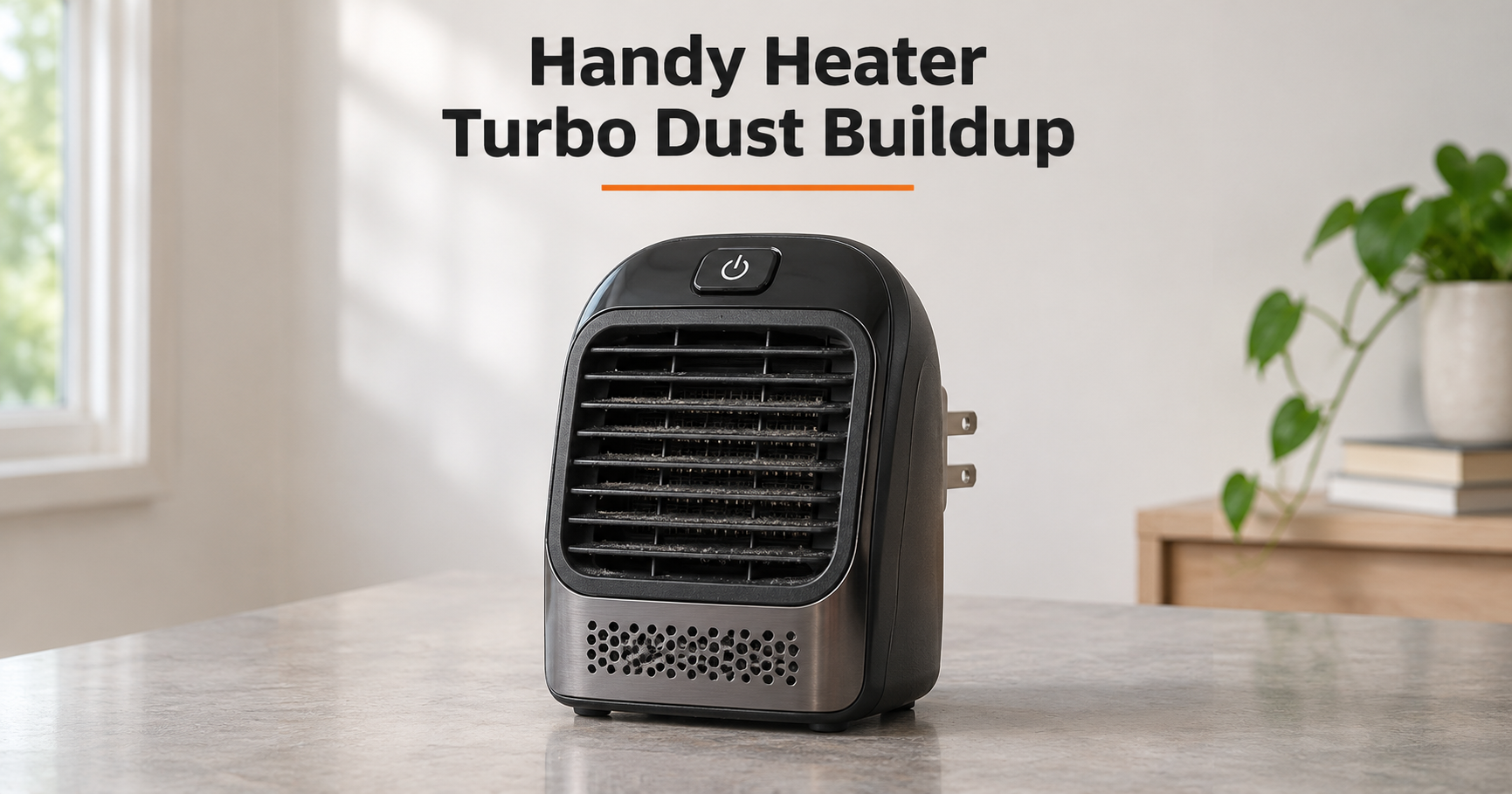

A small wall-outlet heater like the Handy Heater Turbo can make a cold bedroom, home office or bathroom feel comfortable in minutes. But there is one problem that almost every owner runs into sooner or later: dust buildup. Lint, pet hair and fine household dust gather around the intake vents and heating element, and over time they affect how the heater smells, sounds and performs.
The good news is that dust buildup is easy to prevent and simple to fix once you understand what is happening inside the unit. In this guide you will learn why dust collects in a Handy Heater Turbo, what warning signs to watch for, how to clean it safely step by step, and how often you should do it to keep your heater running well for many winters.
Quick Summary
- Dust buildup is normal in any heater that pulls room air through its vents.
- Left alone, it can cause a burning smell, weaker heat, louder fan noise and early shut-offs.
- Always unplug and cool the heater before cleaning, and never use water inside it.
- A soft brush, a vacuum with a brush attachment and a dry cloth are usually enough.
- Clean more often if you have pets, carpets or a dusty room.
What Is the Handy Heater Turbo?
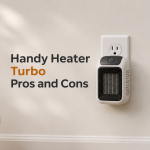
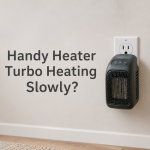
The Handy Heater Turbo (often sold as the Turbo 800) is a compact, plug-in personal space heater designed to sit directly in a wall outlet. It uses a ceramic heating element, which warms up quickly, and it typically comes with an adjustable thermostat, a digital display, a timer and safety features such as stay-cool housing and automatic shut-off. It is a popular choice for small spaces, up to a small or medium room, where running a larger heater would be wasteful.
Because the unit is small, there is not much room inside for air to move. A layer of dust that would hardly matter in a big floor heater can make a noticeable difference in a compact wall-outlet model. That is why regular upkeep matters more than most people expect.
Why Does Dust Build Up Inside a Space Heater?
Every ceramic heater works the same basic way: a fan or natural airflow moves room air across a hot element, and that warmed air is pushed back into the room. Anything floating in your air gets pulled along for the ride. Some of it passes through, but plenty of it sticks to the grille, vent slots and heating surfaces.

Common sources of dust and lint
- Carpets and rugs: They shed fibers every time someone walks across them.
- Pets: Fur and dander are lightweight and easily pulled toward the intake.
- Bedding and curtains: Heaters near beds or drapes collect a lot of lint.
- Seasonal storage: A heater stored without a cover gathers dust over the off-season.
- Outlet position: A low outlet near the floor sits right where most dust settles.
Why the first use of the season smells dusty
If your heater gives off a faint dusty or toasted smell when you switch it on for the first time each winter, that is usually dust that settled during storage burning off the hot surfaces. A short, mild smell that fades within a few minutes is common. A strong, sharp or lingering smell is a different story and should be treated as a warning sign.
Is Dust Buildup Dangerous?
A light film of dust is not an emergency, but heavy buildup is worth taking seriously. Dust is insulating and partly flammable, and any heating appliance is designed to stay within a safe temperature range. When vents are blocked by lint, heat cannot escape the way the designers intended.
- Reduced efficiency: The heater has to work longer to reach the same temperature, which can raise your energy use.
- Overheating: Restricted airflow causes internal temperatures to climb, which can trigger the built-in safety cut-off again and again.
- Odors and air quality: Burning dust releases an unpleasant smell and can irritate people who are sensitive to it.
- Shorter lifespan: Repeated overheating wears out components faster.
- Fire risk in extreme cases: Thick lint combined with a faulty unit or damaged plug is a genuine hazard, which is why you should never ignore warning signs.
Safety First
If you notice a strong burning smell, smoke, sparks, a discolored plug or an outlet that feels very hot, unplug the heater immediately and stop using it until it has been inspected or replaced.
Warning Signs That Your Heater Needs Cleaning
You do not have to open the heater to know it is clogged. Your senses will usually tell you first. Here are the most common signs:

- A burning or dusty smell that lasts longer than a few minutes after turning on the unit.
- Weaker heat than you remember, or a room that takes much longer to warm up.
- The heater switching off early, which often means the overheat protection is working.
- Visible gray lint along the grille or in the vent slots.
- Louder fan or humming as the motor pushes air through a clogged path.
- A very hot plug or housing, which needs immediate attention.
What You Need Before You Start Cleaning
You do not need special tools. Most households already have everything required:
- A soft-bristled brush, such as a clean paintbrush or a soft toothbrush
- A vacuum cleaner with a brush or dusting attachment
- A microfiber cloth, slightly damp for the outside and dry for the grille
- Optional: a can of compressed air for tight vent slots
- A well-lit, clear workspace with a towel or newspaper underneath
How to Clean a Handy Heater Turbo Step by Step

Step 1: Unplug and let it cool
Pull the heater out of the wall outlet and let it cool for at least 20 to 30 minutes. Ceramic elements hold heat for a surprisingly long time. Never clean a heater that is plugged in or still warm.
Step 2: Dry-brush the grille and vents
Use the soft brush to sweep dust off the front grille and out of the vent slots. Brush gently and in one direction so that you push dust out of the unit instead of deeper inside. Do not poke sharp objects into the vents, as you could damage the heating element.
Step 3: Vacuum the surface dust
Switch your vacuum to a low suction setting and use the brush attachment to lift loose lint from the grille, the sides and the back. Hold the nozzle just above the surface rather than pressing it against the vents.
Step 4: Use short bursts of compressed air
If dust remains in the narrow slots, use short bursts of compressed air from a distance of several inches, with the can held upright. Do this outdoors or in a ventilated area, and keep your face away from the vents. Skip this step if you do not have compressed air, since the first three steps are often enough.
Step 5: Wipe the outer housing
Lightly dampen a microfiber cloth with water, wring it out well and wipe the outer casing. Dry it with a second cloth. Keep moisture away from the vents, the display, the buttons and especially the plug pins.
Step 6: Dry completely and test
Leave the heater to air-dry for around 30 minutes. Then plug it in and run it on a low setting for a few minutes. Check that the display lights up, warm air flows normally and there is no unusual smell or noise.
Important: Never Do This
Never submerge the heater in water, spray cleaning liquids into the vents, use a hair dryer or wet cloth on the inside, or try to open the sealed casing yourself. If the heater is still smelly or noisy after cleaning, stop using it and contact the seller or manufacturer.
How Often Should You Clean Your Heater?
There is no single answer, because it depends on how often you use the heater and how dusty your home is. The table below gives a practical starting point you can adjust to your situation.

| Usage pattern | Quick dry-brush | Full cleaning |
|---|---|---|
| Daily, many hours | Every week | Every 2 to 4 weeks |
| A few times a week | Every 2 weeks | Monthly |
| Occasional use | Before each season | Once per season |
| Dusty or pet-heavy home | Every few days | Every 1 to 2 weeks |
Always check the manual that came with your own unit, because the manufacturer’s instructions take priority over any general guidelines.
How to Prevent Dust Buildup in the First Place
Cleaning is easier when less dust gets in. A few small habits can dramatically slow down buildup:
- Vacuum the area around the outlet regularly, especially along the baseboards.
- Keep the heater clear of curtains, bedding, laundry and furniture, with plenty of open space in front.
- Wipe the grille quickly with a dry cloth whenever you notice lint, even between full cleanings.
- Store it properly in its original box or a sealed bag at the end of the season.
- Use an air purifier or change your HVAC filters to reduce the dust in the room overall.
- Groom pets regularly so less fur floats around the room.
- Avoid extension cords and power strips, as plugging directly into a wall outlet is safer for high-wattage appliances.
Troubleshooting: Cleaned It but Still Having Problems?
| Problem | Likely cause | What to do |
|---|---|---|
| Burning smell continues | Dust deeper inside, or an electrical fault | Unplug and stop using it; contact the seller or manufacturer |
| Heat is still weak | Room too large, thermostat set too low, or a worn element | Raise the thermostat and check room size; consider replacement |
| Heater shuts off repeatedly | Overheat protection triggering from restricted airflow | Clean again, clear the area in front, try another outlet |
| Fan is noisy | Dust on the fan blades or a worn motor | Clean thoroughly; if it persists, replace the unit |
| Plug or outlet is hot | Loose connection or worn outlet | Unplug immediately and have the outlet checked by an electrician |
When Should You Replace the Heater?
Even with good care, a budget space heater does not last forever. Consider replacing your Handy Heater Turbo if you notice any of the following:
- The plug, cord or casing is cracked, melted, discolored or deformed.
- It keeps shutting off, even after a careful cleaning.
- The burning smell returns quickly each time you use it.
- The digital display, thermostat or buttons stop responding correctly.
- It has been in heavy use for several winters and heat output has dropped noticeably.
Replacing an aging heater is a small cost compared with the risk of continuing to use a failing electrical appliance.
Safe Heater Habits Beyond Cleaning
- Never leave any space heater running unattended for long periods or while you sleep unless the manufacturer says it is designed for that and you are comfortable with the risk.
- Plug directly into a wall outlet that is in good condition, and keep the cord area free from clutter.
- Keep it away from water, which is especially important in bathrooms.
- Keep children and pets from touching or covering the unit.
- Test your smoke detectors regularly during heating season.
Frequently Asked Questions
Is it normal for a Handy Heater Turbo to smell like dust at first?
Yes. A light dusty smell that disappears within a few minutes is normal, especially after the heater has been stored. If the smell is strong, sharp or does not go away, unplug the heater and inspect it.
Can I clean the heater with water?
Only the outside, and only with a lightly damp cloth on the casing. Never pour or spray water into the vents or onto the plug, and always let it dry fully before plugging it back in.
Can I use a vacuum on the vents?
Yes. A vacuum with a soft brush attachment on low suction is one of the safest and most effective ways to remove surface dust from the grille.
Does dust buildup increase my electricity bill?
It can. When airflow is restricted, the heater may take longer to warm the room or cycle on and off more often, so it uses power less efficiently.
Why does my heater keep shutting off after a few minutes?
The most common reason is the overheat protection activating because of restricted airflow, which is often caused by dust. Cleaning the vents and giving the heater clear space in front often solves it. If the problem continues, the unit may need replacing.
How do I store the heater during summer?
Clean it first, let it dry completely, and then store it in its original box or a sealed bag in a dry place. This keeps dust from settling inside while it is not in use.
Is the Handy Heater Turbo suitable for large rooms?
It is designed for personal heating in small to medium spaces. In a large room it may struggle, and running it constantly at full effort can make dust-related issues show up sooner.
Final Thoughts
Dust buildup in a Handy Heater Turbo is completely normal, but it is not something to ignore. A few minutes of simple cleaning every few weeks keeps the heater warm, quiet, efficient and safe. Pay attention to the warning signs, keep the area around the heater clear, and always unplug it and let it cool before you touch it.
If you follow the routine in this guide, your heater will deliver reliable warmth for far longer, and you will avoid most of the smells, shut-offs and performance drops that frustrate owners. When in doubt about the condition of your heater, the safest choice is to stop using it and replace it.
Disclaimer: This article is for general information only. Always follow the manufacturer’s instructions for your specific heater model and consult a qualified professional for any electrical concerns.