





Decorative throw pillows do a lot of quiet work. They soften a sofa, pull a color palette together and make a bed look finished. They also collect dust, skin oils, pet hair, spilled coffee and the general grime of daily life, and because they are rarely on the weekly laundry list, they often go months or even years without a proper wash.
The good news is that washing throw pillows is far easier than most people expect. Once you know what the cover is made of, what the insert is filled with and what the care label allows, you can clean almost any pillow safely at home. This guide walks you through the whole process: reading care labels, choosing the right method for each fabric, removing stains, washing and drying inserts, and keeping your pillows looking plump and fresh for years.
The short answer
Check the care label first. Remove the cover, pre-treat any stains, and wash the cover inside out in a mesh bag on a gentle cycle with mild detergent. Wash the insert only if its tag says it is machine washable. Dry everything completely on low heat or by air drying, then fluff and reshape. If the label says spot clean only, or you are unsure, spot cleaning is always the safer choice.
Why Washing Throw Pillows Matters
A throw pillow looks clean long before it actually is. Fabric traps dust, dead skin cells, sweat, cooking odors and pollen, and the filling inside holds onto all of it. Over time that buildup can cause a stale smell, dull colors and a flat, lumpy shape. For anyone with allergies or asthma, a dusty pillow can also make symptoms worse, because dust mites thrive in soft furnishings.
Regular cleaning solves all of this. It removes allergens and odors, lifts stains before they set permanently, restores the color and softness of the fabric and helps the filling keep its loft. Cleaning also extends the life of your pillows, which saves money, because replacing a full set of designer covers and inserts is not cheap.
Step One: Read the Care Label
Every safe washing decision starts with the care label. Look for a small tag sewn into a side seam of the cover, or inside the zipper opening. Inserts usually have their own separate tag. The label tells you the maximum water temperature, whether bleach is allowed, how the item should be dried and whether it needs professional cleaning.
Furniture cleaning codes
Many decorative pillows, especially those sold with upholstery fabric, carry a cleaning code instead of laundry symbols. The code is a single letter or a pair of letters:
- W means the fabric can be cleaned with water-based products, such as mild detergent and water.
- S means use only a water-free dry-cleaning solvent. Water can leave rings or damage the fabric.
- WS means either a water-based cleaner or a solvent can be used.
- X means the fabric should only be vacuumed or brushed. No liquid cleaners of any kind.
What if there is no label?
Labels get cut off, fade or go missing. If yours has disappeared, treat the pillow as delicate. Test the fabric for color bleeding by pressing a damp white cloth against a hidden spot, such as an inside seam, for 30 seconds. If any dye transfers to the cloth, do not machine wash the pillow. Spot clean it or take it to a professional. If no dye transfers, a gentle cool wash in a mesh bag is usually safe, but air drying is the careful choice.
What You Need Before You Start
You do not need special equipment, but a few simple supplies make the job easier and protect delicate fabrics:
- A mild liquid detergent or a gentle wool and delicates wash
- Mesh laundry bags, one large enough to hold a pillow cover
- An oxygen-based stain remover and, for pet accidents, an enzyme cleaner
- A soft-bristle brush or an old soft toothbrush for stains
- Clean white towels for blotting and for rolling out excess water
- Wool dryer balls to keep inserts fluffy while they dry
- A drying rack or a clean flat surface for air drying
- A garment steamer or an iron with a low-heat setting
- A lint roller and a vacuum with an upholstery attachment for dry cleaning
Match the Method to the Fabric
The fabric of the cover decides almost everything: the water temperature, whether you can use a washing machine and how you should dry it. The chart below is a quick reference for the most common pillow fabrics, and the notes underneath explain the reasoning.
Cotton, canvas and linen
These natural fabrics are durable and forgiving. Cotton and canvas can handle warm water, but strongly colored or printed covers last longer in cool water because they are less likely to fade. Linen is happiest in cool to lukewarm water and softens beautifully with every wash. Both fabrics shrink if they are dried on high heat, so tumble dry on low or hang dry. Press linen while it is still slightly damp for the smoothest finish.
Polyester and microfiber
Synthetic covers are among the easiest to care for. They resist shrinking and wrinkling, tolerate regular machine washing and dry quickly. Use warm or cool water on a gentle cycle and low heat in the dryer, because high heat can leave polyester with a shiny, crinkled texture.
Velvet
Velvet looks luxurious but is sensitive to water, heat and friction. Many velvet covers are labeled for spot cleaning or dry cleaning only. If the label allows washing, turn the cover inside out, use cool water, a delicate cycle and a low spin, and dry it flat. Never wring it out and never press a hot iron onto the pile. To remove wrinkles, hold a steamer a few inches from the reverse side of the fabric.
Silk and satin
These slippery fabrics are best hand washed in cool water with a gentle detergent made for delicates, or sent to a dry cleaner. Avoid wringing, twisting and direct sunlight. Roll the cover in a clean towel to absorb moisture, then air dry in the shade.
Wool and chunky knits
Wool fibers tangle and shrink when they are exposed to heat and agitation, a process known as felting. Hand wash in cool water with a wool-safe detergent, press out the water without twisting and dry flat, reshaping the knit as it dries. Hanging a heavy knit cover can stretch it out of shape.
Embroidered, beaded and sequined covers
Decorations can snag, loosen or lose their color in a washing machine. Spot clean these covers whenever possible. If the label allows hand washing, turn the cover inside out, wash it gently in cool water and never rub the embellished side. Dry it flat on a towel.
Outdoor pillows
Outdoor covers are built to handle sun and moisture, but they still collect pollen, bird droppings and mildew. Brush off loose dirt, then scrub gently with a soft brush and a solution of mild soap and water. Rinse thoroughly and let the pillow dry in a shaded, breezy spot. Many outdoor covers are machine washable on a gentle cycle, so check the label before you start.
How to Wash Pillow Inserts and Fillings
The insert is the part most people skip, yet it holds the most dust and odor. Whether you can wash it depends on the filling. Check the insert’s tag, then use the guide below.
Polyester fiberfill
Fiberfill is the most common filling and generally the easiest to clean. Wash inserts on a gentle cycle in warm water with a small amount of mild detergent and add a second rinse to flush out the soap. Washing two pillows at the same time keeps the machine balanced. Use a front-loading machine or a top loader without a center agitator, because agitators can twist and tear inserts.
Down and feather
Down and feather inserts can usually be washed, but they need patience. Use a mild detergent, a gentle cycle and an extra rinse. The most important step is drying: down must be completely dry all the way through, or the damp interior will develop mildew and a sour smell. Dry on low heat with wool dryer balls, pausing every 20 to 30 minutes to break up clumps.
Memory foam and shredded foam
Foam should never go in a washing machine or be wrung out, because the structure breaks down and the foam can crumble. Instead, spot clean with a damp cloth and a mild soap solution, blot with a clean towel and air dry away from direct sunlight and heat until no moisture remains.
Buckwheat, beads and sealed inserts
Buckwheat hulls and bead fillings absorb water and can sprout, rot or clump if they get wet. Empty the filling if you need to wash the cover, or simply remove the cover and wash it on its own. Spot clean the insert and air it in a dry, breezy place. Sealed inserts that have no tag should also be treated as spot clean only.
How to Wash Throw Pillow Covers in a Washing Machine
Here is the full routine for washable covers, from preparation to the finished pillow.
- Remove the cover. Take out the insert, close any zippers and fasten hook-and-loop closures so they do not snag other fabric. Turn the cover inside out to protect printed, embroidered or textured surfaces.
- Pre-treat stains. Dab a drop of mild detergent or stain remover onto each mark and leave it for 10 minutes. Work from the outside of the stain toward the center to avoid spreading it.
- Load the machine. Place the cover in a mesh bag. Wash it with similar colors and a few towels or other items to balance the load. Avoid overcrowding, because pillows need room to move and rinse well.
- Choose the right settings. Select a gentle or delicates cycle, cool or warm water as the label allows, and a low spin speed. Use a mild liquid detergent, since powders can leave a residue on dark fabrics.
- Skip softener and chlorine bleach. Fabric softener can leave a coating on fibers, and chlorine bleach can weaken fabric and strip dyes. For white covers, use an oxygen-based whitener instead.
- Dry thoroughly. Follow the drying instructions in the next section, then iron or steam lightly before putting the insert back.
Pro tip for odors
If a washable cover smells musty, add half a cup of white vinegar to the rinse cycle. It helps break down soap residue and neutralize odors. Use this trick only on sturdy fabrics such as cotton and polyester, and skip it for silk, wool and delicate trims.
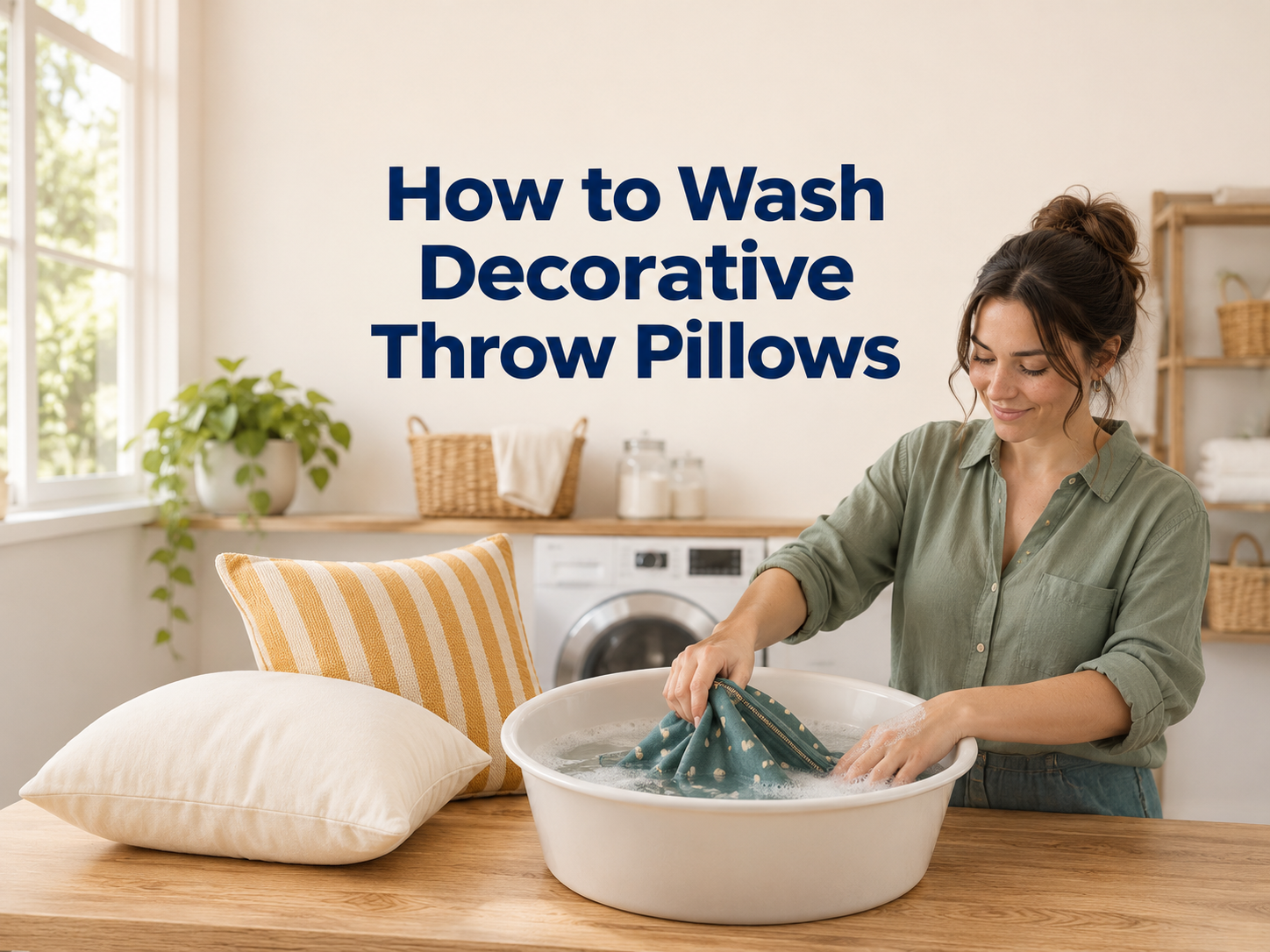
How to Hand Wash Delicate Throw Pillows
Hand washing is the safest option for silk, wool, velvet that allows water, beaded pieces and any cover with a “hand wash only” label.
- Fill a clean sink or basin with cool or lukewarm water and add a small amount of gentle detergent. Swish to mix.
- Submerge the cover and press it down gently so the water saturates the fabric. Let it soak for 10 to 15 minutes.
- Swirl the fabric lightly with your hands. Do not scrub, twist or wring.
- Drain the soapy water, refill with clean cool water and rinse until no suds remain. Repeat as needed.
- Lift the cover out, press out water gently and lay it flat on a thick white towel. Roll the towel up like a sleeping bag to absorb more moisture.
- Reshape the cover and lay it flat to dry on a fresh towel or drying rack, away from direct sun and heat.
How to Remove Common Stains from Throw Pillows
Fast action makes the biggest difference. Blot, never rub, because rubbing pushes the stain deeper into the fibers and can damage the fabric’s surface. Always test any stain remover on a hidden area first.
| Stain | What to do |
|---|---|
| Coffee and tea | Blot the liquid, then rinse from the back of the fabric with cool water. Dab with a little diluted mild detergent and rinse again. |
| Grease and oil | Sprinkle cornstarch or baking soda on the spot and leave it for 15 to 30 minutes to absorb the oil. Brush it off, then dab with a drop of dish soap and rinse. |
| Red wine and juice | Blot immediately and rinse with cold water. Apply a mild detergent solution and blot until the color lifts. Avoid hot water, which can set the stain. |
| Makeup | Dab with micellar water or a little mild detergent on a white cloth, working from the edge inward. |
| Sweat and body oil | Soak the cover in cool water with mild detergent. For yellowing on white fabric, use an oxygen-based whitener if the label allows. |
| Pet accidents | Blot up as much as possible, then treat with an enzyme cleaner according to the product directions. Enzymes break down the odor at its source. |
| Ink | Dab with a cotton swab dampened with rubbing alcohol, blotting with a clean cloth as the ink transfers. Test first and avoid this on silk and acetate. |
| Mud | Let it dry completely, brush off the crust, then treat any remaining mark with mild detergent before washing. |
How to Dry Throw Pillows Properly
Drying is where most pillow washing goes wrong. A pillow that looks dry on the outside can still be damp in the center, and trapped moisture is the main cause of mildew, musty smells and lumpy filling. Take your time here.
Tumble drying
- Use the lowest heat setting. High heat can melt synthetic fibers, shrink natural fabrics and damage foam.
- Add two or three wool dryer balls to keep the filling moving and prevent clumping.
- Stop the dryer every 20 to 30 minutes to fluff the pillow by hand and redistribute the filling.
- Expect inserts to take two hours or more, and sometimes more than one cycle.
Air drying
- Lay the pillow flat on a drying rack or towel so air can circulate underneath it. Flip and rotate it every few hours.
- Place it in a warm, airy room or near a fan. Direct sunlight can fade colors and weaken fibers, so use shade or indirect light.
- Allow a full day or two for thick inserts to dry.
How to tell if it is truly dry
Squeeze the center of the pillow and press it to your cheek or the inside of your wrist. It should feel the same temperature as the room, with no cool or clammy spots. Smell it too: any damp or sour scent means it needs more time.
Fluffing, Ironing and Reshaping
Once everything is dry, punch and shake the insert to restore its loft, and pat the corners into shape. Smooth out wrinkles in the cover by ironing it inside out on the lowest setting that suits the fabric, or by using a handheld steamer. Steam is the best option for velvet, silk and embellished covers because nothing presses into the surface. Slide the insert back into the cover, push the corners fully into place and smooth the cover so seams sit straight.
If a pillow still looks flat, tumble it for 10 minutes on a no-heat or low-heat setting with dryer balls. The gentle tumbling re-expands compacted filling.
How to Clean Pillows That Cannot Be Washed
Some pillows simply cannot go in water. This includes pillows with sealed covers, vintage fabrics and anything marked “spot clean only” or “dry clean only”. You can still refresh them without a machine:
- Vacuum. Use the upholstery attachment to remove dust, crumbs and pet hair from every side.
- Deodorize. Sprinkle baking soda over the surface, wait 30 minutes and vacuum it away.
- Spot clean. Mix a few drops of mild detergent into a cup of cool water, whisk to a foam and apply only the foam with a white cloth. Blot with a clean damp cloth and then a dry towel.
- Steam lightly. A garment steamer held a few inches away freshens fabric and relaxes wrinkles, as long as the label allows it.
- Air out. Place the pillow in a shaded, breezy spot for a few hours.
- Use a professional. For antique, silk, heavily embroidered or expensive pillows, a professional cleaner is a worthwhile investment.
How Often Should You Wash Throw Pillows?
The right schedule depends on how the pillows are used. Use the table as a starting point and clean sooner if you notice stains or odors.
| Situation | Covers | Inserts |
|---|---|---|
| Living room, light use | Every 3 to 6 months | Once or twice a year |
| Bedroom, close to the face | Every 1 to 2 months | Every 6 months |
| Homes with pets or young children | Every 2 to 4 weeks | Every 3 to 6 months |
| Allergy-prone households | Every 2 to 4 weeks | Every 3 to 6 months |
| Guest room | Two or three times a year | Once a year |
| Outdoor pillows | Wipe down monthly, deep clean at the start and end of the season | Air out regularly |
If anyone in the household has dust allergies and the fabric allows it, washing at about 130°F (54°C) or higher kills dust mites. Check the label first, since many decorative fabrics cannot take water that hot. For those pillows, use frequent vacuuming and airing instead.
How to Keep Throw Pillows Clean for Longer
- Choose removable covers. A zippered cover is much easier to wash than a sewn-in design.
- Use pillow protectors. A thin zippered liner under the cover shields the insert from dirt and spills.
- Apply a fabric protector. A spray designed for upholstery helps liquids bead up so you can blot them away. Test it on a hidden spot first.
- Fluff and rotate weekly. Plumping redistributes the filling and lets fibers air out, and rotating spreads wear evenly.
- Vacuum monthly. Dust and hair are easy to remove before they work into the fabric.
- Keep food and drinks off the sofa. Prevention beats stain removal every time.
- Air pillows outside. A few hours in fresh air on a dry, breezy day removes stale smells.
Common Mistakes to Avoid
- Washing a pillow without checking the care label
- Machine washing foam, buckwheat or sealed inserts
- Using hot water on colored, printed or delicate fabrics
- Using chlorine bleach or too much detergent, which leaves residue
- Overloading the washing machine so pillows cannot rinse properly
- Drying on high heat, which can shrink fabric and damage filling
- Putting a pillow back in use while it is still damp inside
- Rubbing stains instead of blotting them
- Ironing velvet or embellished fabric directly
Frequently Asked Questions
Can you put decorative throw pillows in the washing machine?
Many can. Most covers made from cotton, linen and polyester are machine washable on a gentle cycle, and polyester fiberfill inserts can be washed too. Foam, buckwheat and sealed inserts should not go in the machine. Always check the care label first.
How do I wash throw pillows that have no removable cover?
Look at the tag. If the whole pillow is polyester-filled and the tag allows washing, use a gentle cycle in cool or warm water and dry it completely on low heat. If the tag says spot clean or there is no tag, clean the surface by hand with a mild soap solution and let it air dry.
Can I wash velvet pillow covers?
It depends on the label. Many velvet covers are spot clean or dry clean only. If the label allows washing, use cool water, a delicate cycle and a low spin, then dry flat and steam from the reverse side.
How do I dry throw pillows quickly?
Tumble dry on low heat with wool dryer balls and fluff the pillow every 20 to 30 minutes. A fan pointed at an air drying pillow also speeds things up. Avoid high heat, which can damage the fabric and the filling.
How do I keep inserts from clumping after washing?
Dry them completely, add dryer balls to the tumble cycle and stop to break up the filling by hand every half hour. Do not overload the washer, and use a second rinse so detergent does not stiffen the fibers.
Can I use vinegar to freshen throw pillows?
A small amount of white vinegar in the rinse water can reduce odors and soap residue on sturdy fabrics such as cotton and polyester. Avoid it on silk, wool and delicate trims.
What should I do if I cannot find a care label?
Treat the pillow as delicate. Test for color bleeding with a damp white cloth in a hidden spot. If the dye stays put, wash gently in cool water inside a mesh bag and air dry. If you are still unsure, spot clean it.
Final Thoughts
Washing decorative throw pillows comes down to a few simple habits: read the label, match the method to the fabric, treat stains early and dry everything completely. Do that, and your pillows will stay fresh, colorful and plump season after season. A little care every few months is all it takes to keep the cushions in your home looking as good as the day you bought them.