




How to Stop Wooden Furniture From Scratching Floors
You love your wooden furniture and your floors, but when the two meet, the floor usually loses. A single dragged chair can leave a long scratch. Years of sliding and shifting can leave dull, worn patches that are expensive to repair. The good news is that scratches from furniture are almost completely preventable with a few simple habits and the right protective products.
In this guide you will learn why wooden furniture scratches floors, which protectors work best, how to fit them correctly, how to move heavy pieces safely and how to keep your floors looking beautiful for years.
Table of Contents
- Why wooden furniture scratches floors
- Know your floor type
- Choosing the right floor protectors
- How to fit pads correctly
- How to move furniture safely
- Rugs, mats and runners
- Daily habits that protect floors
- Special cases: chairs, tables, beds and sofas
- What to do about existing scratches
- Protection flowchart
- Common mistakes to avoid
- Frequently asked questions
- Final thoughts
1. Why Wooden Furniture Scratches Floors
Understanding the cause makes prevention much easier. Most floor damage comes from four things:
- Bare or rough leg bottoms: wood is often cut roughly, and exposed screws, nails or splinters can dig into the floor.
- Trapped grit: tiny stones, sand and dirt get caught between the leg and the floor. When the furniture moves, they act like sandpaper.
- Dragging: sliding furniture without lifting concentrates the entire weight along one line.
- Heavy weight on narrow legs: small leg tips create high pressure points that can dent softer floors.
2. Know Your Floor Type
Different floors scratch and dent in different ways, so the best protection depends on what you have.
- Solid hardwood: beautiful and repairable, but it can scratch and dent, especially in softer woods like pine.
- Engineered wood: a real wood layer on top. The top layer is thin, so deep scratches are harder to repair.
- Laminate: tough surface, but chips and scratches cannot be sanded away.
- Vinyl and LVT: can scuff and tear from sharp, heavy legs.
- Tile: hard-wearing, but furniture can crack tiles or scratch the glaze.
As a general rule, softer or thinner floors need softer, wider protection under the furniture.
3. Choosing the Right Floor Protectors
There are four main types of furniture protectors. Each has its own best use.
Felt pads
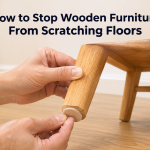
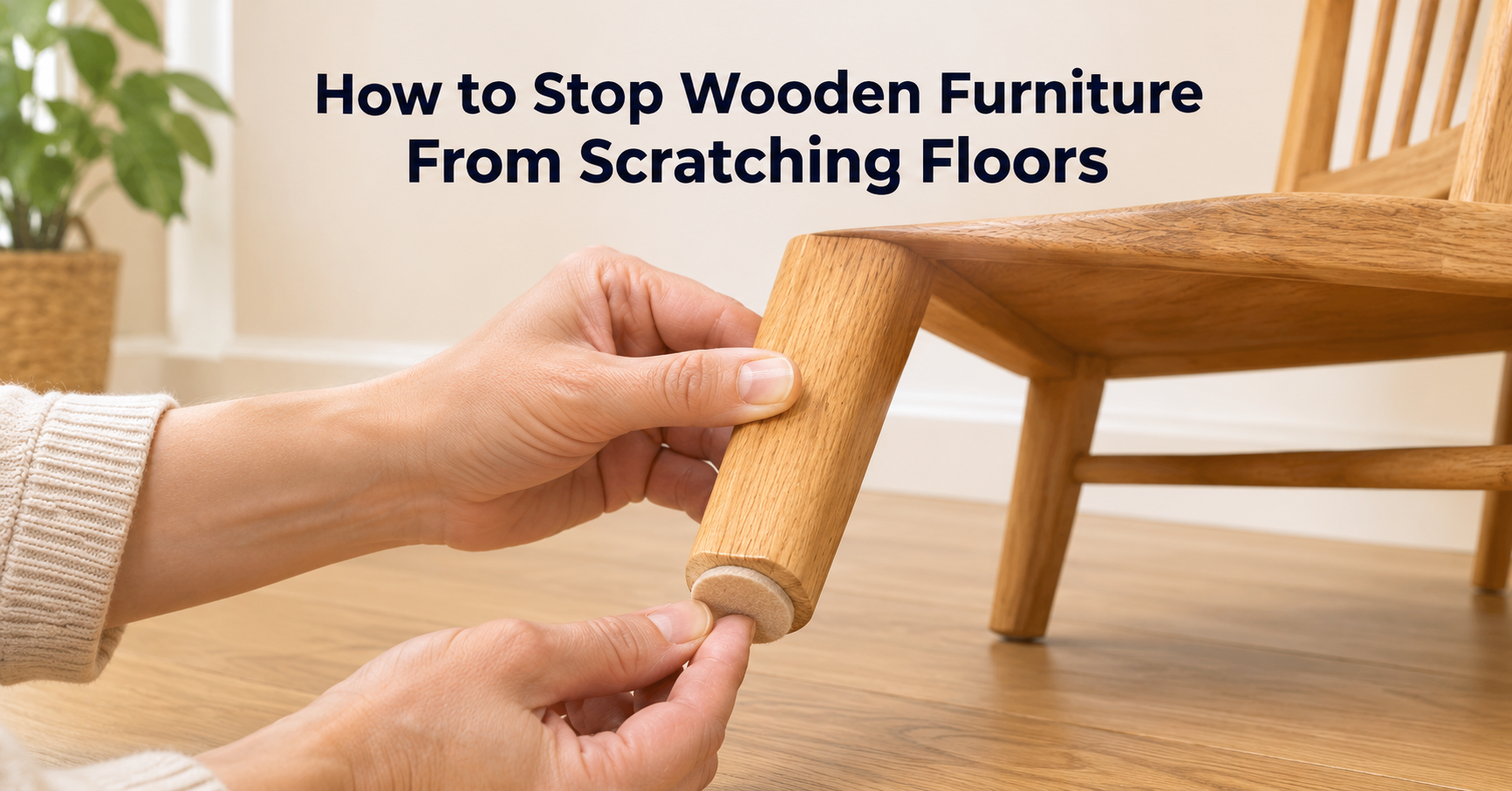
Felt pads are the most popular choice for hardwood floors. They are soft, quiet and let furniture slide gently when needed. Choose thick, high-quality felt, because thin cheap felt wears out quickly. Self-adhesive pads are easy to apply, while nail-on pads stay firmly in place on heavy furniture.
Rubber or silicone pads
These grip the floor and stop furniture from sliding. They are ideal for sofas, beds and furniture that should stay put. Some low-quality rubber can stain or discolor certain floors over time, so choose non-marking rubber and check the floor every few months.
Furniture sliders
Sliders are for moving heavy items. You place them under each leg, and the furniture glides with little effort. They are not meant to stay on all the time. Use them for cleaning or rearranging, then fit permanent pads.
Glide caps and plastic tips
These suit tile and some vinyl floors. On hardwood, hard plastic can scratch, so avoid it unless the glide has a soft lower surface.
4. How to Fit Pads Correctly
Even the best pad fails if it is fitted badly. Follow these steps:
- Clean the leg bottom. Wipe away dust, wax and old glue so the pad sticks properly.
- Sand rough edges. Smooth the leg bottom so the pad sits flat.
- Measure the leg. Choose a pad that covers the whole bottom surface.
- Press firmly. Hold each pad in place for 30 seconds so the adhesive bonds.
- Check the level. Make sure the furniture does not wobble after fitting.
For chairs that are pulled in and out daily, consider nail-on or screw-in pads, which hold better than sticky ones.
5. How to Move Furniture Safely
Many scratches happen in the few seconds when furniture is moved. A careful method makes all the difference.
- Empty it first. Take out drawers, books and items to reduce weight.
- Sweep the floor. Remove grit from the path before you move anything.
- Lift when possible. Two people can carry most chairs, tables and cabinets easily.
- Use sliders or a moving blanket. Tilt one side of the furniture, place sliders, then repeat on the other side. A thick blanket under the legs works for short distances.
- Move slowly. Quick jerks can snag the floor and cause deep scratches.
6. Rugs, Mats and Runners
Rugs protect floors from furniture and foot traffic at the same time. Place them under dining tables, sofas and in front of beds.
- Choose a rug large enough for all legs to rest on it, or at least the front legs.
- Always use a non-slip rug pad so the rug does not move. A moving rug can scratch the floor too.
- Pick a pad made for hardwood floors. Some rubber backings can discolor wood.
- Use chair mats under office chairs with wheels. Choose soft rubber wheels designed for hard floors.
7. Daily Habits That Protect Floors
- Sweep or vacuum often. Use a soft brush attachment to remove grit before it grinds into the floor.
- Use door mats. Place one outside and one inside every entrance to catch dirt.
- Take off outdoor shoes. Shoes bring in the most grit.
- Check pads every three months. Replace those that are worn, flattened, dirty or loose.
- Keep pet nails trimmed. Long nails scratch floors just like furniture does.
- Keep humidity steady. Very dry air can shrink wood and make scratches more visible.
- Avoid harsh cleaners. Use a cleaner made for your floor type.
8. Special Cases: Chairs, Tables, Beds and Sofas
Dining chairs
These move the most, so they cause the most damage. Use thick felt pads or glides, and check them often. Wider chair feet are better than narrow tips. Pull chairs out gently instead of dragging them.
Tables
Tables are heavy and rarely move, so rubber or thick felt pads work well. Make sure the pads are large enough to carry the weight without denting the floor.
Beds
Fit felt or rubber pads on the bed legs and use furniture cups for heavier frames. For platform beds, protect the entire edge that touches the floor.
Sofas and cabinets
Use wide, non-slip pads under each leg. Heavy bookcases and cabinets benefit from sliders when you move them and permanent pads when they are in place.
Rocking chairs
The curved runners of rocking chairs wear floors fast. Use a felt strip or a protective rug under the chair, and avoid rocking on bare hardwood.
9. What to Do About Existing Scratches
If scratches have already appeared, you have a few options depending on how deep they are:
- Light surface scratches: rub gently with a soft cloth and a small amount of floor polish or wood-safe cleaner.
- Medium scratches: use a wax filler stick or a touch-up marker that matches your floor color.
- Deep scratches: fill with wood filler, let it dry, sand lightly and touch up the finish.
- Widespread damage: a professional can sand and refinish solid hardwood floors.
Always test products in a hidden corner first, and follow the manufacturer’s care instructions for your floor.
10. Protection Flowchart
Use this quick path to check your own furniture.
11. Common Mistakes to Avoid
- Using hard plastic tips on hardwood: they can scratch just like bare legs.
- Ignoring worn pads: a flattened pad full of grit is worse than no pad.
- Dragging furniture “just a little”: short drags cause long scratches.
- Using rugs without pads: a sliding rug can scuff the floor.
- Buying thin, cheap pads: they wear out quickly and let the leg touch the floor.
- Forgetting small pieces: side tables, stools and plant stands also leave marks.
- Cleaning with too much water: excess moisture can swell wood and make damage worse.
12. Frequently Asked Questions
What is the best thing to put under furniture to protect wood floors?
Thick felt pads are the best all-round choice for hardwood. For furniture that should not move, non-marking rubber pads are a great option.
How often should I replace felt pads?
Check them every three months. Replace them when they look flat, dirty, torn or no longer stick to the leg. High-traffic chairs may need new pads every few months.
Can I use socks or old fabric under furniture legs?
For quick moving, yes, they can help as a temporary solution. For long-term protection, use proper pads because fabric picks up grit and slips off easily.
Will furniture pads leave marks on my floor?
Good quality felt pads do not leave marks. Some cheap rubber or vinyl pads can discolor floors over time, so choose non-marking types and lift them occasionally to check.
Do heavy pieces need special protection?
Yes. Heavy cabinets and bookcases should have wide pads or furniture cups to spread the weight, and you should use sliders or lift them when moving.
How do I stop chairs from scratching floors when pulled in and out?
Use thick, nail-on felt pads or glides, keep them clean and replace them often. Place a rug under the dining set if you want extra protection.
Can I fix scratches myself?
Light and medium scratches are easy to hide with wax sticks, markers or filler. Deep or widespread damage may need a professional refinish.
13. Final Thoughts
Protecting your floors from wooden furniture is simple, cheap and takes very little time. Fit quality pads, check them regularly, lift instead of drag and keep the floor clean of grit. A few small habits now will save you from costly repairs later.
Take ten minutes this week to turn over a few chairs and check their feet. You may be surprised how many are missing pads or have worn ones, and fixing them today keeps your floors looking beautiful for years to come.