





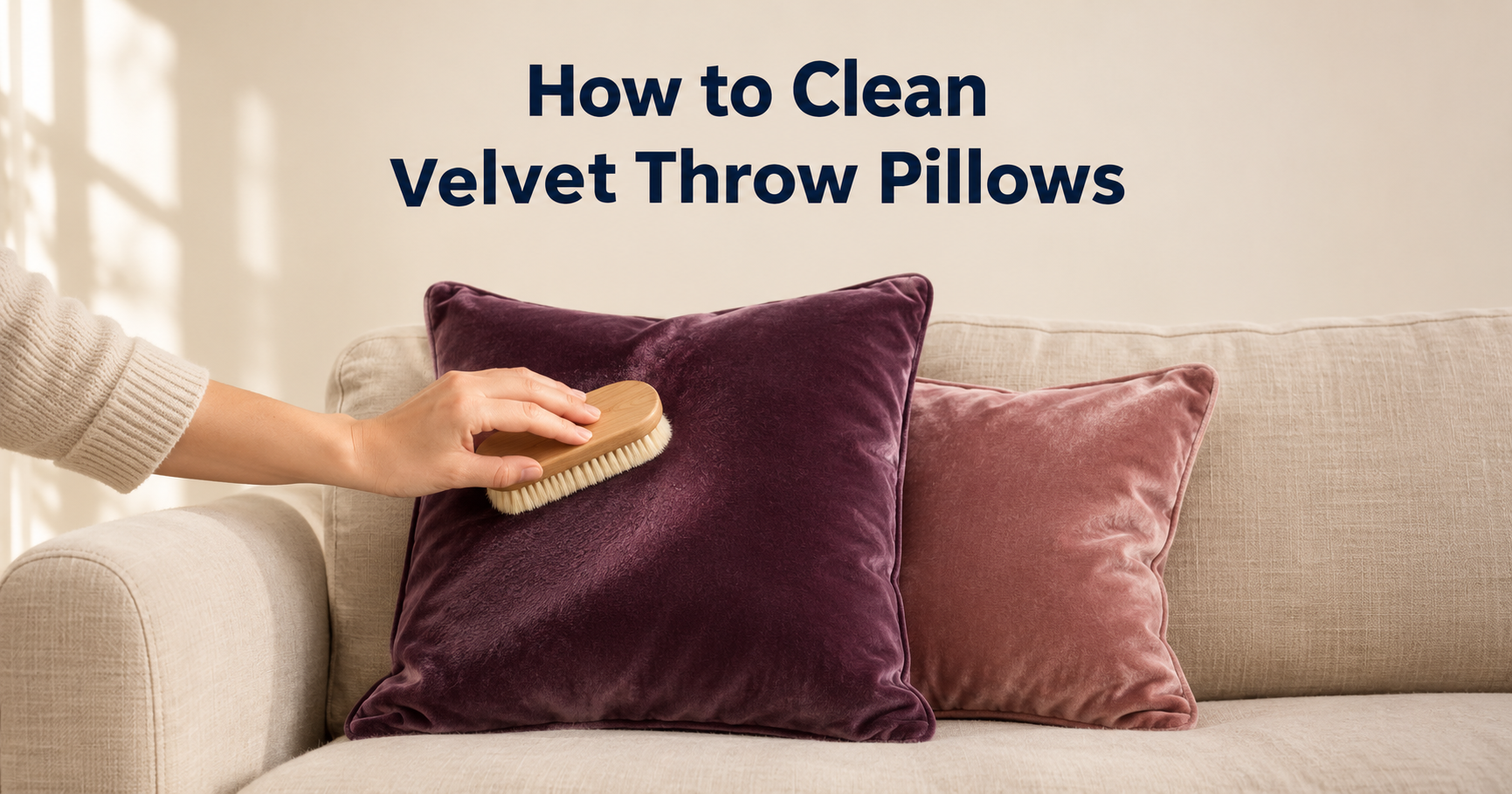

How to Clean Velvet Throw Pillows
Velvet throw pillows add instant luxury to a sofa or bed. They feel soft, catch the light beautifully and make any room look richer. But velvet also has a reputation for being difficult to clean. A single spill, a bit of pet hair or a flattened patch can make a beautiful pillow look tired.
The good news is that velvet is not as delicate as people think, as long as you use the right method. In this complete guide you will learn how to read the care label, vacuum and refresh velvet, remove common stains, deep clean when needed and keep your pillows looking new for years.
Table of Contents
- Understand your velvet first
- Read the care code
- What you need
- Routine cleaning and maintenance
- How to spot clean velvet
- Removing common stains
- How to deep clean a velvet pillow cover
- Drying and restoring the pile
- Do and do not list
- Cleaning method flowchart
- How to prevent stains and wear
- Frequently asked questions
- Final thoughts
1. Understand Your Velvet First
Velvet is a fabric with a dense, short, soft pile. That pile is what gives velvet its deep color and silky feel. It is also what makes velvet sensitive to rubbing, crushing and too much water.
Modern velvet pillows are made from different fibers:
- Polyester velvet: the most common type. It is durable, resists stains better and is usually the easiest to clean.
- Cotton velvet: soft and natural, but it absorbs liquid faster, so spills sink in quickly.
- Silk or rayon velvet: very delicate and often best left to professionals.
- Blends: a mix of fibers, so follow the care tag closely.
2. Read the Care Code First
Most upholstery and pillow fabrics have a care code on the tag, often under the zipper or along the seam. It tells you what kind of cleaner is safe. Always check it before using any liquid.
If there is no tag at all, treat the pillow as an X code to be safe. Start with dry methods and only try a very small, hidden test spot with water if needed.
3. What You Need
- A vacuum with a soft brush attachment
- A soft clothes brush or a soft-bristled baby brush
- Clean white or light colored cloths (so dye does not transfer)
- Mild liquid dish soap or gentle laundry detergent
- Cool or lukewarm water
- A spray bottle (optional)
- Baking soda or cornstarch for odors and grease
- A lint roller or rubber glove for pet hair
- A handheld steamer (optional, for refreshing the pile)
4. Routine Cleaning and Maintenance
Regular light cleaning stops dirt from settling deep into the pile. It takes only a few minutes.
Step 1: Shake and fluff
Take the pillows outside, or to an open window, and give them a gentle shake to loosen dust.
Step 2: Vacuum
Use the soft brush attachment on low suction. Move slowly over the whole surface, including the seams and edges where dust collects.
Step 3: Remove pet hair
A lint roller or a slightly damp rubber glove pulled across the surface lifts hair quickly. Always go in one direction.
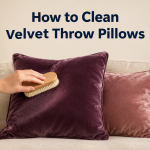
Step 4: Brush the pile
Brush gently in the direction of the pile so the fibers lie smooth and the sheen looks even.
Do this once a week for pillows in heavy use, or once a month for decorative pillows.
5. How to Spot Clean Velvet
Spot cleaning is the safest way to remove most marks, and it is the best method for W and W/S coded velvet.
- Blot immediately. Press a dry white cloth on the spill to absorb as much liquid as possible. Rubbing pushes the stain deeper and crushes the pile.
- Mix a gentle solution. Add a few drops of mild dish soap to a cup of cool water and whisk until foamy.
- Dab the foam. Dip a clean cloth into the foam only, not the liquid, and dab the stain from the outside edge toward the center.
- Rinse. Dab with a cloth dampened with clean water to remove soap residue.
- Dry. Press with a dry cloth, then let it air dry fully before brushing the pile.
6. Removing Common Stains From Velvet
Food and drink (coffee, tea, juice, wine)
Blot quickly, then dab with soapy foam as above. For dried stains, you can lightly mist with water first to soften it. Repeat gently rather than scrubbing hard.
Grease and oil
Sprinkle baking soda or cornstarch on the spot and leave it for 20 to 30 minutes to absorb the oil. Brush it off gently, then spot clean with soapy foam if a mark remains.
Makeup
Use a clean cloth with a tiny amount of micellar water or mild soap foam. Dab lightly and avoid spreading the mark.
Pet accidents and odors
Blot, spot clean, then sprinkle baking soda over the area. Leave it for a few hours, then vacuum with a soft brush. Baking soda also freshens general musty smells.
Ink
Ink is tricky. Dab a little rubbing alcohol on a cotton swab and touch only the ink, testing on a hidden spot first. If the stain is large, take the pillow to a professional cleaner.
Water marks
Water rings appear when only part of the fabric gets wet. Lightly dampen the entire panel evenly, then dry it and brush the pile. A steamer held a few inches away can also help.
7. How to Deep Clean a Velvet Pillow Cover
If the cover is removable and the tag allows water (W or W/S), you can wash it gently. Always follow the tag if it says otherwise.
- Remove the insert. Take the cover off and close the zipper so it does not snag.
- Turn it inside out. This protects the pile from friction.
- Use a mesh laundry bag. It reduces rubbing and keeps the cover safe.
- Choose a gentle, cold cycle with mild detergent. Skip bleach and fabric softener.
- Do not wring or twist. Press out extra water with a towel instead.
For pillows that cannot be washed, such as sewn-in covers, X-coded fabric, silk or rayon velvet, take them to a professional dry cleaner.
8. Drying and Restoring the Pile
Drying
Lay the cover flat on a clean towel, or hang it in a shaded, airy spot. Keep it away from direct sunlight and strong heat because both can fade color and damage fibers. If you use a dryer, choose the lowest heat or the air-only setting, and take it out while still slightly damp.
Restoring crushed velvet
When velvet looks flat or has marks from sitting, a handheld steamer works well. Hold it 15 to 20 cm away from the surface and let the steam relax the fibers. Never let the steamer touch the fabric. Then brush the pile gently in one direction.
No steamer? Hang the pillow cover in the bathroom while a hot shower runs for a few minutes. The steam does a similar job.
9. Do and Do Not List
10. Which Cleaning Method Should You Use?
Use this flowchart to pick the safest method for your pillow.
11. How to Prevent Stains and Wear
- Rotate and flip pillows every week so wear is even.
- Keep food and drinks away from velvet cushions on the sofa.
- Use a fabric protector spray designed for upholstery and test it on a hidden area first.
- Keep pillows out of direct sun to prevent fading.
- Fluff and brush regularly so the pile does not matt down.
- Wash hands before lounging if you have lotion, oil or makeup on them.
- Store spare pillows in breathable cotton bags, never in plastic, to avoid trapped moisture and mildew.
- Consider removable covers when buying new pillows so cleaning is easier.
12. Frequently Asked Questions
Can velvet pillows go in the washing machine?
Only if the care tag allows it (W or W/S) and the cover is removable. Use a cold, gentle cycle with a mesh bag. When in doubt, spot clean instead.
How do I clean velvet without water?
Vacuum with a soft brush, use baking soda or cornstarch for odors and grease, and use a dry-cleaning solvent if the tag is S coded. For X coded fabric, stick to dry methods only.
How do I get pet hair off velvet?
Use a lint roller, a damp rubber glove or a soft brush. Move in one direction and vacuum afterwards with a soft brush attachment.
Why does my velvet pillow look flat or patchy?
The pile has been crushed by pressure or moisture. Steam it lightly and brush the fibers in one direction until the sheen returns.
Can I use vinegar on velvet?
Diluted white vinegar can help with some odors on W coded velvet, but always test it on a hidden spot first because it can affect certain dyes. Avoid it on cotton or silk velvet unless the tag allows it.
How often should I clean velvet pillows?
Vacuum and brush every one to two weeks. Spot clean as spills happen, and do a deeper clean once or twice a year, or as needed.
Is velvet hard to maintain?
Not at all. Polyester velvet is quite durable and forgiving. With regular light cleaning and quick action on spills, velvet pillows can stay beautiful for years.
13. Final Thoughts
Cleaning velvet throw pillows is simple when you follow a few golden rules: check the care code, blot instead of rubbing, use as little water as possible and always brush the pile in one direction. Quick action on spills and regular light vacuuming do most of the work.
Treat your velvet pillows with a little care and they will reward you with that soft, rich look for many seasons to come.