








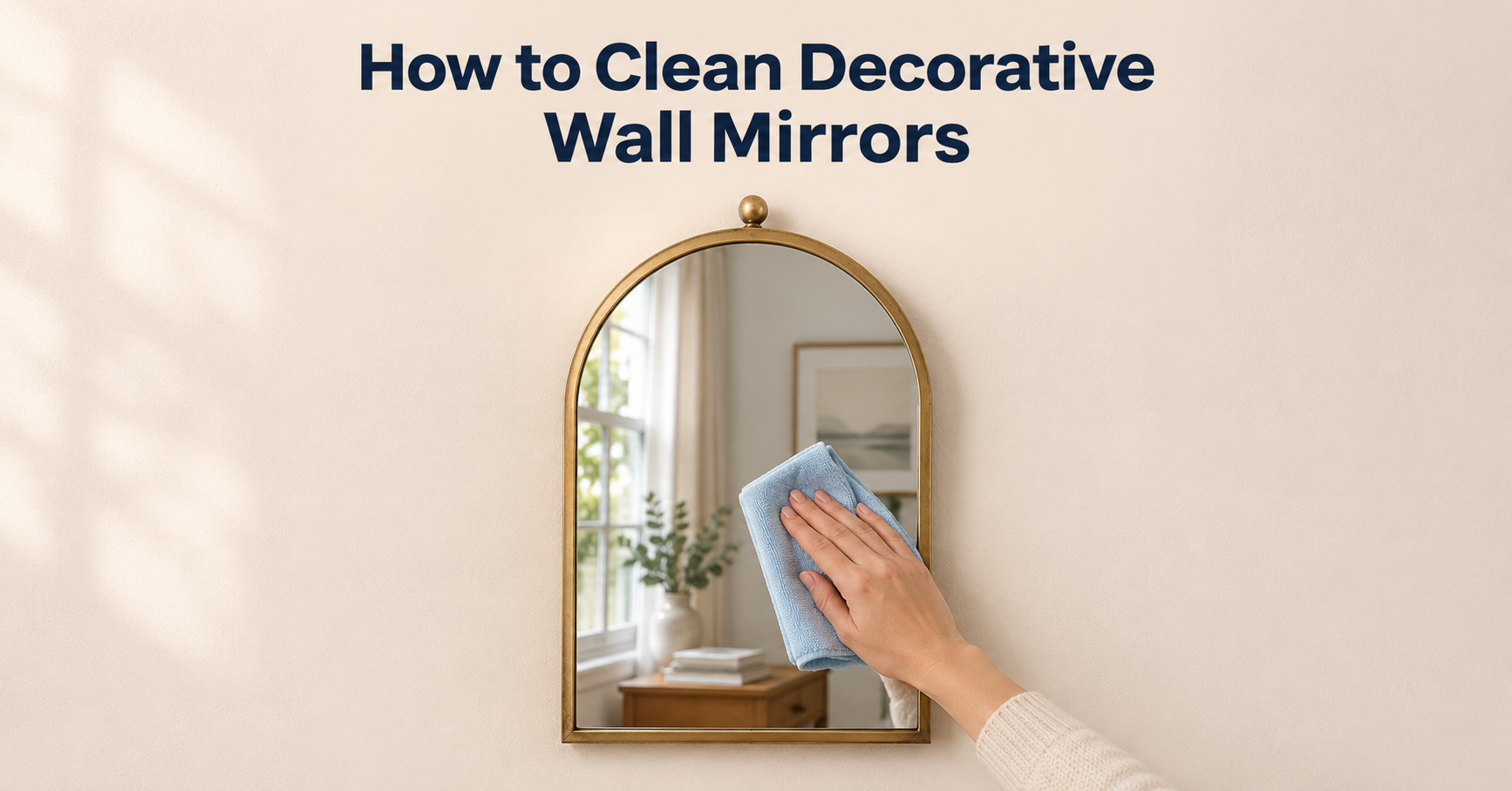
Decorative wall mirrors do more than show your reflection. They bounce light around a room, make small spaces feel bigger, and act as a focal point on the wall. But they also collect dust, fingerprints, hairspray mist, kitchen grease, and water spots, and that can dull even the most beautiful piece. Learning how to clean decorative wall mirrors the right way keeps the glass bright and protects the frame at the same time.
A decorative mirror is not the same as a plain bathroom mirror. Ornate frames have carvings and crevices that trap dust, gilded finishes can wear away, and the glass edges and backing can be damaged by too much liquid. A cleaning method that works on a flat, frameless mirror can quietly ruin a vintage or carved one.
This guide covers the supplies you need, safe cleaning solutions, a step-by-step method for a streak-free finish, frame care by material, how to remove stubborn marks, and what to look for when buying cleaning products.
Quick answer
Dust the frame first with a soft brush, lightly dampen a clean microfiber cloth with distilled water and a mild glass cleaner (never spray the mirror directly), wipe from top to bottom in overlapping strokes, then buff dry with a second dry cloth. Clean the frame separately, using a method that matches its material.
Why Decorative Wall Mirrors Need Extra Care
Several features make decorative mirrors more delicate than ordinary ones.
Ornate frames hide dust and are easy to damage
Carved wood, resin scrollwork, and metal filigree have deep grooves where dust settles. Rubbing these areas with a wet cloth can push grime deeper or wear away paint and gilding.
The glass edges and backing are vulnerable
Mirrors are made of glass with a thin reflective coating on the back, protected by a layer of paint. If liquid seeps behind the glass, it can attack that coating and cause dark spots or black edges that cannot be cleaned away.
Finishes can react to household cleaners
Gold leaf, antique paint, lacquer, and wax finishes can fade, stick, or cloud when exposed to acidic or alcohol-heavy cleaners. Always treat the frame and the glass as two separate surfaces.
Antique and vintage mirrors are more fragile
Older mirrors often have aged silvering, small spots known as foxing, and brittle backing. These need the gentlest possible approach, and some marks are part of the mirror’s character rather than dirt.
Know Your Mirror Before You Clean
Take a moment to identify what you are dealing with. It decides which method is safe.
- Modern framed mirror: usually safe with the standard method in this guide.
- Beveled mirror: the angled glass edge traps dust and smudges, so check it closely.
- Carved or sunburst frame: use a soft brush for the frame and keep liquid away from the details.
- Gilded or gold-leaf frame: dry dust only. Avoid water and cleaners on the gilded surface.
- Antique or vintage mirror: use a barely damp cloth and never spray liquid near the edges.
- Mosaic or mirror-tile piece: work in small sections and keep liquid out of the grout lines.
- Natural-material frame (rattan, bamboo, woven): dust with a soft brush or low-suction vacuum, and avoid soaking.
What You Need Before You Start
Good tools matter as much as good technique. You do not need expensive products, just the right ones.
- Two or three clean microfiber cloths that are lint-free and free of fabric softener
- A soft-bristled brush, such as a clean paintbrush, makeup brush, or dusting brush, for carved frames
- A spray bottle filled with your cleaning solution
- Distilled water, which helps prevent mineral spots and streaks
- Cotton swabs for corners, bevels, and grooves
- A small step stool if the mirror hangs high, so you can reach the top safely
- A towel or drop cloth to protect the floor, furniture, and baseboard below
- Soft cotton gloves (optional) to avoid leaving fingerprints on freshly cleaned glass
The Best Cleaning Solutions for Decorative Mirrors
The gentlest solution that works is always the best one. Start with the mildest option and only step up if needed.
Option 1: Distilled water only
For light dust and fingerprints, a cloth lightly dampened with distilled water and a dry buff is often enough. It is the safest choice for antique mirrors.
Option 2: Vinegar and water (glass only)
Mix equal parts distilled water and white vinegar in a spray bottle. It cuts through film and water spots on modern glass. Use it on the glass only, and keep it away from gilded, painted, waxed, or natural-wood frames and from antique mirror edges.
Option 3: Mild soap solution
For greasy buildup, such as in kitchens, add two or three drops of mild dish soap to a bottle of distilled water. Wipe, then go over the area with a cloth dampened with plain distilled water to remove soap film before buffing dry.
Option 4: Store-bought glass cleaner
A quality, ammonia-free glass cleaner is convenient for modern mirrors. Always apply it to the cloth, not the mirror, and check the label to make sure it is safe for mirrors.
What to avoid
- Abrasive powders, scouring pads, and rough sponges that can scratch the glass or strip the frame
- Ammonia-heavy cleaners and strong solvents on antique mirrors or painted frames
- Paper towels, which can leave lint and tiny scratches
- Soaking wet cloths, which push liquid behind the glass
Step-by-Step: How to Clean Decorative Wall Mirrors
Follow these six steps in order. Working from the dry stage to the damp stage, and from the frame to the glass, helps you avoid smearing dust into wet glass.
Step 1: Prepare the area
- Lay a towel or drop cloth on the floor and any furniture below the mirror.
- Check the mirror is hanging securely. If it moves or sounds loose, fix the fixings before you clean.
- For a large or heavy mirror, ask someone to help, and never lean your weight on it.
Step 2: Dust the frame and surface first
Dust turns into muddy streaks as soon as it meets moisture, so remove it while everything is dry. Use a soft brush to sweep dust out of carvings, corners, and grooves, working from the top down. A microfiber cloth works well on smooth frame sections. For natural-fiber frames, a vacuum with a brush attachment on low suction is gentle and effective. Finish by wiping the glass with a dry microfiber cloth to lift loose dust.
Step 3: Dampen the cloth, not the mirror
Lightly mist a microfiber cloth with your chosen solution until it is slightly damp, not wet. Spraying the mirror directly sends liquid running down the glass and into the frame and edges, where it can cause long-term damage.
Step 4: Wipe from top to bottom
Start at the top corner and wipe in overlapping S-shaped strokes, working your way down. Any drips you create then fall onto an area you have not cleaned yet. Refold or swap the cloth as soon as it feels wet or gets dirty, because a saturated cloth is the main cause of streaks.
Step 5: Detail the edges, bevels, and corners
Wrap a clean corner of the cloth around a cotton swab or your fingertip, dampen it very slightly, and trace the glass edges, beveled borders, and corners where the glass meets the frame. Do not push liquid into the gap. If the frame is touching the glass, clean along the line, not into it.
Step 6: Buff dry right away
Immediately follow with a clean, dry microfiber cloth and buff in light circles or straight strokes until the glass squeaks slightly and looks crystal clear. Buffing dry removes the last of the moisture and prevents spots from forming.
Cleaning the Frame by Material
The frame is often the most valuable part of a decorative mirror, and it needs a different approach from the glass. Always test any method on a small hidden area first.
| Frame material | Safe method | Avoid |
|---|---|---|
| Painted or lacquered wood | Soft brush, then a barely damp cloth, dried right away | Soaking, harsh cleaners, scrubbing |
| Natural or stained wood | Dust, wipe with a slightly damp cloth, dry, and use a suitable wood polish occasionally | Excess water, vinegar, heavy wax buildup |
| Gilded or gold leaf | Dry dusting with a very soft brush only | Water, liquid cleaners, rubbing, cloths that snag |
| Metal (brass, iron, aluminum) | Damp cloth with mild soap, rinse with a clean damp cloth, dry well | Abrasives, harsh polishes on lacquered or antique finishes |
| Resin or plaster | Soft brush, then a lightly damp cloth for smooth areas | Soaking, scrubbing, strong solvents |
| Rattan, bamboo, or woven fibers | Soft brush or low-suction vacuum with a brush attachment | Wet cleaning, which can warp and stain the fibers |
| Mosaic or mirror tiles | Work in small sections with a barely damp cloth and cotton swabs | Letting liquid sit in grout lines |
How to Remove Stubborn Marks
When a normal wipe does not do the job, try one of these targeted fixes on the glass. Work gently, and stop if you see any change to the mirror backing or frame.
| Problem | What to do |
|---|---|
| Fingerprints and smudges | Wipe with a damp microfiber cloth and buff dry. A few drops of mild soap in water help with oily marks. |
| Hard water spots | Dab with a cloth dampened with vinegar and water on the spot, then rinse with a damp cloth and buff dry. |
| Hairspray or product buildup | Use the mild soap solution, then wipe with plain distilled water and buff dry. |
| Kitchen grease | Wipe with the mild soap solution, rinse with a barely damp cloth, and dry. |
| Sticker or tape residue | Dab a small amount of rubbing alcohol on a cotton swab, hold it on the residue to loosen it, wipe away, then clean the glass normally. Keep it off the frame. |
| Marker or ink | Use a cotton swab with a little rubbing alcohol, dabbing gently, then wipe clean and buff. |
| Dried paint or splatter | Soften with a warm damp cloth, then lift gently with a plastic scraper or old plastic card held at a shallow angle. |
| Black or dark edges, or spots inside the glass | This is damage to the mirror coating, not dirt, and cleaning cannot remove it. Prevent it by keeping liquid off the edges. A restorer can re-silver valuable pieces. |
Why Liquid at the Edges Ruins a Mirror
The most common way people damage decorative mirrors is by letting liquid run to the edges. The reflective layer is protected only by a thin coat of paint, and the edge is the weakest point. Once moisture gets in, the coating starts to break down and dark patches creep inward.
How to Get a Streak-Free Finish
- Use distilled water. Tap water contains minerals that leave spots as it dries.
- Keep two cloths. One for cleaning and one clean, dry cloth for the final buff.
- Wash cloths without fabric softener. Softener leaves a film that causes smears.
- Avoid cleaning in direct sunlight. The solution dries too fast and leaves marks.
- Use less liquid than you think you need. A barely damp cloth cleans just as well and dries cleanly.
- Do a final side-light check. Look at the mirror from an angle to spot any remaining streaks, then buff them away.
Special Cases: Antique, Gilded, and Mosaic Mirrors
Antique mirrors
Use a soft dry brush to remove dust, then wipe with a cloth that is barely damp with distilled water. Do not use vinegar, ammonia, or spray directly. Leave aged spots and foxing alone, because rubbing will not remove them and may damage the silvering. For valuable pieces, ask a professional restorer.
Gilded or gold-leaf frames
Dust only, using a very soft brush and light strokes. Do not wipe with a wet cloth, and avoid cloths that can catch on raised details. If there is heavy dirt, a conservator can clean it safely.
Sunburst and carved frames
Work from the center outward with a soft brush, rotating around the frame. Use cotton swabs for narrow gaps, and avoid bending delicate spikes or carved elements.
Mosaic and mirror-tile pieces
Clean one small section at a time with a barely damp cloth. Dry each section immediately so liquid does not collect in the grout or behind the tiles.
How Often Should You Clean Decorative Mirrors?
- Dust the frame: every one to two weeks, or more often in dusty rooms
- Wipe the glass: every two to four weeks, or whenever you notice smudges
- Deep clean: every three to six months, including edges and corners
- Bathrooms and kitchens: more often, because humidity, steam, and grease build up quickly
Safety Tips
- Wear shoes with good grip and use a stable step stool for high mirrors.
- Never lean on or press hard against the glass.
- Do not clean a cracked or chipped mirror without caution. Wear gloves and consider taking it down or getting it repaired.
- Keep cleaning products out of reach of children and pets.
- Do not mix cleaning products together, particularly bleach with vinegar or ammonia.
Common Mistakes to Avoid
- Spraying the mirror directly, which sends liquid into the frame and edges
- Skipping the dusting step and smearing dirt into streaks
- Using the same cleaner on the glass and frame without checking whether the finish can handle it
- Using paper towels or rough cloths that leave lint and scratches
- Cleaning in hot sunlight, which makes the solution dry streaky
- Scrubbing aged spots on an antique mirror
- Forgetting to dry the edges and corners
What to Look for When Buying Cleaning Supplies
The right products make mirror cleaning faster and safer. Here is what to look for in each category.
Microfiber cloths
Look for soft, tightly woven, lint-free cloths, ideally sold as glass or polishing cloths. A multipack lets you keep one set for glass only, so they are never contaminated with furniture polish or grease.
Glass and mirror cleaners
Choose an ammonia-free formula that is labeled safe for mirrors. A streak-free, fast-drying formula is helpful, but remember it should go on the cloth, not the glass.
Soft detailing brushes
Natural-bristle or soft synthetic brushes in a few sizes reach into carvings and corners. Avoid stiff bristles that can scratch finishes.
Extendable dusters
For tall mirrors, a duster with a soft, washable head and an extendable handle helps you reach the top of the frame without climbing.
Distilled water
Inexpensive and widely available, distilled water is one of the simplest upgrades for a spot-free finish.
Squeegees (for large, flat, modern mirrors only)
A small, soft-edged squeegee can speed up big, smooth mirrors with no frame details. Do not use one on a carved, gilded, or antique mirror.
Frequently Asked Questions
What is the best thing to clean a decorative mirror with?
A clean microfiber cloth lightly dampened with distilled water, and a dry microfiber cloth to buff, is the safest all-round method. Add a mild glass cleaner or vinegar solution only when needed, and only on modern glass.
Can I use vinegar to clean a decorative mirror?
You can use a diluted vinegar and water solution on the glass of a modern mirror, but keep it away from the frame and from antique mirrors. Rinse with a damp cloth and buff dry.
How do I clean a mirror with an ornate frame?
Dust the frame with a soft brush first, clean the glass with a damp cloth, then clean the frame based on its material. Avoid letting liquid get into the carvings or behind the glass.
How do I avoid streaks on a mirror?
Use distilled water, a barely damp lint-free cloth, and buff dry right away with a second clean cloth. Avoid direct sunlight and wash cloths without fabric softener.
Why is my mirror turning black around the edges?
Moisture has reached the reflective coating at the edge and damaged it. It is usually caused by humidity or liquid running behind the glass. It cannot be cleaned off, but it can be slowed by keeping edges dry.
How do I clean a mirror that is hard to reach?
Use an extendable duster to remove dust, a stable step stool, and a microfiber cloth. Do not stretch from an unstable position, and ask for help with big or heavy mirrors.
Can I use glass cleaner on an antique mirror?
It is best not to. Antique mirrors have delicate backing, so use a soft dry brush and a barely damp cloth with distilled water, and consult a conservator for valuable pieces.
Is it safe to clean a mirror without taking it off the wall?
Yes, for most mirrors. Make sure the mirror is securely mounted, protect the floor, and use a barely damp cloth so nothing runs into the edges.
Final Thoughts
Cleaning a decorative wall mirror is simple once you know the rules: dust first, use a barely damp cloth, never spray the mirror directly, buff dry, and treat the frame according to its material. These small habits keep the glass bright, protect the finish, and prevent damage that no cleaner can undo.
Whether you own a modern ornate piece or an antique heirloom, the same gentle approach works. Clean regularly, handle delicate details with care, and your decorative wall mirrors will keep reflecting light and style for many years.
Quick checklist
- Soft brush for the frame first
- Distilled water and a mild solution on a cloth, not on the mirror
- Wipe top to bottom, refolding the cloth often
- Cotton swab for edges and corners
- Buff dry with a clean microfiber cloth
- Clean the frame by material, and keep liquid away from the edges