






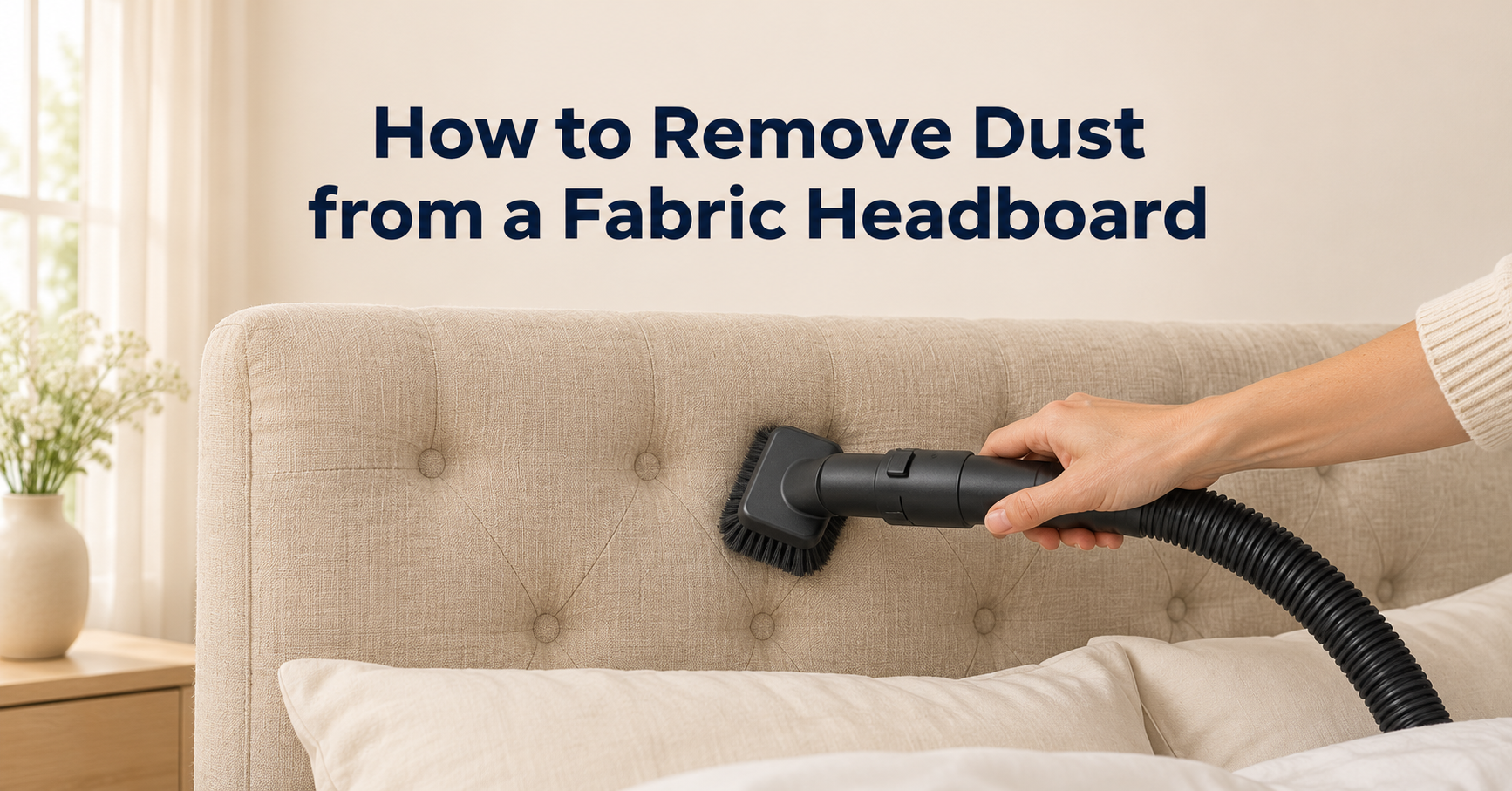
How to Remove Dust from a Fabric Headboard: A Complete Step-by-Step Guide
A fabric headboard makes a bedroom feel soft, warm, and stylish. But the same textured surface that looks so inviting is also a dust magnet. Skin cells, pet hair, lint from bedding, and airborne particles settle into the fibers every day, and over time your headboard can look dull, smell stale, and even trigger allergies.
If you are wondering how to remove dust from a fabric headboard without damaging the material, this guide is for you. You will learn the tools you need, a safe step-by-step method, the best approach for each fabric type, common mistakes to avoid, and simple habits that keep dust from coming back.
Why Fabric Headboards Collect So Much Dust
Unlike a smooth wood or metal frame, upholstered headboards have woven fibers, padding, seams, and often buttons or tufting. All of these hold dust easily. A headboard also sits right beside your pillows, where you shed skin flakes and hair and where bedding fibers float into the air each time you move.
Dust on a headboard is not only a cosmetic issue. Dust can contain dust mites, pollen, pet dander, and other allergens. Because you rest your head close to it for hours each night, keeping it clean is a simple way to improve bedroom air quality.
Before You Start: Check the Care Label
Fabrics react differently to water and cleaners, so first look for a care tag on the underside or back of the headboard, or in the manufacturer instructions. Upholstery cleaning codes tell you what is safe:
| Cleaning Code | Meaning | What to Use |
|---|---|---|
| W | Water-based cleaners are safe | Mild detergent and water for spots |
| S | Solvent-based cleaners only | Dry-cleaning solvent; no water |
| WS | Water or solvent both work | Either, with a spot test first |
| X | Vacuum or brush only | No liquids at all; dry dusting only |
If you cannot find any label, assume the fabric is delicate. Stick with dry cleaning methods first and always test any cleaner on a small hidden spot before using it more widely.
Tools and Supplies You Will Need
You do not need special equipment. Most of the supplies are already in your home:
- Vacuum with an upholstery or soft brush attachment for the main dust removal.
- Soft-bristle brush such as a clean clothes brush or a soft paintbrush for loosening dust and reaching tufts.
- Clean microfiber cloths that trap dust instead of spreading it.
- Lint roller for fast pickup of hair, lint, and light dust.
- Baking soda to freshen the fabric when it smells stale.
- Mild liquid detergent and a spray bottle for water-safe fabrics and small stains.
How to Remove Dust from a Fabric Headboard Step by Step
Step 1: Prepare the Area
Remove pillows, bedding, and decor near the headboard. If the headboard is attached to the bed frame, pull the bed a little away from the wall so you can reach the sides and back. Open a window or turn on a fan so loosened dust leaves the room instead of settling again.
Step 2: Brush Away Loose Dust
Take your soft brush and sweep the surface using light, short strokes from the top down. This lifts dust out of the weave and into a position where the vacuum can catch it. On textured fabrics and tufted areas, use the brush to work into folds and around buttons.
Step 3: Vacuum the Entire Surface
Attach the upholstery or brush tool and set the suction to low or medium. Vacuum in overlapping vertical lines from the top of the headboard to the bottom, then repeat with horizontal lines. This cross-pattern lifts dust from every direction. Pay attention to seams, edges, and the gap where the headboard meets the mattress.
For tufted headboards, use a crevice or small brush attachment to get between the buttons. Do not press hard, as that may pull on stitching or loosen the buttons.
Step 4: Use a Lint Roller or Microfiber Cloth
After vacuuming, go over the surface with a lint roller to pick up hair and fine fuzz. On more delicate or textured fabric, use a dry microfiber cloth in gentle, one-direction strokes instead. If the care label allows water, lightly dampen a second microfiber cloth with clean water and wipe the headboard in smooth, light motions. Wring the cloth thoroughly, because the fabric should feel barely damp, never wet.
Step 5: Spot Clean Stains or Marks
Mix a few drops of mild liquid detergent with water and dab the stain with a clean cloth. Blot rather than rub, since rubbing pushes the dirt deeper and can damage fibers. Rinse by blotting with a cloth dampened with plain water, then press with a dry towel to absorb moisture. Remember that fabrics marked S or X should not be treated with water.
Step 6: Freshen with Baking Soda
If the headboard smells dusty or stale, sprinkle a thin, even layer of baking soda over the fabric, let it sit for several hours or overnight, then vacuum it off thoroughly. Baking soda absorbs odors without leaving moisture behind. Test a hidden area first on dark or delicate fabrics.
Step 7: Let It Dry and Reassemble
Let the headboard air dry fully before you put the bedding back. Dampness left in the padding can lead to musty smells and mildew. Good airflow and a little time are all it takes. Wash or change the pillowcases and sheets at the same time so that you do not put fresh dust back on a clean headboard.
Best Dusting Method for Each Fabric Type
Different upholstery materials need slightly different handling. Use this guide to choose the safest approach:
| Fabric | Best Dusting Method | Avoid |
|---|---|---|
| Cotton / Linen | Vacuum with brush, then lightly damp microfiber wipe | Soaking, hot water, harsh cleaners |
| Velvet | Soft brush moving with the nap, low-suction vacuum | Rubbing against the nap, wet scrubbing |
| Polyester / Microfiber | Vacuum, lint roller, damp cloth | Heat, strong solvents |
| Faux Suede | Dry soft brush or suede brush, gentle vacuum | Water spots, heavy rubbing |
| Boucle / Textured Weave | Soft brush and low-suction vacuum, dab-clean only | Stiff brushes that snag loops |
| Tufted or Buttoned | Soft detail brush for crevices, vacuum upholstery tool | Pulling at buttons or stitching |
How to Clean Dust from a Tufted or Buttoned Headboard
Tufting creates deep folds that collect dust. Start with a soft detail brush, such as a small makeup brush or paintbrush, and sweep dust out of each fold toward the open fabric. Then use a vacuum crevice tool with low suction to pick up the loosened dust. Finish by gently wiping the flat areas with a dry microfiber cloth. Work patiently, and avoid tugging on buttons.
Common Mistakes to Avoid
- Using too much water. Soaked padding dries slowly and can grow mildew.
- Scrubbing hard. Rubbing damages fibers, causes pilling, and can spread stains.
- Skipping the care label. A cleaner that works on one fabric can ruin another.
- Using strong chemicals or bleach. These can fade or weaken fabric.
- Dusting with a dry, dirty cloth. Old cloths push dust around instead of trapping it.
- Using full suction on delicate fabric. It can pull loose threads or distort the shape.
- Forgetting the back and sides. Dust collects behind the headboard and gap near the wall as well.
How Often Should You Dust a Fabric Headboard?
- Every 1 to 2 weeks: a quick vacuum or lint roller pass.
- Monthly: vacuum thoroughly including the edges and back.
- Every 3 to 6 months: do a full clean with spot treatment and baking soda refresh.
- More often if you have pets, allergies, or live in a dusty area.
How to Keep Your Headboard from Getting Dusty Again
- Wash bedding weekly so fewer fibers and skin cells reach the headboard.
- Keep pets off the bed or brush them regularly to reduce hair and dander.
- Run an air purifier with a HEPA filter in the bedroom.
- Dust nearby surfaces such as shelves and nightstands, so dust is not just moving around.
- Keep windows closed on windy or high-pollen days.
- Use a washable headboard cover if you want extra protection, especially in homes with kids or pets.
- Vacuum the floor and the area behind the bed regularly.
- Keep humidity moderate, since damp air makes dust cling and encourages mildew.
Helpful Products for Easier Headboard Cleaning
A few simple products can make routine dusting faster and safer for your fabric:
- Handheld vacuum or vacuum with upholstery tool: gentle, controllable suction for fabric surfaces.
- Microfiber cloth set: traps fine dust and is reusable and washable.
- Reusable lint roller or fabric brush: perfect for quick weekly touch-ups.
- Upholstery cleaner for fabric: pick one that matches your fabric’s cleaning code.
- Fabric protector spray: adds a barrier that helps repel dust and spills, when compatible with your fabric.
- HEPA air purifier: reduces airborne dust that lands on bedroom surfaces.
- Washable headboard cover: easy to remove and launder.
When to Call a Professional
Consider a professional upholstery cleaner if the headboard has deep set stains, strong odors that will not go away, mold or mildew spots, or fabric with a care code that limits home cleaning. Expensive or antique pieces are also best left to an expert, so you avoid costly damage.
Frequently Asked Questions
How often should I dust a fabric headboard?
Lightly vacuum or brush it every one to two weeks, and do a deeper clean every three to six months. Households with pets, allergies, or open windows may need to dust more often.
Can I use a damp cloth on a fabric headboard?
Often yes, but only if the care label allows water, and only with a barely damp microfiber cloth. Always test a hidden spot first. If the label says X, stay with dry methods.
What is the best way to dust a tufted headboard?
Use a vacuum with a soft brush attachment and a small soft detail brush to reach between buttons and folds. Work gently so that you do not loosen the buttons or stitching.
Will a lint roller damage fabric?
A lint roller is generally safe on sturdy fabrics and is great for pet hair and surface dust. Avoid it on delicate fabrics, loose weaves, and velvet, since the sticky sheets can pull fibers or leave marks.
Can I use a steam cleaner on my headboard?
Only if the care label allows it. Steam can shrink, stain, or damage some fabrics and the padding underneath. When unsure, skip steam.
How do I get rid of the dusty smell on a headboard?
Vacuum well, sprinkle a thin layer of baking soda, wait several hours or overnight, and vacuum it off completely. Ventilating the room also helps.
Final Thoughts
Removing dust from a fabric headboard is simple when you use the right method. Check the care label, brush loose dust, vacuum gently, wipe with a clean microfiber cloth, and let the fabric dry fully. A quick routine every couple of weeks keeps the fabric looking fresh and your bedroom healthier.
Stay consistent, avoid soaking or scrubbing, and your headboard can stay clean, soft, and beautiful for many years.