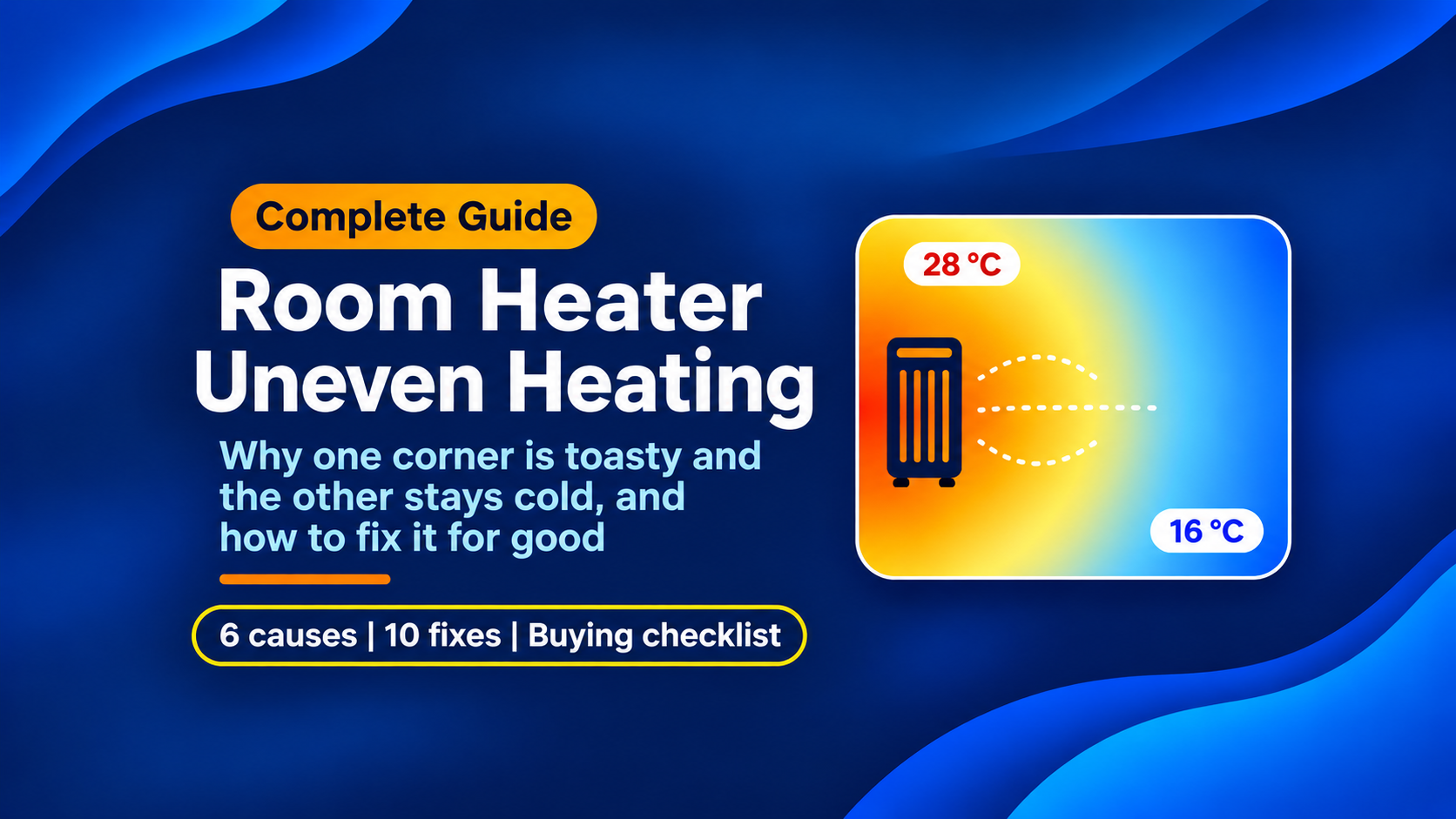
You switch on your room heater, wait a few minutes, and the spot next to it turns toasty. Yet the sofa across the room still feels like winter. If this sounds familiar, you are dealing with room heater uneven heating, one of the most common complaints during cold months.
The good news is that uneven heating is rarely a sign that your heater is broken. In most homes it comes down to physics, room layout, and a few small habits. This guide explains exactly why it happens, how to diagnose your own room, and what you can do about it, step by step.
Quick answer
- Warm air rises, so the ceiling heats first and the floor stays cooler.
- A heater that is too small, badly placed, or the wrong type cannot spread heat across the whole room.
- Drafts, cold walls, and single-glass windows keep pulling heat out of the far side of the room.
- Right sizing, smart placement, air circulation, and draught sealing fix most cases without buying anything new.
What Does “Uneven Heating” Actually Mean?
Uneven heating means the temperature changes noticeably from one part of the room to another. You may notice it as:
- A hot zone around the heater and a cold zone near the windows or door.
- Warm air at head height but cold feet at floor level.
- A heater that clicks off quickly, yet the room never feels comfortable.
- One side of your body feeling warm while the other side feels chilly.
A small difference is normal. Every room has some variation. The problem starts when the gap is large enough that you keep adjusting the heater, moving your chair, or wearing extra layers indoors.
Why Heat Spreads Unevenly: The Simple Science
To fix the problem you need to understand how a room heater moves heat. There are three ways heat travels, and each one plays a part.
Convection: warm air rises
Most room heaters warm the air around them. That warm air is lighter than cool air, so it climbs towards the ceiling. Cooler air drops to the floor and flows back towards the heater. This loop is called convection, and it is the main reason the top of a room is warmer than the bottom. This layering effect is often called stratification, and in rooms with high ceilings the difference can reach several degrees.
Radiation: heat you feel directly
Infrared and radiant heaters send out waves that warm objects and people in their line of sight. Anything in the “shadow” of a sofa, table, or wall receives little or no heat. This is why you can feel warm on one side of your body and cold on the other.
Conduction: heat lost through surfaces
Walls, floors, and windows absorb heat from the room and pass it outside. A thin exterior wall or a single pane of glass acts like a heat drain. The cold surface also makes you feel colder even when the air temperature looks fine, because your body loses heat to it by radiation.
6 Common Causes of Room Heater Uneven Heating
1. The heater is too small for the room
This is the number one cause. A commonly used rule of thumb is about 10 watts per square foot (roughly 100 watts per square metre) for a room with standard ceilings and reasonable insulation. A 1,500 watt heater therefore suits a room of about 150 square feet, or around 14 square metres. If your room is larger, has high ceilings, or loses a lot of heat, the heater can only warm the area close to it.
2. Poor heater placement
Placing a heater in a corner, behind a sofa, or tight against a curtain traps its heat. Warm air cannot circulate, so the rest of the room never gets its share. Corners also limit how widely a heater can spread its output.
3. Drafts and air leaks
Gaps under doors, around window frames, and through unused vents let cold air flow in. That cold air sinks and travels across the floor, creating a chilly zone that your heater has to fight constantly.
4. Cold surfaces: thin walls and single-glass windows
Large windows and uninsulated exterior walls steal heat all day. The side of the room with the most exterior surface will almost always be the coldest, no matter how powerful the heater is.
5. The wrong type of heater for the job
Each heater type spreads heat differently. A radiant heater warms objects directly but leaves the air cool. A fan heater blows hot air quickly but only in one direction. An oil-filled heater heats gently and evenly but slowly. Using the wrong type for your room size and layout creates uneven results.
6. Thermostat and sensor problems
The thermostat sensor sits inside the heater. Because that spot is the hottest part of the room, the heater may decide the room is warm and switch off long before the far side has caught up. This is called short cycling, and it leaves distant corners under-heated.
Quick Troubleshooting Table
Use this table to match what you see with the most likely cause and the quickest fix.
| What you notice | Likely cause | Best first fix |
|---|---|---|
| Hot near heater, cold across the room | Undersized heater or weak airflow | Check wattage, add a fan for circulation |
| Warm head, cold feet | Convection and stratification | Push warm air down with a ceiling fan on low |
| Cold strip along windows or doors | Drafts and cold glass | Seal gaps, close thick curtains at night |
| Heater switches off but room feels cold | Sensor short cycling | Move heater into open space, lower the thermostat gap |
| Warm on one side of your body only | Radiant heater line of sight | Remove obstacles, change the seating angle |
| Weak airflow, dusty smell | Blocked vents or dirty filter | Unplug, cool down, then clean the intake and grille |
10 Proven Ways to Fix Room Heater Uneven Heating
1. Match the heater to the room size
Measure your room, multiply the floor area by roughly 10 watts per square foot (100 watts per square metre), and compare the result with your heater’s wattage. If you fall well short, add a second heater instead of running one at its limit all day.
2. Place the heater on the cold side of the room
This sounds backwards, but heating the coldest area first stops cold air from drifting across the room. Position the heater near the window or exterior wall, with clear space in front of it so warm air can travel into the room.
3. Keep the area around the heater clear
Leave at least 3 feet (about 1 metre) of open space on all sides. Remove blankets, paper, and furniture from the airflow. This is both a performance tip and an important safety rule.
4. Circulate the air with a fan
A small fan placed across the room, or a ceiling fan on its lowest speed, pushes the layer of warm air back down. Many ceiling fans have a reverse (winter) mode that gently pulls air up in the centre and pushes it along the ceiling and down the walls, without creating a breeze.
5. Seal drafts around doors and windows
Weather stripping, door sweeps, and window film are cheap and effective. Even a rolled towel at the bottom of a door can reduce the cold air creeping in along the floor.
6. Use thick curtains and insulate windows
Heavy or thermal-lined curtains reduce heat loss through glass. Open them during the day to let sunlight in, and close them at dusk. Do not hang curtains where they can touch the heater.
7. Close doors and heat only the space you use
An open door lets warm air escape into the corridor and invites cold air to take its place. Closing doors turns your room into a smaller, easier space to heat.
8. Add rugs and soft furnishings
Bare floors, especially tile or concrete, feel very cold underfoot. A rug adds a layer of insulation and makes the lower part of the room feel noticeably warmer.
9. Choose a heater with an oscillation or fan function
An oscillating heater sweeps warm air across a wider area instead of blasting one spot. Combined with a thermostat, it evens out the temperature and reduces short cycling.
10. Clean and maintain the heater
Dust on the grille, vents, or fan blades reduces airflow and output. Before each season, and monthly during heavy use, unplug the heater, let it cool completely, and gently clean it with a dry cloth or a soft brush.
Which Type of Room Heater Heats Most Evenly?
No heater is perfect for every room. This comparison shows how common types behave when it comes to even heat distribution.
| Heater type | How it heats | Evenness | Best for |
|---|---|---|---|
| Oil-filled radiator | Warms oil, which warms the surface and air gently | High, but slow to start | Bedrooms and long, steady use |
| Fan heater | Blows air over a hot element | Medium, fast but directional | Small rooms and quick warm-ups |
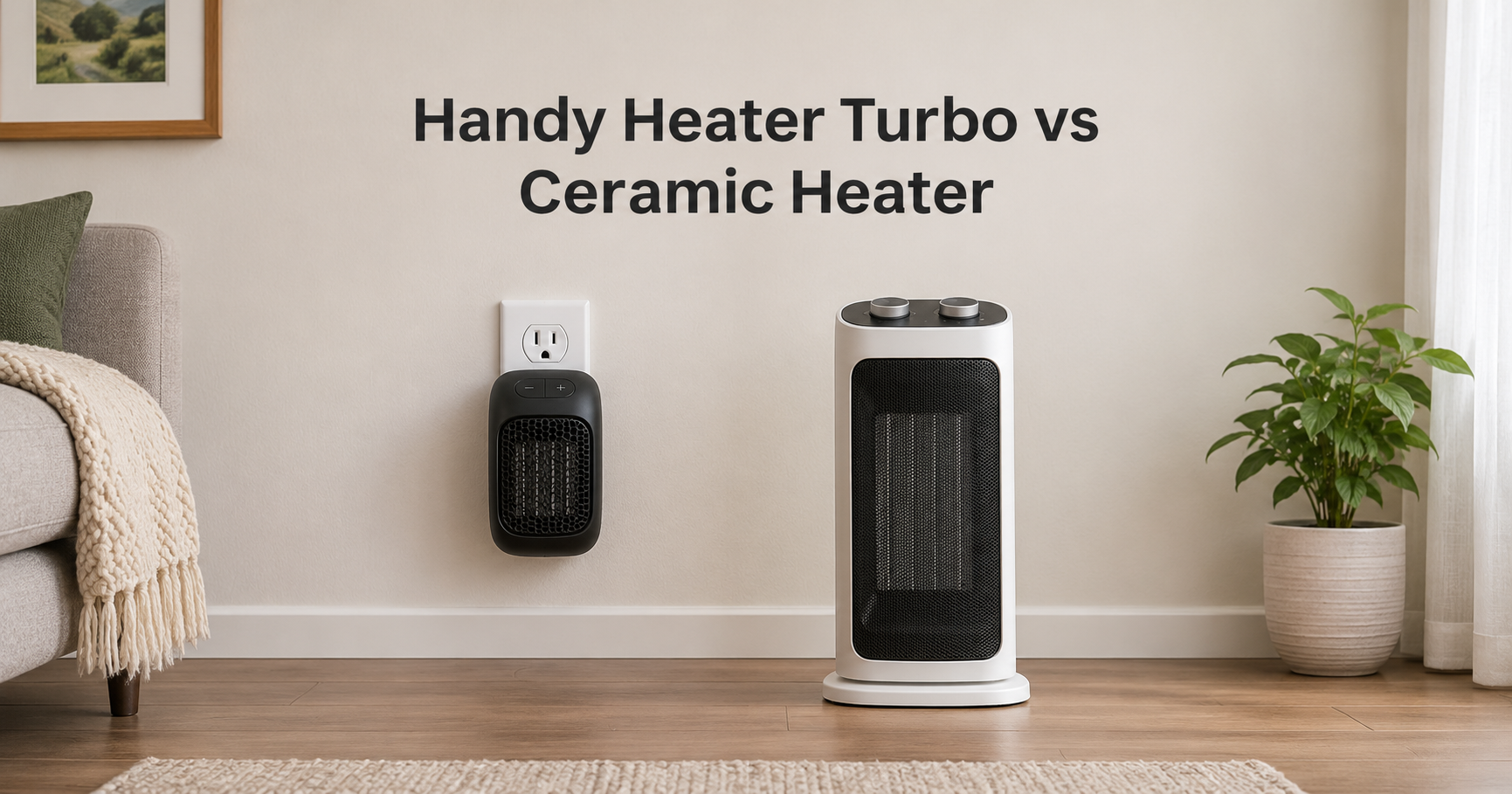
| Ceramic fan heater | Fan plus self-regulating ceramic plates | Medium to high with oscillation | Medium rooms and offices |
| Convector heater | Creates a natural air flow through the unit | Medium to high | Living rooms and general use |
| Infrared / radiant heater | Warms people and objects directly | Low across the room, high in line of sight | Spot heating at a desk or seat |
Buying Checklist: Features That Help Heat Evenly
If your current heater cannot solve the problem, upgrading may be the right move. Here is what to look for before you buy:
- Correct wattage for your room. Use the 10 watts per square foot rule as a starting point, and add some extra for high ceilings.
- Adjustable thermostat. It keeps the temperature stable and prevents overheating near the unit.
- Oscillation. A swinging head spreads warm air over a wider area.
- Multiple heat settings. Low, medium, and high power let you adapt to the weather.
- Tip-over and overheat protection. Essential safety features, especially around children and pets.
- Timer or eco mode. Helps control running costs without sacrificing comfort.
- Stable base or wheels. Makes it easy to reposition the heater to find the best spot.
- Quiet operation. Important for bedrooms and study areas.
For large rooms, two smaller heaters in different areas often give more even results than one big unit, and they let you heat only the zone you are using.
Safety Rules You Should Never Skip
Moving a heater to improve heat distribution should never put your home at risk. Follow these rules every time:
- Plug the heater directly into a wall socket. Avoid extension cords and cheap multi-plugs, because heaters draw a lot of current.
- Keep curtains, bedding, clothes, and papers well away from the unit.
- Never dry clothes on top of or directly in front of a heater.
- Do not leave a heater running unattended or while you sleep, unless it is designed and approved for that use.
- Place it on a flat, stable, hard surface.
- Check the power cord and plug for damage or discolouration before every use.
- Keep a working smoke alarm in the room or nearby.
When Uneven Heating Means a Fault
Sometimes the problem is the heater itself. Stop using it and have it checked or replaced if you notice any of these signs:
- A burning smell that does not fade after the first few uses of the season.
- Sparks, crackling sounds, or flickering lights when it runs.
- The plug or cord becomes very hot to the touch.
- Only part of the heating element glows, or one heat setting stops working.
- The unit trips the circuit breaker repeatedly.
When in doubt, contact the manufacturer or a qualified electrician. Do not try to open or repair a heater yourself.
Frequently Asked Questions
Why does my room heater only heat one side of the room?
Most heaters warm the air or objects close to them. If the heater is small for the room, placed in a corner, or blocked by furniture, its heat never reaches the far side. Drafts and cold windows on the other side make the difference worse.
Why are my feet cold even when the heater is on?
Warm air rises, so the floor is usually the coolest part of any room. Cold floors also draw heat from your feet. Adding a rug, running a ceiling fan on low, and using a heater that sits low to the ground can help.
Is it better to put a heater near the window?
In most cases, yes, as long as it is at a safe distance from curtains. Heating the coldest area first reduces the cold air that would otherwise sink and spread across the floor.
Can a fan help a room heater work better?
Yes. A fan moves warm air around the room, which reduces the temperature difference between the ceiling and the floor and between the near and far sides of the room.
Which heater gives the most even heat?
Oil-filled radiators and convector heaters usually give the most even and steady heat, while oscillating ceramic fan heaters are a good option for faster results. The best choice depends on your room size and how you use the space.
Is a bigger heater always better?
Not necessarily. An oversized heater can overheat the area around it and cycle on and off, which still leaves the room uneven. Choose the right size and focus on placement and air circulation.
Final Thoughts
Room heater uneven heating is almost always solvable. Start with the free fixes: move the heater into open space on the cold side, close doors, block drafts, and circulate the air. Then check that the heater is the right size and type for the room. If it still struggles, a better-suited heater with a thermostat and oscillation can make a real difference.
Take a few minutes to test one change at a time and notice how the room responds. With the right setup, you can enjoy a warm, comfortable room from corner to corner, and lower your energy use at the same time.