You switch on your room heater, the room starts to warm up, and then, just a few minutes later, the heater clicks off. You turn it on again and the same thing happens. It is frustrating, especially on a cold day. The good news is that in most cases this is not a sign the heater is ruined. Room heaters shut off for a handful of well-known reasons, and many of them can be fixed at home in minutes. This guide explains why a room heater turns off after a few minutes, how to find the exact cause, and when it is time to repair or replace the unit.
Why Do Room Heaters Turn Off by Themselves?
Modern heaters are built with several automatic safety and control features. When one of them senses a problem, or simply senses that the job is done, it cuts the power. Behind a heater that keeps switching off, you will usually find one of three groups of causes:
- Safety features triggering (overheat protection or tip-over switch)
- Normal controls doing their job (thermostat or timer)
- Power supply or internal faults (circuit, plug, wiring or failed parts)
7 Common Reasons a Room Heater Turns Off After a Few Minutes
1. Overheat protection is activating
Almost every modern heater has a thermal cut-off that switches the unit off when internal temperature climbs too high. This is the most common reason for a heater that runs a few minutes and stops. It usually happens when airflow is restricted, which can come from:
- Dust and lint clogging the air intake or the heating element
- Vents covered by curtains, blankets, clothes or furniture
- A heater placed too close to a wall or sofa
- A fan inside the heater running slowly or not at all
Once the heater cools down, the protection resets and the cycle repeats. A heater that does this repeatedly is telling you airflow or cooling is not right.
2. Tip-over or tilt switch is triggered
Many heaters have a safety switch at the bottom that cuts the power if the unit falls over. Sometimes it activates even when the heater is still standing, because the floor is uneven, the heater sits on a thick carpet or rug, or the switch is dirty or stuck. A slight tilt can be enough to make it shut off.
3. The thermostat has been reached or is misreading
If the heater has a thermostat, it turns off once the room hits the set temperature. This is normal behavior in a small room. But if the thermostat is set low, or the heater’s temperature sensor sits right in the stream of its own hot air, it may think the room is warm long before it actually is and switch off early. A faulty or miscalibrated thermostat can cause the same problem.
4. Timer, eco mode or auto shut-off is on
Many heaters include a timer, an eco mode or an automatic shut-off after a set period. It is easy to press a button by accident or forget a setting from last time. Check the control panel and remote before assuming a fault.
5. Circuit overload or tripped breaker
Heaters draw a lot of power. If the heater shares a circuit with other high-power appliances such as an air conditioner, geyser, iron or microwave, the total load can exceed the circuit’s limit and the breaker or fuse trips. Check your main panel if the heater and nearby appliances all lose power together.
6. Loose plug, damaged cord, bad socket or extension cord
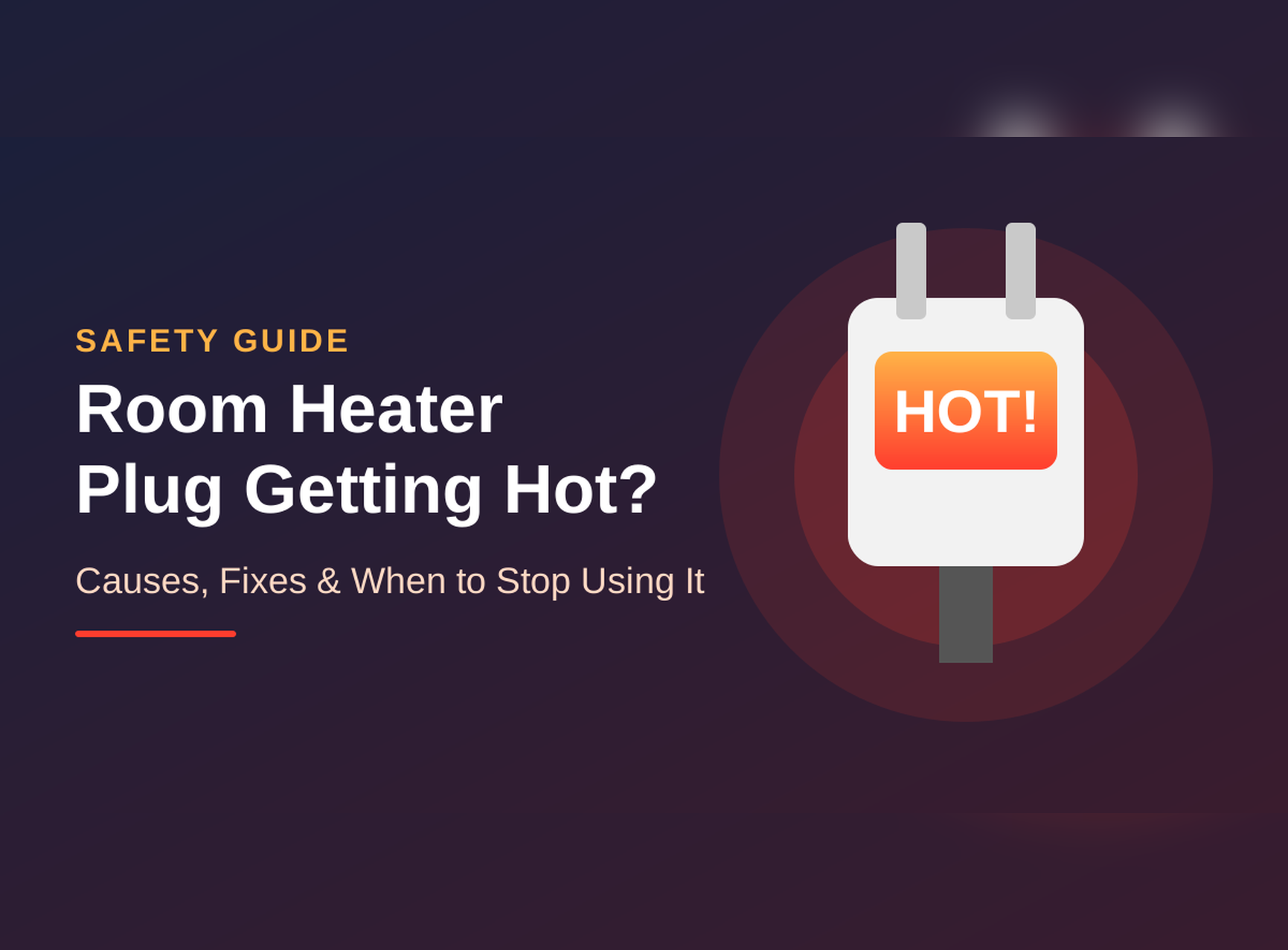
A weak connection can interrupt power, especially once the plug heats up and expands slightly. Thin extension cords and multi-plug boards often cannot handle a heater’s power and may trip their own protection. A plug that feels hot or a socket that smells of burning needs immediate attention.
7. Failed internal part
Over time, the thermal fuse, thermostat, relay, control board, heating element or fan motor can wear out. A failing component may let the heater run briefly and then cut out. This is more likely in older heaters or ones that have been dropped or used heavily.
How To Fix a Room Heater That Keeps Turning Off
Work through these steps in order. Always unplug the heater and let it cool before cleaning or inspecting anything.
Step 1: Check the settings
Look at the thermostat dial or digital display. Turn the thermostat to its highest setting, switch off the timer and eco mode, and see whether the heater runs longer. If it does, the settings were the cause.
Step 2: Clean the heater
Unplug and cool the heater completely. Use a soft brush, a dry cloth or a vacuum cleaner with a brush attachment to remove dust from the grille, air intake and fan area. Do not use water or spray liquids on it. Dust buildup is one of the top causes of overheat shutdowns.
Step 3: Give it space and fresh airflow
Keep the area around the heater clear. A good rule is to leave about three feet (one meter) of open space on all sides and above, and never cover the vents. Keep curtains, bedding, clothes and furniture well away.
Step 4: Place it on a flat, hard surface
Check that the heater sits level and steady. Thick carpet or an uneven floor can tilt it slightly and activate the tip-over switch. Try it on a flat tile or wooden surface.
Step 5: Plug directly into a wall socket
Remove extension cords, power strips and adapters. Plug the heater straight into a healthy wall socket and avoid sharing that line with other high-power appliances.
Step 6: Test a different socket or circuit
If the heater runs fine in another room or on another circuit, the original socket or circuit is the problem. Repeated breaker trips mean the circuit is overloaded or has a fault that should be checked by an electrician.
Step 7: Inspect the plug and cord
Check for bent pins, melted plastic, discoloration, cracks in the cord or a loose fit. A plug that gets hot while the heater runs should be taken seriously. Stop using the heater until the plug or cord is repaired or replaced.
Step 8: Let it rest and restart
If the overheat protection was triggered, switch the heater off, unplug it and let it cool for at least 15 to 30 minutes. Then plug it in again. Some models also have a manual reset button; check the heater’s manual to find out.
Heater-Type Notes: Oil-Filled, Fan, Ceramic and Others
- Oil-filled radiator heaters: These warm up slowly, and their thermostat may cycle off once the oil is hot. A shutdown after several minutes can be normal cycling, but a heater that cuts out almost instantly may be overheating or tilted.
- Fan heaters: Dusty intakes and weak fans are the usual cause. Cleaning is the first fix.
- Ceramic heaters: They have sensitive overheat sensors, so blocked airflow quickly triggers a shutdown.
- Halogen and infrared heaters: Tip-over switches are especially sensitive. Make sure the unit is perfectly upright and stable.
When Not To Keep Troubleshooting
Do not try to bypass or disable any safety switch, thermostat or thermal fuse. These parts exist to prevent fires. Stop using the heater and contact a qualified technician or the manufacturer if you notice:
- A burning smell, smoke or sparks
- A very hot plug, cord or socket
- A cracked housing or exposed wires
- Repeated shutoffs even after cleaning and testing another socket
- Buzzing, crackling or unusual noises
Repair or Replace?
If your heater is old, has been shutting off repeatedly for a long time, or needs a part such as a control board or heating element, replacement is often more sensible than repair. Safety components wear out, and an older unit may not have the protections of newer models. If the heater is fairly new and under warranty, contact the seller or manufacturer rather than opening it yourself.
What To Look For When Buying a New Room Heater
A well-chosen heater should run steadily without nuisance shutoffs. Consider these features:
- Right power for the room size: An undersized heater runs constantly at full power, while an oversized one can cycle on and off. Check the manufacturer’s room-size guidance.
- Accurate adjustable thermostat: Keeps temperature stable and avoids erratic cycling.
- Overheat and tip-over protection: Essential safety features that should be present and reliable.
- Multiple heat settings: Lets you choose lower power for steady, longer running.
- Easy-to-clean filters or grilles: Makes regular maintenance simple.
- Built-in timer and clear display: Helps you control run time without accidental settings.
- Sturdy base and quality plug: A stable, well-made unit is less likely to trip its tilt switch or overheat at the plug.
- Safety certification and warranty: Gives you assurance and support if something goes wrong.
Simple Maintenance Tips To Prevent Future Shutdowns
- Clean the grille and air intake at least once a month during heavy use
- Store the heater covered and dry during warm months
- Check the plug and cord for damage at the start of each winter
- Always place the heater on a flat, hard surface
- Give it its own socket and avoid extension cords
- Read the manual to learn the heater’s reset and timer functions
Frequently Asked Questions
Why does my room heater turn off after 5 minutes?
The most likely causes are overheat protection from blocked airflow or dust, a tip-over switch reacting to a tilted position, or the thermostat reaching its set temperature. Check settings, clean the heater and move it to a flat surface first.
Is it normal for a heater to turn on and off?
Yes, if the heater has a thermostat. It cycles on and off to maintain the set temperature. It is not normal if it shuts off completely and will not restart, or if it cuts out within a minute or two.
How do I reset my room heater?
Switch it off, unplug it and wait 15 to 30 minutes. Plug it back in and turn it on. If your heater has a reset button, press it according to the manual.
Can dust make a heater turn off?
Yes. Dust blocks airflow and traps heat, which triggers the overheat protection. Regular cleaning often solves the problem.
Can an extension cord cause a heater to shut off?
It can. Thin or low-quality extension cords can overheat or cause a voltage drop, and some trip their own protection. It is best to plug the heater directly into the wall.
Is it safe to keep using a heater that keeps turning off?
Not without finding the cause. A shutdown is a warning. If simple fixes do not help, stop using the heater and have it inspected.
Should I bypass the thermal fuse or tip-over switch?
No. Those are fire-safety parts. Bypassing them puts your home and family at serious risk.
Final Thoughts
A room heater that turns off after a few minutes is usually protecting itself or reacting to a simple setup problem. Check the settings, clean the vents, give it space, place it on a flat floor and plug it directly into a healthy socket. If the problem continues, a failed component or wiring issue may be responsible and professional help is the safest option. Looking after your heater and choosing one with good safety features will keep your room warm without the constant interruptions.
Disclaimer: This article is for general information only. Always follow your heater’s manual and consult a qualified technician or electrician for repairs or electrical problems.