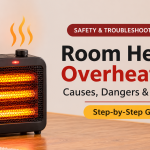
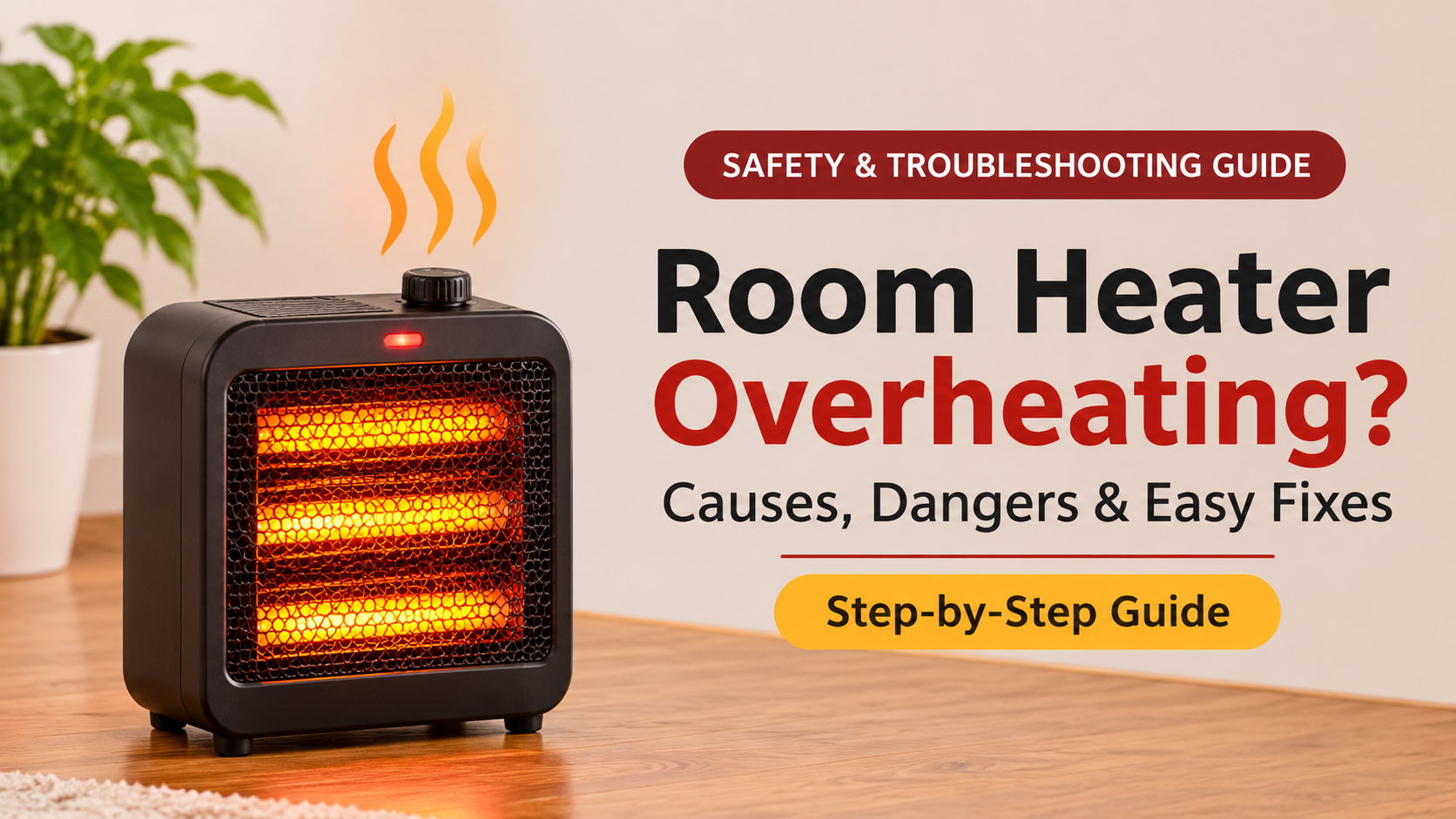

Room Heater Overheating? Causes, Dangers and Easy Fixes
A room heater is supposed to get hot, but there is a big difference between a heater that warms your room and a heater that is overheating. When the body becomes too hot to touch, the plug feels hot, the heater keeps shutting off or gives off a smell, something is wrong. Overheating shortens the life of a heater and, in the worst case, can cause a fire.
In this guide you will learn how to tell normal heat from overheating, the most common causes, safe fixes you can try at home, the warning signs that mean you should stop using the heater, and when to repair or replace it.
Quick Answer: Why Is My Room Heater Overheating?
The most common reasons are blocked vents and dust, a heater covered or placed too close to objects, a weak or failing fan, a faulty thermostat or sensor, an extension cord or overloaded circuit, a heater that is too powerful for the room or run for too long, and a damaged overheat protection. Clean the heater, give it space and plug it directly into a wall socket. If it still gets too hot, stop using it.

Normal Heat or Overheating?
Heaters work by producing heat, so the front grille and vents will be hot. That is normal. What is not normal is excess heat in areas that should stay cooler, such as the plug, cord, handle, control panel or the base.

| What You Notice | Likely Meaning | Action |
|---|---|---|
| Hot air and a warm grille | Normal operation | No action needed |
| Heater switches off, then restarts after cooling | Overheat protection working | Clean vents and give more space |
| Hot plug, cord or socket | Loose connection, overload or damaged cord | Unplug and do not reuse until checked |
| Burning or melting smell | Overheated internal parts or objects on heater | Unplug at once |
| Body or handle too hot to touch | Blocked airflow or failing fan or thermostat | Stop and have it checked |
| Discolored or warped plastic | Severe overheating | Stop using, replace the heater |
Safety First: What to Do If Your Heater Is Overheating

- Switch off the heater and unplug it. Pull the plug, not the cord.
- Do not touch hot parts. Let the heater cool for at least 30 to 60 minutes.
- Remove anything covering the heater or touching it.
- Clean the vents and grille and check the plug, cord and socket for damage.
- If you see smoke, sparks or flames, or the plug is melted, do not reuse the heater. If there is a fire, leave the area and call your local emergency number.
1. Blocked Vents and Dust
This is the most common cause. Dust and lint clog the air intake and outlet, so heat cannot escape. The temperature inside rises, the body gets hotter than normal and the overheat protection may repeatedly switch the heater off.
- Unplug the heater and let it cool for at least 30 minutes.
- Clean the grille, vents and filter with a soft brush or vacuum.
- Wipe the body with a dry or slightly damp cloth, never spraying liquid inside.
- Repeat every 1 to 2 weeks during the heating season.
2. Heater Covered or Too Close to Objects
Clothes, blankets, curtains, furniture or walls too close to the heater trap heat and block airflow. Never dry clothes on a room heater, even for a short time.
Fix: Keep at least 3 feet of clear space on all sides and place the heater on a flat, hard surface.
3. Failing Fan or Motor
In fan heaters, the fan moves heat away from the element. A slow, noisy or stopped fan cannot cool the heater, so internal temperature rises quickly. You may hear grinding or buzzing, feel weak airflow or notice the heater shutting off after a few minutes.
Fix: Clean the visible fan area. If the fan is still weak, noisy or stops, the motor needs professional repair or replacement.
4. Faulty Thermostat or Temperature Sensor
If the thermostat does not switch the element off when the room is warm, the heater keeps heating at full power and overheats. A faulty sensor can also send wrong readings.
Signs: the heater never turns off, the room becomes too hot, or the heater switches off only through the overheat safety cut-off. This needs professional service. A heater that never turns off is a safety risk.
5. Extension Cord or Overloaded Circuit
Room heaters draw a lot of current, often 1000 W to 2000 W. Thin extension cords, multi-plugs and shared circuits can overheat at the plug, cord or socket, even if the heater body feels normal.
- Plug the heater directly into a wall socket.
- Never use an extension cord or multi-plug with a heater.
- Do not run other heavy appliances on the same circuit.
- If the plug or socket feels hot, stop using the heater and have the wiring checked.
6. Heater Too Powerful or Run for Too Long
A high-power heater in a very small room can heat the room quickly and keep running at full power, which raises the temperature around and inside the heater. Running a heater continuously for many hours also adds stress.
Fix: Choose the right wattage for your room size, use the thermostat and timer, and switch the heater off when the room is warm. Never leave a heater running while you sleep or are away.
7. Damaged Overheat Protection
Most heaters have a thermal cut-off that switches the heater off when the inside gets too hot. If this part is faulty, the heater can overheat without any safety backup. Signs are a heater that becomes extremely hot but does not shut off, or a heater that shuts off and cannot be reset.
Fix: Stop using the heater. A heater without working overheat protection should not be used.
8. Poor Ventilation or a Very Small Closed Room
In a tiny room with closed doors and windows and no air movement, the air around the heater becomes hot, which makes the heater run hotter and cycle less. Air circulation helps the heater work efficiently.
Fix: Use the heater in a properly sized room, keep a little air movement and follow the manufacturer’s guidance for room size.
Overheating by Heater Type
| Heater Type | Common Overheating Cause | Quick Fix |
|---|---|---|
| Fan heater | Dust, weak fan, blocked vents | Clean fan and vents, give space |
| Ceramic heater | Blocked airflow, thermostat fault | Clean grille, check thermostat |
| Oil-filled radiator | Covered surface, faulty thermostat | Keep uncovered, never dry clothes on it |
| Halogen / infrared | Too close to objects, heavy use | Keep clear space, limit use time |
Step-by-Step Troubleshooting Checklist
- Switch off and unplug the heater and let it cool completely.
- Remove anything covering or touching it.
- Clean the vents, grille and visible fan area.
- Check the plug, cord and wall socket for heat, black marks or melting.
- Place the heater on a flat, hard surface with 3 feet of free space.
- Plug directly into a wall socket and use the thermostat and timer.
- Run the heater for 10 to 15 minutes while you stay nearby and check the body and plug temperature.
- If it overheats again, smells, shuts off repeatedly or the plug gets hot, stop using it and contact a technician or replace it.
When to Stop Using the Heater for Good
- A strong burning or melting smell
- Smoke, sparks or flames
- A hot, discolored or melted plug, cord or socket
- Warped or discolored plastic on the heater
- A heater that never turns off or cannot be switched off
- Repeated overheat shut-offs even after cleaning
- A failing fan, grinding noise or crackling sounds
Never open the heater while it is plugged in. Heaters use high current, so internal repair should only be done by a qualified technician.
Repair or Replace?
Repair if the overheating stopped after cleaning and moving the heater, or if a technician confirms a simple fix such as a thermostat or fan on a good-quality, newer heater.
Replace if the heater has damaged overheat protection, melted or warped parts, a damaged cord or plug, repeated overheating after cleaning, is more than 5 to 7 years old, or repair costs more than half the price of a new one.
How to Prevent Your Heater From Overheating
- Clean vents and the fan area every 1 to 2 weeks in the season.
- Keep at least 3 feet of clear space around the heater.
- Never cover the heater or dry clothes on it.
- Plug directly into a wall socket, never into an extension cord.
- Use the right wattage for your room size.
- Use the thermostat and timer and do not run it all night.
- Do not leave it running while you sleep or are away.
- Store it dry and covered after winter and test it before the season.
What to Look for in a New Room Heater
- Overheat protection and automatic shut-off.
- Tip-over switch and a cool-touch body.
- Quality thermostat with an adjustable temperature and timer.
- Strong cord and plug and a well-built body.
- Right wattage for your room size.
- Certified safety markings for your region, warranty and local service support.
Frequently Asked Questions (FAQ)
Why is my room heater getting so hot?
Heaters get hot by design, but the body, plug and cord should not be too hot to touch. Blocked vents, a failing fan, a faulty thermostat or covered surfaces can cause overheating.
Is it normal for a heater to shut off because it is hot?
Yes, that is the overheat protection doing its job. If it happens repeatedly, clean the vents, give the heater more space and check the fan and thermostat.
Can a heater overheat and cause a fire?
Yes. Overheating can melt parts, ignite nearby objects such as curtains or clothes, or damage wiring. Treat overheating as a serious warning.
Why is the plug of my heater hot?
A hot plug usually means a loose connection, an overloaded circuit, a worn socket or a damaged cord. Unplug the heater and have the plug and socket checked.
Can I use a heater that keeps overheating?
No. If cleaning and repositioning do not solve it, stop using the heater and have it repaired or replaced.
How hot should a room heater be on the outside?
The front grille and vents will be very hot, but the body, handle and controls should be warm at most. Check your manual for your model’s guidance.
How long can I run a room heater continuously?
Many heaters can run for hours, but it is safer to use the thermostat and timer and take breaks. Never leave a heater running while you sleep or are away.
Final Thoughts
A room heater that is overheating should never be ignored. Most cases come from simple causes such as dust, blocked vents, a covered heater or a bad power connection, and they can be solved with cleaning, space and a direct wall socket. If the plug is hot, the heater smells, shuts off repeatedly or never turns off, stop using it. A professional repair or a new heater with reliable overheat protection is the safest choice.