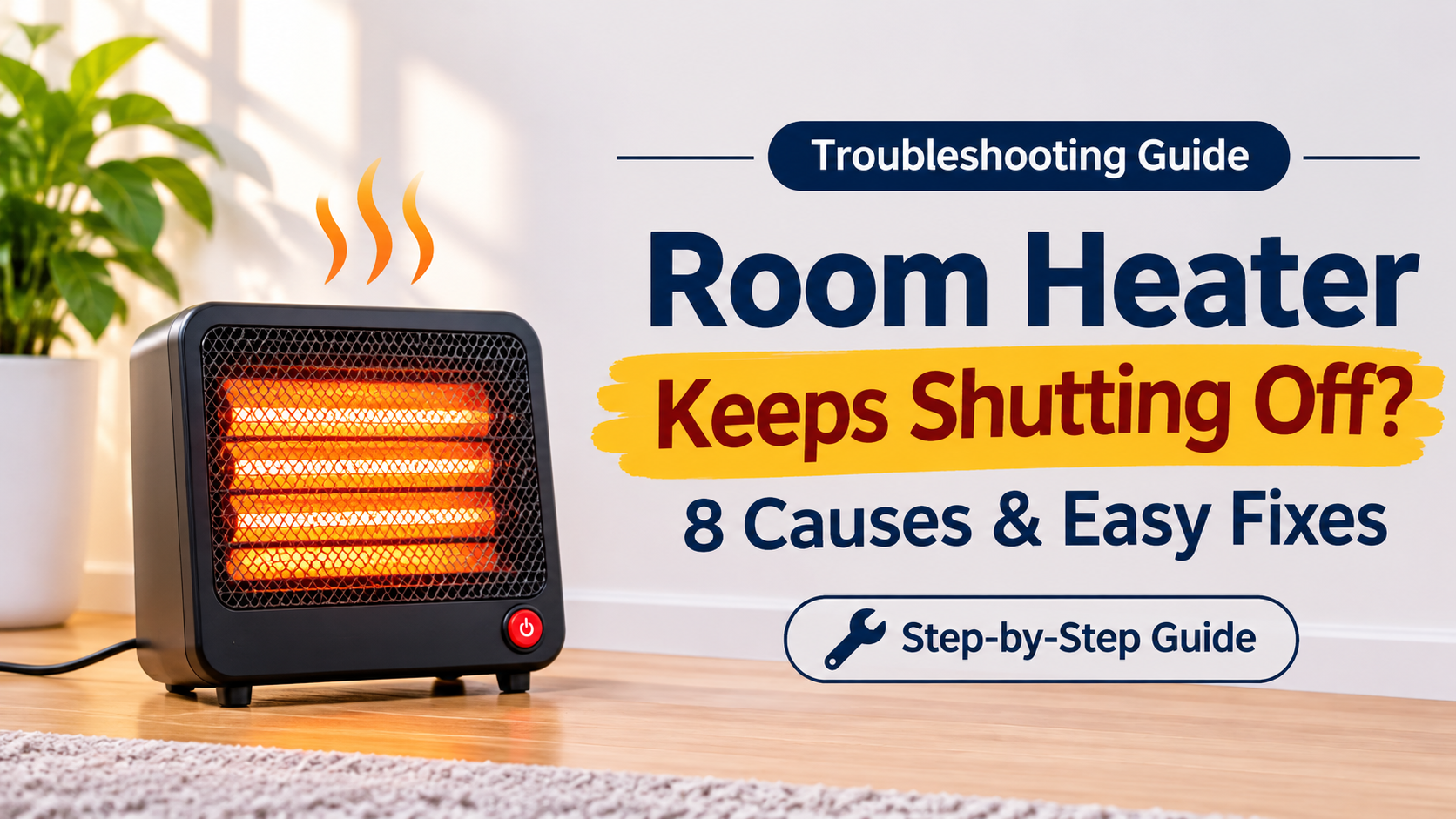

Room Heater Keeps Shutting Off? 8 Causes and Easy Fixes
You switch on your heater, the room starts to warm up, and then it suddenly goes silent. You turn it on again and a few minutes later it shuts off again. A room heater that keeps shutting off is frustrating, but it is also your heater trying to tell you something. In most cases a built-in safety feature or a simple setting is the reason.
In this guide you will learn why heaters turn themselves off, how to tell a normal safety shut-off from a real fault, how to fix the problem step by step, and when it is time to call a technician or replace the heater.
Quick Answer: Why Does My Heater Keep Turning Off?
The most common reasons are overheat protection caused by dust or blocked vents, a triggered tip-over switch, an auto shut-off timer or eco mode, the thermostat reaching its set temperature, a loose plug or bad socket, an overloaded circuit, and a failing fan or thermostat. Start with the easy checks below.

Is It a Safety Feature or a Real Fault?
Heaters are designed to switch off when something is unsafe or when the job is done. A shut-off after a bump, after a timer ends, or when the room reaches the set temperature is normal. Repeated shut-offs within minutes, along with a smell or a hot plug, point to a real fault.

1. Overheat Protection Is Tripping
Every quality heater has an internal thermal cut-off. If the temperature inside rises too much, the heater turns off to prevent damage or fire. This is the number one reason heaters shut off repeatedly.
Common triggers are dust-clogged vents, a covered heater, placing it too close to walls or furniture, or a weak fan that cannot move enough air.
Fix: Unplug the heater, let it cool for 30 to 60 minutes, clean the vents and restart it with at least 3 feet of free space around it.
2. Dust and Blocked Vents
Dust builds up on the grille, filter and fan blades. This reduces airflow and makes the inside heat up faster, which leads to repeated overheat shut-offs, usually after 5 to 20 minutes of running.
- Switch off the heater, unplug it and wait for it to cool completely.
- Remove and clean the filter if your model has one.
- Use a soft brush or vacuum on the intake and outlet grilles.
- Wipe the body with a dry or slightly damp cloth. Never spray liquid inside.

3. Tip-Over Switch Triggered
The tip-over safety switch cuts power when the heater tilts or falls. On carpets, uneven floors or when a heater is slightly leaning, the switch may activate and deactivate repeatedly, making the heater turn off at random.
Fix: Place the heater on a flat, hard surface. Check under the base for dust or debris that may keep the switch from moving freely.
4. Auto Shut-Off Timer or Eco Mode
Many modern heaters include a timer, an auto shut-off feature or an energy-saving mode. If one of these is active, the heater will stop after a set period or when it reaches the target temperature, even if you did not notice you set it.
Fix: Check the display or control panel, cancel the timer, and turn off eco mode. Read the manual for symbols that you do not recognize.
5. Thermostat Reached Its Set Temperature
The thermostat switches the heating element off when the room reaches the set temperature and on again when it cools. This cycling is normal, but if the thermostat is set low or the sensor is near a draft or the heater itself, the heater may switch off too early.
Fix: Raise the thermostat setting and keep the heater away from windows, doors and drafts so it can read the room temperature correctly.
6. Loose Plug or Bad Wall Socket
A loose plug or worn socket interrupts the power for a moment and the heater turns off. It can also cause overheating at the plug, which is dangerous.
- Push the plug in fully and check for a snug fit.
- Look for burn marks, melted plastic or a hot plug.
- Use a direct wall socket and avoid extension cords or multi-plugs.
- Test with another socket on a different circuit.
7. Overloaded Circuit
A room heater uses a lot of power, often 1000 W to 2000 W. If other high-power appliances such as an iron, kettle or air conditioner use the same circuit, the breaker may trip and cut the power.
Fix: Run the heater alone on its circuit. If the breaker trips again, there may be a wiring or breaker problem, and an electrician should check it.
8. Failing Fan Motor or Faulty Thermostat
A weak fan cannot cool the inside of the heater properly, so overheat protection trips again and again. A faulty thermostat can also switch the heater off at the wrong time.
Signs: a slow or noisy fan, a burning smell, a heater that turns off after the same number of minutes each time. These need professional repair or replacement.
Shut-Off Causes by Heater Type
| Heater Type | Common Shut-Off Cause | Quick Fix |
|---|---|---|
| Fan heater | Dust, weak fan, overheat protection | Clean vents, reset |
| Ceramic heater | Blocked airflow, thermostat cycling | Clean grille, raise thermostat |
| Oil-filled radiator | Thermostat, covered surface, overheat cut-off | Keep uncovered, set thermostat higher |
| Halogen / infrared | Tip-over switch, overheating | Level surface, clear space |
Step-by-Step Troubleshooting Checklist
- Note how long the heater runs before it shuts off.
- Check for timer, auto shut-off and eco mode and turn them off.
- Place the heater on a flat, hard surface.
- Unplug it, cool it down and clean vents and filter.
- Plug directly into a wall socket and check the plug.
- Run the heater alone on its circuit.
- If it still shuts off, stop using it and contact a technician or consider replacing it.
When to Stop Using the Heater
Unplug the heater and stop using it if you notice any of the following:
- A burning or melting plastic smell
- Sparks, smoke or visible damage on the cord
- A very hot plug or socket
- Repeated breaker tripping
- Electric shocks or tingling when you touch the heater
Heaters use high current, so safety comes before saving money. Avoid internal repairs unless you are trained.
Repair or Replace?
Repair if the heater is relatively new, under warranty, or the issue is a thermostat, switch or cord on a good-quality model.
Replace if the heater is more than 5 to 7 years old, shuts off even after cleaning, has a failing fan, or the repair costs more than half the price of a new one.
How to Stop Your Heater From Shutting Off Again
- Clean vents and filters every 1 to 2 weeks during the season.
- Keep 3 feet of free space around the heater.
- Never cover it or dry clothes on it.
- Use a heater with the right wattage for your room size.
- Plug into a dedicated wall socket.
- Store it dry and covered after winter.
What to Look for in a New Room Heater
- Right wattage for your room size so it does not overwork.
- Safety features: tip-over switch, overheat protection and cool-touch body.
- Adjustable thermostat and a clear timer display.
- Removable, washable filter for easy cleaning.
- Warranty and local service support.
Frequently Asked Questions (FAQ)
Why does my heater turn off after a few minutes?
The most common cause is overheat protection triggered by dust or blocked airflow. Other causes include a tip-over switch, a timer, or a thermostat that reaches its set temperature quickly.
Is it normal for a heater to turn on and off?
Yes, a heater with a thermostat cycles on and off to keep the room at the set temperature. It is not normal if it shuts off completely within minutes or you smell something burning.
Why does my heater shut off when I move it?
Moving or bumping the heater can trigger the tip-over switch. Place it on a flat surface and restart it.
How long should I wait before turning the heater back on?
If overheat protection tripped, wait 30 to 60 minutes for the heater to cool before restarting.
Can an extension cord make a heater turn off?
Yes. Extension cords can overheat or drop voltage, which may cause shut-offs and is a fire risk. Always use a direct wall socket.
Is a heater that keeps shutting off dangerous?
The shut-off itself is a safety feature, but the reason behind it needs attention. Stop using the heater if you notice burning smells, sparks or a hot plug.
Final Thoughts
A room heater that keeps shutting off is usually protecting itself or reacting to a setting: dust and overheating, a tip-over switch, a timer, or a power problem. Follow the steps in this guide in order, keep your heater clean and give it room to breathe. If it still turns off repeatedly, a professional repair or a new, correctly sized heater is the safest choice.