






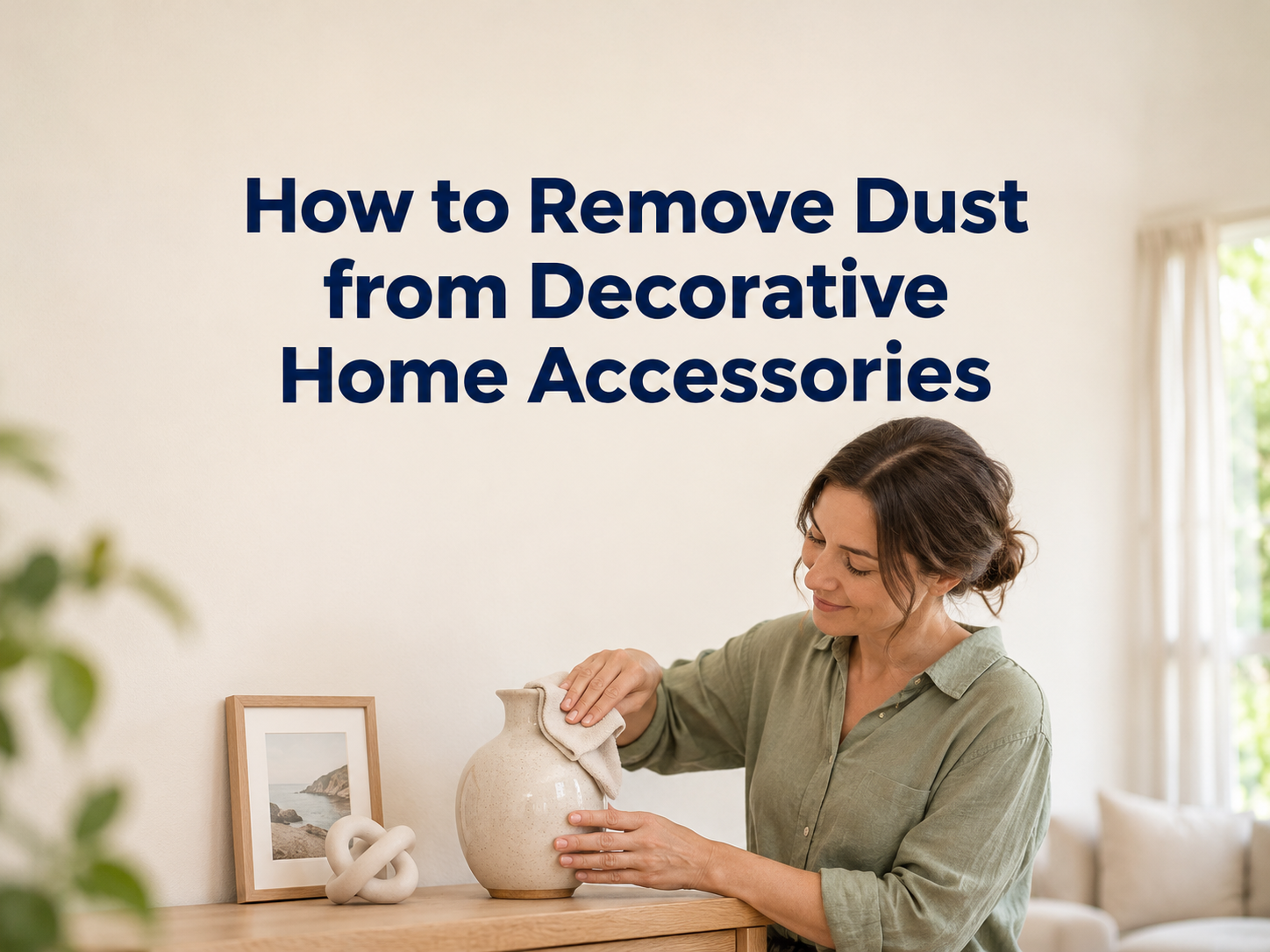
How to Remove Dust from Decorative Home Accessories: A Complete Guide
Decorative accessories make a house feel like a home. Vases, candle holders, picture frames, figurines, baskets and dried flowers add color and personality, but they also collect dust faster than almost anything else in the room. Within a week, a glossy vase can look dull and a carved figurine can look gray.
The tricky part is that decor is often delicate, textured or handmade, so a quick wipe with any cloth is not always safe. In this guide you will learn how to remove dust from decorative home accessories properly: the tools to use, a simple four-step method, the safest approach for each material, and the habits that keep dust from returning so quickly.
Quick answer
Dust decor dry first with a clean microfiber cloth or a soft brush, working from top to bottom and supporting each piece with one hand. Use a lint roller or low-suction vacuum for fabric, a cool hair dryer for dried or faux flowers, and a damp cloth with mild soap only for sturdy, sealed items. Dry everything completely before putting it back.
What you will learn
- Why decorative items collect so much dust
- The best tools for dusting delicate decor
- A safe four-step method you can use on almost anything
- What to do for ceramic, glass, wood, metal, fabric and flowers
- Mistakes that scratch, stain or damage decor
- A simple routine that keeps dust under control
Why Decorative Items Collect So Much Dust
Household dust is a mix of tiny fabric fibers, pollen, pet dander, skin flakes and soil carried in from outdoors. It settles on every surface, but decorative accessories are especially vulnerable for a few reasons:
- They sit still. Decor stays in the same spot for months, so dust has time to build up in layers.
- Texture traps dust. Carvings, glazes with a rough finish, woven baskets and fabric lampshades hold dust far better than smooth surfaces.
- Static attracts particles. Plastic, resin and glass pick up static charge, which pulls fine dust toward them.
- Shelves and surfaces sit in the airflow. Items near vents, windows or doors get more particles.
Regular dusting is not only about looks. For people with allergies or asthma, dust can trigger sneezing, itchy eyes and congestion, so keeping decor clean also helps keep indoor air more comfortable.
Gather the Right Tools Before You Start
The right tool does most of the work. Having a small dusting kit ready means you are far more likely to dust regularly, and far less likely to damage anything.
Microfiber Cloths
- Choose soft, lint-free, edgeless cloths so they do not scratch glass or glazed finishes
- Keep a separate stack just for dry dusting and another for damp cleaning
- Wash them without fabric softener, which clogs the fibers and reduces dust pickup
Soft Detail Brushes
- A clean makeup brush, a soft paintbrush or a purpose-made detail brush all work well
- Pick natural or very soft synthetic bristles that will not scratch
- Use them for carvings, filigree, textured glazes and dried flowers
Air Blowers and Compressed Air
- A hand-squeezed bulb blower is the gentlest way to lift dust from fragile pieces
- Canned air is stronger, so use short bursts, keep the can upright and hold it 6 to 8 inches (15 to 20 cm) away
Lint Rollers and Mini Vacuums
- A lint roller is ideal for lampshades, cushions and fabric-covered decor
- A handheld vacuum with a soft brush attachment and low suction handles baskets, rattan and textured items
- A HEPA filter keeps captured dust from blowing back into the room
Mild Soap and a Spray Bottle
- For stuck-on grime, mix a few drops of mild dish soap into a bowl of lukewarm water
- Spray or wring the cloth first; never spray liquid directly onto decor
The Golden Rules of Dusting Decor Safely
- Dry before wet. Wiping dust with a damp cloth smears it into a film that is harder to remove.
- Work top to bottom. Dust falls, so clean high shelves first and the lowest surfaces last.
- Support the piece. Hold the base of every item with one hand so you do not stress handles, necks or glued joints.
- Lift, do not drag. Pull items off a surface instead of sliding them, which scratches both the item and the shelf.
- Check for damage first. Look for cracks, chips, loose paint or old repairs. If anything looks weak, use only a soft brush.
- Test before you use liquids. Try soap and water on a small hidden area, and wait for it to dry.
- Dry completely. Moisture trapped in crevices or under a base can cause stains, mildew or warping.
A Simple 4-Step Method for Removing Dust from Decor
You can use this routine on almost any decorative accessory. Adjust the tool depending on the material, which we cover in the next section.
Step 1: Clear and Group Your Items
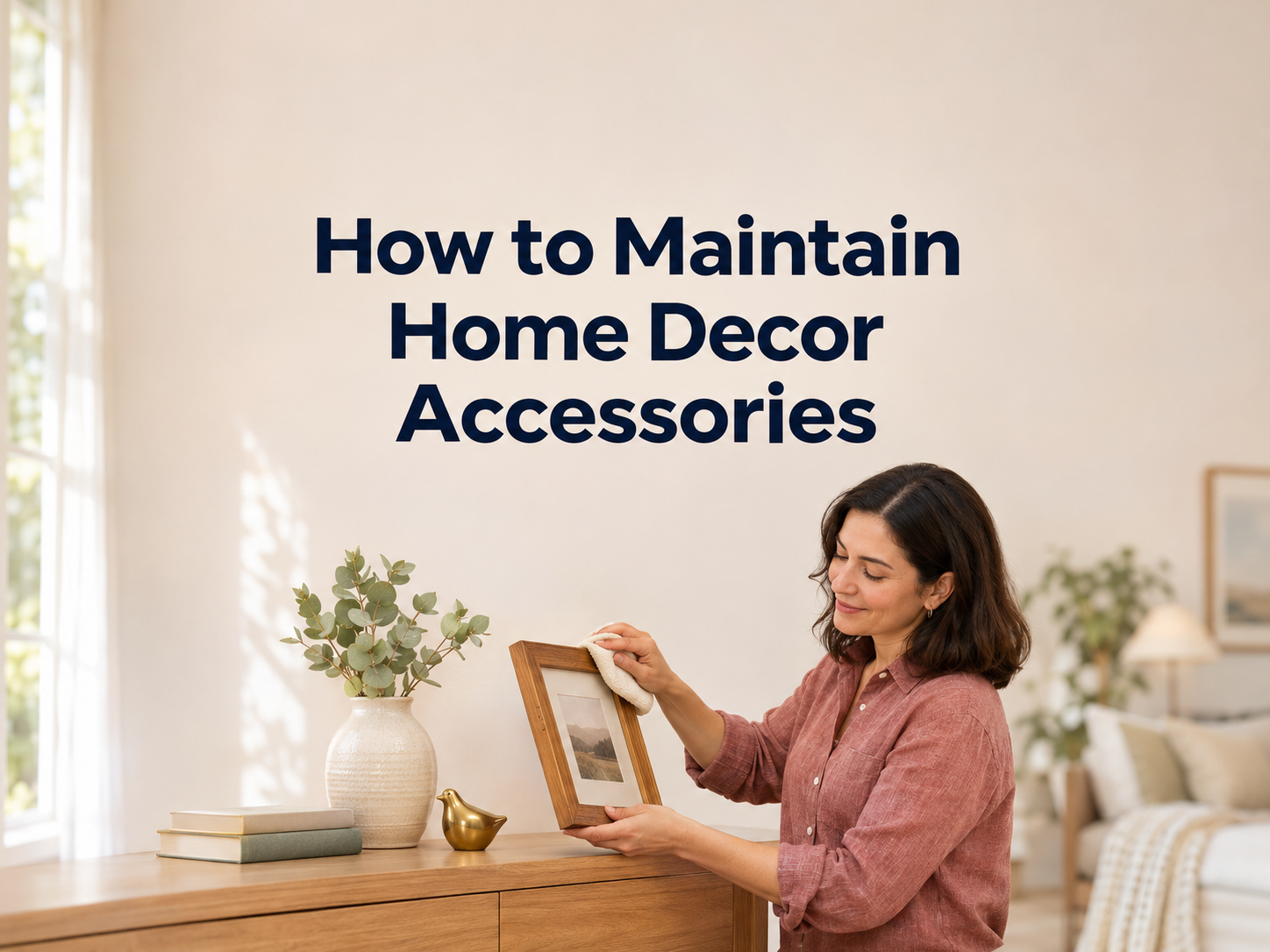
Lay a soft towel on a table and move the items from one shelf onto it. This protects fragile pieces, gives you easy access to the shelf, and lets you inspect each item for cracks or loose parts.
Step 2: Dry Dust First
Use a microfiber cloth or soft brush to lift loose dust. Wipe in gentle, single-direction strokes rather than scrubbing back and forth. For carvings and deep grooves, use a brush and sweep dust out of the crevice rather than pushing it in. Fold the cloth to a clean section as you go.
Step 3: Damp Clean Only If the Piece Is Safe
For sturdy glazed ceramic, sealed resin, glass and metal with a protective coating, lightly dampen a clean cloth with a tiny amount of soap and water, wring it until it is nearly dry, and wipe gently. Never soak decor, and never use damp cloths on unsealed wood, paper, plaster, antique finishes, gilded surfaces or anything with old glue.
Step 4: Dry, Buff and Return
Finish with a dry microfiber cloth to remove moisture and add shine. Dust the shelf, wipe it down, and only then place the items back. Dust the shelf first and decor second, and you will have to repeat it.
How to Dust Different Types of Decorative Accessories
Every material reacts differently to cleaning. Use this chart as a quick reference, then read the details below for the pieces in your home.
Ceramic and Porcelain
Glazed ceramic is durable, but the unglazed base and any painted details can be fragile. Brush off loose dust, then wipe with a barely damp cloth. Dry thoroughly, especially inside vases. For antique porcelain, stay with a soft brush only.
Glass and Crystal
Dust shows clearly on glass, so use a clean, dry microfiber cloth first. If fingerprints remain, apply a little diluted soap on the cloth, not the glass, and buff dry. Avoid hot water on thin glass, which can crack from sudden temperature changes.
Wood Decor
Dry wood decor with a soft cloth, following the direction of the grain. Skip sprays, which can leave residue or damage the finish. For unfinished or carved wood, use a soft brush to lift dust from the details.
Metal and Brass
Dust with a dry microfiber cloth and buff gently. Moisture can dull antique brass or cause tarnish, so keep it dry unless the item has a protective lacquer and you know it is safe. Do not use abrasive pads or harsh polishes on decorative metal.
Resin Figurines and Plastic Decor
These items attract static, so dust comes back quickly. Wipe with a slightly damp microfiber cloth, then dry. A small amount of diluted soap works for dirty spots. Avoid strong cleaners that can cloud or soften resin.
Fabric Decor, Cushions and Lampshades
Run a lint roller over the surface in one direction, or use a vacuum brush attachment on the lowest suction setting, holding it slightly above the fabric. For pleated lampshades, brush between the pleats with a soft brush. Make sure the lamp is unplugged and cool before you start.
Dried Flowers, Faux Flowers and Pampas Grass
Use a hair dryer on the cool, low setting from about 12 inches (30 cm) away, or sweep each stem with a soft brush. For sturdy faux flowers, place them in a large paper bag, add a handful of coarse salt, and shake gently. Keep dried arrangements away from moisture, which can cause mold and fading.
Picture Frames, Mirrors and Wall Art
Dust the frame with a microfiber cloth or soft brush. Wipe glass with a lightly dampened cloth, never spraying cleaner directly onto it, since liquid can seep behind the frame. For unframed canvas art, use only a soft dry brush.
Candles and Candle Holders
Wipe the wax surface gently with a clean, dry microfiber cloth. Clean glass holders as you would any glass item. Storing candles with their lids on keeps dust off the wax and preserves the scent.
Baskets, Rattan and Woven Decor
Vacuum with a soft brush attachment, then use a toothbrush or small brush to remove dust from the weave. Wipe with a slightly damp cloth if the material is sealed, and let it dry fully before returning it.
Books and Paper Decor
Close the book and wipe the covers and edges with a dry cloth. Use a soft brush along the top edge of the pages. Never use water on paper or cloth-bound book covers.
Common Dusting Mistakes to Avoid
- Using a dirty cloth. A cloth loaded with dust just moves it elsewhere. Shake it out outdoors and wash it often.
- Spraying cleaner on decor. Sprays can stain, leave residue and seep into cracks. Spray the cloth instead, or skip it altogether.
- Using feather dusters on delicate pieces. They can scatter dust and snag on rough surfaces.
- Scrubbing hard. Pressure can scratch glazes and rub away paint. Light strokes are enough.
- Using too much suction. A strong vacuum can pull off loose beads, fringe and dried petals.
- Skipping the shelf. If you dust the items but leave the shelf dusty, the cycle restarts immediately.
- Dusting in direct sunlight. Warm surfaces dry cleaners quickly and can leave streaks.
How to Keep Decor Dust-Free for Longer
Even the best cleaning method needs support from good habits. These changes reduce the amount of dust that reaches your decor in the first place.
Control Dust at the Source
- Put doormats inside and outside every entrance and take shoes off at the door
- Wash throws, cushion covers and curtains regularly
- Vacuum with a sealed-system or HEPA vacuum so fine particles stay inside
- Brush pets often and wipe their bedding spaces to reduce dander
Improve Your Indoor Air
- Replace HVAC and furnace filters every one to three months, depending on your home and pets
- Run an air purifier with a true HEPA filter in rooms where you spend the most time
- Keep indoor humidity between about 30 and 50 percent, because very dry air increases static while damp air encourages dust mites and mold
Protect the Pieces You Value Most
- Display fragile or collectible items in closed glass cabinets or under glass domes
- Use covered containers for candles and small keepsakes
- Rotate decor seasonally, which gives you a natural moment to clean each piece
- Choose fewer, larger statement pieces instead of many tiny ones, because there are fewer surfaces to dust
Smart Products That Make Dusting Easier
You do not need many products to keep decor clean. When you shop, these are the features that matter most.
Extendable Microfiber Dusters
- Washable heads that can be reused many times
- A telescoping handle for high shelves and tall items
- A flexible head that bends into gaps
Detail Brush Sets
- Several sizes for both large vases and small crevices
- Soft bristles that do not shed
- Comfortable handles for precise control
Handheld Vacuums with HEPA Filters
- Adjustable suction for delicate surfaces
- A soft brush attachment
- A washable filter to reduce ongoing costs
Display Cases and Glass Domes
- Clear, scratch-resistant material
- A tight-fitting lid or base to keep dust out
- Sizes that suit your most valued pieces
Air Purifiers and Hygrometers
- True HEPA filtration and a room size rating that matches your space
- Quiet operation for living rooms and bedrooms
- A simple hygrometer to check humidity levels at a glance
Frequently Asked Questions
What is the best way to remove dust from decorative items?
Start dry. A clean, dry microfiber cloth or a soft brush lifts dust without pushing it into surfaces. Work from the top down, support each item with one hand, and only use a damp cloth with a drop of mild soap on sturdy, sealed pieces after the loose dust is gone.
Is a feather duster good for decorative accessories?
Traditional feather dusters tend to flick dust back into the air, where it settles again. For delicate decor, a microfiber duster or a soft brush gives better results because the fibers trap dust instead of scattering it.
How do I clean dust from fake or dried flowers?
Use a hair dryer on the cool, low setting from a safe distance, or brush each petal gently with a soft makeup or paint brush. Avoid damp cloths, which can bend petals and cause color bleeding. For sturdy faux flowers, you can shake them inside a large paper bag.
How often should I dust decorative items?
A quick wipe every few days for high-touch pieces and a full dry dusting once a week is enough for most homes. Homes with pets, open windows, or heavy foot traffic may need more frequent dusting.
Can I use compressed air on delicate decor?
Yes, but carefully. Hold the can upright, use short bursts from 6 to 8 inches (15 to 20 cm) away, and keep a hand on the item. Skip it for pieces with loose parts, old glue, or flaking paint. A hand-squeezed air blower is a gentler option.
What is the best way to dust items with lots of crevices?
Use a soft detail brush, a clean makeup brush, or a small paintbrush to sweep dust out of grooves. Follow with a handheld vacuum on low suction with a brush attachment held just above the surface.
How do I stop dust from coming back so fast?
Reduce the dust sources. Use doormats, take shoes off at the door, wash throws and curtains regularly, change HVAC filters on schedule, keep humidity in a moderate range, and place your most delicate pieces in closed cabinets or under glass domes.
Final Thoughts
Removing dust from decorative home accessories does not require special products or a lot of time. It requires a gentle, dry-first approach, the right tool for each material, and a short routine you can repeat. Use a microfiber cloth for smooth pieces, a soft brush for details, a lint roller for fabric and a cool hair dryer for flowers, and your decor will look fresh without being damaged.
Start with one shelf today, build a small dusting kit, and add a few of the prevention habits above. A few minutes of regular care keeps every piece in your home looking exactly the way you chose it.