






How to Prevent Furniture From Scratching Hardwood Floors: Complete Guide
Hardwood floors add warmth, value, and beauty to any home, but they are surprisingly easy to scratch. A dragged chair, a moved sofa, or even the daily shuffle of a dining table can leave marks that dull the finish and are expensive to repair. The good news is that almost all furniture scratches are preventable with a few simple products and habits.
In this complete guide, you will learn why furniture scratches hardwood, which protective products work best for each type of furniture, how to move heavy pieces safely, and which daily habits keep your floors looking flawless.
Why Does Furniture Scratch Hardwood Floors?
Hardwood has a protective finish on top, usually polyurethane or a similar coating. Scratches happen when something harder or rougher than that finish is pressed or dragged across it. The most common causes are:
- Bare furniture legs: wood, metal, and plastic legs rubbing directly on the floor.
- Grit trapped under furniture: tiny sand and dirt particles act like sandpaper every time furniture moves.
- Dragging and sliding: pulling furniture instead of lifting it.
- Worn-out or missing pads: old felt pads that are flat, dirty, or have fallen off.
- Heavy loads on small contact points: narrow legs concentrate weight and can leave dents.
- Chairs that move often: dining chairs and office chairs are the biggest scratch offenders.
- Wheels and casters: hard plastic casters can gouge and leave marks.
1. Use Felt Furniture Pads
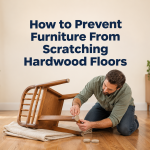
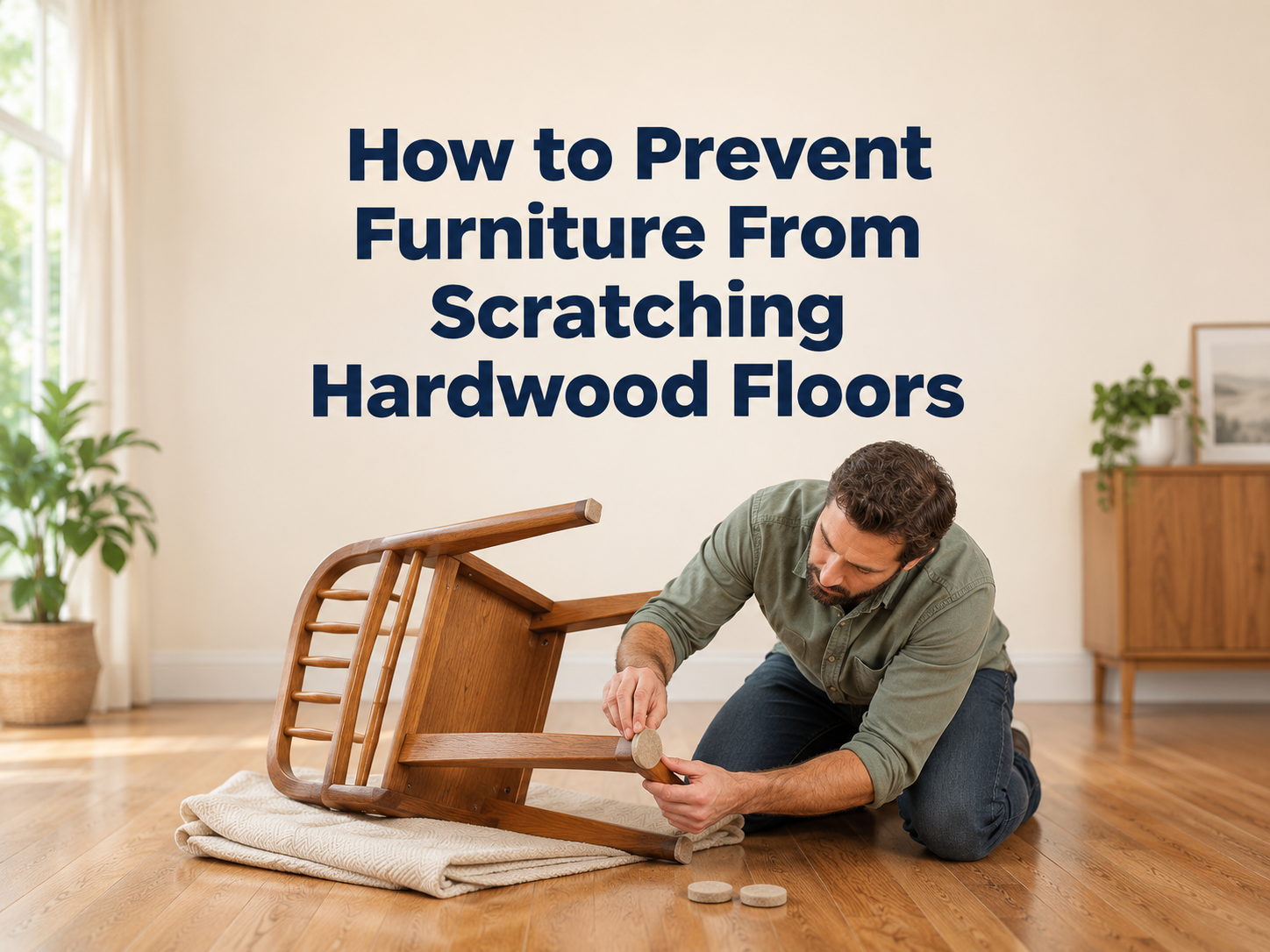
Felt pads are the most effective and affordable protection. They cushion the contact point and let furniture glide without grinding on the finish.
- Choose thick, quality felt: thin felt wears out quickly. Look for pads at least a quarter inch thick for heavy furniture.
- Pick the right shape and size: round pads for round legs, square for square legs, and large pads for wide feet.
- Use self-adhesive or nail-on pads: adhesive pads suit lighter items. Nail-on or screw-on pads hold better under heavy furniture and frequently moved chairs.
- Clean the leg before applying: dust and oil stop adhesive from sticking.
- Check and replace regularly: inspect pads every few months and replace them when they are worn, flattened, or dirty.
2. Use Furniture Cups, Sliders, and Rubber Pads Where Needed
- Furniture cups or coasters: spread weight under heavy items like beds, sofas, and cabinets, preventing dents and gouges. Choose cups with a felt or soft bottom.
- Furniture sliders: placed under legs temporarily to move heavy pieces without scratching.
- Rubber or silicone pads: useful for items that should not slip, such as tables and cabinets that stay in place.
- Soft caster wheels: replace hard plastic wheels on office chairs with soft rubber or polyurethane wheels designed for hardwood.
3. Place Area Rugs Under Furniture
Rugs protect floors under dining tables, sofas, and desk chairs, where furniture moves most. Choose the right one:
- Make the rug large enough that all furniture legs sit on it, or at least the front legs of seating.
- Use a quality rug pad with a non-staining, hardwood-safe backing. Cheap rubber backings can discolor finishes.
- Lift and clean under rugs regularly, since trapped dirt can scratch the floor.
4. Lift, Do Not Drag
Dragging furniture is the quickest way to scratch a floor, even with pads attached. Follow these moving rules:
- Empty the furniture first: remove drawers and contents to make it lighter.
- Get help for heavy items: two people can lift instead of drag.
- Lift slightly off the floor: carry rather than slide.
- Use sliders or moving blankets: place heavy-duty sliders under legs or slide the piece on a thick blanket.
- Use a furniture dolly: for appliances and very heavy items, with soft wheels.
- Clear the path: remove debris and grit from the route before moving anything.
5. Keep Floors and Furniture Clean
Grit is a hidden cause of scratches. Sand, dirt, and small stones get trapped between furniture and the floor, and every movement grinds them into the finish.
- Sweep or vacuum hardwood floors regularly with a soft brush head, not a beater bar.
- Wipe the bottoms of furniture legs and pads occasionally.
- Place doormats at every entrance and ask people to remove shoes.
- Dust-mop under furniture where grit tends to collect.
6. Choose Furniture Wisely
- Look for furniture with built-in felt or rubber feet.
- Choose wider, flat feet over narrow, pointed legs, which concentrate weight.
- Prefer soft-wheeled casters on rolling furniture.
- Be careful with metal feet, glides, or exposed screws, which easily scratch.
7. Rearrange Smartly
- Plan the layout before moving heavy items, to avoid repeated dragging.
- Rotate pieces occasionally so wear and sun exposure are spread evenly.
- Avoid frequent rearranging of heavy pieces. Each move increases the risk.
8. Protect High-Traffic Furniture Zones
- Dining area: use a rug under the table and thick pads on every chair leg, and replace them often.
- Home office: use a chair mat designed for hardwood, plus soft casters.
- Bedroom: use furniture cups under bed frames and dressers.
- Living room: use pads on sofa legs and a rug beneath the seating area.
- Kids’ rooms: use soft pads on toy boxes, desks, and chairs, and add play rugs.
Common Mistakes to Avoid
- Using thin or low-quality felt pads that wear out quickly.
- Forgetting to replace old, dirty pads.
- Using adhesive pads on heavy chairs that move often.
- Dragging furniture because it is “just a short distance.”
- Putting rubber-backed mats on hardwood without checking they are finish-safe.
- Ignoring grit trapped under furniture and rugs.
- Using hard plastic casters on hardwood.
What to Do If Your Floor Already Has Scratches
- Light surface scratches: clean the area and use a hardwood floor polish or a touch-up marker that matches your floor color.
- Medium scratches: use a wax filler stick or putty in a matching shade, wipe off the excess, and buff gently.
- Deep scratches or gouges: may need wood filler, sanding, and refinishing, which is best done by a professional.
- Prevent repeat damage: once the repair is done, add the protective pads and rugs listed above.
Frequently Asked Questions
What is the best way to protect hardwood floors from furniture?
Combine thick felt pads on every leg, rugs in high-traffic areas, and the habit of lifting instead of dragging. Together these three steps prevent most scratches.
How often should I replace felt furniture pads?
Check them every three to six months and replace them as soon as they look worn, flat, or dirty. Chairs that move daily may need new pads more often.
Do rubber furniture pads damage hardwood floors?
Some low-quality rubber can stain or discolor floor finishes over time. Choose pads labeled safe for hardwood, and avoid leaving cheap rubber in contact with the floor for years.
How can I move heavy furniture without scratching the floor?
Empty it first, sweep the path, use furniture sliders or thick blankets under the legs, and lift with a helper. For very heavy items, use a dolly with soft wheels.
Do felt pads stay on dining chairs?
Adhesive-only pads often fall off chairs that are moved constantly. Nail-on or screw-on felt pads hold much better and last longer.
Final Thoughts
Learning how to prevent furniture from scratching hardwood floors takes only a little time and a small investment. Use thick felt pads, add rugs where furniture moves most, lift instead of drag, keep grit off the floor, and replace worn protection regularly. With these habits, your hardwood floors will stay smooth, glossy, and beautiful for many years.