








How to Fix Uneven Sofa Cushions: Causes, Easy Repairs & Prevention
A sofa that once looked plush and perfect can slowly turn lumpy, saggy, and lopsided. One seat sinks lower than the others, the back cushions slump forward, and the whole couch looks tired and uncomfortable. It is one of the most common furniture complaints, and the good news is that most uneven sofa cushions can be fixed at home without buying a new sofa.
This guide explains why sofa cushions become uneven, how to find out whether the problem is the cushion or the sofa frame, and how to fix each cause step by step. You will also learn how to prevent the problem from returning.
Why Do Sofa Cushions Become Uneven?
Uneven cushions are usually caused by a combination of daily use and the materials inside. The most common reasons are:
- Foam compression: foam slowly breaks down and loses its ability to bounce back, especially in the seats people use most.
- Uneven use: if one person always sits in the same spot, that cushion wears faster than the rest.
- Shifting or clumped filling: polyester fiber, feather, and down fills move around and bunch up over time.
- Low-quality or low-density foam: cheaper foam flattens sooner than high-density foam.
- Weak support underneath: stretched webbing, loose springs, or a sagging base makes cushions sink no matter how good they are.
- Wrong cover fit: a cover that is too loose or too tight causes wrinkles, bulges, and a lumpy appearance.
- Moisture and age: humidity and age cause foam and fiber to degrade faster.
- Heavy use or sitting on edges: perching on the front edge and sitting with legs tucked wears specific areas.
Step 1: Find Out What Is Actually Wrong
Before fixing anything, work out whether the cushion or the sofa base is the problem.
- Remove the cushions: take them off the sofa and place them on a flat surface.
- Check the cushion on its own: press it. If it feels flat, lumpy, or does not bounce back, the cushion is the issue.
- Check the sofa base: press down on the empty seat deck. If it sags, creaks, or feels loose, the support system is the issue.
- Compare cushions: swap two cushions. If the unevenness moves with the cushion, it is the cushion. If it stays in the same seat position, it is the base.
- Inspect the cover: check for stretched fabric, a loose zipper, or a cover that is the wrong size.
Fix 1: Fluff, Rotate, and Flip Your Cushions
This is the simplest fix and should be your first step. It works for loose-fill cushions and cushions that have only mild wear.
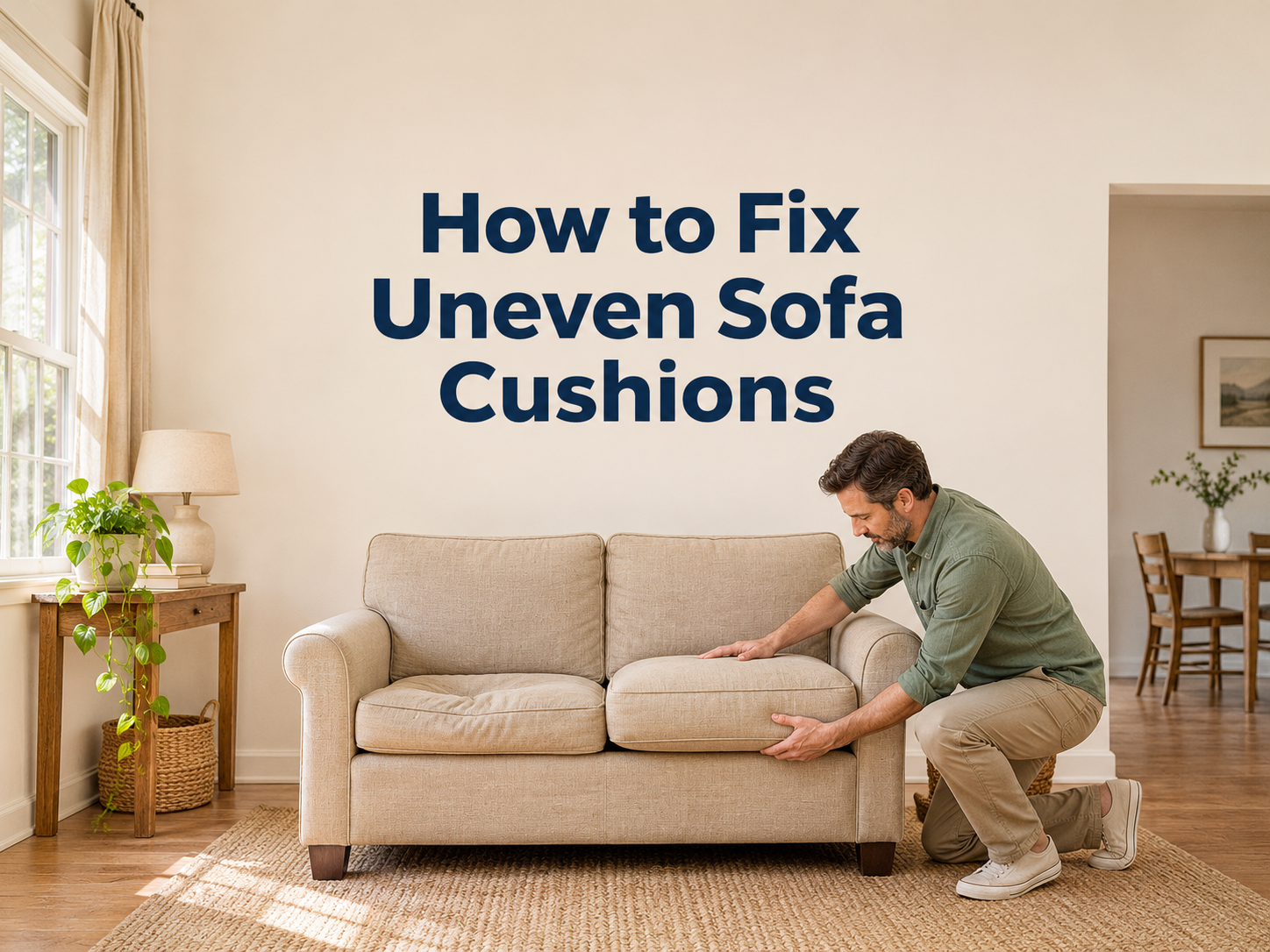
- Fluff: pick the cushion up and shake it, then punch and squeeze it from the corners to redistribute the filling.
- Rotate: turn the cushion front to back or end to end.
- Flip: turn it over if the cushion is reversible and not attached to the cover with a fixed top side.
- Swap positions: move cushions from heavily used seats to less used ones.
Do this once a week or at least once a month to keep wear even.
Fix 2: Add Batting or Polyester Fill to Flat Cushions
If the cushion is slightly flat or the corners look hollow, adding a wrap or extra fill can bring back shape.
- Open the cover zipper and remove the insert.
- Wrap the foam insert in a layer of polyester batting (often sold as Dacron wrap), pulling it evenly across the top, bottom, and sides.
- Secure the batting with spray adhesive designed for foam, or loosely with fabric tape, so it does not shift.
- Slide the insert back into the cover, working carefully into the corners.
- Fluff and straighten the cover to remove wrinkles.
For loose polyester fiber fill, add small handfuls through the zipper, spread them evenly, and avoid overstuffing, which can create hard lumps.
Fix 3: Replace the Foam Insert
If the foam is crumbling, permanently sunken, or breaks apart when pressed, replacing it is the most reliable long-term fix.
- Measure the old insert: note length, width, and thickness. Add about half an inch to one inch to width and length for a snug, plump fit.
- Choose the right foam: high-density foam is firmer and lasts longer for seat cushions. Medium-density suits back cushions and lighter use.
- Cut the foam: mark the shape with a marker and cut with an electric carving knife or a long serrated blade for clean edges, or ask the foam supplier to cut it to size.
- Wrap it: cover the foam with batting for smooth edges and a rounded, crown-shaped top.
- Insert it into the cover: fold the foam slightly, or use a plastic bag to slide it in easily, then straighten the cover.
Fix 4: Fix a Sagging Sofa Base
If the seat deck is the problem, even brand-new cushions will end up uneven. Check what kind of support your sofa has.
Sagging Webbing or Springs
- Inspect the underside by turning the sofa on its side or removing the dust cover.
- Look for stretched, torn, or detached webbing and bent or popped springs.
- Replace worn webbing, or re-attach loose springs using sturdy upholstery fixings. If you are not comfortable doing this, a professional upholsterer can repair it quickly.
Quick Support Fix With a Plywood Board
- Measure the width and depth of each seat deck.
- Cut a piece of plywood about a quarter to half an inch thick to fit the seat area.
- Smooth the edges with sandpaper and wrap the board in fabric or batting so it will not scratch the cushion.
- Place the board on the seat deck, under the cushion.
This gives the cushion a firm, flat foundation and instantly reduces sinking in the middle. It works best for seats with only mild sagging.
Fix 5: Correct a Cover That Is Too Loose or Too Tight
- Too loose: the cover wrinkles and bunches. Add a layer of batting, or have a tailor or upholsterer take in the seams.
- Too tight: the cover strains and puffs in the middle. Check whether the insert is too big and trim a little foam, or loosen the stuffing.
- Misaligned zipper or seams: reposition the insert so seams run straight along the edges, and smooth the fabric into the corners.
Fix 6: Re-Fluff Feather and Down Cushions
Feather and down cushions need regular fluffing. Shake them vigorously, pat them back into shape, and spread the filling toward the corners. If the cushion has separated into a thin layer of feather and lots of empty fabric, adding a bit of fresh down or feather fill through the zipper can restore plumpness.
Prevention: How to Keep Sofa Cushions Even
- Rotate and flip cushions every week or two.
- Swap cushion positions regularly, especially seats that are used most.
- Do not sit on the front edge or on the armrests, which stresses the seams and edges.
- Choose high-density foam when replacing inserts.
- Keep the sofa away from damp areas and strong direct sunlight.
- Vacuum under and between cushions to prevent dirt from wearing the foam and fabric.
- Fix a sagging base early before it ruins good cushions.
When Should You Replace the Cushions or the Sofa?
Replace the foam if it is crumbling, has permanent dents that do not recover after a few hours, or feels hard in some spots and empty in others. Consider replacing the sofa if the frame is cracked or wobbly, the springs and webbing are badly damaged in many places, or the cost of repairs approaches the price of a new piece.
Frequently Asked Questions
Why are my sofa cushions uneven even though the sofa is fairly new?
Low-density foam, a poor-fitting cover, or heavy use of one seat can cause early wear. Rotating and fluffing from the start slows the problem down.
How do I fix a sofa cushion that has sunk in the middle?
Fluff or rewrap it with batting if the foam is still firm. If the foam is permanently compressed, replace the insert. If the seat deck is sagging, add a plywood board or repair the base.
Can I fix sofa cushions without taking them apart?
Fluffing, rotating, flipping, and swapping cushions need no tools. Adding batting, fill, or new foam requires opening the cover.
How often should I rotate my sofa cushions?
Every one to two weeks is ideal, or at least once a month. Heavily used seats benefit from more frequent rotation.
Is it worth replacing sofa cushion foam?
Yes, in most cases. New high-density foam is usually much cheaper than a new sofa and can restore comfort and appearance for years.
Final Thoughts
Learning how to fix uneven sofa cushions begins with finding the cause. Fluff, rotate, and swap cushions first, add batting or fill if they are slightly flat, replace the foam if it is worn out, and repair or support the sofa base if the seat itself is sagging. With a little effort and the right repair, your sofa can look smooth, plump, and comfortable again.