







A fabric lamp shade does a lot of quiet work. It softens harsh bulb light, adds color to a room and pulls a space together. It also collects dust, kitchen grease, pet hair and cigarette or candle smoke without anyone noticing. One day the glow looks yellow and dull, and you realize the shade has not been cleaned in years.
The good news is that most fabric lamp shades can be cleaned at home with simple supplies. The catch is that the right method depends on how your shade is built and what it is made of. A method that works beautifully on a sewn cotton shade can ruin a glued linen one. This guide walks you through every step, from identifying your shade to drying it safely, so you can refresh it without damage.
Quick Answer: How Do You Clean a Fabric Lamp Shade?
Unplug the lamp and let the bulb cool. Remove dust with a lint roller, soft brush or vacuum brush attachment. Test a hidden spot for colorfastness. Then clean with a damp microfiber cloth and mild soapy water, or, if the fabric is sewn and removable, hand wash it briefly in lukewarm water. Air dry the shade flat or upright, away from heat and direct sun.

Before You Start: Identify Your Lamp Shade Type
This is the step most people skip, and it causes most of the damage. Look closely at how the shade is made before you pick a cleaning method.
- Sewn fabric shade: The fabric is stitched around the frame, often over a thin liner. These shades are the most forgiving and many can be washed by hand.
- Glued fabric shade: The fabric is bonded to a stiff plastic or paper liner. Water can dissolve the adhesive, cause bubbling and leave watermarks, so these should only be spot cleaned.
- Pleated shade: Pleats hold dust in every fold. They can be vacuumed and spot cleaned, but soaking can flatten the pleats.
- Silk, velvet or delicate fabric shade: These fabrics show water rings and lose their sheen easily. Dust gently and use a professional cleaner for stains.
- Metal frame shade: If the frame is bare steel, long soaking can cause rust spots that bleed onto the fabric.
If you are not sure, treat the shade as glued and delicate. Dry methods first, then the lightest damp cleaning. You can always escalate, but you can never undo a ruined shade.
Cleaning Method at a Glance
| Shade Type | Best Method | Avoid |
|---|---|---|
| Sewn cotton or linen | Dry dusting, then hand wash if removable | Hot water, wringing |
| Glued fabric | Lint roller and lightly damp cloth | Soaking |
| Pleated | Soft brush or vacuum, spot clean | Scrubbing across pleats |
| Silk or velvet | Gentle dusting, professional cleaning | Water and rubbing |
What You Will Need
- A lint roller (the sticky kind works well on pet hair and fine dust)
- A soft-bristled brush, such as a clean makeup brush or a soft paintbrush
- A vacuum with a soft brush attachment
- Two or three clean microfiber cloths
- A mild, dye-free liquid detergent or gentle dish soap
- A basin or clean sink for lukewarm water
- A clean white towel
- Cotton swabs for tight corners (optional)
Step-by-Step: How to Clean a Fabric Lamp Shade
Step 1: Unplug the Lamp and Remove the Shade
Always switch off and unplug the lamp, and make sure the bulb has fully cooled. Lift the shade off the harp or fitter if it comes off easily. Cleaning it away from the lamp keeps water and cleaning products away from the electrical parts and the cord. If the shade is attached permanently, leave it in place and clean it carefully, keeping everything dry around the socket.
Step 2: Remove Dry Dust First
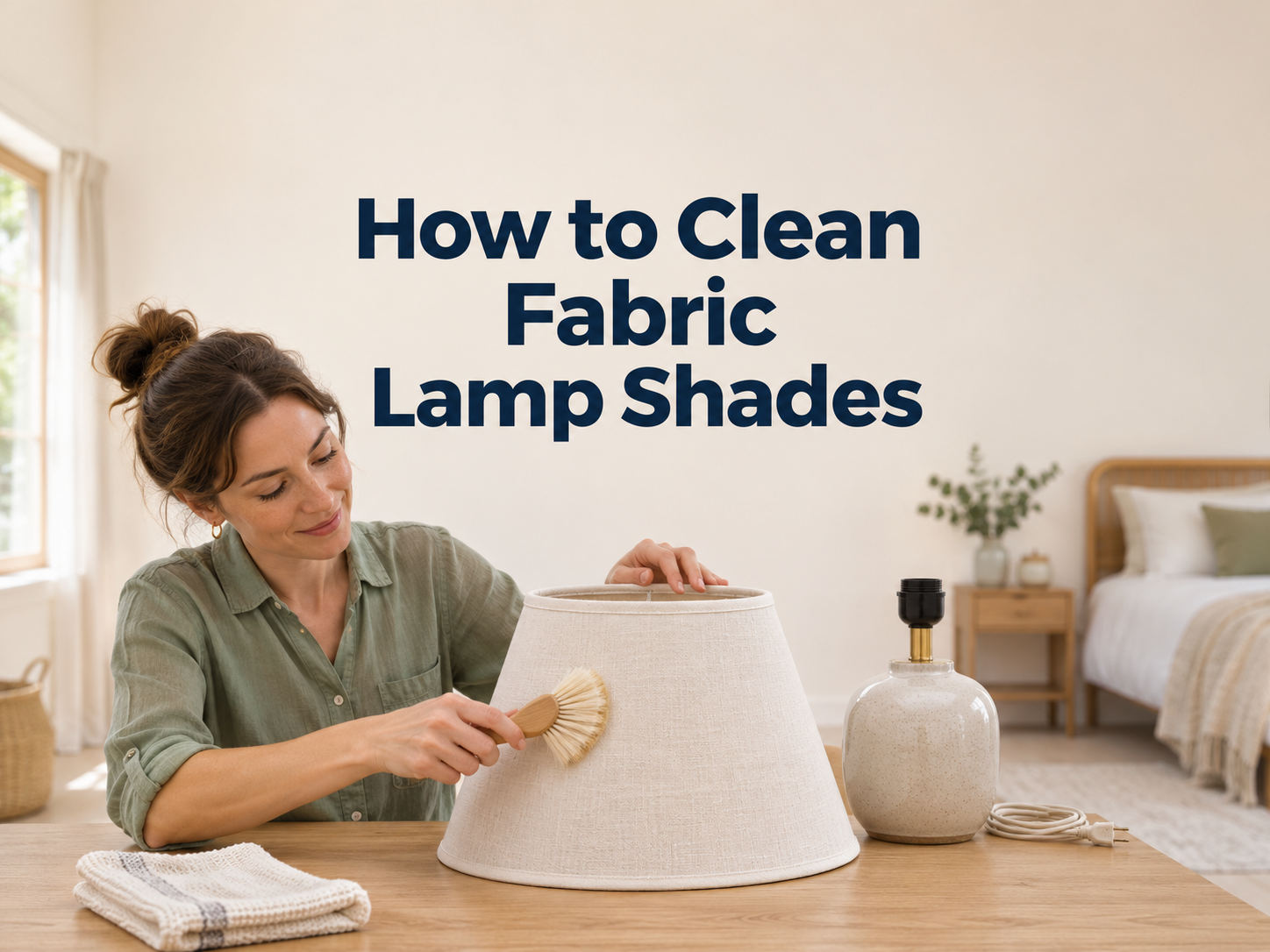
Dry dust turns into muddy streaks the moment it meets water, so always remove it first. Start at the top and work down in light, even strokes. A few options work well:
- Lint roller: Roll gently over the outside and inside of the shade. It lifts pet hair, lint and surface dust in seconds.
- Soft brush: Sweep the dust away from the fabric using short, light strokes. This is ideal for pleats and decorative trim.
- Vacuum brush attachment: Set the suction to low and hold the brush just above the fabric rather than pressing hard. Too much suction can stretch or pucker loose fabric.
Do not forget the inside of the shade and the top and bottom rims, where dust and dead insects collect.

Step 3: Spot Test in a Hidden Area
Dampen a corner of a microfiber cloth with a tiny amount of your cleaning solution. Dab it on a hidden spot, such as the inside seam or the back near the bottom rim. Wait a minute, then check both the shade and the cloth. If you see any color on the cloth, a ring forming or the fabric changing texture, stop. That shade needs dry methods or a professional cleaner.

Step 4: Mix a Gentle Cleaning Solution
Fill a basin with lukewarm water and add a small amount of mild detergent. You only need a few drops. Swirl it until you see light suds. Strong cleaners, bleach and hot water can fade dyes, weaken glue and warp the frame, so keep the mix very mild.
Step 5: Clean the Shade the Right Way
For glued, pleated or delicate shades (spot cleaning): Dip a microfiber cloth in the solution and wring it out until it is barely damp. Wipe the shade from top to bottom in gentle, overlapping strokes, following the weave of the fabric. Avoid rubbing in circles, which can leave marks or fuzz the fibers. Switch to a fresh cloth dampened with plain water to remove the soap, and keep your cloth moving so you never let one spot get wet.
For sewn, removable fabric shades (hand washing): Lower the shade into the lukewarm solution and swish it gently for a minute or two. Do not scrub, twist or wring. Lift it out, rinse it in clean lukewarm water until the suds are gone, and press it gently against a towel to remove water. Work quickly and never leave the shade soaking, especially if the frame is metal.

Step 6: Dry the Shade Properly
Drying is where many careful cleaning jobs go wrong. Pat the shade with a clean white towel to absorb surface water. Then let it air dry completely in a well-ventilated room, either upright on a towel or on a stand. Rotate it now and then so that no side stays wet. A fan on a low setting speeds things up safely.
Do not use a hot hair dryer, radiator or direct sunlight. Heat can shrink fabric, loosen glue and fade color. Do not put the shade back on the lamp until it is fully dry, since damp fabric near a bulb can trap moisture and encourage mildew.

How to Remove Common Stains From Fabric Lamp Shades
Grease and Kitchen Splatter
Grease is a common problem for lamps near the kitchen. Sprinkle a little cornstarch or baking soda on the stain, let it sit for 15 to 30 minutes to absorb the oil, and brush it off gently. Then dab with a cloth dampened with mild soapy water, working from the outside of the stain toward the center.
Smoke and Yellowing
Smoke from cigarettes, candles or fireplaces leaves a yellow film. Vacuum the shade first, then wipe it with a cloth lightly dampened with soapy water. Repeat with fresh cloths until they come away clean. Heavy yellowing on delicate or glued shades may need a professional cleaner.
Water Marks and Rings
Water rings appear when a damp spot dries unevenly. To fix a ring, lightly dampen the whole panel of fabric from seam to seam with a barely damp cloth so it dries evenly, and blot with a towel. Working from edge to edge prevents a new ring from forming.
Mildew or Musty Smell
Mildew can appear on shades stored in damp rooms. Brush off dry spores outdoors if possible, and wipe the area with a cloth dampened with a small amount of white vinegar mixed with water. Test it first on a hidden spot. Let the shade dry completely in fresh air. If the smell remains, dry cleaning is the safer choice.
Ink and Makeup
Blot, do not rub. Dab the mark with a cotton swab lightly dampened with mild soapy water, and work from the outside inward. Stubborn ink on glued or silk shades is best left to a professional.
Common Mistakes to Avoid
- Soaking glued shades: Water breaks down adhesive and causes bubbles and wrinkles.
- Skipping the spot test: Dyes can run, and one dark streak is hard to hide.
- Using hot water or strong cleaners: Both can fade, shrink and weaken the fabric.
- Rubbing hard: Aggressive scrubbing fuzzes fibers and spreads stains.
- Using a hair dryer on high heat: Heat warps frames and loosens glue.
- Putting the shade back while damp: This invites mildew and musty odors.
- Cleaning while the lamp is plugged in: Always unplug first.
When to Call a Professional
Some shades are better left to experts. Consider a professional cleaner or lamp specialist if the shade is silk, velvet or hand-painted, if it is an antique or sentimental piece, if the stain is large or oily, or if your spot test shows the color running. The cost is usually small compared with replacing a custom or high-quality shade.
How to Keep Fabric Lamp Shades Clean Longer
- Dust the shade weekly with a dry microfiber cloth or lint roller.
- Use cool-running LED bulbs, which are gentler on fabric and glue than hot incandescent bulbs.
- Keep lamps away from cooking areas, ashtrays and open windows where dust and steam collect.
- Rotate the shade every few weeks so sun fades evenly.
- Cover shades with a breathable dust sheet when storing them, and avoid damp basements or attics.

Frequently Asked Questions
Can I put a fabric lamp shade in the washing machine?
It is not recommended. Even on a gentle cycle, agitation can bend the frame, loosen glue and distort the fabric. Hand cleaning is much safer.
How often should I clean my lamp shades?
Dust them weekly and give them a deeper clean once or twice a year. Lamps in kitchens, smoking households or homes with pets may need attention more often.
Can I use a vacuum on a lamp shade?
Yes, with a soft brush attachment on low suction. Hold the brush lightly against or just above the fabric rather than pressing hard.
What is the best way to clean a pleated lamp shade?
Use a soft brush or a vacuum brush attachment and work along the pleats, not across them. Spot clean marks with a barely damp cloth and avoid soaking.
Is it safe to use a lint roller on a lamp shade?
Yes. A lint roller is one of the gentlest and quickest ways to remove dust, pet hair and lint from nearly any fabric shade.
How do I clean the inside of a lamp shade?
Use the same dry methods first. The inside is often lined with white or reflective material that can be wiped with a lightly damp microfiber cloth. Avoid soaking the lining.
Why did my lamp shade get water stains after cleaning?
Water rings form when only part of the fabric gets wet and dries unevenly. Next time, use less water and wipe the entire panel evenly from seam to seam.
Final Thoughts
Cleaning a fabric lamp shade is simple once you match the method to the shade. Start with dry dust removal, test before you use any liquid, keep water to a minimum on glued and delicate shades, and always dry the shade fully before it goes back on the lamp. With a little regular dusting, your shades will stay bright, fresh and soft-glowing for years.