








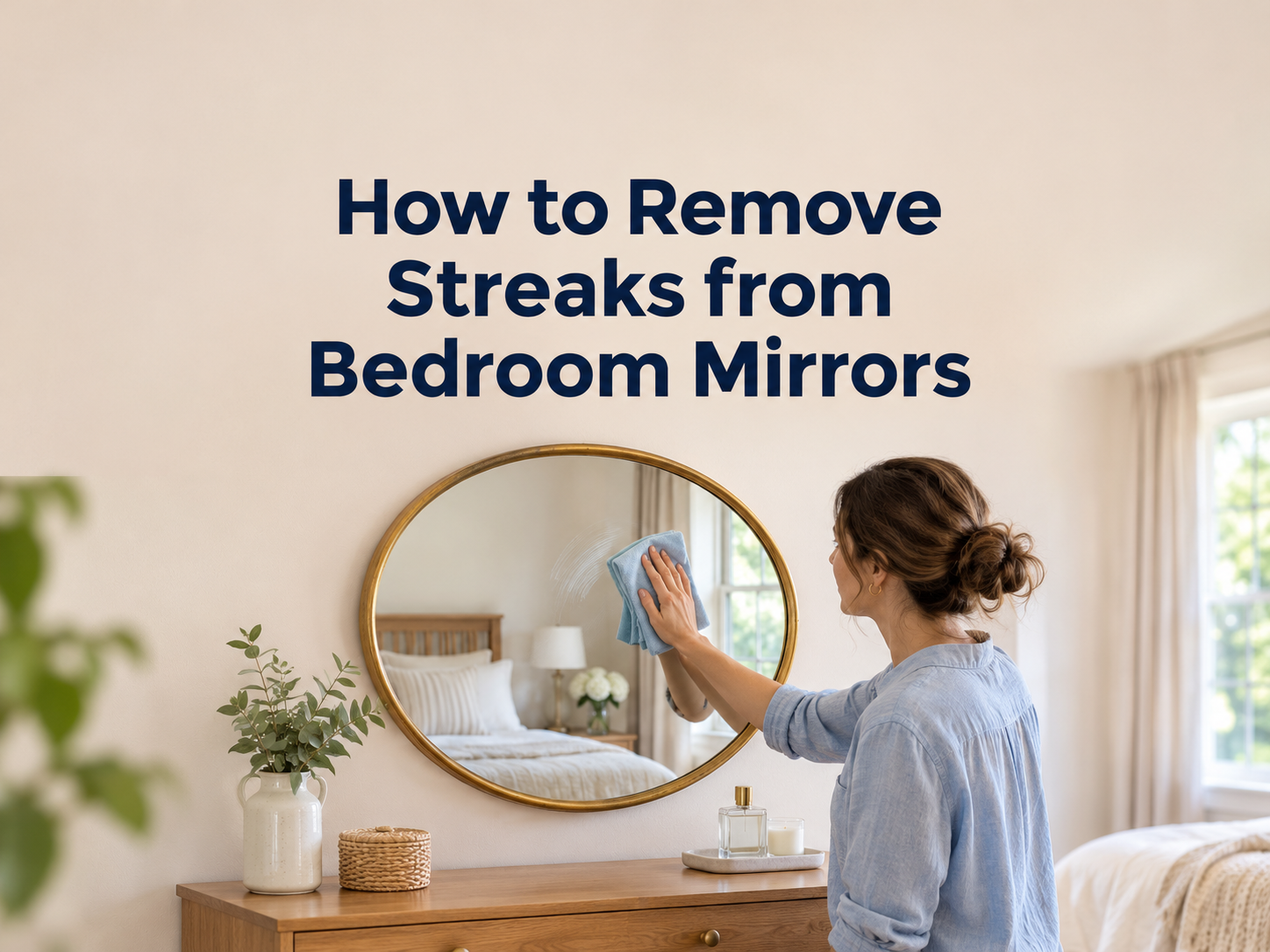

You wipe your bedroom mirror, step back, and there they are: cloudy lines, swirls and smudges that seem even worse than before you started. It is one of the most frustrating little chores in the house. The good news is that streaky glass is almost never a sign that your mirror is damaged. It is a sign that something in your cleaning routine needs a small adjustment.
In this guide you will learn exactly how to remove streaks from bedroom mirrors, why they appear in the first place, which cleaners and cloths work best, and how to keep the glass clear for weeks. Everything here uses simple supplies you probably already own.
In this article
- Why bedroom mirrors streak
- What you need before you start
- Step-by-step method for a streak-free finish
- Three DIY mirror cleaner recipes
- How to fix stubborn marks and spots
- Common mistakes to avoid
- How to keep mirrors clear longer
- Frequently asked questions
Why Do Bedroom Mirrors Get Streaky?
Before fixing the problem, it helps to understand it. Streaks are simply leftover residue. When you clean, you dissolve dirt and oils into liquid. If that liquid is not lifted off completely, it dries into visible lines. Bedroom mirrors are especially prone to this because they collect a unique mix of everyday residue:
- Hairspray and styling products that mist onto the glass and dry into a sticky film.
- Skincare and makeup such as face oils, foundation and setting spray.
- Fingerprints and hand oils from touching the glass or adjusting the mirror.
- Dust that settles overnight and turns muddy when wet.
- Perfume and body spray that leave a faint, hazy layer.

1. Dirty or Reused Cloths
A cloth that has already wiped kitchen counters or a bathroom sink carries grease and soap residue. Rubbing it across glass just spreads that residue into a thin layer. Cloths washed with fabric softener are even worse, because softener leaves a waxy coating on the fibers that transfers directly to the mirror.
2. Using Too Much Cleaner
More spray does not mean more clean. A heavily soaked mirror takes longer to dry, and the extra liquid dissolves dirt and then redeposits it as it evaporates. A light mist is nearly always enough.
3. Hard Tap Water
If your tap water is hard, it contains dissolved minerals such as calcium and magnesium. When the water evaporates, the minerals stay behind as white streaks and dots. Using distilled water in your cleaning solution avoids this entirely.
4. Cleaning Warm Glass or in Direct Sunlight
A mirror that sits near a sunny window or a heater is warm to the touch. Cleaner dries on warm glass before you can wipe it away, which locks in streaks. Always clean mirrors when they are cool and out of direct sun.
What You Need Before You Start
You do not need expensive products. A handful of simple items will give you better results than most heavily advertised sprays.

- Two clean microfiber cloths. Microfiber grabs oil and dust without shedding lint. Keep one for damp wiping and one for drying and buffing.
- A fine-mist spray bottle. A good mist lets you control how much liquid you apply.
- Distilled water. It costs very little and removes the mineral problem.
- White vinegar or 70% rubbing alcohol. Both cut through oils and evaporate quickly.
- A small squeegee (optional). Helpful for large wall or full-length mirrors.
- An old towel. Place it along the base of the mirror to catch drips.
Pro tip
Avoid paper towels and old t-shirts when you can. Paper towels leave lint, and worn cotton can leave fibers stuck to the glass. A dedicated pair of microfiber cloths, used only for glass, makes the biggest single difference.
How to Remove Streaks from Bedroom Mirrors: Step-by-Step
This method works on wall mirrors, dresser mirrors, vanity mirrors and full-length standing mirrors. Set aside about five minutes.

Step 1: Dust the Mirror First
Wipe the whole surface and frame with a dry microfiber cloth. If you skip this, dust turns into muddy paste when it meets liquid, and you end up smearing it around. Pay attention to the top edge of the frame, where dust collects.
Step 2: Mist the Cloth, Not the Mirror
Fill your spray bottle with one of the recipes in the next section. For most mirrors, a half-and-half mix of white vinegar and distilled water is a reliable starting point. Spray the cloth until it is lightly damp, not dripping. This prevents liquid from running behind the glass, where it can damage the silver backing and cause dark spots along the edges over time. It also keeps drips off your dresser, carpet and bedding.
Step 3: Wipe in a Controlled Pattern
Start at the top corner and work downward using gentle S-shaped strokes, slightly overlapping each pass. Working from top to bottom means any drips run over areas you have not cleaned yet.

Step 4: Buff Dry Immediately
Before the mirror air-dries, go over it with your second, completely dry microfiber cloth. Use light pressure and small circular motions. This is the step that actually removes streaks, because it lifts the last film of moisture and dissolved residue before it can settle.
Step 5: Check From an Angle
Stand to the side and look across the surface with light hitting it from a window or lamp. Streaks that are invisible head-on become obvious at an angle. Touch up any problem areas with a dry corner of the cloth.
Three DIY Mirror Cleaner Recipes
Homemade cleaners are cheap, effective and free of the heavy fragrances and added soaps that can cause streaking in some store-bought products. Always mix them in a clean spray bottle and label the bottle clearly.

Recipe 1: White Vinegar and Distilled Water
Mix equal parts white vinegar and distilled water. Vinegar is mildly acidic, so it dissolves hard-water deposits and cuts light oils. It is the best all-round choice for routine cleaning. The smell fades within minutes as it dries.
Recipe 2: Rubbing Alcohol and Distilled Water
Combine one cup of 70% rubbing alcohol with one cup of distilled water. Alcohol evaporates very quickly, which leaves little time for streaks to form. It is excellent for fingerprints and smudges. Use it in a ventilated room and keep it away from heat or flame.
Recipe 3: Warm Water with a Drop of Dish Soap
For heavy, greasy buildup, mix two cups of warm distilled water with two or three drops of mild dish soap. Be careful not to add more soap than that, because too much soap is one of the most common causes of cloudy streaks. Follow with a cloth dampened in plain distilled water to rinse, then buff dry.
Safety note
Never mix vinegar with bleach or hydrogen peroxide, and never combine rubbing alcohol with bleach. Some of these combinations create harmful fumes or irritating compounds. Use one cleaner at a time, and rinse out your bottle before switching recipes.
How to Fix Stubborn Marks and Spots
Sometimes a normal wipe is not enough. Here is how to handle the most common problem areas.
Hairspray Residue
Hairspray dries into a tacky film that regular cleaner struggles with. Wipe the area with a cloth dampened in rubbing alcohol, which dissolves the sticky polymers. Follow with your usual cleaner and buff dry.
Makeup and Foundation Splatter
Dab the spot with a microfiber cloth dampened with warm, slightly soapy water. Let it sit for about ten seconds to loosen the product, then wipe gently. Avoid scrubbing hard, because rubbing dried makeup across glass can smear it into a wider area.
Hard-Water Spots
Soak a cloth in undiluted white vinegar, hold it against the spots for a minute so the acid can dissolve the minerals, then wipe clean. Rinse with a damp cloth and buff dry.
Dried-On Dirt or Sticky Residue
For stuck-on marks such as old stickers or dried drips, lay a warm, damp cloth on the area for a couple of minutes to soften it. Gently lift with a plastic card edge or a soft nail, never a metal blade, which can scratch the glass.
Dark Edges and Black Spots
Black marks creeping in from the edges usually mean moisture has reached the reflective backing, and that damage cannot be cleaned away. You can slow it down by keeping the edges dry and avoiding spraying cleaner directly onto the glass. For valuable or antique mirrors, ask a professional glass restorer.
Frames and Wooden Edges
Many bedroom mirrors have wood, metal or gilded frames. Keep acidic cleaners such as vinegar away from natural stone, unsealed wood and gold-finish frames, since they can dull or discolor those surfaces. Wipe frames separately with a dry or very lightly damp cloth.
Common Mistakes That Cause Streaks
- Cleaning in direct sunlight. The cleaner dries too fast to wipe away.
- Spraying the glass directly. It causes drips, pooling at the edges and uneven drying.
- Using too much soap. Even a small extra squirt can leave a cloudy film.
- Washing cloths with fabric softener. It coats the fibers with wax that transfers to the mirror.
- Using one cloth for everything. A damp cloth cannot also do the drying work.
- Skipping the dusting step. Wet dust becomes a muddy smear.
- Wiping in random circles. It pushes residue around instead of lifting it.
- Using paper towels or newspaper. Both can leave lint or ink smudges on modern glass.
How to Keep Your Bedroom Mirror Streak-Free Longer
A little regular upkeep means you will rarely need a full cleaning session. Here is a simple routine that fits into any week.

- Apply hairspray and perfume away from the mirror. Or cover the glass with a towel while you do.
- Wash your cleaning cloths separately. Use a small amount of mild detergent, skip the fabric softener and air-dry them.
- Keep a dry microfiber cloth nearby. A quick wipe over fingerprints takes seconds and prevents buildup.
- Dust regularly. Less dust means less muddy residue when you do clean.
- Use distilled water. It is the simplest way to avoid mineral spots completely.
- Control bedroom humidity. Good ventilation reduces moisture on glass and protects the mirror backing.
Store-Bought Cleaners vs. DIY: Which Is Better?
Both can work well. A good ammonia-free glass cleaner is convenient and cuts through heavy grime quickly, but some products contain added fragrance or soap that can leave a film if you use too much. DIY mixes are inexpensive and predictable, though they need to be mixed fresh and stored safely. If you prefer a ready-made option, look for formulas labeled streak-free and ammonia-free, and apply them to the cloth rather than the glass.
Many people also find that a quality microfiber glass cloth, sometimes sold as a waffle-weave or glass-polishing cloth, improves results more than any change of cleaner. A small squeegee can also speed up large mirrors, but wipe the rubber blade clean after every stroke to avoid dragging dirt across the surface.
Frequently Asked Questions
Why does my mirror look streaky even after I clean it?
The most common reasons are a dirty cloth, too much cleaner, hard water minerals, or leaving the glass to air-dry. Switch to clean microfiber cloths, use distilled water, apply less liquid and always buff dry right away.
Is vinegar safe for mirrors?
Yes, diluted white vinegar is generally safe for the glass surface itself. Keep it off the frame if the frame is natural stone, unsealed wood or gold-finish, and avoid letting liquid run into the edges.
What is the best thing to clean a mirror without leaving streaks?
A lightly damp microfiber cloth with a mix of white vinegar and distilled water, followed immediately by a dry microfiber cloth, is hard to beat. Rubbing alcohol mixed with distilled water is another very reliable choice.
Can I use newspaper to clean mirrors?
It is a classic tip, but modern newsprint and inks do not always perform the same way. Microfiber is more reliable, produces no lint and does not leave ink on your hands or the glass.
How often should I clean my bedroom mirror?
A quick dry wipe daily or every few days handles fingerprints. A full damp clean once a week is enough for most households. Clean more often if you use hairspray or makeup near the mirror.
Why does my mirror streak more in the morning light?
Low-angle sunlight highlights thin residue that is invisible in normal lighting. Check your finished work from an angle with light on the glass so you can catch and fix those lines.
Does hard water really make that much difference?
Yes. Minerals left behind as water evaporates are a major cause of white lines and speckles. Switching to distilled water for your cleaning solution is one of the simplest and cheapest fixes.
Final Thoughts
Removing streaks from bedroom mirrors comes down to a few habits: dust first, use a little liquid, choose clean microfiber cloths, wipe in an organized pattern and buff dry right away. Add distilled water and a simple vinegar or alcohol mix, and you will get a sparkling result without specialty products.
Put this routine into practice next time you clean and you will notice the difference immediately. Keep one pair of cloths reserved for glass, build the weekly wipe into your routine, and your mirror will stay clear, bright and streak-free.