







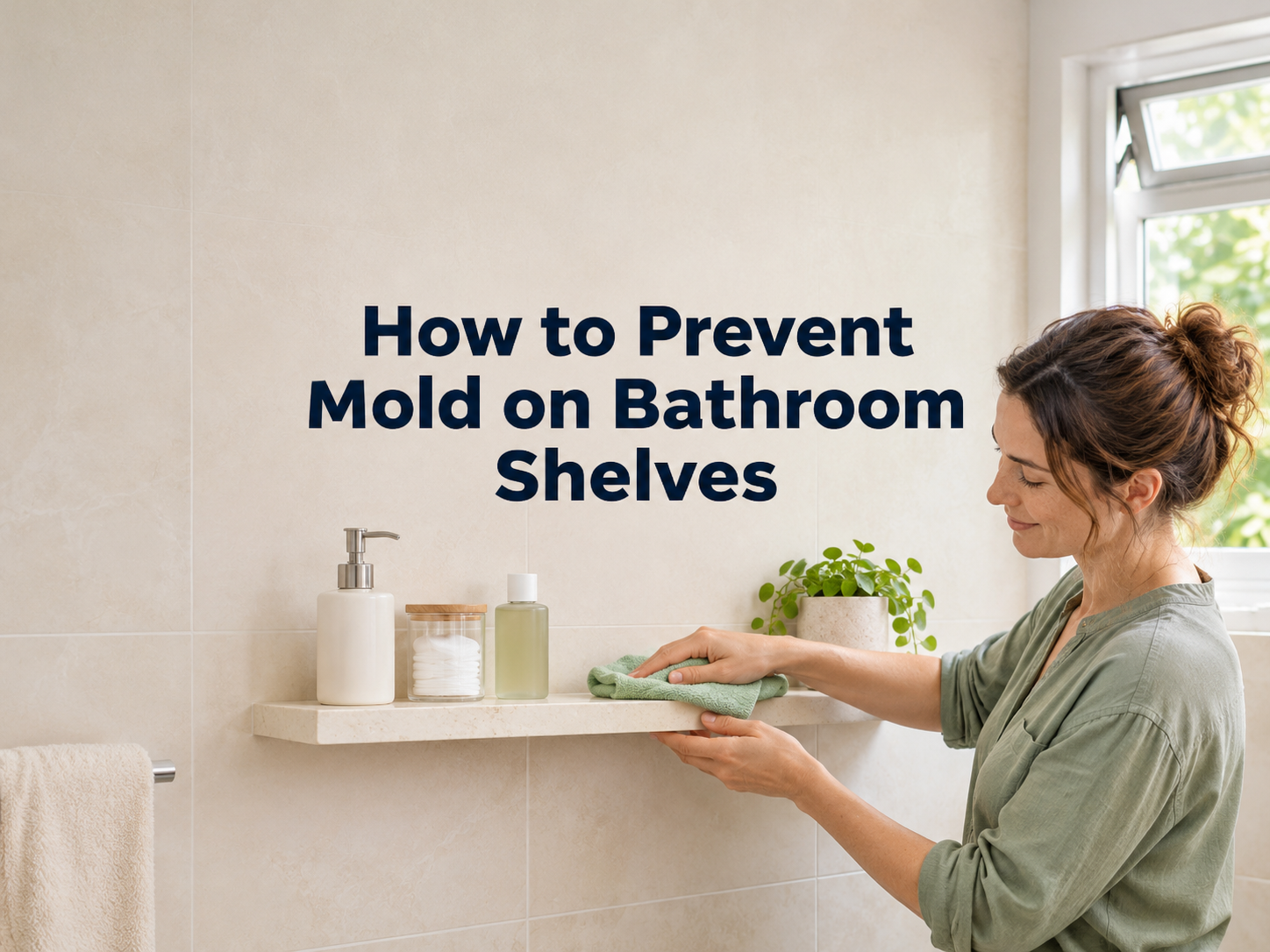
You reach for your shampoo and notice tiny black or green dots on the shelf underneath it. Or maybe there is a fuzzy, slightly musty patch in the corner where a soap dish usually sits. Mold on bathroom shelves is one of the most common household problems, and it tends to come back again and again if you only wipe it away without dealing with the cause.
The good news is that mold prevention does not need expensive products or complicated routines. It comes down to controlling moisture, improving airflow, choosing the right shelf materials and building a few small habits. In this guide, you will learn why mold grows on bathroom shelves, how to remove it safely, and the exact steps that keep it from returning.
Quick answer
To prevent mold on bathroom shelves, reduce humidity with good ventilation, dry shelves and containers after use, keep items off direct contact with wet surfaces, choose mold-resistant or non-porous shelf materials, clean regularly with a mild cleaner, and seal gaps where water collects. Mold needs moisture to grow, so keeping surfaces dry is the single most effective step.
Why Mold Grows on Bathroom Shelves
Mold is a type of fungus that spreads through tiny airborne spores. These spores are present in almost every home, and they stay harmless until they land on a surface that gives them what they need. Three things must be present together: moisture, a comfortable temperature, and something to feed on.
Bathrooms are the perfect setting. A hot shower fills the room with steam that settles on every surface. Warm temperatures encourage growth, and shelves collect plenty of food in the form of soap residue, shampoo drips, skin oils, dust and the organic material in wood or particle board.
The Most Common Causes of Shelf Mold
1. Poor ventilation
Without an extractor fan or an open window, steam stays in the room for hours. Damp air keeps shelf surfaces moist long after the shower is finished, which gives mold time to establish itself.
2. Wet bottles and containers sitting in one spot
Shampoo bottles and soap dishes trap a thin film of water underneath them. Because air cannot reach this area, it stays wet for a long time and becomes the first place mold appears.
3. Porous shelf materials
Untreated wood, MDF, chipboard and laminated board with damaged edges soak up moisture. Once water enters the material, wiping the surface no longer removes it, and mold can grow inside as well as on top.
4. Soap scum and product residue
Soap film, conditioner drips and body oils are an ideal food source. A shelf that looks clean but has a sticky layer is far more likely to grow mold than a truly clean one.
5. Shelves pressed tight against the wall
When a shelf sits flush against a damp wall, air cannot circulate behind it. Moisture and condensation collect in the gap, and mold often begins at the back edge where you cannot see it.
6. Leaks, condensation and cold walls
A small plumbing leak, a cold exterior wall or a poorly sealed shower can keep the wall behind the shelf damp all the time. In this case, cleaning the shelf alone will never solve the problem.
7. Infrequent cleaning
Mold starts small and invisible. If a shelf is only cleaned occasionally, spores have days or weeks to settle in and spread.
How to Spot Mold Early
- Black, green, grey or brown dots and patches, especially in corners and under bottles.
- A musty, earthy smell that remains after cleaning.
- Slimy or fuzzy texture on the surface.
- Discoloured, swollen or soft shelf edges, especially on wood or board.
- Peeling paint or bubbling wall surface behind the shelf.
Catching it at this stage means a quick clean is usually enough. Left alone, it can spread to walls, grout, towels and other items.
How to Remove Mold From a Bathroom Shelf Safely
Prevention works best on a clean surface, so remove any existing mold first. Always work in a ventilated room, wear gloves and avoid breathing in dust or spores. Never mix different cleaning products, especially bleach with vinegar or ammonia, because the fumes can be harmful.
Step 1: Empty and ventilate
Remove everything from the shelf, open the window or switch on the fan, and wear gloves. Wash or discard anything that has visible mold on it.
Step 2: Apply a suitable cleaner
For hard, non-porous shelves such as glass, plastic, metal, glazed ceramic and sealed surfaces, white vinegar sprayed on the area and left for about an hour works well on light mold. A diluted mild disinfectant or a household mold cleaner suited to the surface is another option. Follow the product instructions.
Step 3: Scrub gently
Use a soft brush or sponge, and reach into corners, joints and under edges. Avoid harsh scouring on glass or coated surfaces, since scratches create rough spots where mold can return.
Step 4: Rinse and dry completely
Wipe with clean water and dry with a cloth. Leave the shelf open to the air until it is fully dry before putting anything back.
Step 5: Protect the surface
Seal gaps, repair damaged finishes and restock only dry items. Replace soap dishes or mats that stay wet.
When to replace the shelf instead of cleaning it
If a wooden or board shelf is soft, swollen, crumbling or deeply stained, the mold has likely spread inside the material. In that case, replacing it is safer and more effective than repeated cleaning. If mold covers a large area of the wall, keeps returning after cleaning, or anyone in the home has breathing problems or allergies, consider a professional assessment.
12 Proven Ways to Prevent Mold on Bathroom Shelves
1. Ventilate after every shower
Run the extractor fan or open a window during the shower and for 20 to 30 minutes afterwards. This single habit removes the moisture mold depends on.
2. Keep humidity under control
Indoor humidity between roughly 30 and 50 percent discourages mold. A small hygrometer shows the level, and a dehumidifier helps in bathrooms without windows.
3. Wipe the shelf dry
A quick wipe with a microfibre cloth after showers takes seconds and removes standing water before mold can use it.
4. Choose mold-resistant shelf materials
Glass, stainless steel, aluminium, powder-coated metal, plastic and sealed or treated materials resist moisture far better than untreated wood or chipboard. See the comparison table below.
5. Allow air to move around the shelf
Choose open, slatted or wire designs, and leave a small gap between the shelf and the wall if possible. Water then drains away and air dries the surface.
6. Lift bottles off wet surfaces
Use bottles with narrow bases, small risers, rubber feet or open trays so water can escape and air can reach the underside.
7. Use fewer items on the shelf
A crowded shelf blocks airflow and traps humidity. Keep only daily items on display and store the rest in a dry cupboard.
8. Dry soap dishes and containers
Choose draining soap holders and empty any pooled water. Rinse and dry refill bottles occasionally, since residue builds up at the bottom.
9. Clean regularly with a mild cleaner
A weekly wipe and a monthly deeper clean remove soap scum and the early traces of mold before they become visible.
10. Seal gaps and fix leaks
Check silicone and grout near the shelf for cracks, and repair dripping taps, pipes or shower seals that keep the wall damp.
11. Let towels and mats dry elsewhere
Wet towels placed on or near the shelf raise humidity and add moisture. Hang them properly so they dry fully between uses.
12. Improve light and warmth where practical
A bathroom that stays cold, dark and damp is more prone to mold. Warmer walls and natural light help surfaces dry faster.
Which Shelf Materials Resist Mold Best?
The table below compares common bathroom shelf materials. Results depend on quality and finish, so check what the manufacturer recommends for wet rooms.
| Material | Mold resistance | Notes |
|---|---|---|
| Glass | Very good | Non-porous and easy to wipe. Clean the edges and brackets. |
| Stainless steel | Very good | Choose rust-resistant grades. Wire designs dry quickly. |
| Aluminium | Very good | Light, rust-free and low maintenance. |
| Plastic or acrylic | Good | Smooth surface, but avoid scratches that trap dirt. |
| Ceramic or stone, sealed | Good | Keep grout and joints sealed and clean. |
| Treated or sealed hardwood (such as teak or bamboo) | Moderate | Needs regular re-sealing and drying. Avoid constant water contact. |
| Untreated wood, MDF, chipboard | Poor | Absorbs moisture and swells. Not recommended for wet bathrooms. |
A Simple Routine to Keep Shelves Mold Free
Consistency matters more than effort. This routine takes only a few minutes at each stage.
Pro tips
- Keep the bathroom door open after showers when possible, so moist air can escape.
- Use a squeegee on glass shelves and nearby tiles to remove water fast.
- Do not store open or half-used products that can drip onto the shelf.
- Place moisture absorbers in small bathrooms without windows.
- Test any new cleaner on a small hidden area before using it widely.
Mistakes That Make Mold Come Back
- Cleaning the visible mold but leaving the surface damp.
- Using bleach on porous materials. It may lighten the colour but does not reach mold deep in wood or board.
- Mixing cleaning products, which is dangerous and also does not clean better.
- Ignoring leaks, condensation or a wet wall behind the shelf.
- Closing the door and window straight after a shower.
- Keeping a decorative but poorly draining shelf in the shower spray zone.
Frequently Asked Questions
Why does mold keep coming back on my bathroom shelf?
Usually because the cause has not changed. High humidity, poor airflow, a damp wall or a porous shelf will bring mold back no matter how well you clean. Fix the moisture source along with the surface.
Is vinegar or bleach better for bathroom shelf mold?
Vinegar is a gentle choice for light mold on hard, non-porous surfaces. Bleach can be used on some non-porous surfaces but should never be mixed with other products and does not work well on porous materials. Always follow the product label and ventilate the room.
Is bathroom mold dangerous?
Mold can irritate the eyes, nose and throat, and may trigger symptoms in people with allergies, asthma or sensitive breathing. Clean small patches carefully, and seek professional advice for large or recurring growth or if anyone is experiencing health symptoms.
Can I stop mold on a wooden bathroom shelf?
It is possible if the wood is properly sealed and kept dry, but it needs more upkeep than glass or metal. Re-seal when the finish wears, and avoid letting water sit on it.
How often should I clean bathroom shelves?
Wipe them weekly and do a deeper clean monthly. In very humid or windowless bathrooms, clean a little more often.
Do I need a dehumidifier?
Not always. If your bathroom has a good fan or window, you may not. For small rooms without ventilation, a dehumidifier or moisture absorber can make a clear difference.
Final Thoughts
Mold on bathroom shelves is not a sign of a dirty home. It is simply the result of moisture, warmth and leftover residue meeting in a small space. By ventilating well, drying surfaces, picking mold-resistant materials, leaving room for airflow and following a light cleaning routine, you take away what mold needs to grow.
Start with the easiest habit, running the fan after every shower, and add the other steps one at a time. Within a few weeks, your shelves will stay cleaner, smell fresher and last much longer.