Portable Electric Heater Circuit Breaker Trips: Causes, Fixes and Safety Tips

You switch on your portable electric heater, the room starts to warm up, and then everything goes dark or the heater stops. The circuit breaker has tripped. You reset it, and a few minutes later it trips again. It is frustrating on a cold day, but it is also your electrical system doing exactly what it was designed to do: protecting your home from too much current.
This guide explains why a portable electric heater trips a circuit breaker, how to tell a simple overload from a real electrical fault, what to do step by step, and how to keep your heater running without repeated trips. It applies to ceramic fan heaters, oil-filled radiators, convection panels and infrared heaters, because they all draw a lot of power.
Key Takeaways
- The most common cause is overload: the heater, plus anything else on the same circuit, draws more current than the circuit is rated to carry.
- A breaker that trips after the heater has run for a while usually points to overload. A breaker that trips instantly points to a possible fault.
- Use a lower power setting, plug the heater directly into a wall socket and keep other high-power appliances off the same circuit.
- Never keep resetting a breaker that trips straight away, and never fit a larger breaker or tape a breaker in place.
- If you see sparks, smell burning or find a hot plug or socket, stop using the heater and call a qualified electrician.
In This Guide
- How a circuit breaker works
- Why heaters trip breakers
- How much power your circuit can handle
- Overload or electrical fault?
- Which kind of trip is it?
- What to do when the breaker trips
- How to heat a room without tripping the breaker
- When to call an electrician, buying tips and FAQs
How Does a Circuit Breaker Work?
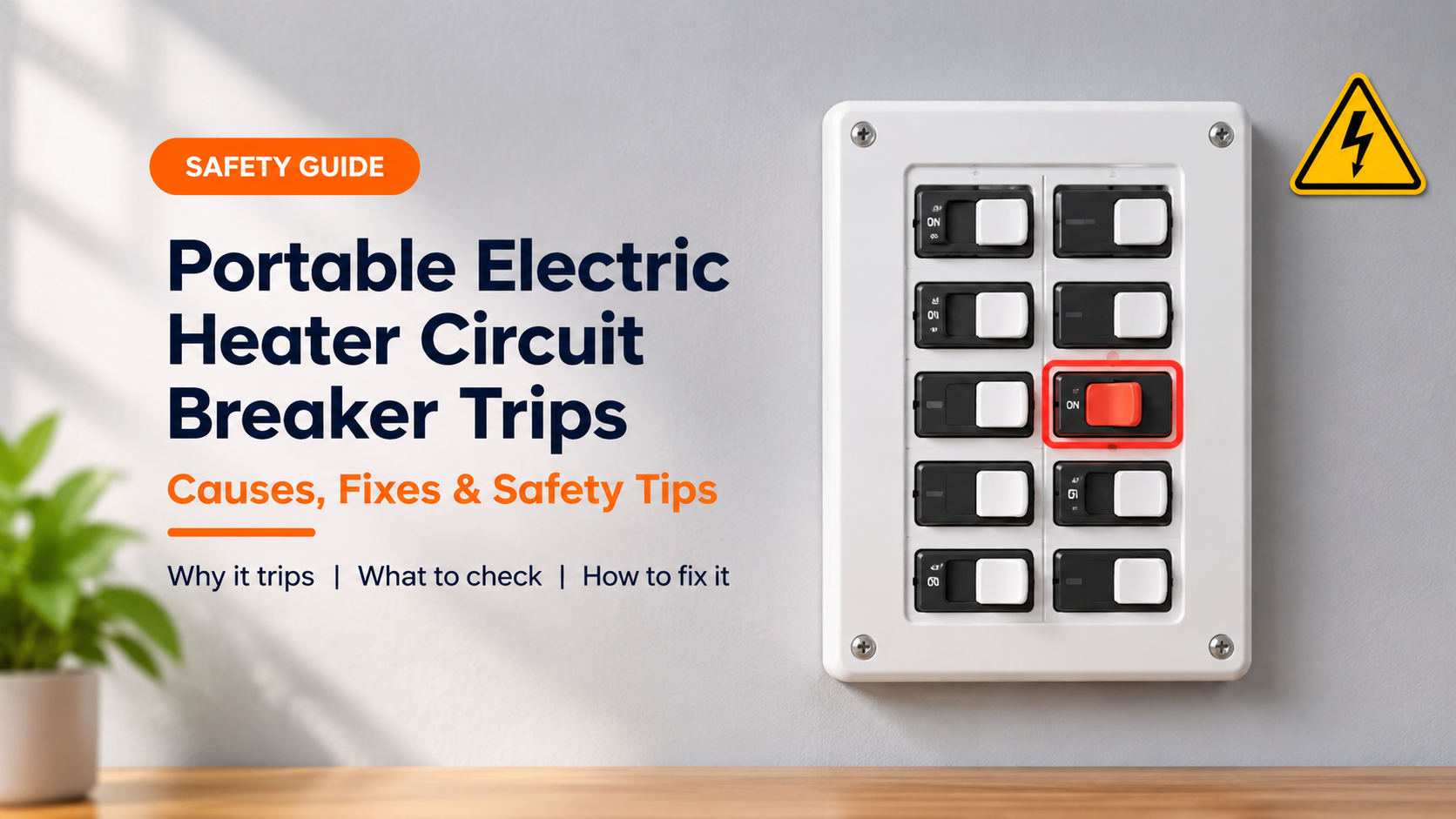
A circuit breaker is a safety switch. It sits in your electrical panel and watches the current flowing through a circuit. If the current stays too high for too long, or spikes suddenly, the breaker opens and cuts the power. This protects the wiring inside your walls from overheating.
Most household breakers have two ways of tripping. A thermal mechanism responds to a moderate overload, such as a circuit carrying more than its rating for several minutes, and it reacts more quickly the higher the overload is. A magnetic mechanism responds almost instantly to a very large surge, such as a short circuit. Some circuits also have extra protection devices. A GFCI (in North America) or RCD (in many other regions) trips when it detects current leaking to earth, which can happen with moisture or a fault. An arc-fault device can trip when it detects dangerous arcing.
Knowing which kind of trip you have is the key to working out the cause, and the timing of the trip is one of the best clues.
Why Does a Portable Electric Heater Trip the Breaker?
Portable heaters are some of the most power-hungry appliances in a home. Most are rated between about 1,000 and 2,000 watts, far more than a lamp, a TV or a laptop charger. That makes them very likely to push a circuit to its limit.

1. Circuit Overload
This is the most common cause. Every circuit has a maximum current it can safely carry. When the heater draws close to that limit by itself, even a small additional load can push the circuit over. The breaker then trips to protect the wiring. This often happens after the heater has been running for a few minutes or longer.
2. A Shared Circuit
Several rooms and outlets often share one breaker. If your heater is on the same circuit as lights, a TV, a kettle, a hair dryer or even a second heater, the combined load can exceed the circuit’s rating. A breaker that trips when someone switches on another appliance is a classic sign of this.
3. Extension Cords and Power Strips
Extension cords and power strips that are not rated for a heater’s power can overheat. They can also cause the breaker to trip, and they are a safety risk in their own right. Plugging the heater directly into a wall socket removes this variable.
4. A Faulty Heater or Cord
A short circuit in the heater, a damaged element or a damaged cord can cause a very large current surge. This usually trips the breaker immediately, often as soon as you switch the heater on or plug it in. This is a fault, not an overload, and it is serious.
5. A Worn or Weak Breaker
Breakers can weaken with age and repeated tripping. An old breaker may trip at a lower load than its rating suggests. This is less common than overload, but it can explain why a heater that used to work now trips. Only an electrician should test or replace a breaker.
6. Damaged Wiring or Sockets
Loose connections, worn sockets or damaged wiring create heat and can cause faults. If the breaker trips only on one socket, or the plug or wall plate is warm, discoloured or smells of burning, the problem may be in the wiring rather than the heater.
How Much Power Can Your Circuit Handle?
Power in watts equals voltage multiplied by current in amps. A 1,500 watt heater on a 120 volt supply draws about 12.5 amps. On a 230 volt supply the same heater draws about 6.5 amps. The table below shows approximate limits for common circuits.
| Circuit | Maximum Power | Typical Guideline for Continuous Use (80%) |
|---|---|---|
| 15 A at 120 V | 1,800 W | about 1,440 W |
| 20 A at 120 V | 2,400 W | about 1,920 W |
| 16 A at 230 V | 3,680 W | about 2,940 W |
The 80 percent guideline for continuous loads is common in North America. Other regions use different rules, so always follow your local electrical regulations and the ratings in your own home.
Notice that a 1,500 watt heater on a standard 15 amp, 120 volt circuit is already above the typical continuous guideline of about 1,440 watts. Adding almost anything else to that circuit makes tripping likely.
Typical Appliance Power (Approximate)
| Appliance | Typical Power |
|---|---|
| Portable heater | 750 to 2,000 W depending on setting |
| Electric kettle | 1,000 to 1,800 W |
| Hair dryer | 1,000 to 1,875 W |
| Microwave oven | 1,000 to 1,500 W while running |
| Vacuum cleaner | 500 to 1,400 W |
| Television | 50 to 200 W |
| LED bulb or laptop charger | 5 to 100 W |
Check the label on your own appliances for exact figures.
As an example, a 1,500 watt heater and a 1,000 watt kettle together draw 2,500 watts. That is well above the 1,800 watt maximum of a 15 amp, 120 volt circuit, so the breaker will trip.
Overload or Electrical Fault?
The most useful thing you can work out is whether the trip is an overload or a fault. Overloads are usually fixable by changing how you use the heater. Faults need repair or replacement.

In general, a trip that happens after a few minutes, or when another appliance starts, is an overload. A trip that happens the instant you switch on, or on every circuit you try, suggests a fault in the heater or cord. Smell, sparks, buzzing or a hot plug always point to a fault.
Which Kind of Trip Is It?
Use the guide below to match your situation to the most likely cause and the right response.

Trips After a Few Minutes
This is the typical overload pattern. The circuit is carrying too much current for too long. Lower the heater’s power setting, unplug other devices on the same circuit and try again.
Trips Instantly
If the breaker trips as soon as you plug in or switch on the heater, suspect a short circuit in the heater or its cord. Do not keep resetting the breaker. Unplug the heater, inspect the plug and cord for damage, and stop using it.
Trips Only With an Extension Cord
The cord may be overloaded or overheating. Remove it and plug the heater directly into a wall socket. A heater should not be run from an extension cord or power strip unless the manufacturer clearly allows it.
RCD or GFCI Trips
If your breaker is a GFCI or RCD and it trips, current may be leaking to earth. This can be caused by moisture or a fault inside the heater. Keep the heater and plug dry and out of damp areas, and stop using it if it trips repeatedly.
What to Do When the Breaker Trips
Work through these steps in order. They are safe for most homes, but if you are unsure at any point, stop and call an electrician.

- Unplug the heater. Switch the heater off and unplug it before you touch the breaker panel.
- Check the heater and plug. Look for damage, scorch marks, a burning smell or a plug that is hot or discoloured. If you find any of these, stop using the heater.
- Unplug other devices. Remove other appliances from the same circuit so the heater is the only major load.
- Reset the breaker once. Move the breaker switch fully to off, then back to on. Do this only one time. Make sure your hands and the area are dry.
- Retest on a lower setting. Plug the heater directly into the wall socket, use a lower power setting and keep an eye on it for the first few minutes.
- Stop if it trips again. Do not keep resetting the breaker. Try the heater on a different circuit, or replace the heater, or call an electrician.
Never Do These Things
- Do not replace a breaker with a larger one to stop it tripping. The wiring behind the wall is sized for the original breaker and could overheat.
- Do not tape, hold or bypass a breaker to keep it from tripping.
- Do not keep resetting a breaker that trips immediately.
- Do not touch an electrical panel with wet hands or open it unless you are qualified.
How to Heat a Room Without Tripping the Breaker
If your heater trips the breaker through overload, you can often solve the problem without any repair. These practical changes reduce the load.
- Use a lower power setting. Many portable heaters have settings such as 750 watts and 1,500 watts. Use the high setting to warm the room, then switch to a lower setting.
- Use the thermostat. A thermostat cycles the heater on and off, which reduces the average load.
- Run the heater alone on its circuit. Keep kettles, hair dryers, microwaves and other heaters on different circuits while the heater is running.
- Move the heater to another circuit. Try a socket in a different room that is on a different breaker, ideally one with a higher rating.
- Plug directly into a wall socket. Avoid extension cords and power strips.
- Reduce heat loss. Close doors, block draughts and use curtains so the heater has less work to do.
- Consider two lower-power heaters. Two smaller heaters on separate circuits can spread the load, as long as each is used safely.
When to Call an Electrician
Call a qualified electrician if any of the following apply:
- The breaker trips even with only the heater on the circuit, and on a low setting.
- The breaker trips instantly when you reset it, with nothing plugged in.
- A socket, plug or wall plate is hot, discoloured or smells of burning.
- You hear buzzing or crackling from a socket or the electrical panel.
- The breaker feels hot, will not stay reset or looks damaged.
- The heater works on one circuit but trips another every time, which may point to a wiring problem.
- You have an older home with an old electrical panel that trips often.
If you see smoke, sparks or flames, leave the room, switch off the power at the main breaker if it is safe to do so, and call your local emergency services.
Prevention Checklist
A few habits make breaker trips far less likely and also make your heating safer.

- Match power to the circuit. Check the heater’s wattage against the rating of the circuit you plan to use.
- Run it on its own. Avoid sharing the circuit with other high-power appliances.
- Plug into the wall. Skip extension cords and power strips.
- Use lower settings once warm. Let the thermostat or a lower setting maintain the temperature.
- Check the cord and plug. Look for damage, discolouration or a loose fit before each season.
- Know your panel. Label your breakers so you know which sockets share a circuit.
Choosing a Heater That Is Less Likely to Trip Breakers
If your current heater keeps tripping the breaker, or you are buying a replacement, look for features that help you manage the load:
- Adjustable power settings such as low, medium and high, so you can match the heater to your circuit.
- A reliable thermostat that cycles the heater rather than running at full power continuously.
- A power rating that suits your room. An oversized heater draws more current than you need, while an undersized one runs flat out for hours.
- A recognised safety certification mark showing the product has been tested to a safety standard.
- Overheat and tip-over protection for added safety.
- A thick, well-made cord and solid plug that can handle the current.
Remember that a lower-wattage heater may take longer to warm a room, but it is much easier on your circuit. For long periods of heating, an efficient, well-insulated room and a lower, steadier setting often work better than a short burst at maximum power.
Frequently Asked Questions
Why does my portable heater keep tripping the breaker?
The most common reason is overload. The heater draws a lot of current, and if other devices share the circuit, the combined load can exceed the breaker’s rating. A faulty heater, damaged cord, extension cord, worn breaker or wiring problem can also cause trips.
Is it safe to keep resetting the breaker?
Resetting once after unplugging the heater is fine. If the breaker trips again, stop. Repeatedly resetting a breaker that trips can mean there is a fault, and it can damage the breaker or increase the risk of overheating.
Why does the heater trip the breaker only after a few minutes?
That usually points to an overload. The breaker’s thermal mechanism takes time to respond, so a circuit that is slightly overloaded may run for a few minutes before it trips.
Why does the breaker trip as soon as I turn on the heater?
An instant trip suggests a short circuit in the heater or cord, or a fault in the socket or wiring. Unplug the heater, check for damage and do not keep resetting the breaker.
Can I use a higher-rated breaker to stop the tripping?
No. Fitting a larger breaker is dangerous because the wiring is sized for the original rating and could overheat without the breaker protecting it. Any change to breakers or wiring should be done by a qualified electrician.
Can I use an extension cord with a portable heater?
The safest option is to plug the heater directly into a wall socket. Many manufacturers advise against extension cords and power strips, because they can overheat and cause trips or fires.
Will a lower-wattage heater stop the breaker tripping?
It often helps, because it draws less current. If the problem is a shared circuit, a lower-wattage heater, or a heater on a lower setting, leaves more room for other appliances. If the heater trips on a low setting with nothing else on the circuit, there may be a fault.
Final Thoughts
A portable electric heater that trips the circuit breaker is usually telling you that the circuit is overloaded, and the fix is often as simple as using a lower power setting, unplugging other appliances or plugging into a different circuit. But a breaker that trips instantly, or one that comes with sparks, smells or hot plugs, points to a fault that should not be ignored.
Use the timing of the trip as your first clue, never keep resetting a breaker that trips straight away, and never fit a larger breaker. Keep your heater on its own circuit where possible, plug it directly into the wall and have a qualified electrician look at anything you cannot explain. With a little care you can stay warm without repeatedly losing power.