


Portable Electric Heater Fan Noise: Causes, Noise Levels and How to Keep It Quiet

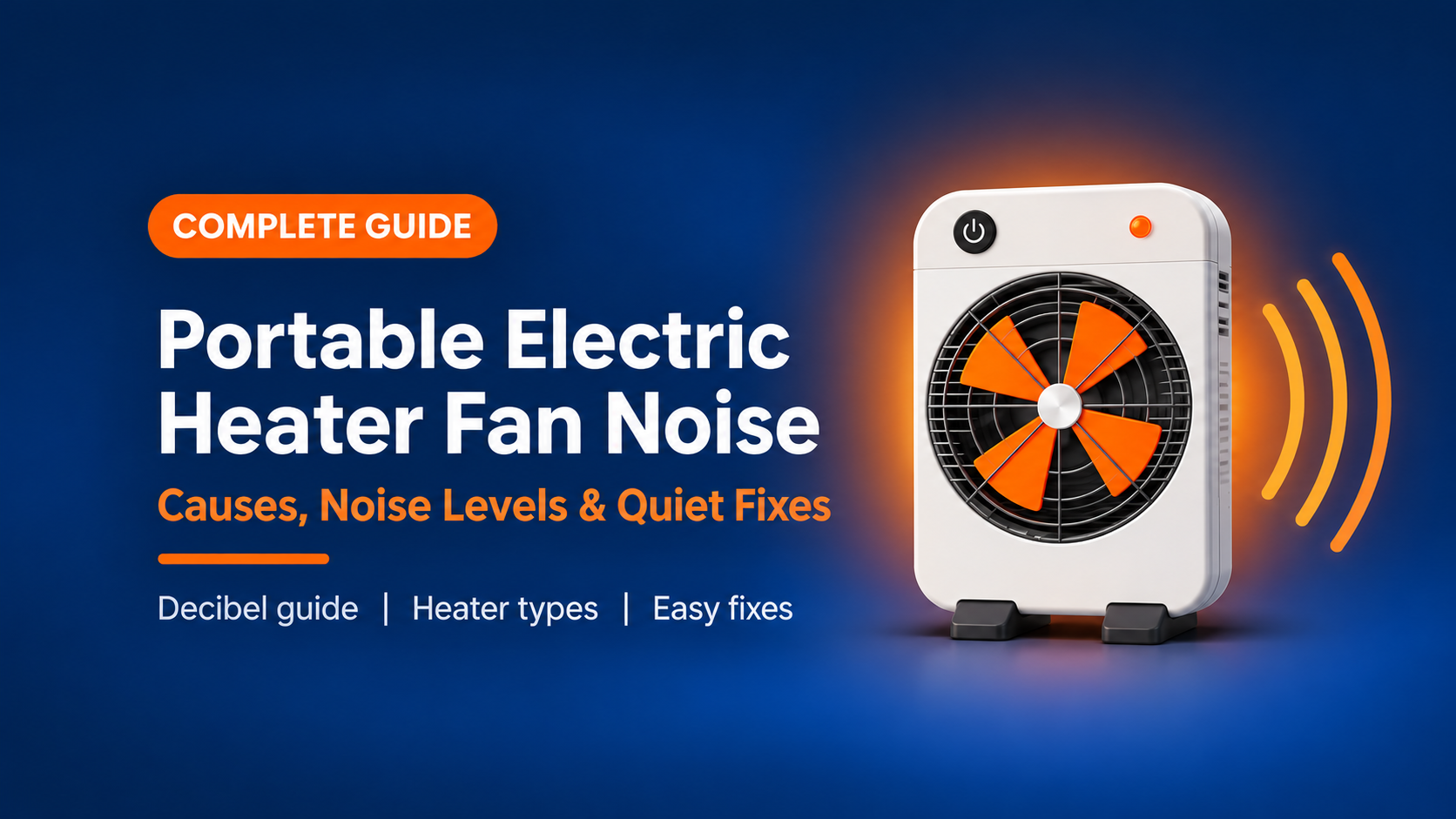
A portable electric heater is one of the easiest ways to warm a cold room, but nothing spoils a cozy evening like a constant whirring, buzzing or rattling. If you have ever tried to sleep, work or watch a movie next to a noisy heater, you already know that portable electric heater fan noise is more than a small annoyance.
This guide explains where the noise comes from, how loud is normal, how different heater types compare, what strange sounds mean, and how to choose and use a quieter heater. Everything here is based on how these heaters actually work, so you can apply it to almost any brand or model.
Key Takeaways
- Most fan heater noise comes from three places: the motor, the blades moving air, and vibration in the housing.
- Typical fan heaters run at roughly 40 to 60 dB. Oil-filled, convection and infrared heaters are usually much quieter because they have little or no fan.
- Dust, loose screws and uneven surfaces are the most common causes you can fix yourself.
- Grinding, scraping or a burning smell are warning signs. Unplug the heater and stop using it until it is checked.
- A heater that is the right size for your room and has a good thermostat can heat quietly, because the fan does not need to run flat out.
In This Guide
- Why portable electric heaters make noise
- How loud a portable heater really is
- Noise levels by heater type
- Common heater sounds and what they mean
- How to choose a quiet heater
- How to make your heater quieter
- Which heater suits which room
- Running cost, safety and FAQs
Why Do Portable Electric Heaters Make Noise?
A fan heater has a simple job. It pulls in cool room air, passes it over a hot element, and pushes the warm air back out. Every stage of that process can create sound, and the loudness depends on build quality, fan speed, cleanliness and how the heater is placed.

1. Motor Hum and Whine
The fan motor is the heart of the noise. A healthy motor produces a low, steady hum. As bearings wear or lubrication dries out, that hum can turn into a higher-pitched whine. Cheaper motors and lightweight mounting tend to transmit more vibration to the body of the heater.
2. Airflow Noise
Moving air is never silent. The faster the blades spin, the more air they push through the grille, and the louder the whooshing sound becomes. Small, high-speed fans are usually louder than larger, slower ones, which is why a compact heater on its highest setting often sounds like a small hairdryer.
3. Heating Element Ticking
Metal and ceramic parts expand as they heat up and shrink as they cool down. This causes light ticking or clicking sounds, especially when you switch the heater on or off. These sounds are normal and harmless. A thermostat clicking as it cycles is also normal.
4. Rattling and Vibration
Loose screws, a loose grille or an uneven surface can turn a small vibration into an irritating buzz or rattle. Placing a heater on a hollow table or thin shelf can amplify the sound even further, because the surface acts like a speaker.
5. Dust and Debris
Dust collects on the intake, the blades and the heating element over time. A layer of dust can unbalance the fan and restrict airflow, which makes the motor work harder and the heater louder. Dust burning off the element can also create a brief burning smell when you first use a heater after storage.
How Loud Is a Portable Electric Heater?
Sound is measured in decibels (dB). Most product ratings use dB(A), a scale adjusted to match how the human ear hears. Two points help you read these numbers sensibly:
- The scale is not linear. A rise of about 10 dB is perceived as roughly twice as loud, so 50 dB sounds much louder than 40 dB.
- Distance matters. Ratings are usually measured at a set distance, often around one metre. Sitting closer to the heater will sound louder than the rating suggests.

A Rough Guide to Heater Noise Levels
- Below 35 dB: very quiet. Comfortable for sleeping and quiet work.
- 35 to 45 dB: quiet background sound, similar to a refrigerator humming in the next room.
- 45 to 55 dB: clearly noticeable. Fine for daytime, but it may disturb light sleepers or phone calls.
- Above 55 dB: intrusive in bedrooms and quiet offices, closer to the level of normal conversation.
Health organisations have long suggested keeping continuous bedroom noise at around 30 dB(A) or lower for good sleep. That is a demanding target for any fan heater, which is one reason fanless designs are popular for nighttime use.
Noise Levels by Heater Type
The single biggest factor in noise is whether the heater uses a fan at all. Fan-forced heaters warm a room quickly but make more sound. Heaters that rely on natural convection or radiant heat are far quieter, although they take longer to warm the room.

| Heater Type | How It Heats | Typical Noise | Best For |
|---|---|---|---|
| Ceramic fan heater | A fan blows air across hot ceramic plates | Moderate, about 38 to 60 dB | Fast heating of small rooms and desks |
| Compact fan-coil heater | A small fan blows air across a metal coil | Loudest, about 55 to 68 dB | Garages, workshops and short bursts of heat |
| Oil-filled radiator | Heated oil warms metal fins that radiate heat | Very quiet, about 25 to 38 dB | Bedrooms and long periods of use |
| Convection panel heater | Warm air rises and cool air is drawn in naturally | Very quiet, about 25 to 40 dB | Living rooms and home offices |
| Infrared / radiant heater | Heats people and objects directly | Very quiet, about 25 to 40 dB | Spot heating where you sit or work |
Figures are approximate real-world ranges and vary by model, power setting and room conditions.
If silence matters most, an oil-filled or convection heater is usually the best choice. If you want heat within minutes and can tolerate some sound, a ceramic fan heater on a low or medium setting offers a good balance. Even “silent” heaters make faint clicks as the thermostat switches on and off.
Common Heater Sounds and What They Mean
Not every noise is a problem. Some sounds are completely normal, some are easy to fix, and a few are a clear signal to stop using the heater. The guide below shows the most common sounds at a glance.

Normal Sounds
A gentle hum, soft airflow and occasional ticking or clicking as the heater warms up, cools down or cycles with the thermostat are all expected. If the sound is steady and does not change, there is usually nothing to worry about.
Sounds You Can Usually Fix
Rattling, buzzing and a louder-than-usual whoosh are most often caused by loose parts, an uneven surface, a high fan speed or dust. Cleaning the heater and moving it to a flat, solid surface solves most of these problems.
Sounds That Mean Stop
Grinding, scraping or loud banging can mean debris is touching the fan or a bearing is failing. A burning smell that does not go away after cleaning can point to a failing component. In these cases, unplug the heater, let it cool and stop using it. Continuing to run a damaged heater can be a safety risk.
How to Choose a Quiet Portable Electric Heater
Buying the right heater from the start is easier than trying to quiet a loud one later. Use the checklist below when comparing models.

Check the Stated Noise Level
Some manufacturers list a decibel rating. If you find one, note the distance it was measured at and the fan speed. A figure measured on the lowest setting will not match what you hear on high.
Pick the Right Heater Type
For bedrooms and quiet rooms, oil-filled, convection and infrared designs are the safest bets. For quick, temporary heating, a ceramic fan heater is a sensible compromise.
Match the Power to Your Room
Many portable heaters are rated between about 1,000 and 2,000 watts. A common rule of thumb is roughly 10 watts for every square foot of floor space, or about 100 watts per square metre, for an average room. A heater that is too small has to run continuously at full speed, which keeps the fan loud. A slightly more powerful heater can reach the target temperature sooner and then drop to a lower, quieter setting.
Look for Multiple Speeds and a Reliable Thermostat
Adjustable fan speeds let you heat quickly at first and then switch to a quiet setting. A good thermostat cycles the heater on and off to hold the temperature rather than running constantly.
Choose a Night or Quiet Mode
Some models include a low-noise or night setting that reduces fan speed and dims the display. This is especially useful for bedrooms and home offices.
Consider Build Quality and Cleaning
A sturdy housing and a stable base reduce vibration. A grille or filter that is easy to access makes regular cleaning simple, and clean heaters stay quieter for longer.
Never Skip the Safety Features
Look for tip-over protection, overheat protection and a recognised safety certification mark. A quiet heater is only a good choice if it is also a safe one.
How to Make Your Heater Quieter
If you already own a noisy heater, these steps often make a noticeable difference. Always unplug the heater and let it cool before cleaning or touching any part, and follow the manufacturer’s instructions.
- Clean the intake, grille and blades. Use a soft brush or a vacuum with a brush attachment to remove dust. Dust is one of the most common causes of extra noise.
- Use a flat, solid surface. Place the heater directly on the floor or on a sturdy, level surface. Avoid hollow or wobbly furniture that amplifies vibration.
- Tighten loose parts. Check the grille, handle and any exposed screws for looseness, but only where the manual says it is safe to do so.
- Lower the fan speed. Use the high setting to warm the room quickly, then drop to a lower setting and let the thermostat do the work.
- Warm the room before you need quiet. Run the heater earlier, then switch to a low setting or turn it off when you want to sleep or concentrate.
- Increase the distance. Moving the heater a little farther from your bed or desk reduces how loud it sounds, as long as you keep the required clearance from furniture and fabrics.
- Reduce heat loss. Close doors, block draughts around windows and use curtains to keep warmth in. The less heat that escapes, the less often the fan has to run.
- Replace an old or worn unit. If cleaning and repositioning do not help, the motor bearings may be worn. Repairing the motor is rarely practical, and replacing the heater is usually the better choice.
Which Heater Is Best for Each Room?
- Bedroom: an oil-filled radiator or a convection heater with a thermostat gives steady, near-silent warmth.
- Home office: a convection panel heater or a ceramic fan heater on a low setting keeps noise low during calls.
- Living room: a convection or oil-filled heater suits long evenings, while an infrared heater can warm the seating area directly.
- Under a desk or small space: a compact ceramic heater on a low setting is quick and convenient.
- Bathroom: only use a heater specifically designed and rated for bathroom use.
- Garage or workshop: a fan-forced heater is fine here, since noise is less of a concern and fast heating is more valuable.
Does a Quieter Heater Cost More to Run?
Not necessarily. Electric resistance heaters convert almost all the electricity they use into heat, so a 1,500 watt heater uses about 1.5 kilowatt-hours for every hour it runs at full power, whether it is loud or quiet. Running cost depends on wattage, thermostat settings and how long you use the heater, not on how much noise it makes.
The difference is how the heat feels. Fan heaters warm the air quickly, while oil-filled and convection heaters take longer to warm up but keep the room comfortable for longer once they get going.
Safety Tips for Using Any Portable Heater
- Plug the heater directly into a wall socket. Avoid extension cords and power strips unless the manufacturer says otherwise.
- Keep curtains, bedding, clothes and furniture well away from the heater and follow the clearance distance in the manual.
- Never cover the heater or block the air intake or outlet.
- Place it on a flat, stable surface where it cannot be knocked over easily.
- Switch it off and unplug it when you leave the room or go out, unless the manual states otherwise.
- Treat unusual noises or smells as warning signs rather than something to ignore.
Frequently Asked Questions
Are portable electric fan heaters noisy?
Most fan heaters are audible, typically somewhere between 40 and 60 dB depending on the model and fan speed. They are quieter on low settings and louder on high. Heaters without fans are much quieter.
Why is my heater louder than when it was new?
The usual causes are dust on the blades and intake, loose screws, or wear in the motor bearings. Cleaning and tightening often restore quieter operation. If the sound is a grinding or high-pitched whine that does not go away, the motor may be wearing out.
Is it normal for a heater to click?
Yes. Ticking and clicking commonly come from metal parts expanding as they heat up and contracting as they cool, or from the thermostat switching the heating element on and off.
What is the quietest type of portable electric heater?
Oil-filled radiators, convection panel heaters and infrared heaters are generally the quietest because they do not rely on a powerful fan.
Can I sleep with a portable heater running?
That depends on the heater and its manual. If you do use one at night, choose a quiet type with a thermostat, tip-over protection and overheat protection, and follow the manufacturer’s guidance on unattended use. Many people prefer to warm the room before bed and switch the heater off.
Can heater fan noise be removed completely?
A fan heater can be made quieter, but not silent. If you need near-silent heating, choose a heater that uses little or no fan.
Final Thoughts
Portable electric heater fan noise comes from a handful of predictable sources: the motor, moving air, expanding metal, loose parts and dust. Understanding them makes it much easier to decide what is normal, what you can fix, and when a heater needs to be replaced.
If you are buying a new heater, think about where it will be used. For bedrooms and quiet spaces, choose an oil-filled, convection or infrared heater. For quick warmth in a small space, a ceramic fan heater on a low setting is a practical choice. And whichever type you pick, keep it clean, place it on a stable surface and follow the safety guidance in the manual. With the right heater and a few simple habits, you can enjoy a warm room without the constant background racket.